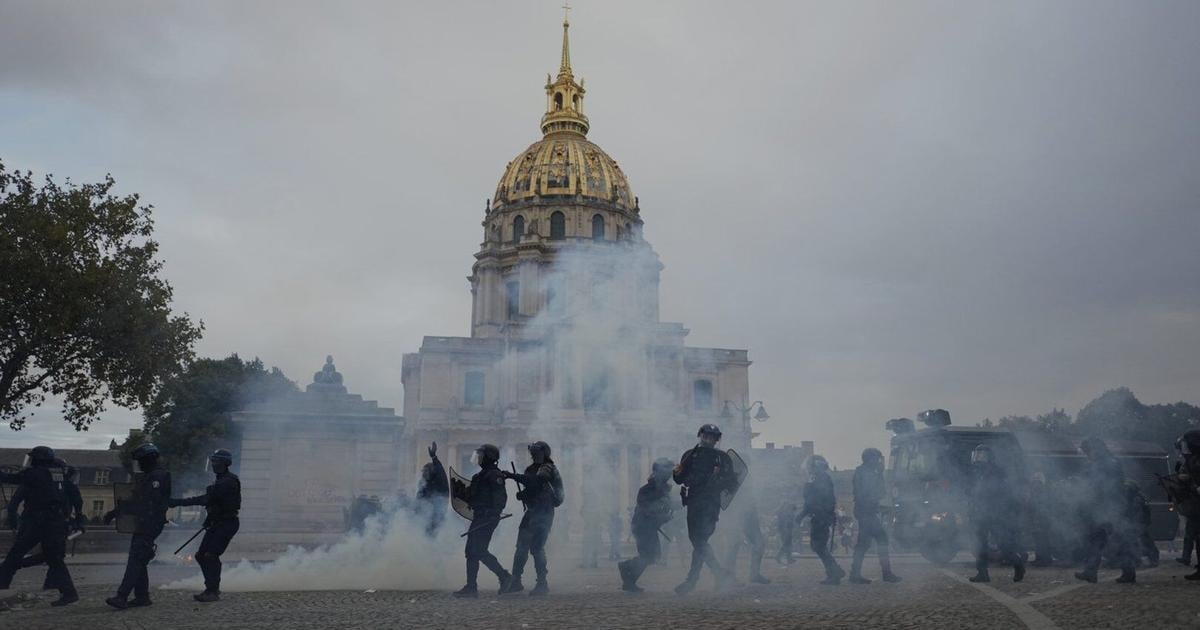
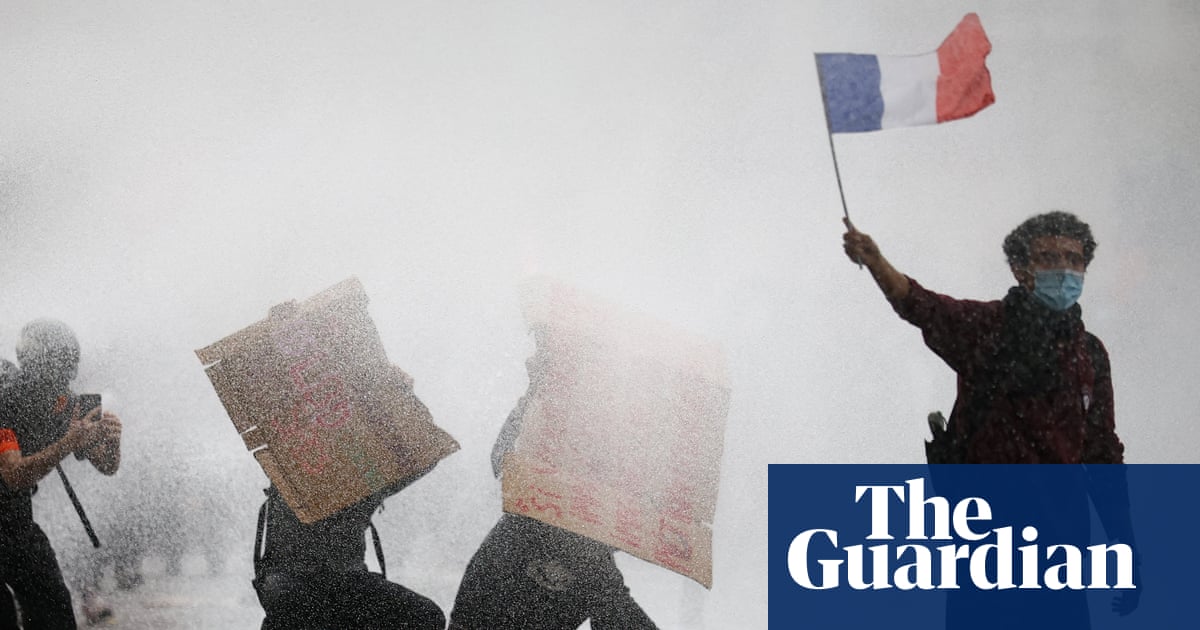
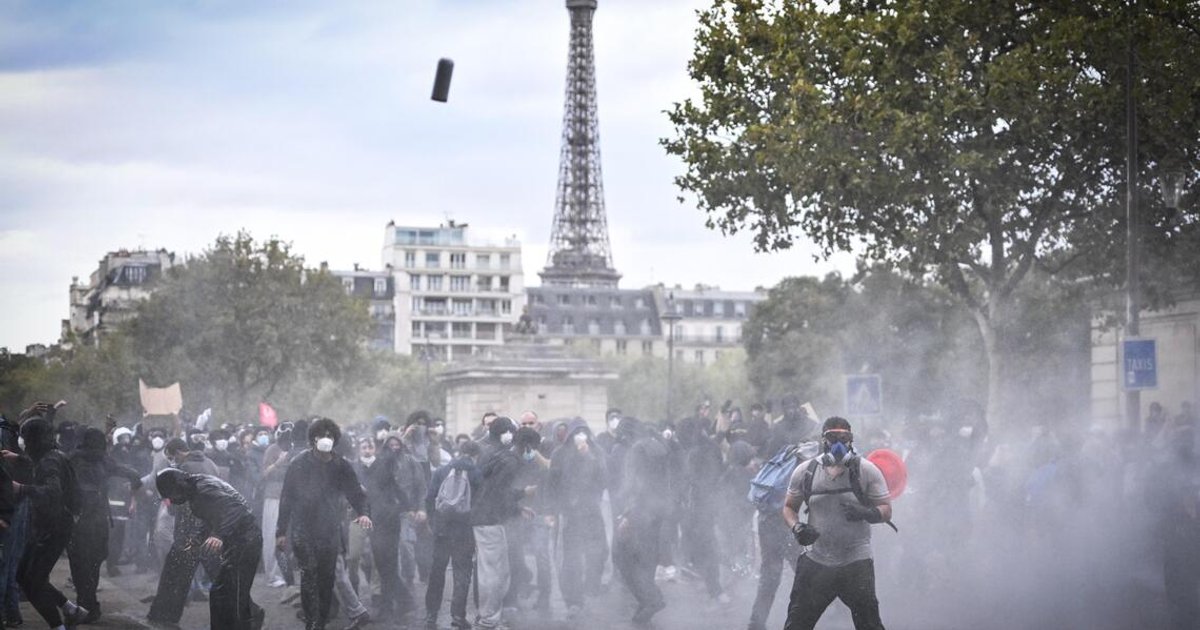
PARIS (AP) — On one side, legions of determined teenagers protesting for their future by blockading schools and taking part in marches that have sometimes spiraled into violence.
asserted
that → protest → violence
The result, playing out almost daily outside high schools and on the streets of France, is a nationwide storm of unrest.
asserted
result → play → unrest
The mayhem of recent weeks — with mass arrests and hundreds of injured — has sparked an uproar in a country steeped in a centuries-old culture of protest.
asserted
mayhem → injure → protest
Even some police have turned on the government’s handling of the demonstrations.
asserted
police → turn → demonstrations
Discontent shrouds Macron’s final months
For President Emmanuel Macron, who leaves office in May, it’s hardly the dream ending to his decade in power.
uncertain
it → shroud → power
He has faced a succession of protest movements that sapped his popularity and fueled broad criticism of how his ministers use police against demonstrators.
asserted
ministers → face → demonstrators
With the high schoolers, the outcry has grown particularly loud.
asserted
outcry → grow → schoolers
That’s partly because the vast majority of the 8,000 people arrested in recent weeks are teenagers under 18 and because police riot-control weapons are blamed for life-changing injuries suffered by some young teens.
asserted
weapons → ’ → teens
The protesters’ push for better-resourced schools, particularly in poorer Paris suburbs and other cities and towns, also has a sympathetic audience as France hurts from record poverty and record public debt.
asserted
France → resource → poverty
But police complain that they’re facing violent rioters who are latching onto the protests and using the crowds as cover to attack officers, pelting them with rocks, fireworks and other projectiles and wreaking havoc with fires, vandalism and other destruction.
asserted
who → complain → fires
By the government’s count, more than 900 officers and nearly 150 teachers and other school staffers have been wounded.
asserted
officers → wound → count
French history partly explains why protests are veering into confrontations between riot police and some demonstrators who come ready to fight in masks and black clothes, says Walid Hrar, a police officer and union representative in the northern suburbs of Paris.
asserted
Hrar → explain → Paris
Everyone boasts about it, in fact.
asserted
Everyone → boast → fact
Some political parties don’t hesitate to say that we need to disobey the law.
asserted
we → hesitate → law
That’s what Robespierre and other revolutionaries taught us in 1789,” he said.
asserted
he → ’ → 1789
“France always tends to react rather than anticipate,” he added.
asserted
he → tend → ?
“In other words, we’re always going to extremes.”
asserted
we → go → extremes
Attention focusing on police weaponry
The police have drawn sharp scrutiny for their efforts to control crowds using a variety of so-called non-lethal weaponry, particularly grenades and other projectiles, but also tear gas, water cannons and riot shields equipped with powerful strobe lights.
asserted
police → focus → lights
“We’re sending poorly equipped, untrained public security police officers to violent demonstrations who are likely to become agitated very quickly out of anger and fear,” said Jean-Marie Godard, an author who specializes in French policing.
asserted
who → send → policing
Hrar said some of his police colleagues “aren’t specialized in crowd control and aren’t equipped for it.
asserted
some → say → it
We send them in because we need the manpower, so we have officers wearing uniforms that aren’t flame-resistant.
asserted
that → send → uniforms
And if you’re hit by a firework mortar and your uniform isn’t flame-resistant, you can catch fire.
asserted
you → hit → fire
We also have officers with worn-out helmets.
asserted
We → have → helmets
We have shields that aren’t suitable.”
asserted
that → have → shields
He said officers who haven’t been given permission to use riot-control projectiles and grenades sometimes struggle to keep attackers at a safe distance.
asserted
who → say → distance
“So unfortunately we make do,” he said.
asserted
he → make → ?
“You’ll inevitably end up in direct physical confrontation.
asserted
You → end → confrontation
When that happens, there are injuries on both sides.”
asserted
that → happen → sides
His Alliance police union announced this week that it is filing a legal complaint against the state, accusing it of endangering lives.
asserted
it → announce → lives
It alleged that officers are being issued with vague and contradictory orders, leaving them “isolated, betrayed, abandoned, exposed to violence.”
asserted
officers → allege → violence
Probes of alleged misconduct grow
French Interior Minister Laurent Nunez said this week that security forces have used crowd-control weapons at least 18,000 times during the protests — mostly smoke and tear gas but also projectiles and grenades.
asserted
forces → allege → protests
They include a deafening launcher-fired grenade that Nunez said was used “about 40 times” before he suspended its deployment against high schoolers, after a 15-year-old lost a hand.
asserted
old → include → hand
“All this equipment, all these forces, all these intermediate weapons, are used whenever necessary, with proportionality, to mark an escalation of the response, to keep people at a distance or sometimes to put them out of action,” he said.
asserted
he → use → action
The minister said rules governing the use of riot-control projectiles are “very clear, very strict.”
asserted
rules → say → projectiles
“We avoid everything above the neck,” he said.
asserted
he → avoid → neck
Still, an officer suspected of firing a round that partially blinded a 16-year-old was this week charged with aggravated violence.
asserted
that → suspect → violence
That case is among a growing number of investigations — totaling 36 as of Tuesday — into alleged police misconduct.
asserted
case → grow → misconduct
Four involve “mutilating injuries,” another six involve “significant injuries” and others are for “blows, insults and suspected sexual assaults” and include the case of an officer accused of attempting to drown a protester
asserted
others → involve → protester
, Nunez said.
asserted
Nunez → say → ?
Expert says different groups get different policing
France has more than 250,000 police and gendarmes.
Sebastian Roché, a policing specialist at France’s National Center for Scientific Research, said their use can depend on the political needs of the government, which commands them.
asserted
which → say → them
…and 5 more, not listed.
 The Aporia