France’s students are angry about more than crumbling classrooms and missing teachers

Read the original at The Guardian ↗
Cite

correspondent, J. H. E. (2026, October 14). France’s students are angry about more than crumbling classrooms and missing teachers. The Guardian. https://www.theguardian.com/world/2026/oct/14/french-students-are-not-just-protesting-for-better-schools-but-for-their-future

Dated from the outlet's own feed. Check the original for its byline.

The Guardian · collected 2026-10-14 · by Jon Henley Europe correspondent

Quick Summary

French students are protesting against poor school conditions and teacher shortages, with over 160,000 participants in recent demonstrations. The protests extend beyond material issues to reflect broader concerns about economic instability and reduced prospects for young people. More than 250 pupils have been injured during the protests, leading to public criticism of the government’s use of force against demonstrators.
Written locally by qwen2.5:14b on 2026-10-14, using this article's own text rather than the other coverage of the same event (that is the story summary below).

AI analysis runs on qwen2.5:14b, locally

Story summary

French students are protesting over teacher shortages, overcrowded classes, and deteriorating school buildings. The protests, which began three weeks ago, saw more than 160,000 people take to the streets on Tuesday. Beyond these immediate issues, the demonstrations reflect a broader anxiety among young French people about their future prospects, including poorly paid jobs, unstable employment, high living costs, and declining public services. Political parties like Marine Le Pen’s far-right National Rally and Jean-Luc Mélenchon’s radical-left La France Insoumise are using the protests to criticize either youth behavior or police response, while blaming centrist politicians for incompetence.

Written for “French Student Protests” on 2026-10-14, grounded in this article and the 0 other(s) covering the same event.
Why this leaning score
The article's own words the score was based on. Each is quoted verbatim and was checked against the article text before being stored, so you can find it in the original.
Reading Leans strongly left (beta estimate) Confidence high
Leaning: leans strongly left for article 79570 (high confidence, 2 verified quotes) · logged 2026-10-14

Story

📰 French Student Protests
Education · 1 article(s) covering the same event.

Compared with similar articles

This article reads leans strongly left and hedges 13% of its claims. Each row says how that neighbour differs.
A red-green warning from France different event · 95%
Washington Examiner
⚖️ Leans strongly right further right than this 🔴 3% hedged 1 of 29 📰 publisher trust 68
“The articles describe different aspects of unrest in France: one focuses on rioters burning schools and vandalizing storefronts over migration issues, while the other discusses student protests about school conditions.”
Al Jazeera
⚖️ leaning not scored 🔴 0% hedged 0 of 1 📰 publisher trust 60
“The articles describe different aspects of student protests; Article A focuses on Greta Thunberg's comments about French students being 'robbed', while Article B provides a broader overview of protest slogans and issues without mentioning any specific incident or time.”
BBC News
⚖️ leaning not scored 🔴 9% hedged 7 of 75 📰 publisher trust 72
“While both articles discuss student protests in France over similar issues, they refer to different phases of ongoing protests with distinct dates and contexts.”
The Guardian
⚖️ leaning not scored 🔴 2% hedged 1 of 50 📰 publisher trust 67
“The articles describe different aspects of a broader issue and do not focus on the same specific incident.”
CBC News
⚖️ leaning not scored 🔴 0% hedged 0 of 1 📰 publisher trust 60
“Article A describes a specific clash between students and riot police, while Article B focuses on the broader context and slogans used during weeks of protests.”
Al Jazeera
⚖️ Leans left further right than this 🔴 22% hedged 2 of 9 📰 publisher trust 60
“Article A describes a specific protest event on October 13th with reported attendance figures and mentions of violence in Paris. Article B discusses broader themes and slogans from multiple weeks of protests without specifying the exact date or details of any single rally.”
The Straits Times
⚖️ Leans left further right than this 🔴 13% hedged 4 of 30 📰 publisher trust 59
“Article A describes a specific rally on Oct 13 with attendance numbers, while Article B discusses general slogans and issues motivating student protests over several weeks.”
How this article was measured signals, leaning charts, publisher record, byline, topics and claims

Signals How these are calculated →

Claims extracted
38
sentences that state something as happening or true
Uncertain
13%
5 of 38 hedged ("reportedly", "may", "according to")
Leaning
Leans strongly left
of the writing, not the subject · beta estimate
Publisher signals
67/100
The Guardian's corrections and hedging, across everything collected from it. Not a measure of accuracy.
Outlets on this story
1
Education
Same framing elsewhere
1
articles that frame the event the way this one does
Analyzed 2026-10-14 · how these are computed

How this is being covered How these are calculated →

Article leaning vs. publisher reliability
Source leaning vs. consistency

Publisher

The Guardian · 1826 article(s) · 5 correction(s) detected
Running correction rate · 5 correction(s)

Who wrote this

Jon Henley Europe correspondent
4 article(s) here · 1 carrying a prediction
🔮 Say what you will about France’s high schools, they still produce world-class slogan writers.
🔮 “After decades of lies, for the first time, many millions of Hungarians could experience what real regime change and equality before the law really mean, Magyar said on social media.
🔮 With elections due next year in eight EU countries including France, Italy, Spain and Poland, leaders are scrambling to head off the potential fallout from what analysts have warned could be one of the continent’s biggest energy shocks in decades.
🔮 She added: “Russia will find our resolve only growing stronger.”
Also by Jon Henley Europe correspondent
Nothing else under this byline is closely related to this article, so these are simply their most recent.

Topics

France French Guardian Madrid Spain

Subjects

France GPE · 7× French NORP · 3× Alexander Hurst PERSON · 1× Barcelona GPE · 1× Emmanuel Macron PERSON · 1× Guardian ORG · 1× Kitty Sayers PERSON · 1× Madrid GPE · 1× Paris GPE · 1× Spain GPE · 1×

Narrative

Meanwhile, Marine Le Pen’s far-right National Rally and the radical-left La France Insoumise of Jean-Luc Mélenchon are weaponising the protests, the former castigating an out-of-control youth, the latter an out-of-control police, and both blaming centrist incompetence.
framing: assertive · carried by 1 article(s) · first seen 2026-10-14
🔮 Say what you will about France’s high schools, they still produce world-class slogan writers.

Claims (38 extracted, 5 hedged)

Say what you will about France’s high schools, they still produce world-class slogan writers. asserted
they → say → writers
Here’s a brief selection spotted during three weeks of blockades and marches over chronic teacher shortages, overcrowded classes and crumbling buildings: “Pas d’avenir, pas de calme” (No future, no calm). asserted
selection → ’ → shortages
“Vous détruisez notre futur, on bloque votre présent” (You destroy our future, we block your present). asserted
we → destroy → present
A couple more: “Nos lycées tombent en ruines, comme nos espoirs” (Our schools, like our hopes, are falling into ruin”). asserted
schools → fall → ruin
“On n’est pas mal éduqués, on n’est pas écoutés” (We’re not badly brought up, we’re just not being listened to). asserted
we → n’est → ?
The protests, which continued this week with more than 160,000 on the streets on Tuesday, might be over very material problems – but beneath them there clearly lies an altogether more existential worry. uncertain
worry → continue → them
This generation fears its future will be one of diminishing prospects, poorly paid, unstable jobs, unaffordable living costs and steadily decaying public infrastructure – the end, in short, of the basic socioeconomic security their parents, mostly, enjoyed. asserted
parents → fear → security
That was the central theme of a 30-second Instagram post I recorded last week with the Guardian’s social media team and that, at time of writing, had been watched almost 540,000 times – with young people in France the largest single group of viewers. asserted
people → record → viewers
The same core concerns underlie youth protests elsewhere – notably, ongoing mass housing demonstrations in Spain, where the twentysomethings of Madrid and Barcelona are in revolt at the monthly rental on a one-bed flat costing an entire monthly median salary. asserted
twentysomethings → underlie → salary
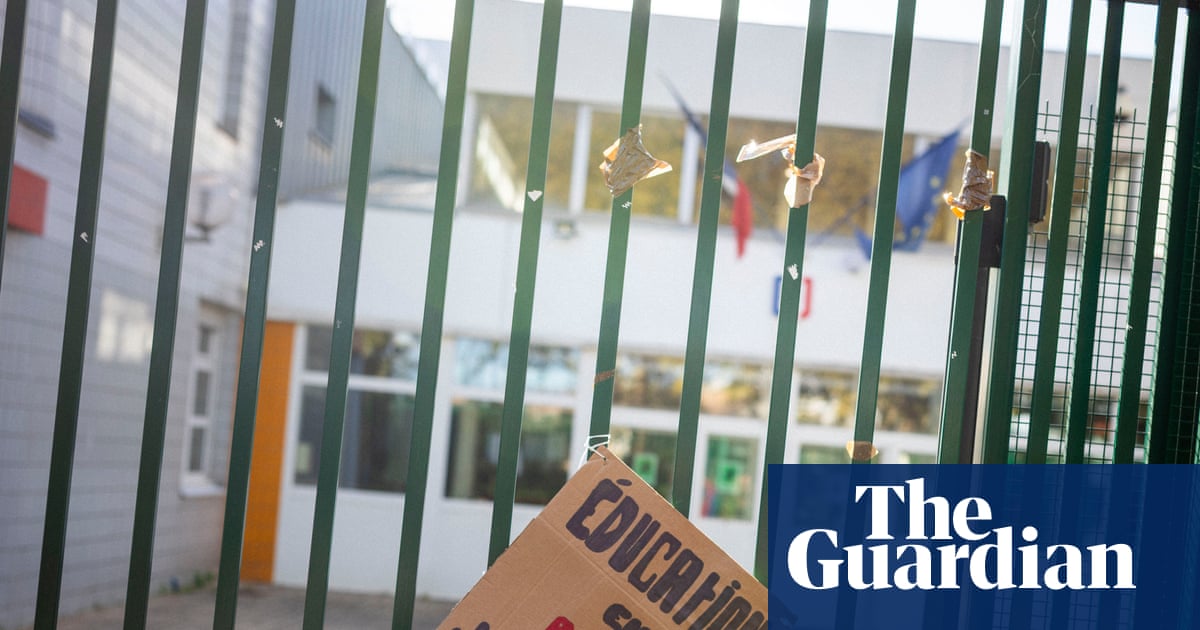
In France, teenagers in Seine-Saint-Denis, a low-income area in the north of Paris, show reporters pictures of broken chairs and desks, holes in walls, leaking ceilings, mould, shattered toilets and defective audiovisual equipment. asserted
teenagers → show → walls
Some have gone months without key teachers. asserted
Some → go → teachers
As Kitty Sayers, who went to school in France, explained, France’s republic “was born of insurrection and has never forgotten it … asserted
republic → go → it
The language of rights, citizenship and collective power is woven into French education.” asserted
language → weave → education
This means that in French schools protest is “taught as a legally framed, fundamental right and a civic responsibility”. asserted
protest → mean → right
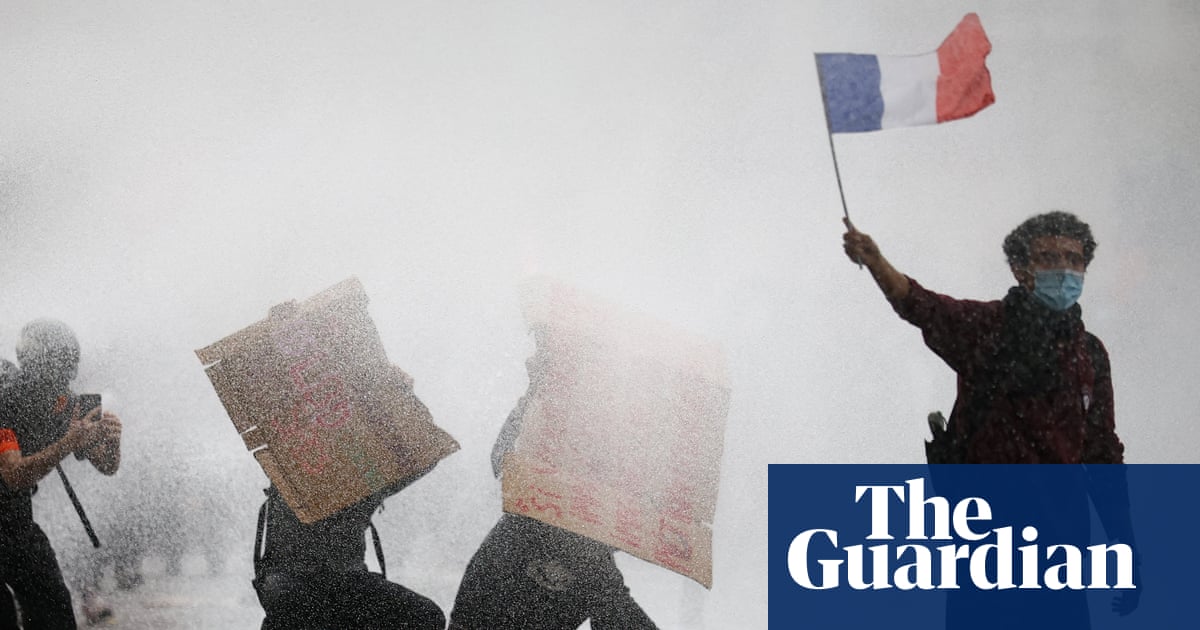
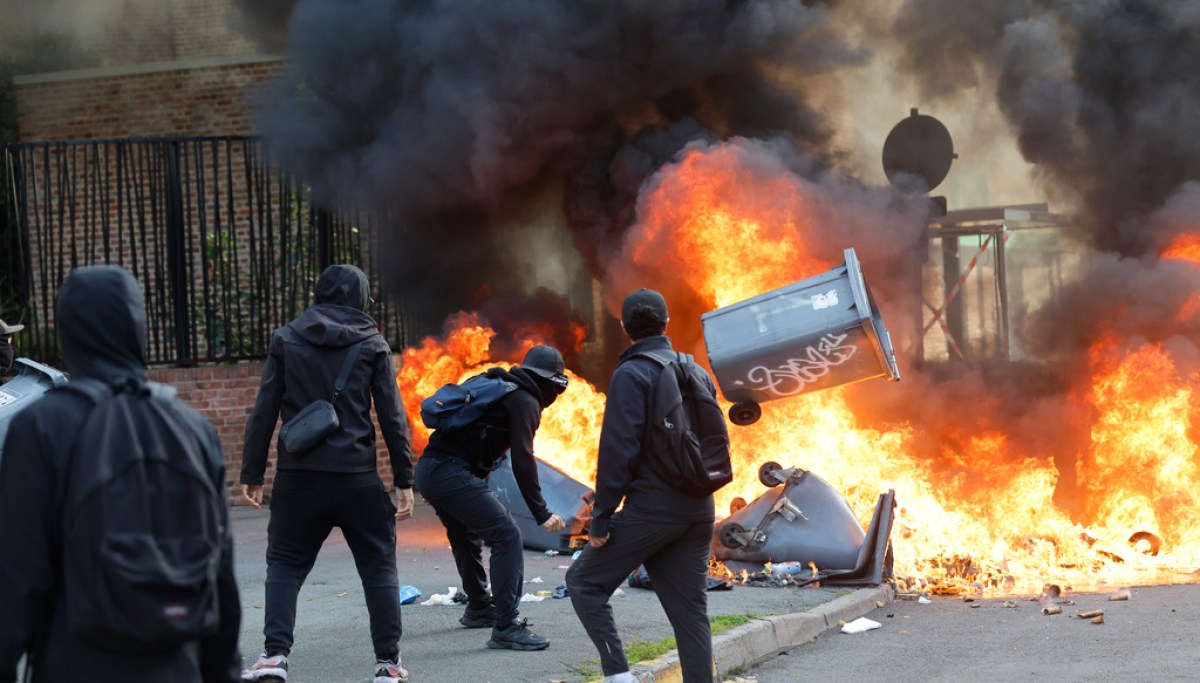
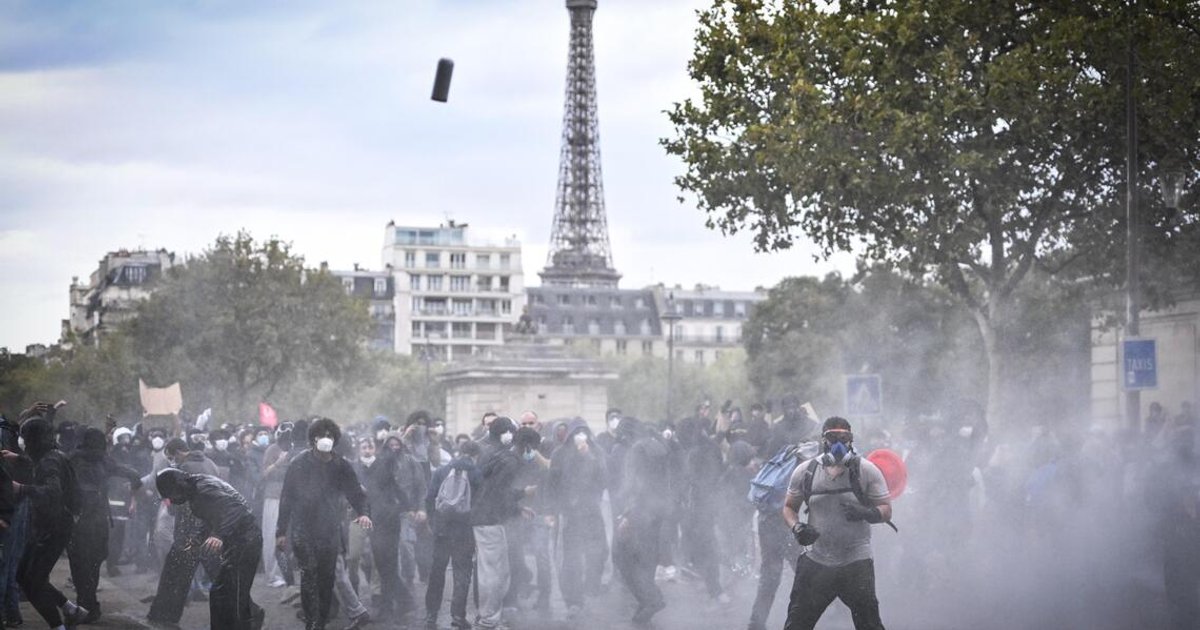
More than 250 pupils have been injured, along with about 100 school staff and 750 police. asserted
pupils → injure → staff
One teen has lost a hand from a stun grenade, another the sight in one eye, a third his teeth. asserted
third → lose → eye
More than 6,000 people – almost all minors – have been detained. asserted
people → detain → ?
After a public outcry, the interior minister last week suspended the use of stun grenades. asserted
minister → suspend → grenades
But as Alexander Hurst observed, when pupils complain about the state of their schools “and the response is riot police, the government has lost the plot”. asserted
government → observe → plot
If the government hoped public opinion would be on its side, it miscalculated. asserted
it → hop → side
Teachers’ and other unions, parents and university students have marched with the pupils, and a poll this week showed 57% of the public approved of the protests, with 33% opposed. asserted
% → march → protests
They come at a particularly delicate time for France’s political establishment. asserted
They → come → establishment
Presidential elections to replace Emmanuel Macron are due next spring, and without a parliamentary majority his government is caught in legislative deadlock. asserted
government → replace → deadlock
Meanwhile, Marine Le Pen’s far-right National Rally and the radical-left La France Insoumise of Jean-Luc Mélenchon are weaponising the protests, the former castigating an out-of-control youth, the latter an out-of-control police, and both blaming centrist incompetence. asserted
both → weaponise → incompetence
As Philip Inman pointed out, with a debt-to-GDP ratio and a budget deficit both among the highest in the EU, France has no cash to spare – and the markets are watching. asserted
markets → point → cash
So while cost-cutting will only provoke more unrest, the absence of it could trigger a boycott of French bonds, or even a default and bailout (although as the economist Paul Krugman says, France “may have crossed from too big to fail to too big to save”). uncertain
France → provoke → big
Ultimately, there seems little doubt France will have to make some of the same painful adjustments to bring its debt back under control that Italy, Spain and Greece made a decade or more ago – and to which French public reaction could be dramatic. uncertain
reaction → seem → which
We began with slogans; let’s end with some. asserted
’s → begin → some
The best-known French youth protest – a revolution, more or less – was, of course, May 1968. uncertain
protest → know → course
Comparing its iconic posters with those of today’s demonstrating school pupils is instructive. asserted
Comparing → compare → pupils
In 1968, there was “Sous les pavés, la plage” (Beneath the cobblestones, the beach); “L’imagination au pouvoir” (Put imagination in charge); “L’ennui est contre-révolutionnaire” (Boredom is counter-revolutionary). asserted
Boredom → be → charge
Those, you can see, were slogans born out of infinite possibility: a generation that, in overthrowing the old social hierarchies, never doubted its material survival. asserted
that → see → survival
May 68 was about blowing open the doors of a rigid, outmoded society to grasp a bright future. uncertain
May → blow → future
Today’s students are fighting to stop the doors slamming shut on them altogether. asserted
doors → fight → them
Guardian live-streamed event – Hacking Tech Big tech and AI pose immense challenges for our societies and democracies. asserted
tech → stream → societies
The Guardian is partnering with French news investigative outlet Mediapart, on a live event called Hacking Tech in Paris at 1pm CEST on Saturday 17 October. asserted
Guardian → partner → Saturday
Speakers include Naomi Klein, Emily M Bender, Paris Marx, Sönke Iwersen and the Guardian’s UK technology editor, Rob Booth. asserted
Speakers → include → Klein
The event is free and open to the public but don’t worry if you can’t be there: the debates will be live-streamed without a paywall on Mediapart’s YouTube channel. asserted
debates → worry → channel

💬Give feedback
🕘History 🎫Support