Why Saudi Arabia has struggled to defend itself against the Houthis' recent attacks

Read the original at Toronto Star ↗
Toronto Star · collected 2026-10-13 · by Sam Mcneil

Quick Summary

Saudi Arabia, despite possessing advanced U.S.-supplied weaponry, has struggled to defend itself against recent missile and drone attacks from Yemen's Houthi rebels. These attacks, which began in late November, have killed at least 14 people and targeted critical infrastructure like airports. The Houthis, backed by Iran, are a significant threat due to their sophisticated tactics and extensive arsenal, challenging Saudi Arabia’s air defense systems and forcing the country to reassess its military strategy and potential international support options.
Written locally by qwen2.5:14b on 2026-10-13, using this article's own text rather than the other coverage of the same event (that is the story summary below).

AI analysis runs on qwen2.5:14b, locally

Story summary

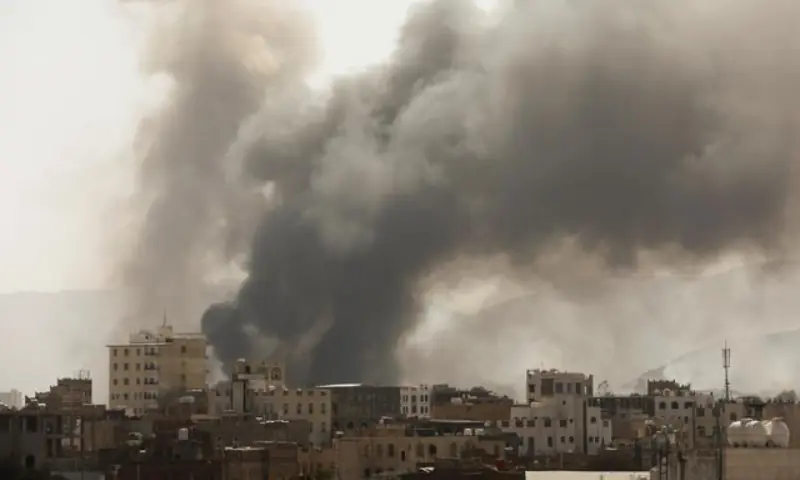
In October 2026, US President Donald Trump criticized Yemen's Houthi militants, saying they were "behaving very badly" following a series of attacks on Saudi Arabian airports. The Houthis, backed by Iran, have been battling the Saudi-backed Yemeni government since 2014 and intensified their attacks in response to the US-Iran war. These recent attacks included strikes on King Khalid International Airport in Riyadh, which killed at least 13 people and injured over 300 others, causing temporary airport closures.

Trump also mentioned possibly asking Turkish President Tayyip Erdogan for assistance against the Houthis, indicating his intent to support Saudi interests. The attacks have raised concerns about shipping safety through the crucial Bab al-Mandab Strait, a critical passage for global oil shipments.

Written for “Yemen Conflict StrikesSaudiArabia” on 2026-10-13, grounded in this article and the 111 other(s) covering the same event.
Why this leaning score
The article's own words the score was based on. Each is quoted verbatim and was checked against the article text before being stored, so you can find it in the original.
Reading Leans left (beta estimate) Confidence medium 1 quote(s) discarded as not found in the article
Leaning: leans left for article 77015 (medium confidence, 1 verified quote) · logged 2026-10-13

Story

📰 Yemen Conflict StrikesSaudiArabia
World · 112 article(s) covering the same event. Compare every outlet's account →

Compared with similar articles

This article reads leans left and hedges 8% of its claims. Each row says how that neighbour differs.
The Independent · 0.95 cosine similarity
⚖️ Leans right further right than this 🔴 7% hedged 4 of 54 📰 publisher trust 59
“Both articles describe Saudi Arabia's struggle to defend itself against recent attacks by the Houthi rebel group, including strikes on airports and casualties.”
The Straits Times · 0.86 cosine similarity
⚖️ Leans right further right than this 🔴 0% hedged 0 of 3 📰 publisher trust 59
“Both articles discuss Saudi Arabia's struggle against Houthi attacks that killed at least 14 people and struck airports, referring to the same recent deadly attack.”
The Guardian
⚖️ Leans left 🔴 6% hedged 2 of 35 📰 publisher trust 68
“Both articles describe a Houthi rebel attack on Saudi Arabia's capital Riyadh that resulted in casualties at King Khalid International Airport.”
Yemen escalation same event · 95%
Dawn
⚖️ Leans left 🔴 24% hedged 5 of 21 📰 publisher trust 71
“Both articles describe the same Houthi attack on Saudi Arabia's airport in Riyadh, resulting in casualties and international condemnation.”
The Independent
⚖️ Leans strongly left further left than this 🔴 0% hedged 0 of 29 📰 publisher trust 59
“Both articles describe the same recent attacks on Saudi Arabia's Riyadh airport by Houthi rebels, resulting in deaths and injuries.”
The Hindu
⚖️ leaning not scored 🔴 5% hedged 1 of 21 📰 publisher trust 94
“While both articles discuss security concerns and attacks by Houthis on Saudi Arabia involving drones and missiles, they describe different aspects and timeframes of the situation.”
The Hindu
⚖️ Leans left 🔴 2% hedged 1 of 46 📰 publisher trust 94
“The articles discuss different aspects of the conflict between Saudi Arabia and the Houthis, with Article A focusing on a diplomatic incident involving a Houthi delegation and Article B discussing recent attacks by the Houthis on Saudi targets.”
CBS News
⚖️ Leans right further right than this 🔴 2% hedged 1 of 46 📰 publisher trust 66
“The first article describes an attack on Riyadh's main airport with three fatalities on a specific Thursday, while the second article discusses multiple attacks over recent days that killed at least 14 people.”
Semafor
⚖️ Leans left 🔴 19% hedged 3 of 16 📰 publisher trust 95
“The articles describe similar situations but refer to different time periods and impacts: Article A discusses the general reversal of Saudi Arabia's status as a safe haven, while Article B specifically addresses recent Houthi attacks causing casualties and disrupting daily life.”
Al Jazeera
⚖️ leaning not scored 🔴 0% hedged 0 of 2 📰 publisher trust 60
“The articles discuss related events involving Houthi attacks on Saudi Arabia but describe different aspects of the conflict, not a single identical incident.”

Cite this article

Mcneil, S. (2026, October 13). Why Saudi Arabia has struggled to defend itself against the Houthis' recent attacks. Toronto Star. https://www.thestar.com/news/world/why-saudi-arabia-has-struggled-to-defend-itself-against-the-houthis-recent-attacks/article_6830ab51-4d3f-5cf4-a3c5-ad0e2ee75753.html

Dated from the outlet's own feed. Check the original for its byline.

How this article was measured signals, leaning charts, publisher record, byline, topics and claims

Signals How these are calculated →

Claims extracted
52
sentences that state something as happening or true
Uncertain
8%
4 of 52 hedged ("reportedly", "may", "according to")
Leaning
Leans left
of the writing, not the subject · beta estimate
Publisher signals
63/100
Toronto Star's corrections and hedging, across everything collected from it. Not a measure of accuracy.
Outlets on this story
112
World
Same framing elsewhere
2
articles that frame the event the way this one does
Analyzed 2026-10-13 · how these are computed

How this is being covered How these are calculated →

Article leaning vs. publisher reliability
Source leaning vs. consistency

Publisher

Toronto Star · 6767 article(s) · 20 correction(s) detected
Running correction rate · 20 correction(s)
2026-10-07
Correction
2026-09-24
Correction

Who wrote this

Sam Mcneil
6 article(s) here · 1 carrying a prediction
🔮 As Saudi Arabia investigates how its air defenses failed to stop the Houthis’ attacks, it must also consider how to respond and what the rebels might do next.
🔮 Despite the seeming European unity this week, it remains unclear what the EU can or is willing to do.
🔮 Magnus Brunner said he would call for a vast expansion of Frontex, including new powers, more funding and a larger workforce.
🔮 BRUSSELS (AP) — Wars in the Middle East and Ukraine are driving governments across Europe to craft subsidies, taxes and policy revisions that might shield their economies, companies and increasingly aggrieved citizens from record gasoline and diesel prices.
Also by Sam Mcneil
Nothing else under this byline is closely related to this article, so these are simply their most recent.
All 6 articles by Sam Mcneil →

Topics

American Houthi Houthis Saudi Saudi Arabia

Subjects

Houthis NORP · 11× Saudi Arabia GPE · 10× Saudi NORP · 5× American NORP · 3× Houthi NORP · 3× Yemen GPE · 3× Iran GPE · 2× Saudi Arabia’s GPE · 2× Saudis NORP · 2× U.S. GPE · 2×

Narrative

The strikes on Saudi airports and economic assets symbolize a sharing of lessons in asymmetric warfare between the Houthis and the Iranians: how to not just puncture expensive air defenses, but also damage vulnerable energy installations and threaten global maritime routes.
framing: assertive · carried by 2 article(s) · first seen 2026-10-13
🔮 As Saudi Arabia investigates how its air defenses failed to stop the Houthis’ attacks, it must also consider how to respond and what the rebels might do next.

Claims (52 extracted, 4 hedged)

Saudi Arabia has one of the world’s most expensive and sophisticated arsenals, filled with American warplanes, missile defenses and other cutting-edge technology. asserted
Arabia → have → warplanes
But in recent days it has appeared helpless in the face of barrages of missiles and drones fired by the Houthi rebel group from neighboring Yemen. asserted
it → appear → Yemen
The attacks have struck Saudi airports, killed at least 14 people and forced schoolchildren and businesspeople to stay indoors and work from home. asserted
attacks → strike → home
The Iran-backed Houthis, once seen as little more than a ragtag militia, have grown into a formidable fighting force. asserted
Houthis → back → force
They have inflicted damage on the region’s top oil producer, threatened critical supply routes in the Red Sea and now risk reigniting a full-scale war on the Arabian Peninsula that displaced millions and killed tens of thousands. asserted
that → inflict → thousands
The Houthis are attacking Saudi Arabia because it supports government forces in Yemen the rebels seek to overthrow. asserted
rebels → attack → Yemen
As Saudi Arabia investigates how its air defenses failed to stop the Houthis’ attacks, it must also consider how to respond and what the rebels might do next. uncertain
rebels → investigate → what
Here’s what we know and don’t know about the Saudi and Houthi conflict: asserted
we → ’ → conflict
Saudi Arabia is the world’s top purchaser of American weapons, according to the Stockholm International Peace Research Institute. uncertain
Arabia → accord → Institute
It says the Saudis received 12% of all U.S. arms exports from 2021-2025. asserted
Saudis → say → 2021
Over the years, the Saudis have purchased American F-15 warplanes, Patriot air defense systems, as well as advanced radars and offensive missile systems, according to the think tank, which tracks global arms transfers. uncertain
which → purchase → transfers
Saudi Arabia’s annual budget for 2026 listed $83 billion for military expenditures. asserted
budget → list → expenditures
Earlier this year, it struck a $9 billion deal with Washington for 730 Patriot missiles. asserted
it → strike → missiles
But it has a huge area to defend The Houthis have been able to exploit Saudi Arabia’s large size. asserted
Houthis → defend → size
Vulnerable energy, civilian and military assets are scattered across the country’s sparsely populated territory roughly three times the size of Texas. asserted
assets → scatter → Texas
Its border with Yemen stretches more than 1,300 kilometers (800 miles) through rugged desert areas. asserted
border → stretch → areas
“Expecting a country the size of Saudi Arabia to intercept every missile is simply unrealistic. asserted
country → expect → missile
No defense can guarantee complete protection,” Ali Shihabi, a Saudi analyst, said in a post online Monday. asserted
Shihabi → guarantee → post
At the same time, regional officials say that Saudi Arabia is running low on interceptors and has reached out to allies for help. asserted
Arabia → say → help
Saudi Arabia recently struck a joint defense pact with Pakistan and Turkey. asserted
Arabia → strike → Pakistan
But so far, the two countries appear to be largely staying on the sidelines or limiting their support. asserted
countries → appear → support
President Donald Trump said this week he is evaluating whether the U.S. should join Saudi strikes on the Houthis. asserted
U.S. → say → Houthis
But he has not yet announced a decision. asserted
he → announce → decision
Houthi weapons and tactics are battle-tested Like their patron Iran, the Houthis have deployed asymmetric warfare for the 21st century by capitalizing on their strengths — primarily drones and missiles. asserted
Houthis → test → strengths
For the Houthis, success on the battlefield doesn’t require toppling Saudi Arabia; disrupting the Saudi economy and sowing fear within its society may be enough to give the Houthis leverage in any possible negotiations to end the fighting. uncertain
disrupting → require → fighting
The Houthis have a large arsenal capable of striking targets well over 1,000 miles (1,600 kilometers) away. asserted
Houthis → have → targets
Some warheads change direction during flight and pose an extra challenge to air defenses. asserted
warheads → change → defenses
The group has fired hundreds of drones and missiles at Israel since its war in Gaza erupted in October 2023. asserted
war → fire → October
While most were intercepted, a handful managed to land, in one case killing an Israeli man. asserted
handful → intercept → man
Another strike hit an Israeli airport last year. asserted
strike → hit → airport
Andreas Krieg, a professor at King’s College London, said this experience in challenging Israel’s cutting-edge air defenses has given the Houthis confidence and expertise as they now strike Saudi Arabia. asserted
they → say → Arabia
“They’ve learned how to over-saturate the radars,” he said. asserted
he → learn → radars
The Houthis, working with allied militias in Iraq, have also targeted Saudi oil installations, including a vital pipeline used to export oil through the Red Sea while movement through the Strait of Hormuz is limited. asserted
movement → work → Hormuz
The Houthis have also seized territory in Yemen near the Bab el-Mandeb, a key Red Sea waterway, putting additional pressure on Saudi oil exports. asserted
Houthis → seize → exports
Saudi Arabia appears to have miscalculated Michael Ratney, a former U.S. ambassador to Saudi Arabia, says the kingdom assumed the Houthis wouldn’t strike civilian targets like airports. asserted
Houthis → appear → airports
Doing so marked “a paradigm shift,” he said. asserted
he → do → shift
Ratney, now an adviser at the Center for Strategic and International Studies, said the Saudis now find themselves in a position where they have to respond while also trying to prevent the fighting from spinning out of control. asserted
they → say → control
“They can’t not strike back — they were attacked in a very brutal way by their archenemies,” he said. asserted
he → strike → archenemies
“They need to exert military pressure on the Houthis and then find a way to kind of deescalate.” Rather than sending troops into Yemen, the Saudis will likely launch airstrikes against the Houthis and ramp up support of nationalist forces, several analysts said. asserted
analysts → need → forces
“It will be surrogate warfare,” Krieg said. asserted
Krieg → say → ?
…and 12 more, not listed.

💬Give feedback
🕘History 🎫Support