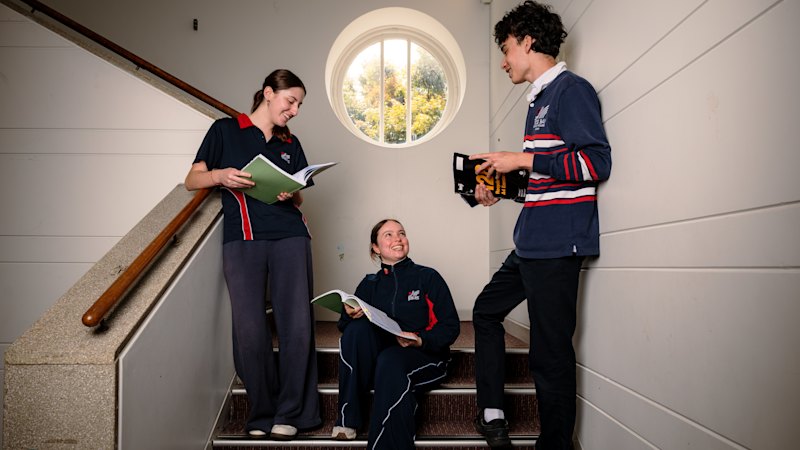
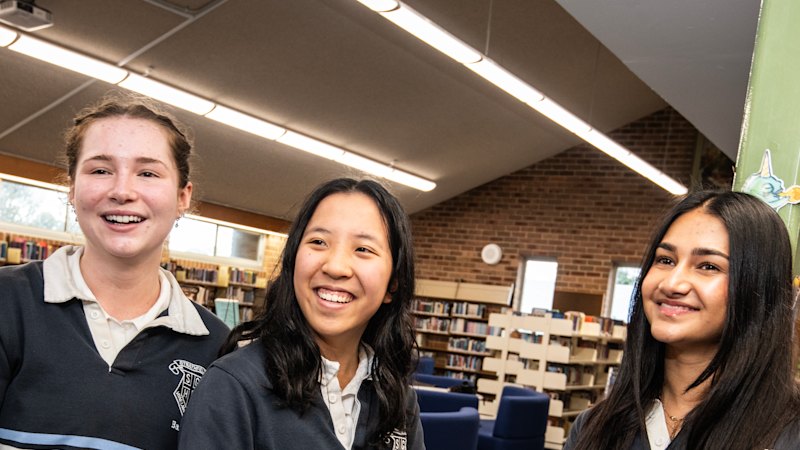
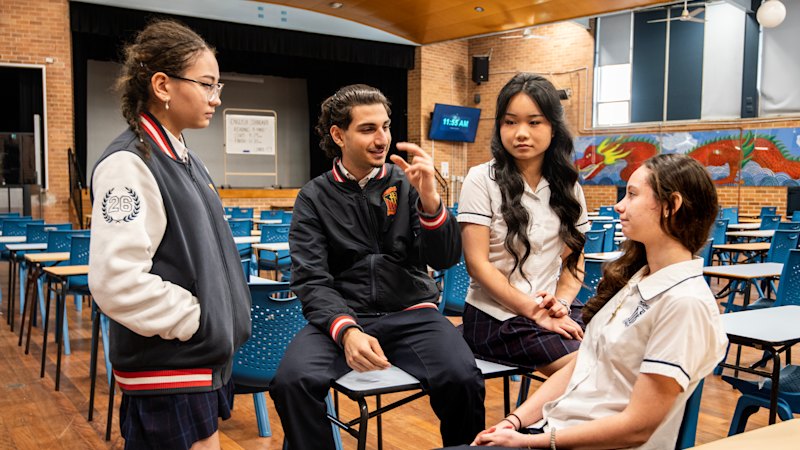
Rose Bay Secondary College modern history teacher Emily Lawson appears popular with students, but she harbours views which might prompt a double-take in the staff room.
uncertain
which → appear → room
“I have very strong opinions that modern history is one of the hardest examinations to go through,” she says.
asserted
she → have → examinations
The years of history her students covered included the Russian Revolution, Hitler and World War II, to the apartheid state of South Africa, culminating in a three-hour exam sat by 11,012 pupils across NSW on Friday.
Students must have a strong command of historical knowledge, interpretation, argumentation, engagement with scholarship and historiography, Lawson said.
asserted
Lawson → cover → scholarship
She has noticed her politically engaged Gen Z students’ curiosity for historical detail powers their dedication to the subject.
asserted
curiosity → notice → subject
“They just love learning more about the world and that it’s so connected to today,” she said.
asserted
she → love → today
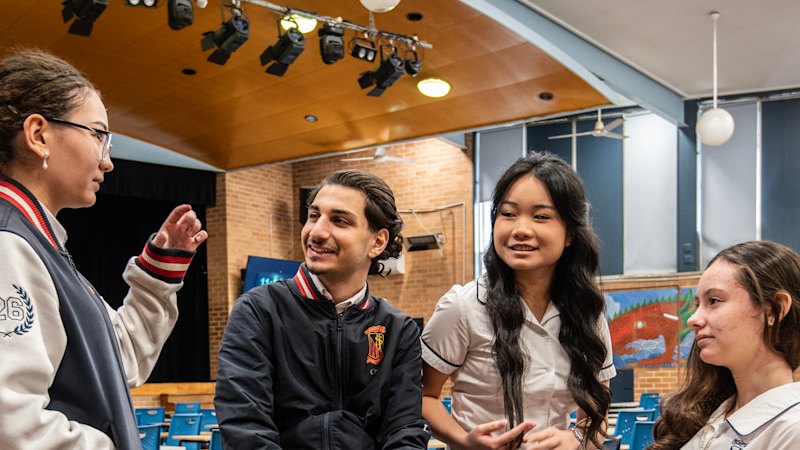
In the school’s hall after the exam had finished, Lawson flicked through the exam with its historical source photographs of Nazis and communists.
asserted
Lawson → finish → Nazis
She was very positive about the questions but feared the wording may have confounded some students.
uncertain
wording → fear → students
That included one on an extract from a 1934 Daily Mail article which was a pro-Nazi article reporting on the Night of the Long Knives, asking students to explain the problems the article raises for a historian.
asserted
article → include → historian
I haven’t seen that in a paper before,” Lawson said.
asserted
Lawson → see → paper
“We usually get like value questions, but explain the problems?
asserted
We → get → problems
Her train of thought is interrupted when one of her students approaches.
asserted
one → interrupt → students
“You’ve been the best teacher in the whole entire world,” the boy says.
asserted
boy → say → world
“I didn’t pay him to say that,” she says.
asserted
she → pay → that
Asher Jacoby, 17, had 600 palm cards with modern history facts and quotations on them.
asserted
Jacoby → have → them
He walked in remembering about half of them.
asserted
He → walk → them
The trickiest part for him was the USSR question he opted for, which asked students to evaluate the accuracy of this statement: Social and cultural change was an essential feature of Stalin’s totalitarian control over the USSR.
asserted
change → opt → USSR
“You can broaden that out to talk about social, political, and economics,” he said.
asserted
he → broaden → social
Remembering all the facts was just one element of the subject.
asserted
Remembering → remember → subject
“Modern history is a really great subject for not just learning about history, but learning about writing in general … you have to have a thesis, and then you have to support that thesis with argumentation,” he said.
asserted
he → learn → argumentation
For the section on WWII, Auriane Lacroix, 17, tackled the essay question on Allied leadership.
asserted
Lacroix → tackle → leadership
“I think that was a good question,” she said.
asserted
she → think → ?
She argued it was a significant factor in victory, referencing Britain’s use of the air force and D-Day landings.
asserted
it → argue → force
When Teya Whitcombe, 18, saw that question on Allied leadership she had a different take, due to its specificity.
asserted
she → see → specificity
“I thought that was a bit strange,” she said.
asserted
she → think → ?
Overall, she thought the exam was “a bit weird … but nothing too horrible”.
asserted
exam → think → ?
She never intended to study history but enrolled late because her friends did it.
asserted
friends → intend → it
“I’ll treasure my modern history knowledge, even if I won’t really use it,” she said.
asserted
she → treasure → it
And then there was Ms Lawson.
asserted
Lawson → be → ?
“She’s a very good teacher,” she said.
asserted
she → ’ → ?
 The Aporia