Fish, with a side of moral ambiguity: The toughest questions in the HSC English exam

Read the original at The Sydney Morning Herald ↗
The Sydney Morning Herald · collected 2026-10-14 · by Christopher Harris

Quick Summary

The article discusses a thought-provoking question from the Higher School Certificate (HSC) English exam in Australia, which used fishing as a metaphor for personal growth and the importance of the journey over the destination. Students were given options to respond either creatively, persuasively, or discursively. The piece includes insights from students like Tijana Kovacevic and Julie Le who tackled the question from different angles, such as emphasizing life experiences over achievements and discussing digital communication's impact on intimacy. Teachers also commented on how many students grasped the metaphorical nature of the fishing reference, highlighting the exam's focus on critical thinking and analytical skills.
Written locally by qwen2.5:14b on 2026-10-14, using this article's own text rather than the other coverage of the same event (that is the story summary below).

AI analysis runs on qwen2.5:14b, locally

Story summary

The final question on Wednesday’s Higher School Certificate (HSC) English Advanced exam for 2026 posed a philosophical query about fishing, asking students to reflect on the relationship between "observations and feelings" as explored in MT Anderson's novel Feed. The question stated that while busyness distracts most people, wonder and play are essential for flourishing, emphasizing that “the point isn’t to catch a fish – it’s how you feel while you’re trying to catch a fish.” Students were required to choose between writing creatively, persuasively, or discursively in response. Bonnyrigg High student Tijana Kovacevic chose the discursive option and focused on the idea that lessons and experiences along the journey are more rewarding than mere achievements. Her teacher, Emmanuel Vazenios, expressed confidence that most students at his school understood the metaphorical nature of the question.

Written for “HSC English Exam Questions” on 2026-10-14, grounded in this article and the 0 other(s) covering the same event.
Why this leaning score
This article does not take a side on a contested political question, so it has no leaning score. That is an answer rather than a gap: a match report or a rescue can be warmly or critically written without being left or right, and scoring it anyway is how approval of a subject gets recorded as a political position.
No political leaning scored for article 78546 · logged 2026-10-14

Story

📰 HSC English Exam Questions
Education · 1 article(s) covering the same event.

Compared with similar articles

This article reads unscored and hedges 8% of its claims. Each row says how that neighbour differs.
The Guardian
⚖️ leaning not scored 🔴 12% hedged 4 of 34 📰 publisher trust 67
“The articles describe different questions from the HSC English exam, each with distinct themes and prompts.”
The Sydney Morning Herald
⚖️ leaning not scored 🔴 6% hedged 2 of 31 📰 publisher trust 61
“While both articles discuss the HSC English exam of 2026, they describe different aspects and outcomes of the examination process.”

Cite this article

Harris, C. (2026, October 14). Fish, with a side of moral ambiguity: The toughest questions in the HSC English exam. The Sydney Morning Herald. https://www.smh.com.au/national/nsw/fish-with-a-side-of-moral-ambiguity-the-toughest-questions-in-the-hsc-english-exam-20261014-p6153j.html?ref=rss&utm_medium=rss&utm_source=rss_feed

Dated from the outlet's own feed. Check the original for its byline.

How this article was measured signals, leaning charts, publisher record, byline, topics and claims

Signals How these are calculated →

Claims extracted
26
sentences that state something as happening or true
Uncertain
8%
2 of 26 hedged ("reportedly", "may", "according to")
Leaning
not political
takes no side on a contested political question
Publisher signals
61/100
The Sydney Morning Herald's corrections and hedging, across everything collected from it. Not a measure of accuracy.
Outlets on this story
1
Education
Same framing elsewhere
1
articles that frame the event the way this one does
Analyzed 2026-10-14 · how these are computed

How this is being covered How these are calculated →

Article leaning vs. publisher reliability
Source leaning vs. consistency

Publisher

The Sydney Morning Herald · 3585 article(s) · 10 correction(s) detected
Running correction rate · 10 correction(s)

Who wrote this

Christopher Harris
12 article(s) here · 1 carrying a prediction
🔮 The final question on Wednesday’s Higher School Certificate English Advanced exam might have seemed oddly specific or even divorced from the poetry and novels students studied in class.
🔮 In the next four weeks, 79,675 students are expected to complete at least one of the 123 written HSC exams that will span about 350 hours, starting with 75,348 putting their heads down for the first English paper from 9.50am on Tuesday.
🔮 Snowballing tuition hikes mean the cost of 13 years of an independent education is set to reach $800,000 by the end of the next decade if school fees continue to grow at 5 per cent each year.
2026-10-10 · assertive framing · The cost of 13 years of private school to hit $800k
🔮 The Reserve Bank of Australia decided it was in the “public interest” to ban surcharges on card payments from October 1 and Prime Minister Anthony Albanese said it could make the cost of a cup of coffee cheaper.
🔮 Universities Australia chief executive Luke Sheehy said curbing international students would be “extraordinarily challenging” for universities.
🔮 Education Minister Jason Clare said recent funding agreements would result in $20 billion flowing into public schools in coming decade under the needs-based Gonski funding model.
🔮 When high school leaders were asked, only 10 per cent believed students could self-regulate their use of technology when learning.
🔮 Mathematics teacher Eddie Woo said the increase in students choosing the extension course reflected students’ growing awareness of where maths could take them in their careers, as well as the early grades of high school where teachers built up students’ capability.
2026-10-04 · assertive framing · The difficult HSC subject boys are rushing to enrol in
🔮 An all-boys school which promised to be the first in Australia to deliver a classical education spanning Plato to Aristotle will close its doors just four years after opening because it failed to attract enough students.
🔮 When Lee Casuscelli got her first job out of teachers college in the 1980s, she was given what might be termed a challenging first assignment at The Grange Public School in south-west Sydney.
Also by Christopher Harris
‘We are in crisis’: The HSC subject bleeding enrolments
2026-10-12 · The Sydney Morning Herald
The cost of 13 years of private school to hit $800k
2026-10-10 · The Sydney Morning Herald
Cranbrook gardener charged over alleged child abuse material
2026-10-10 · The Sydney Morning Herald
Nothing else under this byline is closely related to this article, so these are simply their most recent.
All 12 articles by Christopher Harris →

Topics

Bonnyrigg High English HSC

Subjects

HSC ORG · 3× Bonnyrigg High ORG · 2× Shakespeare PERSON · 2× Emmanuel Vazenios PERSON · 1× English NORP · 1× Julie PERSON · 1× Julie Le PERSON · 1× Margaret Atwood’s PERSON · 1× Tijana PERSON · 1× Tijana Kovacevic PERSON · 1×

Narrative

When English standard student Katherine Kurtz opened her paper, a question about how the relationship between “observations and feelings” was explored in the novel she’d studied – Feed by MT Anderson – did not have an immediately obvious answer.
framing: assertive · carried by 1 article(s) · first seen 2026-10-14
🔮 The final question on Wednesday’s Higher School Certificate English Advanced exam might have seemed oddly specific or even divorced from the poetry and novels students studied in class.
2026-10-14 · The Sydney Morning Herald
Fish, with a side of moral ambiguity: The toughest questions in the HSC English exam · assertive framing

Claims (26 extracted, 2 hedged)

The final question on Wednesday’s Higher School Certificate English Advanced exam might have seemed oddly specific or even divorced from the poetry and novels students studied in class. uncertain
students → seem → class
It posed a premise to students: while “busyness and distraction” preoccupied most people, it was wonder, absorption and play that are essential for flourishing. asserted
that → pose → flourishing
“The point isn’t to catch a fish – it’s how you feel while you’re trying to catch a fish,” it said. asserted
it → catch → fish
Clued-up students knew to look deeper beneath the surface. asserted
students → clue → surface
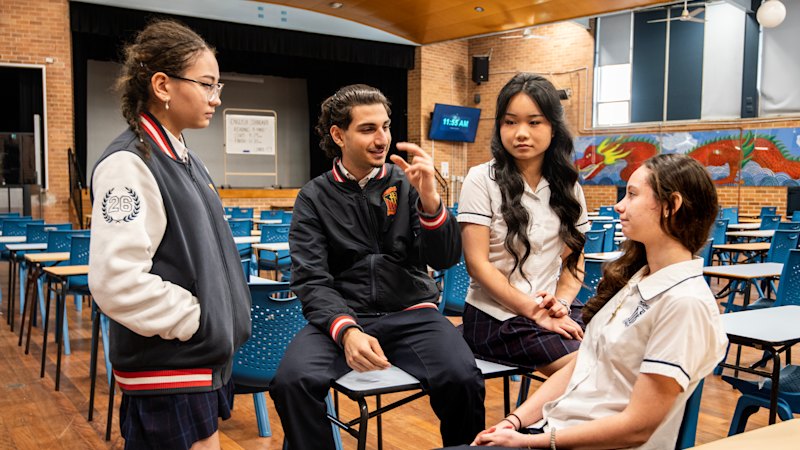
“The question didn’t specifically ask us to talk about fishing,” Bonnyrigg High student Tijana Kovacevic. asserted
question → ask → fishing
Students were given a choice between writing creatively, persuasively or discursively in response; Tijana opted for the third. asserted
Tijana → give → third
“I saw that the question was trying to tell us that it’s about the journey, not the end result.” asserted
it → see → journey
She wrote about how awards and recognition were signs of success but the lessons and experiences a person had along the way could be the most rewarding. uncertain
person → write → way
Bonnyrigg High English teacher Emmanuel Vazenios said he was confident most students at his school would have clocked it. asserted
students → say → it
“I think the majority of them would have figured out the metaphor,” he said. asserted
he → think → metaphor
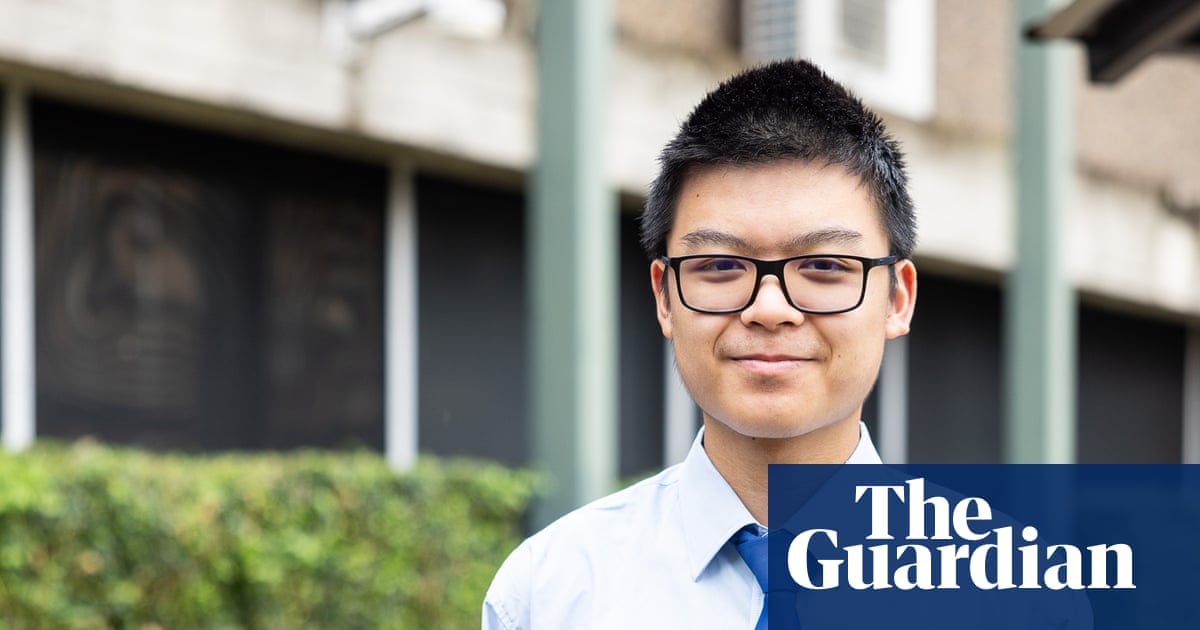
Year 12 Julie Le also went for the discursive option. asserted
Le → go → option
“I wrote about like the erosion of intimate relationships in modern society as a result of digital communication,” she said. asserted
she → write → communication
The second HSC English exam runs for two hours, during which students must write two essays as well as the creative or discursive piece. asserted
students → run → essays
For Julie, the trickiest part of the exam was a question in the first section on “moral ambiguity” and how it pertained to the texts she had studied: Shakespeare’s The Tempest and Margaret Atwood’s Hag-Seed. asserted
she → pertain → texts
“I didn’t really know how to adapt that question,” she said. asserted
she → know → question
But she found a way, discussing the moral ambiguities associated with gender identities in Shakespeare. asserted
she → find → Shakespeare
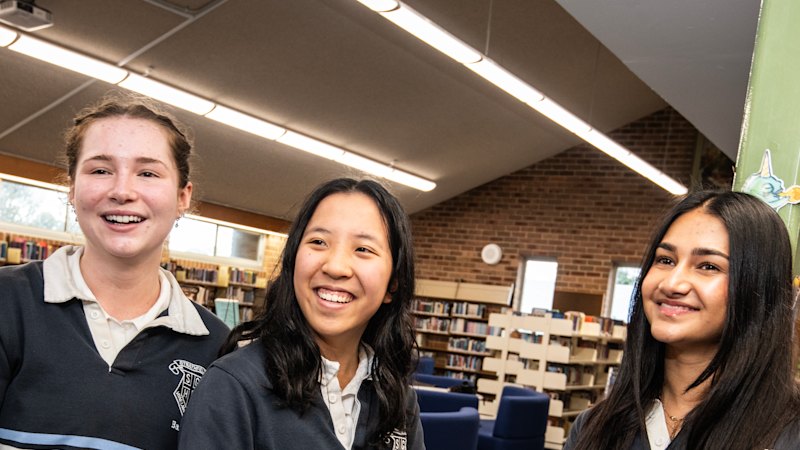
When English standard student Katherine Kurtz opened her paper, a question about how the relationship between “observations and feelings” was explored in the novel she’d studied – Feed by MT Anderson – did not have an immediately obvious answer. asserted
she → open → answer
“I was freaking out because I spent the entire time thinking about how I should make it relate,” she said. asserted
she → freak → time
The novel is set in a world where technology has just run rampant. asserted
technology → set → world
“It’s taking over human lives,” she said, “and it’s about this character who’s really absorbed in it, and he meets this girl who’s quite against it.” asserted
who → take → it
She got there in the end. asserted
She → get → end
“But it was a lot of trying to make sense of things that just didn’t make sense.” asserted
that → try → sense
For Christo Fathel, English was his hardest subject to study for, but he’s glad he did it. asserted
he → study → it
“HSC English is really important for going into the real world and communicating, giving ideas, sharing ideas,” he said. asserted
he → go → ideas
“It just taught me a bunch of things, including memorisation, critical thinking, analysis, all this stuff that is applicable to a future career.” asserted
that → teach → career
HSC exams run until November 5. asserted
exams → run → November

💬Give feedback
🕘History 🎫Support