Howard Levitt: Olivia Chow owes Toronto’s Jewish community some answer

National Post · collected 2026-09-12 · by Special to National Post analysis
Read the original at National Post ↗

Summary

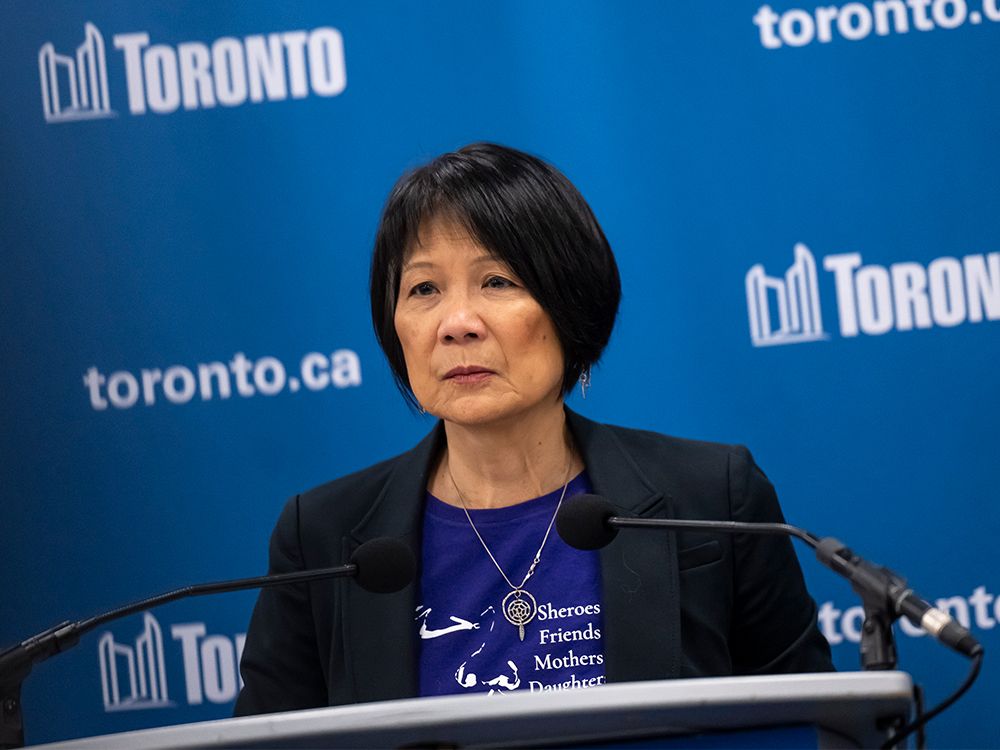
Howard Levitt writes about the tension between Toronto's Jewish community and Mayor Olivia Chow following her refusal to attend an anti-antisemitism debate on September 8, a day before her official campaign launch. The article highlights Chow’s decision not to participate despite weeks of communication with organizers who even offered to change the date. Levitt argues that this absence reveals political choices rather than logistical issues and contrasts it with how she would likely respond if similar violence targeted other minority groups.
Written by the local model on 2026-09-12, using this article's own text rather than the other coverage of the same event (that is the story summary below).

Signals How these are calculated →

Claims extracted
56
claim-shaped sentences
Uncertain
2%
1 of 56 hedged
Leaning
withheld
no quote in the article backed the model's score
Publisher trust
95.7
red-flag proxy, not a credibility rating
Outlets on this story
1
Politics
Narrative spread
1
articles carrying this framing
Analyzed 2026-09-12 · how these are computed

AI analysis (generated at analysis time, not now)

Story summary

Olivia Chow, Toronto's mayor, has sparked controversy within the city's Jewish community by refusing to participate in a mayoral debate focused on antisemitism and the safety of Toronto’s Jewish residents. The debate was scheduled for September 8th, one day before her official campaign launch date of September 9th. Despite weeks of communication between organizers and Chow’s campaign team, she cited technical reasons for not attending, even when given the opportunity to change the event's date. Critics argue that her decision highlights a growing divide between Chow and Toronto’s Jewish community at a time when antisemitic incidents are on the rise in the city. The situation has raised questions about Chow's stance on issues affecting marginalized groups and her willingness to engage with communities facing specific challenges during her tenure as mayor.

Written for “Olivia Chow Controversy” on 2026-09-12, grounded in this article and the 0 other(s) covering the same event.
Why this leaning score
The model judged this article politically coded and scored it -0.65, but every quote it verified points right, so the score is not published.
Written under an earlier scoring contract, which gave a paragraph rather than checkable quotes. Re-analysing this article replaces it.
Leaning score withheld for article 8337: score contradicts its own evidence · logged 2026-09-12

Story

📰 Olivia Chow Controversy
Politics · 1 article(s) covering the same event. This is the one the site leads with.

How this is being covered How these are calculated →

Article leaning vs. publisher reliability
Source leaning vs. consistency

Compared with similar articles

This article reads unscored and hedges 2% of its claims. Each row says how that neighbour differs.
National Post
⚖️ Leans right 🔴 16% hedged 6 of 38 📰 publisher trust 96
“The articles discuss different aspects related to Olivia Chow's mayoralty and her relationship with Toronto’s Jewish community, but they do not describe the same specific incident or occurrence.”

Publisher

National Post · 172 article(s) · 0 correction(s) detected
No corrections detected for this publisher. That may mean careful reporting, or simply that nothing has been checked.

Who wrote this

Special to National Post
39 article(s) here · 1 carrying a prediction
🔮 We judge politicians by their words, their actions, the causes they champion, the people whose approval they seek, those they are willing to offend and, most importantly, what they do when “doing the right thing” carries political costs.
🔮 “We kept thinking over the last 10 years that the fad would soon diminish, and it hasn’t,” King said.
🔮 Boosting investment could help keep Canadian innovators at home, building successful businesses here.
🔮 On this anniversary, I can’t help but wonder what Osama bin Laden, the mastermind behind those infamous terrorist attacks, would make of the world today.
2026-09-11 · assertive framing · Sheryl Saperia: 25 years on, what would bin Laden see?
🔮 Anyone old enough to recall 9/11 will remember the horrific images: People jumping from the Trade Center towers to escape the flames; people fleeing lower Manhattan to escape the two towers before and after their collapse; firefighters, police, and a Franciscan friar who perished, carried away by those who survived.
🔮 At 1 p.m., the Town of Gander’s emergency services called Moss, asking if the campus could accommodate incoming planeloads of passengers by providing shelter, first aid and food.
🔮 She said she would.
🔮 During that time, I challenged the Hamilton-Wentworth District School Board’s (HWDSB) authority to impose its will on our school council.
🔮 Historians such as Efraim Karsh in his book “Palestine Betrayed” and Yoav Gelber in “Palestine 1948: War, Escape and the Emergence of the Palestinian Problem” have demonstrated that many thousands left their homes, some at the urging of Arab leaders, in expectation that the Arab states would soon invade and destroy the new Jewish state.
🔮 They convinced Chrétien there would be time for that tomorrow.
More on this subject from Special to National Post
All 39 articles by Special to National Post →

Topics

Jewish Jewish Torontonians Jews Toronto the National Council of Canadian Muslims

Subjects

Jewish NORP · 10× Chow PERSON · 7× Toronto GPE · 4× Jews NORP · 3× Olivia Chow PERSON · 2× Gaza GPE · 1× Israel GPE · 1× Jewish Torontonians NORP · 1× Palestinian NORP · 1× the National Council of Canadian Muslims ORG · 1×

Narrative

But there is a profound difference between criticizing a government and adopting rhetoric that demonizes the world’s only Jewish state, one reborn as a direct result of an actual genocide the large majority were slaughtered in the most heinous ways That distinction becomes particularly important when the politician using that rhetoric is the mayor of a city with a Jewish community in crisis.
framing: assertive · carried by 1 article(s) · first seen 2026-09-12
🔮 We judge politicians by their words, their actions, the causes they champion, the people whose approval they seek, those they are willing to offend and, most importantly, what they do when “doing the right thing” carries political costs.
2026-09-12 · National Post
Howard Levitt: Olivia Chow owes Toronto’s Jewish community some answer · assertive framing

Claims (56 extracted, 1 hedged)

In its time of crisis unmatched since the 30s, the fear is that, when we most need her, she is on the other team. asserted
she → need → team
We judge politicians by their words, their actions, the causes they champion, the people whose approval they seek, those they are willing to offend and, most importantly, what they do when “doing the right thing” carries political costs. asserted
doing → judge → costs
And if I am wrong, she has made my conclusion difficult to rebut. asserted
conclusion → make → ?
Look at what happened this week. asserted
what → look → ?
Toronto’s mayor was invited to a mayoral debate about antisemitism and the safety of her city’s Jewish community. asserted
mayor → invite → community
She refused to attend. asserted
She → refuse → ?
Her explanation was that she does not participate in candidate events before her campaign officially launched on Sept. 9. asserted
campaign → participate → Sept.
It also belies common sense. asserted
It → belie → sense
The organizers had been communicating with Chow’s campaign for weeks without her providing that excuse. asserted
her → communicate → excuse
They offered to change the date, but she still refused to attend. asserted
she → offer → date
Her opponents were attending. asserted
opponents → attend → ?
But Chow did not. asserted
Chow → do → ?
Can you imagine her not attending? asserted
her → imagine → ?
Toronto’s Jewish community is facing extraordinary violence and hostility. asserted
community → face → violence
Jewish schools, synagogues and community institutions are being shot at, bombed and require security. asserted
schools → shoot → security
Jewish businesses attacked. asserted
businesses → attack → ?
Many Jews are concealing any visible identity to avoid becoming a target. asserted
Jews → conceal → identity
They are fearful in many cases of walking our streets. asserted
They → walk → streets
This is a public safety crisis involving one of the communities the mayor is sworn to represent. asserted
mayor → involve → communities
A debate devoted to that crisis offered Chow the opportunity to stand before Jewish Torontonians and answer difficult questions. asserted
debate → devote → questions
Her defenders will point out that Chow has condemned antisemitism and expressed support for Toronto’s Jewish community and its necessary security measures Put those statements in the record. asserted
Chow → point → record
The relevant question is not whether Olivia Chow has ever said something supportive of Jews. asserted
Chow → say → Jews
The question is what her record as a whole reveals. asserted
record → reveal → whole
Last November, speaking at a fundraising gala for the National Council of Canadian Muslims, to applause, Chow said: “The genocide in Gaza impacts us all.” Genocide is the deliberate attempt to annihilate a people and where large percentages of them are exterminated. asserted
percentages → speak → them
It is one of the most consequential accusations that can be made against a state. asserted
that → make → state
Chow is obviously entitled to criticize Israel, condemn its government, oppose its military campaign and express upset over Palestinian civilian deaths. asserted
Chow → criticize → deaths
But there is a profound difference between criticizing a government and adopting rhetoric that demonizes the world’s only Jewish state, one reborn as a direct result of an actual genocide the large majority were slaughtered in the most heinous ways That distinction becomes particularly important when the politician using that rhetoric is the mayor of a city with a Jewish community in crisis. asserted
politician → be → crisis
Chow, with decades in public life, knows the power of political language. asserted
Chow → know → language
She knows that a mayor’s words do not disappear when the speech ends. asserted
speech → know → ?
Her words signal whose suffering she recognizes. asserted
she → signal → suffering
Whose claims she considers legitimate. uncertain
she → consider → ?
Whose political concerns she is prepared to take seriously. asserted
she → take → ?
And whose she is obviously prepared to ignore asserted
she → ignore → ?
It is not one sentence or missed debate but her cumulative record. asserted
It → miss → ?
The audiences she chooses to address, political causes she embraces and the people she is not willing to confront Chow appears perfectly comfortable using the most inflammatory language before audiences deeply engaged by the Palestinian cause. asserted
she → choose → cause
Yet when Toronto’s Jewish community asks her to discuss the hatred directed at Jews in the city she leads, she finds a procedural reason not to appear. asserted
she → ask → reason
A politician does not have to personally be politically opposed to the Jewish communities interest to make herself useful to people who are. asserted
who → have → people
She only has to decide that confronting them is politically inconvenient. asserted
confronting → have → them
That is how prejudice becomes normalized. asserted
prejudice → normalize → ?
The politician does not have to utter a slur. asserted
politician → have → slur
…and 16 more, not listed.

💬 Give feedback
🕘 History 🎫 Support