With fall slowly creeping up, experts are warning of a record strong El Niño, colloquially dubbed “super El Niño.”
asserted
experts → creep → Niño
The weather event is expected to impact global temperatures and rainfall, and could increase the risk of extreme weather events in some parts of the world.
uncertain
event → expect → world
The corresponding weather events triggered by the warmer ocean can have a varied and strong impact around the globe.
asserted
events → correspond → globe
With El Niño, forecasters are expecting to see stormier weather in some parts of the world and drought conditions in others.
asserted
forecasters → expect → others
“Pacific sea surface temperatures are going to vary at least two degrees from the average.
asserted
temperatures → go → average
That means the Pacific waters are going to be warmer than normal, and we can expect a lot of evaporation,” says Risper Nyairo, assistant professor in the department of environmental studies at Davidson College.
asserted
Nyairo → mean → College
That evaporation means more moisture in the sky in some areas which can lead to more rain.
asserted
which → mean → rain
Meanwhile evaporation over dry land can increase drought.
asserted
evaporation → increase → drought
El Niño typically peaks in the last few months of the year, but will remain active in the beginning of 2027.
asserted
Niño → peak → 2027
Forecasts are predicting that this year’s El Niño will be the strongest in recorded history.
asserted
Niño → predict → history
“The ocean conditions in the tropical Pacific are pushing towards record warmth,” says Marty Ralph, director of the Center for Western Weather and Water Extremes, and research meteorologist at UC San Diego Scripps Institution of Oceanography.
asserted
Ralph → push → Oceanography
The warmer oceans, coupled with already record warming due to climate change, means that 2027 could shape up to be the warmest year on record.
uncertain
2027 → couple → record
The World Meteorological Organization has also warned that a strong El Niño could raise the risk of extreme weather events going into next year.
uncertain
Niño → warn → year
Australia, Indonesia, and parts of Southern Africa, including Zambia and Zimbabwe, are likely to see drier than average conditions.
asserted
Australia → include → conditions
Parts of South America, including Ecuador, Peru, and Uruguay, and East African countries will experience more rainfall than usual.
asserted
Parts → include → rainfall
What does El Niño mean for fall and winter weather in the U.S.?
asserted
Niño → mean → U.S.
U.S. residents don’t have to sound the alarm over El Niño, says Patrick Rafter, assistant professor in the College of Marine Science at USF.
asserted
Rafter → have → USF
“For the most part, I don't see a monster El Niño event as anything the continental U.S. has to be overly concerned with.”
asserted
U.S. → see → anything
Historically, El Niño often brings a warmer than usual winter to the northern U.S., and a wetter, cooler winter in the south, with a higher likelihood for rain and snow.
asserted
Niño → bring → rain
It can also increase the likelihood of tornadoes in areas receiving wetter weather.
asserted
It → increase → weather
“We will likely see less severe or less frequent hurricanes, but probably more severe tornadoes with severe storms,” says Nyairo.
asserted
Nyairo → see → storms
El Niño years are typically associated with quieter hurricane years off the Atlantic.
asserted
years → associate → Atlantic
This year, the Atlantic hurricane season reached its peak without a single storm.
asserted
season → reach → storm
The Pacific, however, has seen an unusually active hurricane season.
asserted
Pacific → see → season
Along the west coast, El Niño could bring bigger waves and higher sea levels.
uncertain
Niño → bring → waves
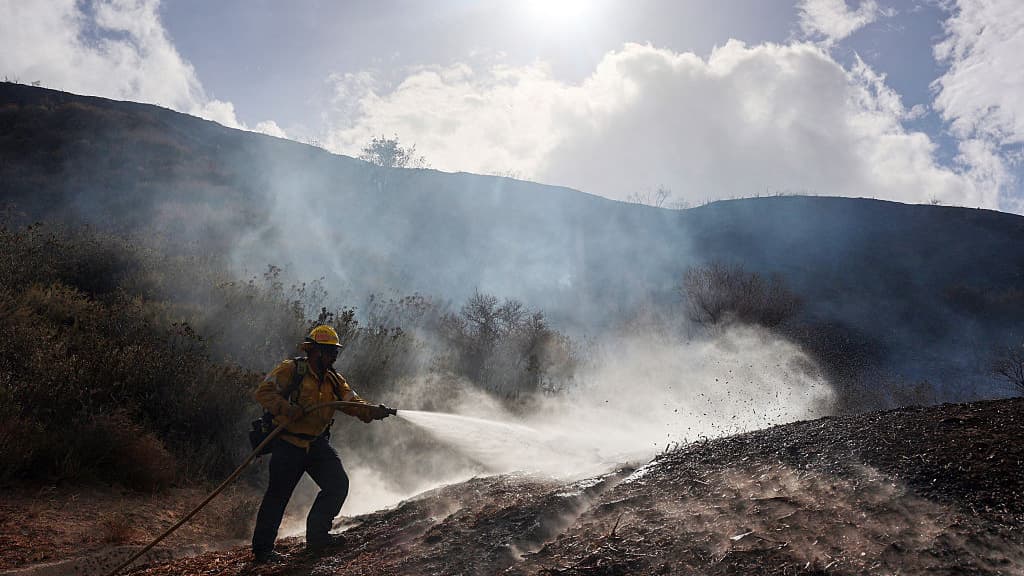
The weather event also creates a higher risk of wildfires in areas with dry conditions.
asserted
event → create → conditions
The predictions, experts note, are just that.
asserted
experts → note → ?
“There tend to be patterns that generally occur, but they aren't always guaranteed outcomes,” says Ralph.
asserted
Ralph → tend → ?
The Indian Ocean Dipole, which impacts sea surface temperatures in the Indian Ocean, and the Madden-Julian Oscillation, a tropical atmospheric phenomenon that influences rainfall, are among some of the other modes of climate variability that can also impact weather patterns alongside El Niño.
asserted
that → impact → Niño
Atmospheric rivers, narrow regions of the atmosphere that can carry moisture thousands of miles, can also disrupt El Niño conditions—particularl in California, where they often occur.
asserted
they → carry → California
“We've seen since 2000 roughly that some of the El Niño years when we expect it to be relatively dry down in SoCal, it's ended up being unusually wet,” says Ralph.
asserted
Ralph → see → SoCal
Regardless, a strong El Niño has the potential to have long lasting impacts for communities around the world.
asserted
Niño → have → world
“The increased rainfall or intense drought cascades into other impacts on society,” says Nyairo.
asserted
Nyairo → cascade → society
“Lives may be lost in unprepared societies.
uncertain
Lives → lose → societies
 The Aporia