Cost of balancing Great Britain’s power grid reaches nearly £50m a day

Read the original at The Guardian ↗
Cite

correspondent, J. A. E. (2026, October 15). Cost of balancing Great Britain’s power grid reaches nearly £50m a day. The Guardian. https://www.theguardian.com/business/2026/oct/15/cost-of-balancing-great-britain-power-grid-50m-daily

Dated from the outlet's own feed. Check the original for its byline.

The Guardian · collected 2026-10-15 · by Jillian Ambrose Energy correspondent

Quick Summary

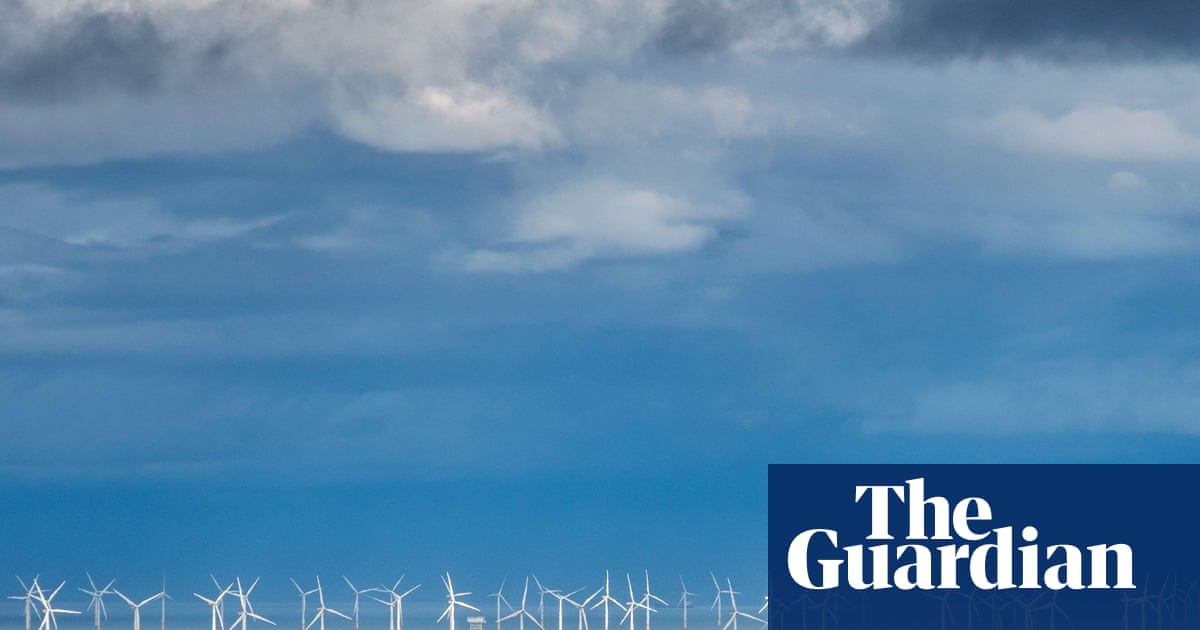
The cost of balancing Great Britain's power grid has reached nearly £50 million per day, with wind farms being turned off due to transmission bottlenecks. On Wednesday alone, the grid operator paid £47.9 million, including £1.6 million for one half-hour period, to manage supply and demand issues. These costs are among the highest since early 2022 and reflect growing concerns over insufficient infrastructure upgrades to support new renewable energy projects.
Written locally by qwen2.5:14b on 2026-10-15, using this article's own text rather than the other coverage of the same event (that is the story summary below).

AI analysis runs on qwen2.5:14b, locally

Story summary

The cost of balancing Great Britain’s power grid reached nearly £50 million a day in late October 2026. This surge occurred after wind farms were turned off due to transmission bottlenecks across the country. On Wednesday alone, £47.9m was spent, with one half-hour period costing £1.6m, some of the highest recorded since the early months of the Ukraine crisis in 2022.

These expenses follow a series of emergency measures by the National Energy System Operator (Neso), including seeking last-resort assistance from France to send power supplies on specific days. The cumulative costs for September hit £505m, marking the highest monthly cost ever recorded, and are projected to reach £3.2bn over the next year.

The escalating expenses highlight growing concerns about the pace of Great Britain’s £150 billion power networks upgrade failing to keep up with new renewable energy projects being integrated into the grid. On Wednesday, wind farms and hydropower plants capable of generating nearly 9 gigawatts were paid not to produce electricity, enough capacity to power more than 8 million typical households.

Written for “Cost Of Balancing Britain's Power Grid” on 2026-10-15, grounded in this article and the 0 other(s) covering the same event.
Why this leaning score
The model judged this article politically coded and scored it -0.50, but every quote it verified points right, so the score is not published.
Written under an earlier scoring contract, which gave a paragraph rather than checkable quotes. Re-analysing this article replaces it.
Leaning score withheld for article 82648: score contradicts its own evidence · logged 2026-10-15

Story

📰 Cost Of Balancing Britain's Power Grid
Economy/Business · 1 article(s) covering the same event.

Compared with similar articles

Nothing to compare against. No article is close enough to this one for the pipeline to have linked or judged the pair.
How this article was measured signals, leaning charts, publisher record, byline, topics and claims

Signals How these are calculated →

Claims extracted
21
sentences that state something as happening or true
Uncertain
14%
3 of 21 hedged ("reportedly", "may", "according to")
Leaning
withheld
no quote in the article backed the model's score
Publisher signals
67/100
The Guardian's corrections and hedging, across everything collected from it. Not a measure of accuracy.
Outlets on this story
1
Economy/Business
Same framing elsewhere
1
articles that frame the event the way this one does
Analyzed 2026-10-15 · how these are computed

How this is being covered How these are calculated →

Article leaning vs. publisher reliability
Source leaning vs. consistency

Publisher

The Guardian · 1900 article(s) · 5 correction(s) detected
Running correction rate · 5 correction(s)

Who wrote this

Jillian Ambrose Energy correspondent
8 article(s) here · 1 carrying a prediction
🔮 They add to the growing costs of balancing the grid, which reached a total of £505m in September alone, the highest monthly cost recorded, and are expected to reach £3.2bn over the next year.
🔮 Days after Donald Trump announced a deal to import Russian diesel into the US in an effort to lower soaring pump prices, the world’s energy watchdog has warned that the global fuel shortage will drag into 2027.
🔮 Drivers will be able to see live petrol prices on Google Maps for the first time from Thursday, in a move that will help motorists shop around for the cheapest fuel.
🔮 Shell’s refineries are expected to make almost double the profit from every barrel of fuel produced owing to record prices caused by shortages around the world.
🔮 “It will take decades to wean off from that dependency,” Rossi said in an interview with the BBC.
🔮 Household energy bills in Great Britain are predicted to soar by £276 a year for the typical household from January as the impact of the Middle East war continues through the coldest months of winter.
🔮 With elections due next year in eight EU countries including France, Italy, Spain and Poland, leaders are scrambling to head off the potential fallout from what analysts have warned could be one of the continent’s biggest energy shocks in decades.
🔮 BP will partner with two oil firms with close links to the Trump administration to develop the second phase of the Loran gasfield, in one of the first large-scale foreign investments in Venezuela since the US ousted its leader Nicolás Maduro in January.
Also by Jillian Ambrose Energy correspondent
Nothing else under this byline is closely related to this article, so these are simply their most recent.
All 8 articles by Jillian Ambrose Energy correspondent →

Topics

Great Britain’s LCP Delta Neso Ukraine the National Energy System Operator

Subjects

Neso ORG · 9× Great Britain’s GPE · 2× LCP Delta ORG · 2× Claire Coutinho PERSON · 1× France GPE · 1× Malhotra PERSON · 1× Scotland GPE · 1× Shivam Malhotra PERSON · 1× Ukraine GPE · 1× the National Energy System Operator ORG · 1×

Narrative

The record costs have come to light days after the National Energy System Operator (Neso) was forced to call for “last resort” emergency assistance from its counterpart in France, which agreed to send last-minute power supplies to the UK on Monday and Friday last week. “
framing: assertive · carried by 1 article(s) · first seen 2026-10-15
🔮 They add to the growing costs of balancing the grid, which reached a total of £505m in September alone, the highest monthly cost recorded, and are expected to reach £3.2bn over the next year.
2026-10-15 · The Guardian
Cost of balancing Great Britain’s power grid reaches nearly £50m a day · assertive framing

Claims (21 extracted, 3 hedged)

The cost of balancing Great Britain’s power grid has soared to near-record highs of almost £50m a day after windfarms were turned off because of bottlenecks in transmitting power around the country. asserted
windfarms → balance → country
The grid operator paid £47.9m on Wednesday to turn windfarms off in areas with an oversupply of electricity and turn gas plants on in areas where supplies were tight. asserted
supplies → pay → areas
The costs, which are levied on to household energy bills, included a £1.6m payment for one half-hour period, and were some of the highest recorded since the early months of the Ukraine crisis in 2022. asserted
which → levy → 2022
They add to the growing costs of balancing the grid, which reached a total of £505m in September alone, the highest monthly cost recorded, and are expected to reach £3.2bn over the next year. asserted
which → add → year
The costs underline the growing concerns over the pace of Great Britain’s £150bn power networks upgrade, which is failing to keep up with new renewable energy projects being connecting to the grid. asserted
which → underline → grid
Overall, windfarms and hydropower plants with about 9 gigawatts of capacity were paid to not generate on Wednesday, according to the consultancy LCP Delta, enough to power more than 8m typical households. uncertain
windfarms → pay → households
Instead, the grid operator was forced to pay for a string of gas and biomass plants to fire up and bought more electricity imports from Europe via high voltage subsea power cables. asserted
operator → force → cables
The record costs have come to light days after the National Energy System Operator (Neso) was forced to call for “last resort” emergency assistance from its counterpart in France, which agreed to send last-minute power supplies to the UK on Monday and Friday last week. “ asserted
which → come → Monday
The system overall wasn’t tight in terms of power supplies,” said Shivam Malhotra, the head of power trading at LCP Delta. asserted
Malhotra → say → Delta
“It’s the age-old story of a lack of infrastructure to transport power to where it’s needed, leading to lots of windfarms being turned off. asserted
lots → ’ → windfarms
Typically, windfarms in Scotland are paid to turn off because there is not enough high voltage cabling connecting the country to areas of growing electricity demand further south. asserted
windfarms → pay → demand
“To resolve the energy needs in the south of the country Neso had to use one of their last resorts. asserted
Neso → resolve → resorts
It’s quite surprising for this time of year,” Malhotra said. asserted
Malhotra → ’ → year
Neso was approached for comment. asserted
Neso → approach → comment
During the summer Neso faced severe grid challenges when a high pressure heat dome led to a drop in renewable energy output and surging electricity demand to power air conditioning and refrigerators. asserted
dome → face → conditioning
Neso was forced to bring in independent investigators to look into whistleblower claims that its staff were involved in a cover-up of a near-blackout during record high temperatures in late June. uncertain
staff → force → June
The accusations, which were raised in parliament last week by the shadow energy secretary, Claire Coutinho, included claims that senior bosses at Neso were “risking blackouts to protect Neso’s reputation”. uncertain
bosses → raise → reputation
Fintan Slye, Neso’s chief executive, told an industry conference on Wednesday that there would be “lessons to be learned” coming out of a review into that period by the industry regulator Ofgem. asserted
Slye → tell → regulator
Asked how he thought Neso handled the situation, Slye said: “Through that period, no customers were disconnected [and] frequencies stayed within statutory limits. asserted
frequencies → ask → limits
But undoubtedly, it was a really challenging period for the system and right across Europe we saw power systems … under strain. asserted
systems → see → strain
“I think the control room and teams that were in it did an absolutely superb job managing what was a really difficult situation through the week.” asserted
what → think → week

💬Give feedback
🕘History 🎫Support