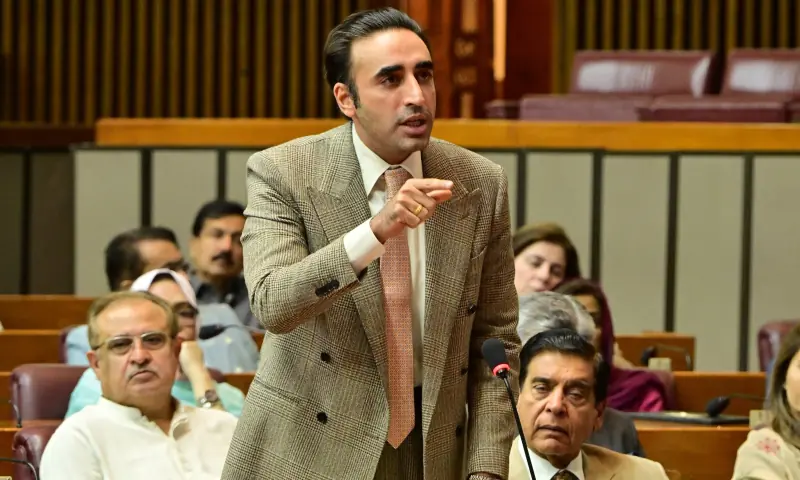
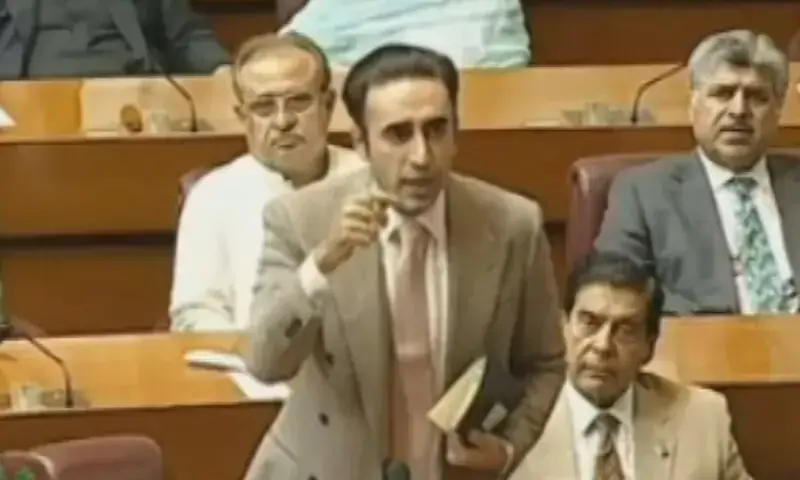
A joint sitting of the Parliament on Thursday gave its approval of the Centre’s imposition of emergency and governor’s rule in Khyber Pakhtunkhwa amid a strong protest from the opposition.
asserted
sitting → give → opposition
The joint session of the Parliament had been summoned to discuss separate resolutions on the imposition of emergency and governor’s rule in KP, where the opposition’s PTI was in power.
asserted
PTI → summon → power
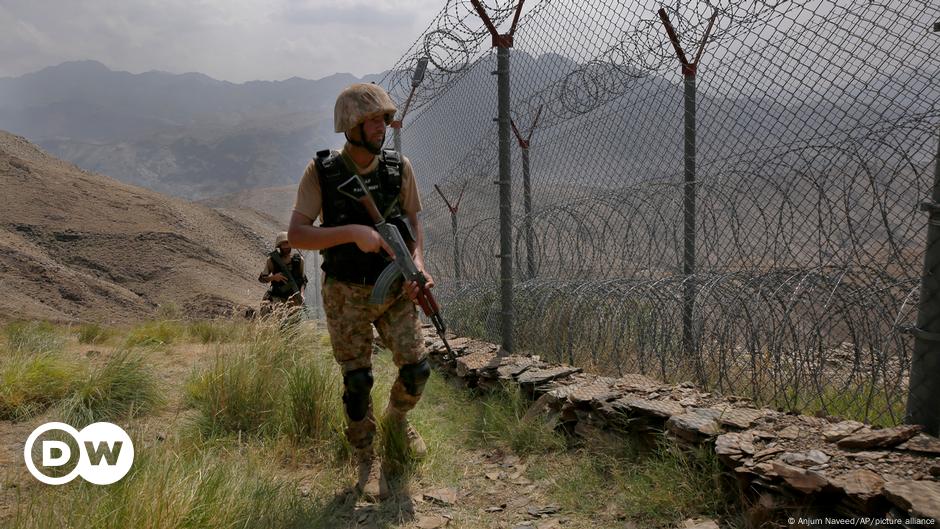
The Centre took the measures on Oct 11, citing the provincial government’s “deliberate disengagement” from the fight against terrorism.
asserted
Centre → take → terrorism
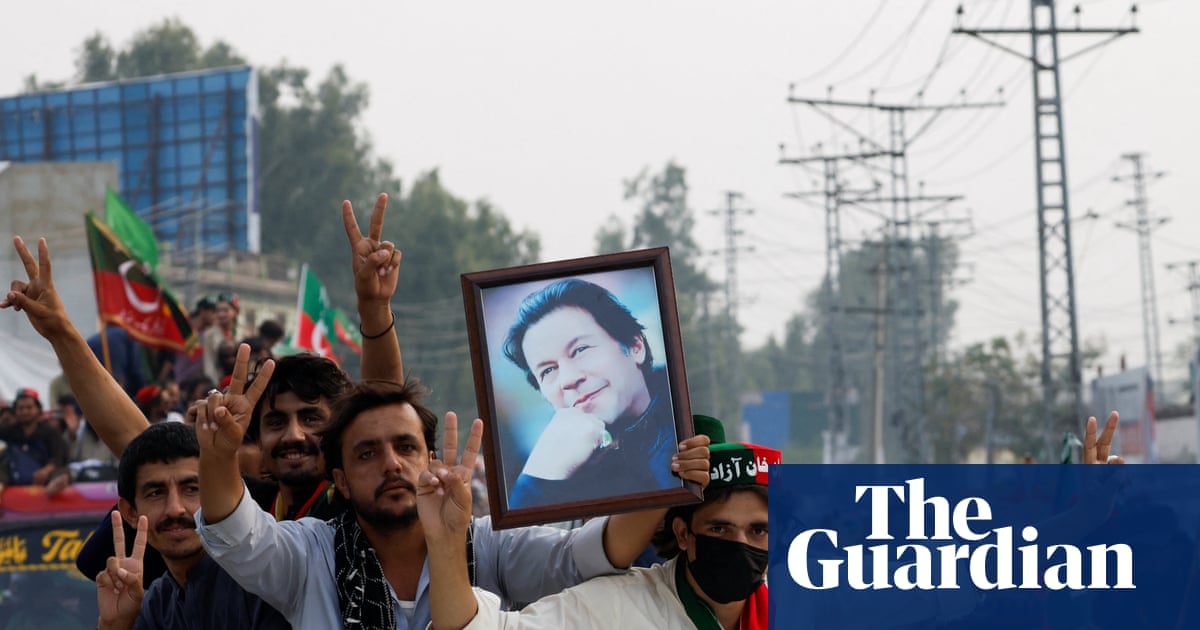
The move followed weeks of political tensions between the Centre and the PTI — as well as negotiations to bridge their differences — after the latter announced a long march to Islamabad to demand the release of its jailed founder, Imran Khan.
asserted
latter → follow → founder
Speaking during Thursday’s joint sitting, Interior Minister Mohsin Naqvi urged the opposition to stick to facts when recounting the dialogue held with the government, asserting that the Centre had “no option left” but to impose emergency and governor’s rule in KP.
asserted
Centre → speak → KP
Naqvi sought to provide a “clarification” on the allegations levelled by the opposition and maintained that the Centre “tried our best” to take the KP government on board on the issue of counterterrorism.
“I will request only that you let facts remain facts.
asserted
facts → seek → counterterrorism
] We had no option left, after which we did this and you will definitely oppose it, but we should consider the facts.”
asserted
we → have → facts
Naqvi, who was part of the government’s delegation during the Oct 3 talks as the interior minister, said: “We tried until the last minute […] It was our effort until the last hour that this (emergency/governor’s rule) is not imposed.”
asserted
this → say → hour
He said the federal government offered its KP counterpart to declare emergency in “12 districts, on which you said fine, let’s do it”.
asserted
’s → say → it
Naqvi claimed that PTI’s Asad Qaiser, who was present during the talks, was willing to sign an agreement, but he advised the latter to consult the KP government first.
Naqvi further said: “I believe that you, and those we spoke to, particularly Asad Qaiser sahib, as he responded on [the issue] of terrorism that day, I guarantee that even we were not thinking of the things they were speaking on.”
asserted
they → claim → things
He went on to acknowledge that all those present in the meeting “had an absolutely clear stance [on terrorism] that we will do this for Pakistan”.
asserted
we → go → Pakistan
Pointing towards the opposition benches, the interior minister affirmed that the government was not levelling allegations against them.
asserted
government → point → them
Naqvi noted that Sohail Afridi, the KP chief minister whose role is now non-functional, had not gone to the site of “even a single operation with the army and only used to say ‘I cannot afford this politically’”.
asserted
I → note → this
The minister recalled his efforts to sort out differences between the Centre and KP, such as meetings between Afridi and Prime Minister Shehbaz Sharif on the issue of provincial funds.
asserted
minister → recall → funds
He said the federal government wanted a meeting of the provincial apex committee to be held.
asserted
meeting → say → committee
“A press release had to be issued, which would state that we will fight against terrorism together.
asserted
we → have → terrorism
You can ask for that press release, what was written in it and what happened; everything is before you.”
asserted
everything → ask → you
He recalled that some personnel were martyred in an attack “the same day”, adding that it took place in February.
“We requested the CM sahib and took him to the funerals with us.
asserted
We → recall → us
That was the last day when CM KP attended the funeral of any army officer or jawaan (soldier),” he added.
asserted
he → attend → officer
Resolutions tabled
The joint sitting is taking place a day after both Houses of Parliament, in separate sittings, passed resolutions endorsing the imposition of emergency in KP.
asserted
Houses → table → KP
According to Article 232, if the “president acts on his own, the Proclamation of Emergency shall be placed” before both Houses of the Parliament for approval by each House within 10 days.
uncertain
Proclamation → accord → days
Meanwhile, a proclamation for governor’s rule issued under Article 234 “shall be laid before a joint sitting and shall cease to be in force at the expiration of two months”, unless a joint sitting approves its extension.
asserted
sitting → issue → extension
However, such a measure shall not remain in force for more than six months.
asserted
measure → remain → months
During Thursday’s joint sitting, opposition members turned up carrying placards inscribed with slogans, such as “emergency na manzoor (emergency is unacceptable)”.
asserted
emergency → turn → slogans
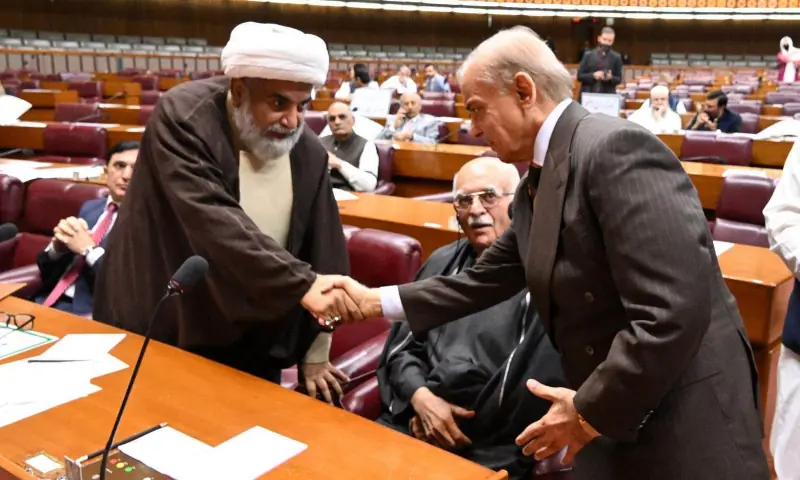
PM Shehbaz, who attended part of the session, shook hands with opposition leaders of both the Senate and the NA, pictures and footage showed.
asserted
pictures → attend → Senate
At the outset of the proceedings, Parliamentary Affairs Minister Tariq Fazal Chaudhry presented a motion under Rule 232 of the Parliament (Joint Sitting) Rules 1973 to suspend certain sub-rules so he could move the resolutions.
uncertain
he → present → resolutions
As loud noes echoed and opposition members chanted “emergency na manzoor”, NA Speaker Ayaz Sadiq again put the motion to a vote by asking the members to stand up, which was then adopted with 214-56 votes.
asserted
which → echo → votes
Subsequently, Chaudhry moved two resolutions before the joint sitting — one for the Proclamation of Emergency under Article 232 and the second for the proclamation of governor’s rule under Article 234.
asserted
Chaudhry → move → Article
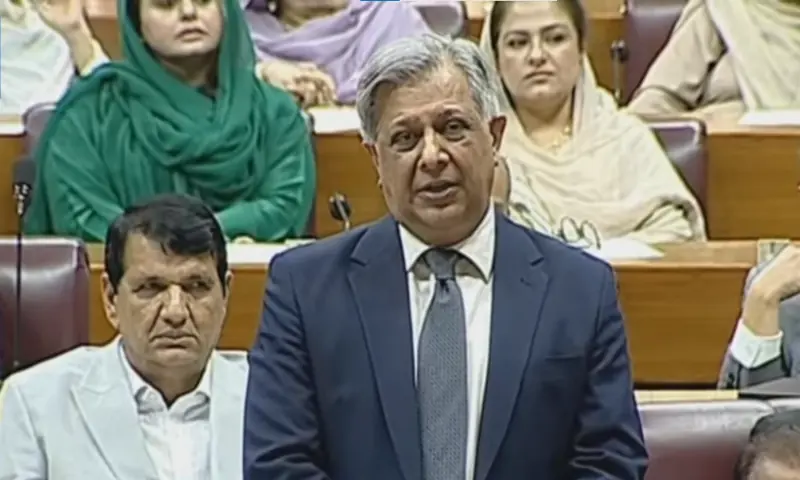
Law Minister Azam Nazeer Tarar then opened the discussion on the two resolutions.
asserted
Tarar → open → resolutions
Noting that a resolution regarding the imposition of emergency also required to be passed by a joint sitting, Tarar said a special mechanism has been put in place in KP to run its affairs during the emergency and governor’s rule.
asserted
mechanism → note → emergency
He said members of the treasury benches were ready to reply to any query raised by the opposition.
asserted
members → say → opposition
The law minister highlighted that the PTI-led government in KP, which now stands non-functional, was advised time and again to tackle terrorism.
asserted
which → highlight → terrorism
He again lamented that PTI leaders did not attend any funeral of martyrs who lost their lives in terrorist attacks.
asserted
who → lament → attacks
Tarar went on to stress that governor’s rule was imposed under Article 234, which allows the move if any provincial government was being run against the Constitution.
asserted
government → go → Constitution
Explaining the constitutional process to approve the resolution for emergency, he said the joint sitting could reject it by a total majority, ie 51 per cent.
uncertain
sitting → explain → majority
Similarly, the resolution for governor’s rule also required a total majority of votes for approval.
asserted
resolution → require → approval
At the outset of the sitting, the Parliament offered prayers for the lives lost, mostly of children, in a roof collapse in Peshawar.
asserted
Parliament → offer → Peshawar
Gohar objects to allegations of ‘backing terrorists’
asserted
Gohar → object → terrorists
Speaking on the Parliament’s floor, PTI interim chairman Barrister Gohar Ali Khan said the country was going through a “very fragile situation”.
asserted
country → speak → situation
He lamented that the KP government was accused of “backing terrorists”.
asserted
government → lament → terrorists
…and 55 more, not listed.
 The Aporia