That is 0 articles you have read today.
The Aporia is free and carries no advertising, so readers are the only
thing paying for it. If you are getting this much out of it, a small
donation is what keeps it independent.
Daily limit reached
You have read 0 articles today.
That is more than the 15 a day The Aporia gives away,
and well past what it can carry on nothing. Your allowance resets at
midnight.
There is no advertising here and nothing about you is sold, so readers
are the only thing paying for it. If the site is worth this much of
your day, it is worth a few dollars.
Everything else stays open: the
maps, the
directory and
search do
not count against this, and neither does re-opening something you have
already read today.
The Pakistani federal government has imposed an emergency and governor’s rule in Khyber Pakhtunkhwa due to escalating tensions with the PTI-led provincial government over counterterrorism policies amid worsening security conditions. Under Articles 232 and 234 of Pakistan's Constitution, governor’s rule allows the federal government to take control of the province for up to six months total, while a state of emergency permits Parliament to override provincial laws but does not dissolve the provincial assembly or suspend high court operations.
Written locally by qwen2.5:14b on 2026-10-11,
using this article's own text rather than the other coverage of the
same event (that is the story summary below).
Story summary
October 11, 2026, the President of Pakistan declared an emergency and imposed governor's rule in Khyber Pakhtunkhwa (KP) province, citing deteriorating law and order and the breakdown of constitutional governance. The federal government invoked Articles 232(1) and 234(1) of the Constitution to take control over KP amid tensions with the provincial PTI-led government led by jailed former prime minister Imran Khan's party. This move came as opposition leaders planned a protest march starting from Lakki Marwat on October 4, demanding Khan’s release and better medical care.
Earlier, the federal cabinet had approved these measures after reviewing security conditions in KP and noting the provincial government’s alleged disengagement from counterterrorism efforts. The decision was made to prevent further destabilization of Pakistan's economy during an ongoing conflict with the PTI over constitutional authority and governance policies.
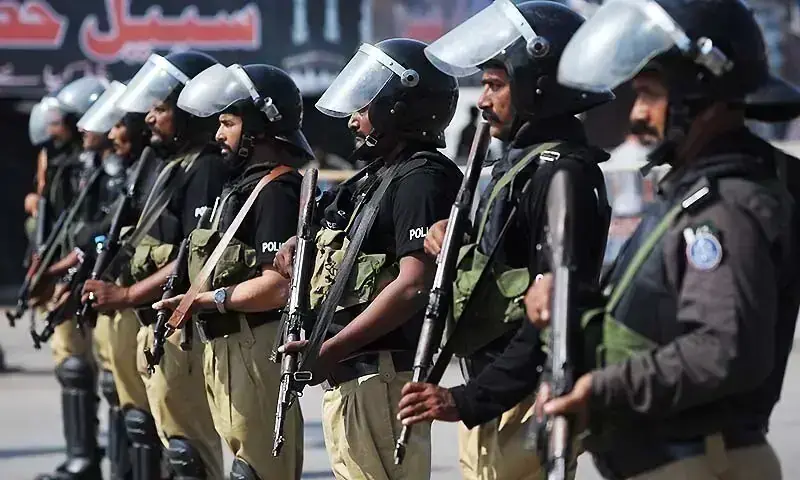
Under the new rules, Sohail Afridi, the chief minister, and other members of his cabinet were immediately relieved of their duties as per the presidential proclamation. Meanwhile, KP police had been put on high alert for potential protests and violence, preparing to manage demonstrations according to strict guidelines issued by the Inspector General of Police.
This declaration allows the federal government to assume executive and legislative powers in KP for up to six months, with possible extensions approved by Parliament. It marks a significant escalation in political and constitutional tensions within Pakistan as national leaders seek to stabilize the country amid opposition challenges and security concerns.
Written for “Emergency Imposed In KP” on 2026-10-11,
grounded in this article and the 6 other(s) covering the same event.
Why this leaning score
This article does not take a side on a contested political
question, so it has no leaning score. That is an
answer rather than a gap: a match report or a rescue can be warmly
or critically written without being left or right, and scoring it
anyway is how approval of a subject gets recorded as a political
position.
No political leaning scored for article 71885 · logged 2026-10-11
The federal government imposed an emergency and governor’s rule in Khyber Pakhtunkhwa amid growing tensions with the PTI-led provincial government, including disagreements over counterterrorism policy amid a deteriorating security situation in the province.
asserted
government → impose → province
The decision was taken under Articles 232 and 234 of the Constitution of Pakistan.
asserted
decision → take → Pakistan
Here is what it means.
asserted
it → mean → what
Governor’s rule
Article 234 of the Constitution of Pakistan stipulates that, if the president believes that a provincial government cannot function in accordance with the Constitution, the federal government can assume control of the province.
asserted
government → stipulate → province
This can be done either directly or by assigning the relevant functions to the provincial governor — hence the term governor’s rule.
asserted
This → do → governor
Under this arrangement, the powers of the provincial assembly can be exercised by Parliament.
asserted
powers → exercise → Parliament
However, neither the president nor the governor can assume the powers of the high court or suspend its operations.
Moreover, governor’s rule can be imposed for an initial period of two months, with a joint sitting of Parliament able to approve an extension of up to two months at a time.
In total, governor’s rule can remain in place for a maximum of six months.
asserted
rule → assume → months
Meanwhile, under Article 232, which pertains to the proclamation of an emergency, the provincial assembly continues to function as usual.
asserted
assembly → pertain → emergency
However, if a provincial law conflicts with a federal law enacted by Parliament, the latter takes precedence.
asserted
latter → conflict → precedence
Lawyer Basil Nabi Malik, speaking to Dawn, explained that the chief minister would remain in office during a state of emergency.
asserted
minister → speak → emergency
However, the federal government could assume certain functions of the provincial government.
uncertain
government → assume → government
An emergency also allows the federal government to make provisions it considers necessary and suspend certain constitutional provisions relating to provincial bodies.
asserted
it → allow → bodies
However, as with governor’s rule, the federal government cannot assume the powers of a high court.
asserted
government → assume → court
It also empowers Parliament to confer powers and impose duties on federal government officers in the province.
asserted
Parliament → empower → province
It further stipulates that laws passed by Parliament solely on account of the emergency will cease to have effect six months after the emergency ends.
asserted
emergency → stipulate → effect
The proclamation of emergency lapses after two months unless it is approved by a resolution of a joint sitting of Parliament.
asserted
it → lapse → Parliament
 The Aporia