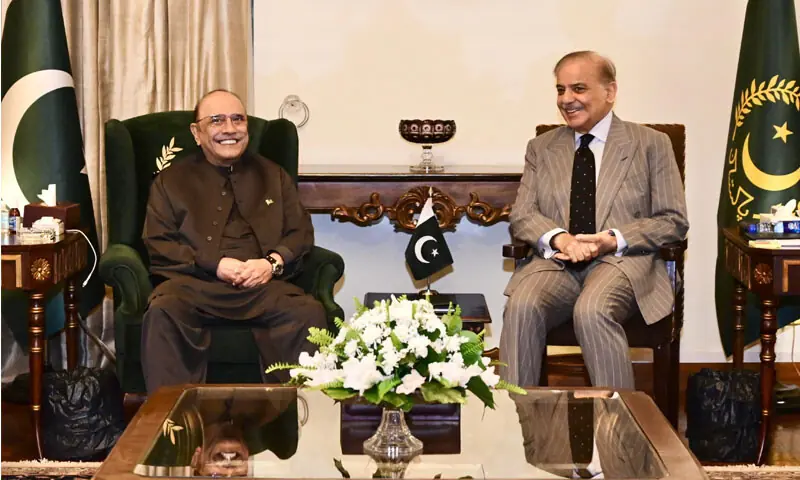
On October 11, 2026, Pakistan President Asif Ali Zardari declared a state of emergency in Khyber Pakhtunkhwa province due to escalating terrorist attacks and deteriorating law and order. Under Articles 232(1) and 234(1) of the Constitution, this declaration dissolved the provincial government led by jailed former prime minister Imran Khan's party, Pakistan Tehreek-e-Insaaf. The emergency grants federal authorities control over key provincial functions, including legislative powers that would otherwise belong to the Khyber Pakhtunkhwa Assembly. This move follows a protest march initiated by the province’s chief minister, Sohail Afridi, which was aiming for Islamabad but was barred from entering the capital.
Written locally by qwen2.5:14b on 2026-10-11,
using this article's own text rather than the other coverage of the
same event (that is the story summary below).
Story summary
October 11, 2026, the President of Pakistan declared an emergency and imposed governor's rule in Khyber Pakhtunkhwa (KP) province, citing deteriorating law and order and the breakdown of constitutional governance. The federal government invoked Articles 232(1) and 234(1) of the Constitution to take control over KP amid tensions with the provincial PTI-led government led by jailed former prime minister Imran Khan's party. This move came as opposition leaders planned a protest march starting from Lakki Marwat on October 4, demanding Khan’s release and better medical care.
Earlier, the federal cabinet had approved these measures after reviewing security conditions in KP and noting the provincial government’s alleged disengagement from counterterrorism efforts. The decision was made to prevent further destabilization of Pakistan's economy during an ongoing conflict with the PTI over constitutional authority and governance policies.
Under the new rules, Sohail Afridi, the chief minister, and other members of his cabinet were immediately relieved of their duties as per the presidential proclamation. Meanwhile, KP police had been put on high alert for potential protests and violence, preparing to manage demonstrations according to strict guidelines issued by the Inspector General of Police.
This declaration allows the federal government to assume executive and legislative powers in KP for up to six months, with possible extensions approved by Parliament. It marks a significant escalation in political and constitutional tensions within Pakistan as national leaders seek to stabilize the country amid opposition challenges and security concerns.
Written for “Emergency Imposed In KP” on 2026-10-11,
grounded in this article and the 6 other(s) covering the same event.
Pakistan on Sunday (October 11, 2026) declared an emergency in the northwest Khyber Pakhtunkhwa province over the deteriorating law and order situation, bringing the provincial government led by jailed former prime minister Imran Khan's party to an end.
asserted
Pakistan → declare → end
An emergency allows Pakistan's federal government to assume key executive and legislative powers in a province during a security crisis or breakdown of constitutional governance.
asserted
government → allow → governance
President Asif Ali Zardari issued a proclamation under Articles 232(1) and 234(1) of the Constitution, citing rising terrorist attacks and a breakdown of constitutional machinery in the northwestern province, according to the presidential declaration.
uncertain
Zardari → issue → declaration
Under the proclamation, the chief minister, provincial ministers, advisers, special assistants and advocate general will immediately vacate their offices.
asserted
minister → vacate → offices
The move comes amid an ongoing protest march led by Khyber Pakhtunkhwa (KPK) Chief Minister Sohail Afridi, who is pressing for Imran Khan's release and access to medical treatment for him.
asserted
who → come → him
The march began in Lakki Marwat on October 4 and has passed through several districts of the province.
asserted
march → begin → province
Mr. Afridi on Saturday (October 10, 2026) vowed to continue peaceful protests and rejected military operations as a solution to the province's problems.
asserted
Afridi → vow → problems
The Pakistan Tehreek-e-Insaaf party had initially planned to take the march to Islamabad for a sit-in, but the federal government said it would not allow protesters to enter the capital.
asserted
protesters → plan → capital
The presidential declaration on Sunday (October 11, 2026) said the emergency was imposed in view of rising terrorist incidents and the grave law and order situation in the province.
asserted
emergency → say → province
“The extraordinary intensity of terrorist incidents poses serious threats to the lives and property of the public,” the declaration stated.
asserted
declaration → pose → public
It cited an increase in attacks on government installations, infrastructure and law enforcement agencies, accusing the provincial government of failing to demonstrate the resolve and take the measures needed to curb terrorism and lawlessness.
asserted
It → cite → terrorism
The declaration said a report by the Khyber Pakhtunkhwa governor had highlighted a breakdown of constitutional machinery and the provincial government's inability to function in accordance with the Constitution.
asserted
report → say → Constitution
Under the proclamation, the federal government may direct the provincial governor to assume all or some functions of the provincial government.
uncertain
government → direct → government
The governor may also exercise powers of other provincial institutions and officials, including those of the Provincial Assembly, as directed by the federal government.
uncertain
governor → exercise → government
The powers of the Khyber Pakhtunkhwa Assembly will be exercised by Parliament or under its authority, according to the declaration, which took effect immediately.
uncertain
which → exercise → effect
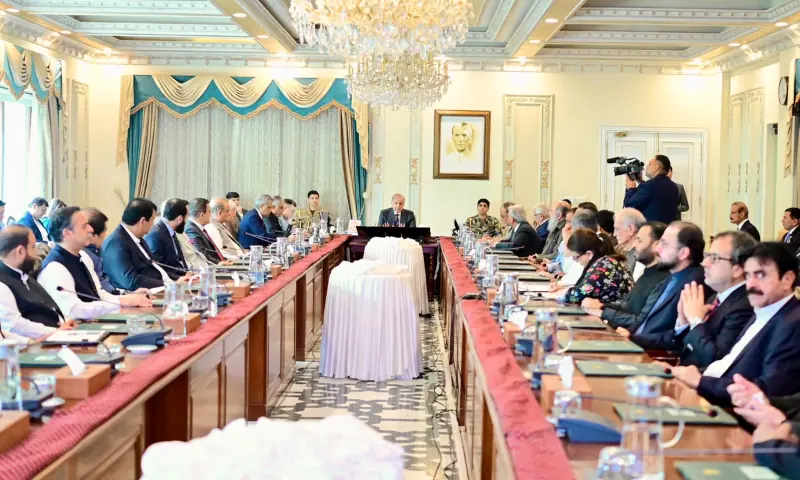
The federal cabinet endorsed the emergency proposal earlier on Sunday after a special meeting chaired by Prime Minister Shehbaz Sharif to review the worsening security situation.
asserted
cabinet → endorse → situation
The Cabinet said the provincial government had deliberately disengaged from the fight against terrorism and recommended that the prime minister advise the president to impose an emergency.
“The Cabinet recommended that the Prime Minister advise the President to exercise his constitutional authority and impose an emergency in Khyber Pakhtunkhwa under Articles 232 and 234 of the Constitution of Pakistan, given the gravity of the situation,” an official statement said.
asserted
statement → say → situation
Sources said the cabinet decided to pursue the move after exploring other options, including a last-ditch effort to engage the provincial government through mediation by Maulana Fazlur Rehman, chief of the Jamiat Ulema-e-Islam-Fazl (JUI-F).
asserted
cabinet → say → Fazl
The efforts failed to yield a breakthrough, they said.
asserted
they → fail → breakthrough
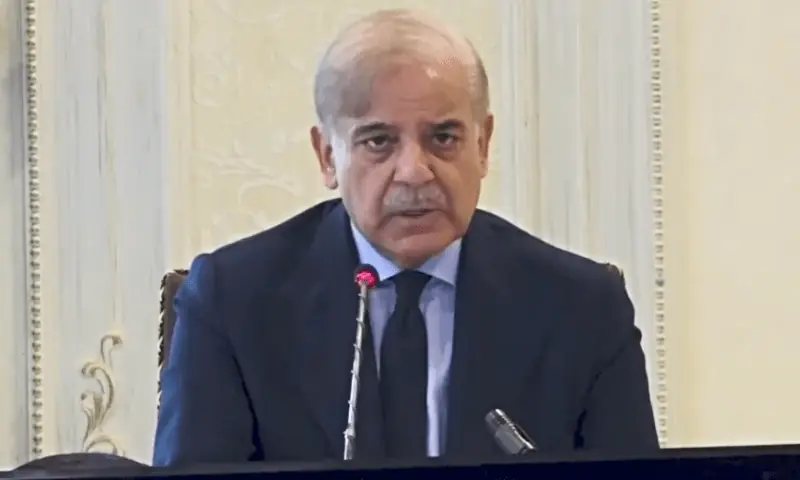
Earlier, Mr. Sharif told the Cabinet that the Khyber Pakhtunkhwa government was not doing enough to tackle terrorism and called for decisive action.
“The KP government is not saying a word against militancy…
asserted
government → tell → militancy
It is time to take a decision as we have reached a moment of now or never,” he said.
asserted
he → take → moment
Mr. Sharif said the law and order situation was deteriorating and accused the provincial government led by Khan’s party of failing to address the threat.
asserted
situation → say → threat
He added that the federal government had provided at least PKR 800 billion to the province over the past 10 years to fight terrorism and improve security, but the situation had not improved.
asserted
situation → add → security
The party’s key demands include an immediate meeting with Khan, access for his personal doctors, the release of his sisters and supporters arrested ahead of the protest, a proper medical check-up for his wife, Bushra Bibi, and hearings in their cases without interference.
asserted
demands → include → interference
Mr. Khan, the 73-year-old former cricketer-turned-politician, has been incarcerated at Adiala Jail in Rawalpindi since 2023 and faces more than 100 cases, including corruption and charges related to inciting violence.
asserted
Khan → turn → violence
The long march followed the failure of two rounds of talks between Mr. Khan’s party and the federal government.
asserted
march → follow → party
The discussions broke down over the party's demand for access to Mr. Khan before calling off the protest, while the government insisted that the demonstration be ended first.
asserted
demonstration → break → protest
The federal government had warned that protesters would not be allowed to enter Islamabad, where security was tightened and roads along the planned route blocked with shipping containers.
asserted
roads → warn → containers
 The Aporia