Not long after several planes were hijacked and used to wreak devastation on downtown New York and Washington, DC, a quarter of a century ago, air travel for millions of people all over the world changed beyond recognition – forever.
asserted
travel → hijack → recognition
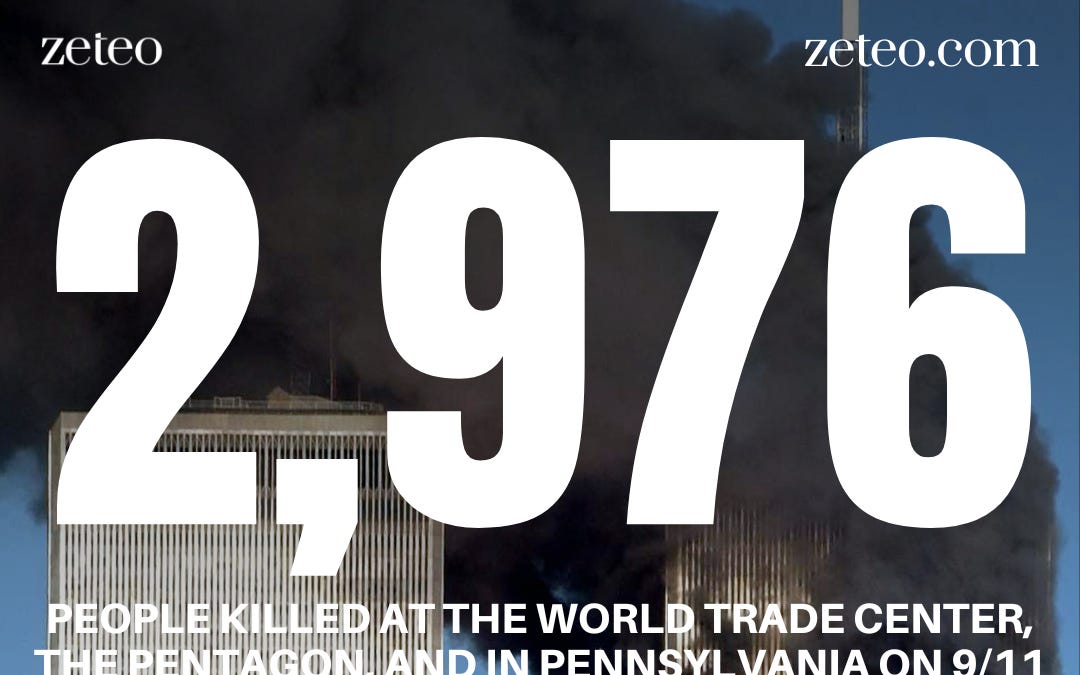
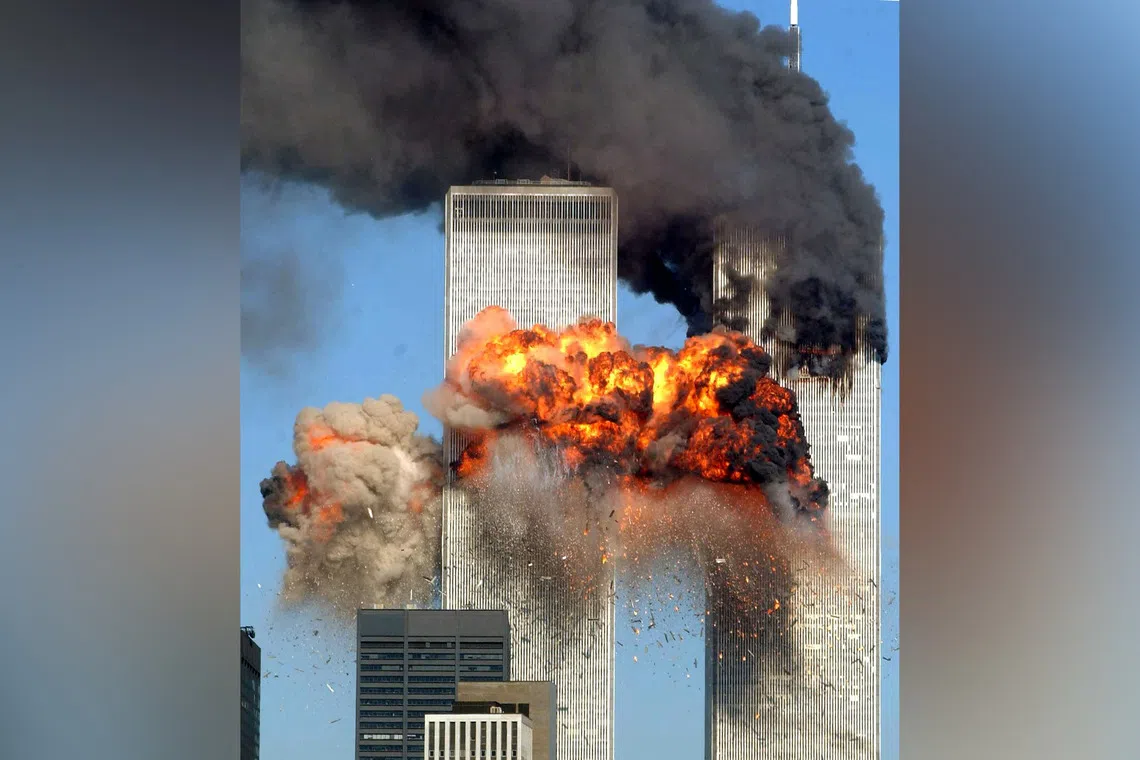
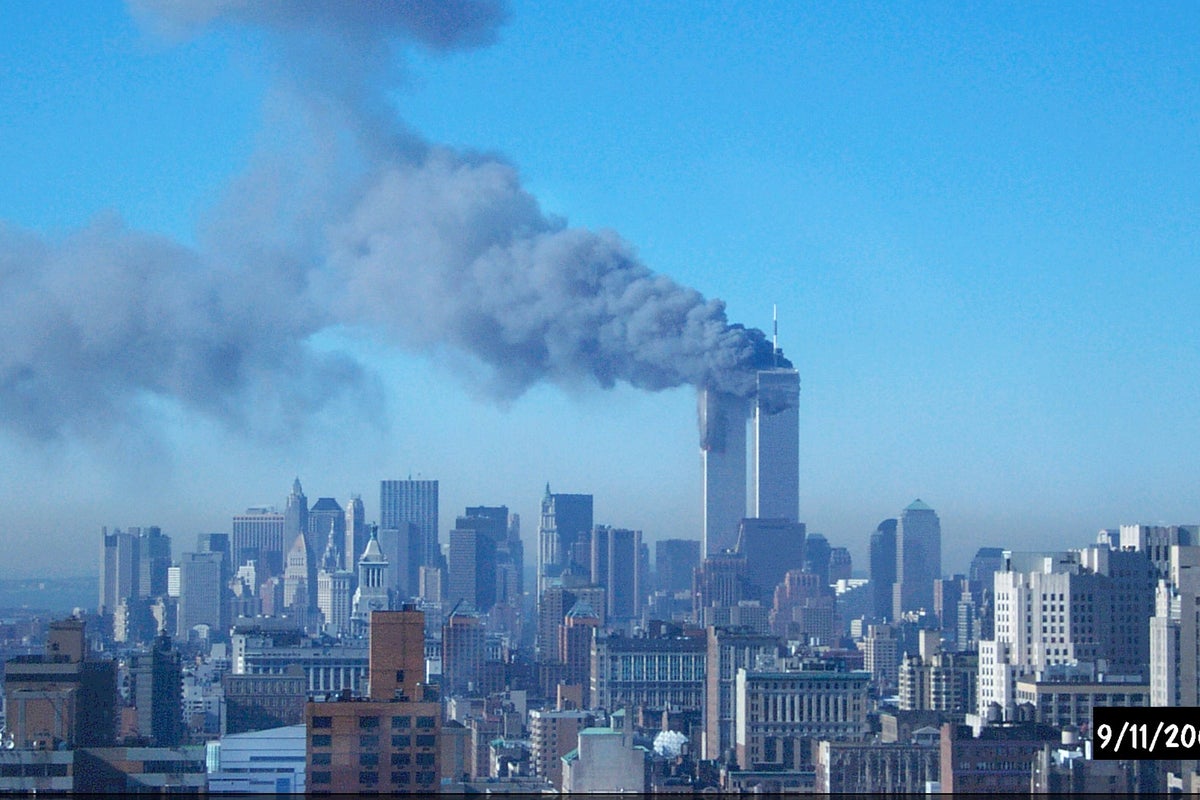
Two of the planes, hijacked by men linked to al-Qaeda, were flown into the Twin Towers at the World Trade Centre at the south end of Manhattan Island in New York City, causing the buildings to collapse and killing nearly 3,000 people.
asserted
buildings → hijack → people
Recommended Stories
list of 3 items- list 1 of 3UK travellers face fresh chaos as more flights cancelled after glitch
- list 2 of 3Marco Rubio says US seeks more economic and security ties in Latin America
- list 3 of 3How has Israel hit back against sanctions by the UK, others?
asserted
Israel → face → UK
A third hit the Pentagon, the building in Washington that houses the United States Department of Defense, while a fourth, believed to be headed towards the White House, crashed into an empty field in Pennsylvania after passengers on board wrested control of the aircraft from the hijackers.
asserted
passengers → hit → hijackers
It was the deadliest terrorist attack in US history, and all the planes had been boarded and seized with relative ease by the hijackers.
asserted
planes → board → hijackers
Here’s a look at how life for air passengers has changed since then.
asserted
life → ’ → passengers
What happened to air travel in the immediate aftermath of September 11, 2001?
asserted
What → happen → September
Across the US, all air traffic was immediately grounded.
asserted
traffic → ground → US
Canada closed its airspace but exempted military, police and humanitarian flights, according to a government document.
uncertain
Canada → close → document
In other countries, airports were closed and flights to the US were cancelled, causing many people to be stranded for days.
asserted
people → close → days
Canada reopened its airspace in stages, with domestic flights allowed to resume on September 12, followed by international flights a day later, and final restrictions removed the day after.
asserted
restrictions → reopen → flights
On September 13, the US also reopened its airspace.
asserted
US → reopen → airspace
What new travel rules came into place afterwards?
ID and baggage checks
Before September 2001, travellers could turn up for a domestic flight in the US and walk straight to their gate without showing identification, while their friends and family were permitted to accompany them to the gate to say goodbye at most US airports.
uncertain
friends → come → airports
In some instances, travellers were able to transfer from US domestic flights to international flights without going through any further security checks, either.
asserted
travellers → transfer → checks
That all changed immediately after September 11, and, in November 2001, then-US President George Bush signed the Aviation and Transportation Security Act (ATSA) into law, requiring all passengers and their baggage to undergo checks by federal officials.
asserted
Bush → change → officials
The act created the Transportation Security Administration (TSA).
asserted
act → create → Administration
Armed marshals and reinforced cockpits
The Federal Air Marshal Service was expanded, with more armed air marshals placed on flights.
asserted
marshals → reinforce → flights
Cockpit doors, which had often been unlocked during flights before, were required by law to be reinforced, fitted with bulletproof materials, and remain locked from the inside to keep potential attackers out.
asserted
which → unlock → attackers
Other countries swiftly adopted the new standard for reinforced cockpits, with British airline carrier Virgin Airways becoming one of the first to announce the measure in October 2001.
asserted
Airways → adopt → October
Now, reinforced cockpit doors are standard on commercial airlines, although not all are bulletproof.
Knives
Immediately after 9/11, knives and box cutters were banned from carry-on baggage.
asserted
knives → reinforce → baggage
Before the attack, the Federal Aviation Administration had allowed passengers to carry knives which were less than 10cm (4in) long on board the aircraft.
asserted
which → allow → aircraft
In December 2001, British-born Richard Reid attempted to detonate explosives he had hidden in his shoe on an American Airlines flight from Paris to Miami.
asserted
he → bear → Miami
He was thwarted when other passengers on board restrained him, but the incident prompted the TSA and some airlines worldwide to begin asking passengers to remove their shoes for security screening on a voluntary basis.
asserted
incident → thwart → basis
In 2006, the TSA made shoe checks mandatory.
asserted
checks → make → 2006
Pilots with handguns
In 2003, the first pilots were certified under the US Federal Flight Deck Officer programme to carry handguns if they wanted to after undergoing training to defend commercial aircraft.
asserted
they → certify → aircraft
Limits on liquids
In 2006, United Kingdom authorities uncovered and foiled a plot to detonate liquid explosives on board aircraft travelling from London to various US and Canadian cities.
asserted
authorities → uncover → cities
According to the UK government at the time, the planned attacks could have caused more deaths than September 11.
uncertain
attacks → accord → September
As a result, the US banned all liquids, gels and aerosols from carry-on luggage.
asserted
US → ban → luggage
In September, it relaxed the rule to allow liquids, but only 100ml (3.4oz), and they had to fit in a small clear bag to allow security officials to view them.
asserted
officials → relax → them
In 2009, on a flight from Amsterdam to Detroit, a man named Umar Farouk Abdulmutallab attempted to detonate a bomb that he had hidden in his underwear.
asserted
he → name → underwear
Al-Qaeda in the Arabian Peninsula (AQAP), a group based in Yemen, claimed it was behind the attempted attack.
asserted
it → base → attack
Although the attack failed, the TSA began installing full-body scanners that use advanced imaging technology to detect anything hidden under clothes.
asserted
that → fail → clothes
These scanners are now used across Europe, Japan, the UK and other countries.
asserted
scanners → use → Europe
Facial recognition software and electronics checks
In 2017, some airlines began trials of facial recognition software to allow passengers’ faces to serve as their boarding passes.
asserted
faces → begin → passes
The trials later became part of a new biometric boarding system, which is used at major airports internationally.
asserted
which → become → airports
The same year, rules were implemented requiring travellers to place electronics larger than a mobile phone into security trays for checking in X-ray machines.
asserted
rules → implement → machines
How has this affected air passengers?
asserted
this → affect → passengers
With more thorough baggage and security checks than before, passengers now spend more time in the airport, meaning journeys take longer.
asserted
journeys → spend → longer
According to a 2007 research journal by Alexander G de Barros and David D Tomber, a few years after the main measures were first implemented, the added screening protocols had made the processing rate at passenger screening points drop from “500 to 600 passengers per hour per lane before September 2001, to 100 to 150 passengers” after 9/11.
uncertain
rate → accord → 9/11
Moreover, passenger numbers in North America fell by up to 30 percent straight after September 2001, according to a research journal in 2003 on ScienceDirect, a platform that provides access to peer-reviewed reports.
uncertain
that → fall → reports
…and 17 more, not listed.
 The Aporia