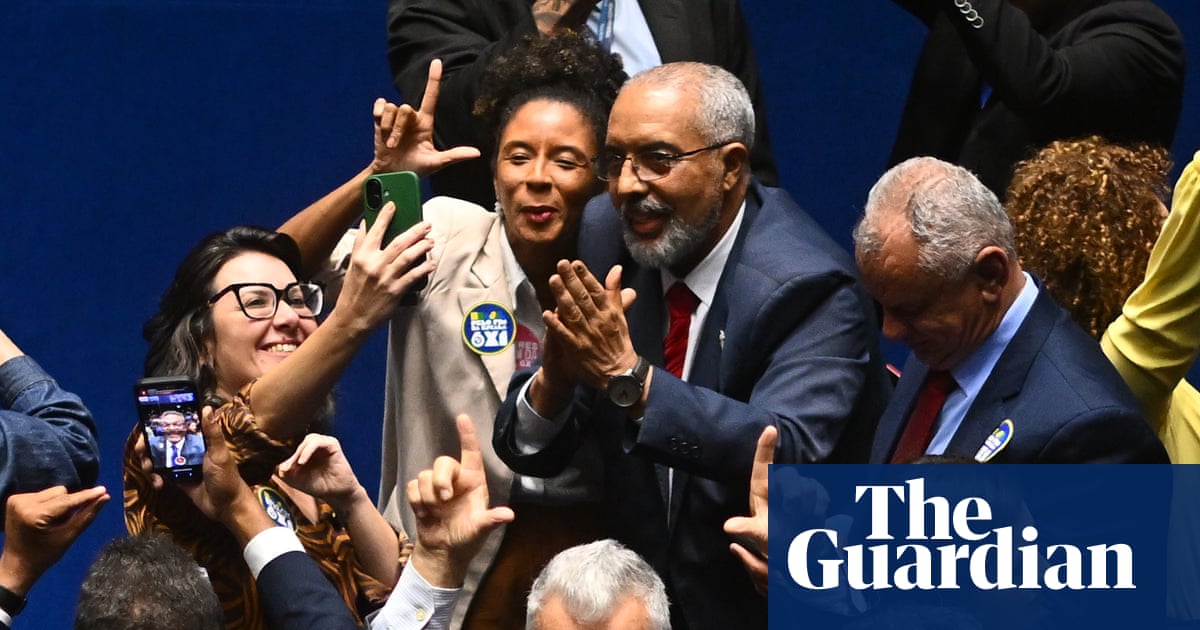
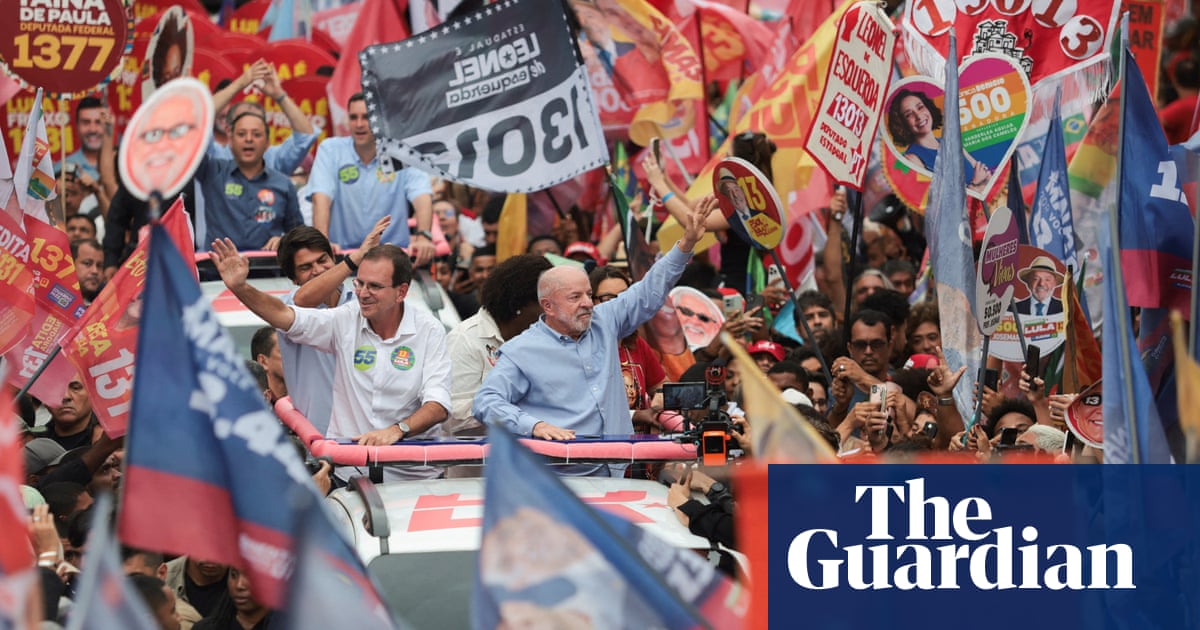
Brazil cuts work week to 40 hours in win for Lula ahead of runoff

Read the original at The Guardian ↗
Cite

Janeiro, T. R. i. R. d. (2026, October 15). Brazil cuts work week to 40 hours in win for Lula ahead of runoff. The Guardian. https://www.theguardian.com/world/2026/oct/15/brazil-cuts-work-week-to-40-hours-lula-bolsonaro-election-runoff

Dated from the outlet's own feed. Check the original for its byline.

The Guardian · collected 2026-10-15 · by Tiago Rogero in Rio de Janeiro

Quick Summary

Brazil’s congress has approved a constitutional amendment to reduce the workweek from 44 to 40 hours, affecting over 30 million workers and banning six-day workweeks currently followed by 16 million people. This move is seen as a political victory for President Luiz Inácio Lula da Silva ahead of the upcoming presidential runoff against Flávio Bolsonaro. Although initially opposed, Bolsonaro changed his stance due to widespread public support for the amendment, which passed with only one dissenting vote in the Senate.
Written locally by qwen2.5:14b on 2026-10-15, using this article's own text rather than the other coverage of the same event (that is the story summary below).

AI analysis runs on qwen2.5:14b, locally

Story summary

Brazil's Senate approved a constitutional amendment on October 15, 2026, reducing the country’s maximum workweek from 44 hours to 40 hours without cutting salaries. This move was backed by President Luiz Inácio Lula da Silva ahead of the presidential runoff scheduled for October 25 against Flávio Bolsonaro. The amendment passed with a near-unanimous vote of 75 to 1, and only one senator, Hamilton Mourão, voted against it. Initially opposed, Bolsonaro eventually supported the initiative remotely while campaigning in southern Brazil. The measure is expected to impact around 30 million workers and will give businesses 14 months to adopt the new work schedule, addressing business leaders' concerns about immediate implementation. This amendment aims to bolster Lula's support among voters who favor shorter working hours.

Written for “Brazil Shortens Work Week” on 2026-10-15, grounded in this article and the 1 other(s) covering the same event.
Why this leaning score
The model judged this article politically coded and scored it +0.35, but every quote it verified points left, so the score is not published.
Written under an earlier scoring contract, which gave a paragraph rather than checkable quotes. Re-analysing this article replaces it.
Leaning score withheld for article 81137: score contradicts its own evidence · logged 2026-10-15

Story

📰 Brazil Shortens Work Week
Economy/Business · 2 article(s) covering the same event. See how they differ ↓

Compared with similar articles

This article reads unscored and hedges 19% of its claims. Each row says how that neighbour differs.
Toronto Star · 0.93 cosine similarity
⚖️ Leans left 🔴 9% hedged 3 of 35 📰 publisher trust 63
“Both articles describe Brazil's Senate approving a constitutional amendment to reduce the workweek to 40 hours on the same day, with the same political context and outcome.”
How this article was measured signals, leaning charts, publisher record, byline, topics and claims

Signals How these are calculated →

Claims extracted
32
sentences that state something as happening or true
Uncertain
19%
6 of 32 hedged ("reportedly", "may", "according to")
Leaning
withheld
no quote in the article backed the model's score
Publisher signals
67/100
The Guardian's corrections and hedging, across everything collected from it. Not a measure of accuracy.
Outlets on this story
2
Economy/Business
Same framing elsewhere
1
articles that frame the event the way this one does
Analyzed 2026-10-15 · how these are computed

How this is being covered How these are calculated →

Article leaning vs. publisher reliability
Source leaning vs. consistency

Publisher

The Guardian · 1854 article(s) · 5 correction(s) detected
Running correction rate · 5 correction(s)

Who wrote this

Tiago Rogero in Rio de Janeiro
8 article(s) here · 1 carrying a prediction
🔮 Brazil’s congress has approved a constitutional amendment to shorten the working week to a maximum of 40 hours, a move that could affect 30 million workers and that will hand a political victory to the leftist president Luiz Inácio Lula da Silva ahead of the presidential runoff in under two weeks.
🔮 He went from fewer than 10,000 votes in a mayoral race two years ago to 380,000 votes for congress.
🔮 Brazil’s presidential race will go to a second round after the far-right candidate, Flávio Bolsonaro, beat the incumbent leftwing president, Luiz Inácio Lula da Silva, but failed to secure the outright majority he needed to avoid a runoff.
🔮 Brazilians go to the polls on Sunday in the first round of a highly polarised and high-stakes presidential election that could change not only the direction of Latin America’s largest country but that of the entire region.
🔮 On Sunday, Brazilians go to the polls in a presidential election that many believe will determine more than Latin America’s largest country’s fate for the next four years.
🔮 The accusation came in a televised campaign advert that was broadcast on Thursday by Lula’s team amid growing fears over the impact alleged US interference could have on the vote.
🔮 On 4 October, the leftwing incumbent will face the far-right senator Flávio Bolsonaro, son of the former president Jair Bolsonaro, who has been gaining ground in recent weeks.
🔮 After learning that the document would prevent Lula from taking office, Baptista Júnior told the defence minister he refused even to receive it: “The air force will not take part in this.”
Also by Tiago Rogero in Rio de Janeiro
Nothing else under this byline is closely related to this article, so these are simply their most recent.
All 8 articles by Tiago Rogero in Rio de Janeiro →

Topics

Brazil Brazilian Senate TikTok the Laboratory of Parties, Elections and Comparative Politics

Subjects

Lula PERSON · 7× Bolsonaro PERSON · 3× Senate ORG · 3× Jair Bolsonaro PERSON · 2× Brazil GPE · 1× Brazilian NORP · 1× Flávio PERSON · 1× Flávio Bolsonaro PERSON · 1× Hamilton Mourão PERSON · 1× Luiz Inácio Lula da Silva PERSON · 1×

Narrative

Lula also continued announcing benefits just days before the vote, including debt relief for microentrepreneurs, and published a letter to evangelical Christians – who have historically favoured Bolsonaro – stressing his commitment “to ensuring that everyone has two days off a week, because life is not just about work”.
framing: assertive · carried by 1 article(s) · first seen 2026-10-15
🔮 Brazil’s congress has approved a constitutional amendment to shorten the working week to a maximum of 40 hours, a move that could affect 30 million workers and that will hand a political victory to the leftist president Luiz Inácio Lula da Silva ahead of the presidential runoff in under two weeks.
2026-10-15 · The Guardian
Brazil cuts work week to 40 hours in win for Lula ahead of runoff · assertive framing

Claims (32 extracted, 6 hedged)

Brazil’s congress has approved a constitutional amendment to shorten the working week to a maximum of 40 hours, a move that could affect 30 million workers and that will hand a political victory to the leftist president Luiz Inácio Lula da Silva ahead of the presidential runoff in under two weeks. uncertain
that → approve → weeks
In an attempt to overturn the first-round lead secured by his opponent, far-right senator Flávio Bolsonaro, Lula has strongly championed the amendment, which will give some workers an extra day off each week. asserted
which → overturn → day
Bolsonaro, by contrast, spent months opposing the change but reversed course on Tuesday, saying “the majority of Brazilian workers” supported it. asserted
majority → spend → it
On Wednesday, he joined 75 senators who approved the reform, which passed the lower house in May. uncertain
which → join → May
Only one senator voted against it: Hamilton Mourão, former vice-president to Jair Bolsonaro, Flávio’s father. asserted
senator → vote → Bolsonaro
The constitutional amendment bans six-day workweeks, currently worked by 16 million people, while cutting the maximum workweek from 44 to 40 hours for more than 30 million workers. asserted
amendment → ban → workers
The change is expected to affect mainly workers in retail, restaurants and hotels, most of them low-paid – one of the groups which Lula lost the most support from since the 2022 election, when he defeated Jair Bolsonaro. asserted
he → expect → Bolsonaro
Lula celebrated the amendment’s passing, writing on social media “ending the 6x1 schedule is about more than changing working hours. asserted
ending → celebrate → hours
It means more time to live, rest, be with family, watch your children grow up, look after yourself and enjoy life.” asserted
children → mean → life
Victor Escobar, a researcher at the Laboratory of Parties, Elections and Comparative Politics, said the change “could indeed benefit Lula’s re-election campaign”. uncertain
change → say → campaign
The proposal began as a TikTok movement called Life Beyond Work, founded by a pharmacy assistant who entered politics after its success and later was embraced by Lula. asserted
who → begin → Lula
His party spent months pushing the senate to put the proposal to a vote and many believed that after the far right’s sweeping victory last week secured a broad congressional majority in 2027, the Senate would no longer vote on it. asserted
Senate → spend → it
But Senate president Davi Alcolumbre, whose relationship with Lula has at times been rocky, put it to a vote. asserted
relationship → put → vote
Flávio Bolsonaro’s party had considered blocking it, but polls showed the change had more than 70% of the general population behind it, and more than half of the senator’s voters. asserted
change → consider → voters
In May, Bolsonaro said the proposal could cause “mass unemployment”, an argument employers’ associations opposed to the change have repeatedly made. uncertain
associations → say → change
The senator voted remotely while campaigning in the country’s south. asserted
senator → vote → south
Even after changing his position, Bolsonaro said on Tuesday that he “supports something even better,” referring to an alternative proposal he had long advocated in which pay would be based on the hours actually worked. asserted
pay → change → hours
The Folha newspaper reported that he told business leaders that, if elected, he would review parts of the new amendment, a point several allied senators also made during Wednesday’s vote. asserted
senators → report → vote
Despite its approval, none of the changes will take effect before the runoff on 25 October. asserted
none → take → October
After the Senate president promulgates it, a 60-day period will follow before six-day workweeks are abolished and the maximum working week is reduced from 44 to 42 hours, then to 40 hours after a further 14 months. asserted
week → promulgate → months
However, Escobar believes its approval could already benefit Lula: “It will speak to how voters feel economically when they cast their ballot; they can feel more relieved with a change in their working schedule”. uncertain
they → believe → schedule
Marilane Oliveira Teixeira, a professor and researcher at a study centre at the University of Campinas who has spent months examining the possible impacts of the change, said there was no shortage of evidence showing how harmful having only one day off is to workers. asserted
having → spend → workers
“People who work a 6x1 schedule are practically prevented from having even a minimum level of social life,” she said, adding that the negative effects could include illness, workplace risks and exhaustion, “especially for women, who still carry the burden of unpaid domestic work”. uncertain
who → work → work
Lilian Cristo dos Santos, 50, has only one day off from her job as a saleswoman at a home appliances shop in Salvador, Bahia. asserted
Santos → have → Salvador
“There’s no time to go to the doctor, to the beach, to the salon, to look after myself; I wanted to have time to study and I can’t. asserted
I → ’ → time
On my only day off, I have to clean the house and look after my family,” she said. asserted
she → have → family
Santos said she voted for Lula, but has colleagues who chose Bolsonaro. asserted
who → say → Bolsonaro
“They say he represents change – well, yes, but certainly for the worse.” asserted
he → say → worse
Escobar is among many political scientists who believe that, despite Bolsonaro’s lead, Lula has gained momentum not only from the change to the working schedule, but also from demonstrations by his supporters that have drawn thousands across the country and an effort to build a stronger presence on social media. asserted
that → believe → media
Lula also continued announcing benefits just days before the vote, including debt relief for microentrepreneurs, and published a letter to evangelical Christians – who have historically favoured Bolsonaro – stressing his commitment “to ensuring that everyone has two days off a week, because life is not just about work”. asserted
life → continue → work
Escobar said: “Although most people have already decided their vote, there are some who are more responsive to political moves, and Lula has been trying very strongly to reach them. … asserted
Lula → say → them
The race still looks somewhat tangled, tied, with some degree of advantage for Bolsonaro, but it is still a very open election.” asserted
it → look → Bolsonaro

💬Give feedback
🕘History 🎫Support