NASA’s Perseverance rover breaks Mars driving record, covering 28.1 miles in five years

Read the original at Times of India ↗
Times of India · collected 2026-10-14 · by TOI Science Desk

Quick Summary

Not summarized yet. This article was analyzed before summaries existed, or the model was unreachable at the time. python maintenance.py backfill-article-summaries fills these in.

AI analysis runs on qwen2.5:14b, locally

Story summary

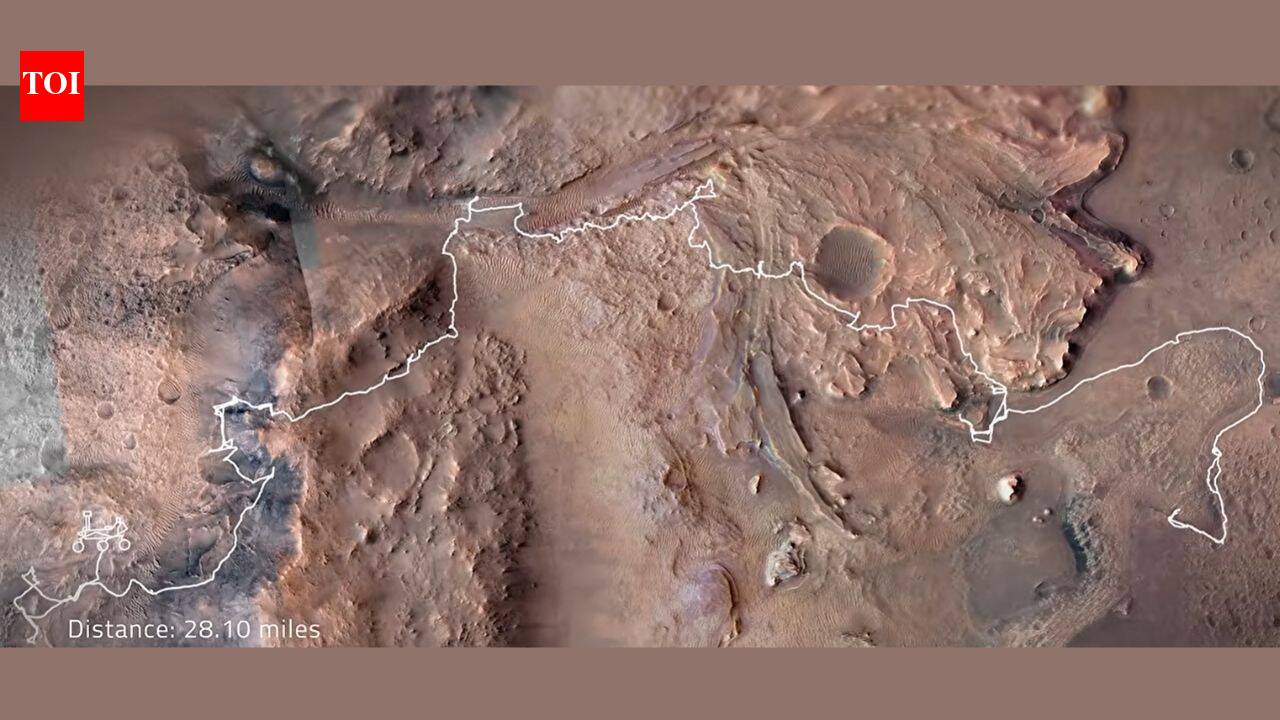
As of October 11, 2026, NASA's Perseverance rover broke the record for distance traveled on another planet’s surface by driving a total of 45.2 kilometers (28.1 miles) since landing on Mars in February 2021. This surpasses the previous record set by NASA's Opportunity rover, which operated from 2004 to 2018 and traveled 45 kilometers over nearly 15 years. Perseverance achieved this milestone in just over five years, highlighting advancements in robotic exploration technology. The rover has been exploring the ancient terrain of Mars' Jezero Crater, aiming to uncover evidence of past microbial life. With its instruments in excellent condition and all redundant systems available, NASA approved an extended mission for Perseverance through 2028.

Written for “Nasa Perseverance Mars Driving Record” on 2026-10-14, grounded in this article and the 3 other(s) covering the same event.

Story

📰 Nasa Perseverance Mars Driving Record
Science · 4 article(s) covering the same event. Compare every outlet's account →

Compared with similar articles

This article reads unscored and hedges 10% of its claims. Each row says how that neighbour differs.
South China Morning Post · 0.92 cosine similarity
⚖️ leaning not scored 🔴 0% hedged 0 of 3 📰 publisher trust 67
“Both articles describe Perseverance rover breaking the distance record on Mars, reaching exactly 45.2 km (28.1 miles), and specify the exact same milestone.”
CBS News · 0.91 cosine similarity
⚖️ leaning not scored 🔴 7% hedged 1 of 14 📰 publisher trust 66
“Both articles describe Perseverance rover setting a new driving record of 28.1 miles on Mars, specifying the exact date and context.”
Dawn · 0.92 cosine similarity
⚖️ leaning not scored 🔴 7% hedged 2 of 28 📰 publisher trust 71
“Both articles describe Perseverance rover breaking the driving record on Mars, reaching exactly 45.2 kilometers (or 28.1 miles) on October 11, 2026.”

Cite this article

TOI Science Desk. (2026, October 14). NASA’s Perseverance rover breaks Mars driving record, covering 28.1 miles in five years. Times of India. https://timesofindia.indiatimes.com/science/space/nasas-perseverance-rover-has-driven-farther-than-any-vehicle-on-another-world-after-five-and-a-half-years-on-mars-it-has-covered-28-10-miles-beating-opportunitys-15-year-record/articleshow/134916000.cms

Dated from the outlet's own feed. Check the original for its byline.

How this article was measured signals, leaning charts, publisher record, byline, topics and claims

Signals How these are calculated →

Claims extracted
50
sentences that state something as happening or true
Uncertain
10%
5 of 50 hedged ("reportedly", "may", "according to")
Leaning
not political
takes no side on a contested political question
Publisher signals
59/100
Times of India's corrections and hedging, across everything collected from it. Not a measure of accuracy.
Outlets on this story
4
Science
Same framing elsewhere
1
articles that frame the event the way this one does
Analyzed 2026-10-14 · how these are computed

How this is being covered How these are calculated →

Article leaning vs. publisher reliability
Source leaning vs. consistency

Publisher

Times of India · 2446 article(s) · 2 correction(s) detected
Running correction rate · 2 correction(s)

Who wrote this

TOI Science Desk
249 article(s) here · 1 carrying a prediction
🔮 Lightning signals may be weak or absent for phreatic or low-intensity eruptions, and the authors say real-time lightning data should be combined with observations such as satellite imagery and meteorological radar.
🔮 Polyethylene, one of the most widely produced plastics in the world, may have implications for liver health, according to new research from Texas A&M University.
🔮 Perseverance is now operating beyond the original mission plan, with NASA approving an extended mission that will carry its crater-rim exploration through roughly the end of 2028, as per the report.
🔮 A rare wildflower once found in the scrublands of Las Vegas has not been reliably recorded in the area for nearly a century, highlighting growing concerns about species that may be disappearing before scientists can determine whether they are extinct.
🔮 Samples collected during the process are expected to undergo laboratory analysis to determine whether they contain evidence of human activity or organic material that could point to the presence of decayed wood.
🔮 The delicate teeth would probably have been poorly suited to gripping struggling, larger prey, which could have damaged them.
🔮 For park rangers working to protect endangered animals, a missed movement could have serious consequences.
🔮 She hopes the process will help developing communities that lack the infrastructure to manage large amounts of plastic waste, with fertiliser supporting farms, cleared waterways restoring irrigation, and the absence of plastic preventing accidental burning and improving air quality.
🔮 Instead of relying only on conventional laboratory models, Shen tested a potential cancer drug in clams to determine whether these animals could serve as an animal model for blood-cancer drug discovery.
🔮 But recent years have seen records broken for low sea ice in both winter and summer, raising concerns that global heating could be driving the losses.
Wire or desk byline, not an individual reporter.
Also by TOI Science Desk
Nothing else under this byline is closely related to this article, so these are simply their most recent.
All 249 articles by TOI Science Desk →

Topics

AutoNav Jet Propulsion Laboratory NASA Opportunity Perseverance

Subjects

NASA ORG · 14× Jet Propulsion Laboratory ORG · 2× ESA ORG · 1× Gene Cernan PERSON · 1× Harrison Schmitt PERSON · 1× the Soviet Union’s GPE · 1×

Narrative

On October 11, 2026, after five and a half years on Mars, the six-wheeled rover’s odometer reached 28.10 miles, or 45.22 kilometres, surpassing the 28.06-mile record set by NASA’s Opportunity rover over nearly 15 years of exploration.
framing: assertive · carried by 1 article(s) · first seen 2026-10-14
🔮 Perseverance is now operating beyond the original mission plan, with NASA approving an extended mission that will carry its crater-rim exploration through roughly the end of 2028, as per the report.

Claims (50 extracted, 5 hedged)

NASA’s Perseverance rover has set a new record for distance travelled on the surface of another planet. asserted
rover → set → planet
On October 11, 2026, after five and a half years on Mars, the six-wheeled rover’s odometer reached 28.10 miles, or 45.22 kilometres, surpassing the 28.06-mile record set by NASA’s Opportunity rover over nearly 15 years of exploration. asserted
odometer → reach → exploration
According to NASA’s Jet Propulsion Laboratory, Perseverance achieved the milestone on the 2,006th Martian day, or sol, of its mission. uncertain
Perseverance → accord → mission
It reflects how far robotic exploration has advanced since NASA’s earliest Mars rovers, and it gives scientists faster access to the varied geology of Jezero Crater and its ancient surroundings. asserted
it → reflect → Crater
Perseverance is now operating beyond the original mission plan, with NASA approving an extended mission that will carry its crater-rim exploration through roughly the end of 2028, as per the report. asserted
that → operate → report
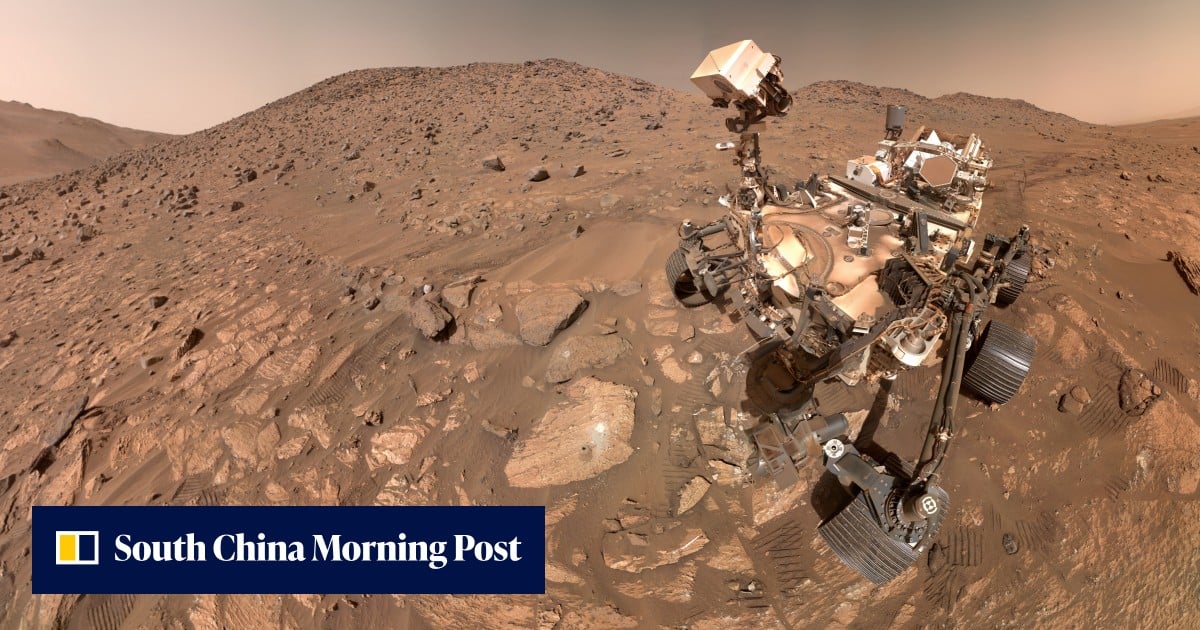
A record set in half the time Nasa’s Perseverance Mars rover is seen in a "selfie" that it took over a rock nicknamed "Rochette" (Nasa) Opportunity held the previous off-world driving record for years. asserted
Opportunity → set → years
The rover landed on Mars in 2004 and continued operating until 2018, covering 28.06 miles across 5,111 Martian days. asserted
rover → land → days
Its endurance made it one of NASA’s most successful planetary missions and set a benchmark that seemed difficult to match. asserted
that → make → benchmark
Perseverance reached a slightly greater distance in just five and a half years. asserted
Perseverance → reach → years
It covered the distance on its 2,006th sol, meaning it travelled farther than Opportunity did in less than half the time. asserted
Opportunity → cover → time
NASA says the rover has already driven well beyond its original mission requirement of no more than 12.4 miles. asserted
rover → say → miles
The record also places Perseverance ahead of other major off-world vehicles. asserted
record → place → vehicles
It has passed the 22.2 miles travelled by Apollo 17 astronauts Gene Cernan and Harrison Schmitt on the Moon in 1972, as well as the 24.2 miles covered by the Soviet Union’s Lunokhod 2 rover in 1973, as per the report. asserted
It → pass → report
How Perseverance drives so far A major reason for the new record is Perseverance’s autonomous navigation system, known as AutoNav. asserted
reason → drive → AutoNav
As the rover moves, it images the terrain, builds a three-dimensional map of hazards, and plots a route between waypoints selected by engineers on Earth. asserted
it → move → Earth
NASA describes this ability as “thinking while driving.” asserted
NASA → describe → ability
This autonomy allows Perseverance to move at or near its top speed without waiting for every decision to be made from Earth. asserted
decision → allow → Earth
In a single Martian day, the rover can cover as much as 1,351 feet, or 412 metres. asserted
rover → cover → feet
More than 90 percent of its total distance has been driven using AutoNav, compared with about 5 percent for NASA’s earlier Opportunity and Spirit rovers, as per NASA’s Jet Propulsion Laboratory. asserted
percent → drive → Laboratory
NASA’s first Mars rover, Sojourner, assessed the path ahead using 20 measurement points. asserted
rover → assess → points
Perseverance processes 600,000 points with every look, allowing it to identify obstacles and choose safer routes with far greater precision. asserted
it → process → precision
Exploring ancient terrain Top surface layer water appears readily visible at some places on Mars. asserted
water → explore → Mars
The record-setting drive occurred as Perseverance travelled toward an area called Idubi, through a region west of Jezero Crater nicknamed Lac de Charmes. asserted
Perseverance → set → Crater
NASA says the rocks there may include some of the oldest terrain ever explored in the solar system. uncertain
rocks → say → system
The terrain is so ancient that comparable rocks on Earth have largely disappeared because of erosion and plate tectonics. asserted
rocks → disappear → erosion
Mars does not have tectonic plates, which helps preserve a longer record of its early geological history. asserted
which → have → history
At Idubi, scientists hope to find evidence of ancient hydrothermal systems, environments where heated water may once have circulated through rock. uncertain
water → hope → rock
Perseverance’s journey has taken it from an ancient lakebed up a fossilised river system and toward the crater rim. asserted
journey → take → rim
Along the way, it found a potential biosignature in a rock called Cheyava Falls, a discovery that makes the rover’s ability to travel efficiently across varied terrain especially important. asserted
ability → find → terrain
Sojourner, the agency’s first Mars rover, travelled about 330 feet during its 83-sol mission in 1997. asserted
Sojourner → travel → 1997
The twin rovers Spirit and Opportunity arrived in 2004 with planned prime missions of 90 sols, but both far exceeded expectations. asserted
both → arrive → expectations
Spirit logged 4.8 miles before it was silenced by the Martian winter in 2010. asserted
it → log → 2010
Opportunity continued for 5,111 sols, completed the first extraterrestrial marathon in 2015, and set the distance record that Perseverance has now broken. asserted
Perseverance → continue → that
NASA’s Curiosity rover remains active as well. asserted
rover → remain → ?
Since landing in Gale Crater in 2012, it has travelled more than 23.65 miles. asserted
it → land → miles
Together, these missions show a steady improvement in rover durability, mobility, and scientific capability. asserted
missions → show → durability
What the record means for science Distance is only part of the achievement. asserted
means → mean → achievement
Longer and faster drives allow Perseverance to examine more rock formations, collect samples from more environments, and build a broader picture of Mars’ past. asserted
Perseverance → allow → past
NASA says the rover’s reach has already carried it from an ancient lakebed to a fossilised river system and then to the crater rim. asserted
reach → say → rim
So far, Perseverance has collected 29 rock and regolith samples from the crater floor, a former river delta, and the crater rim. asserted
Perseverance → collect → floor
…and 10 more, not listed.

💬Give feedback
🕘History 🎫Support