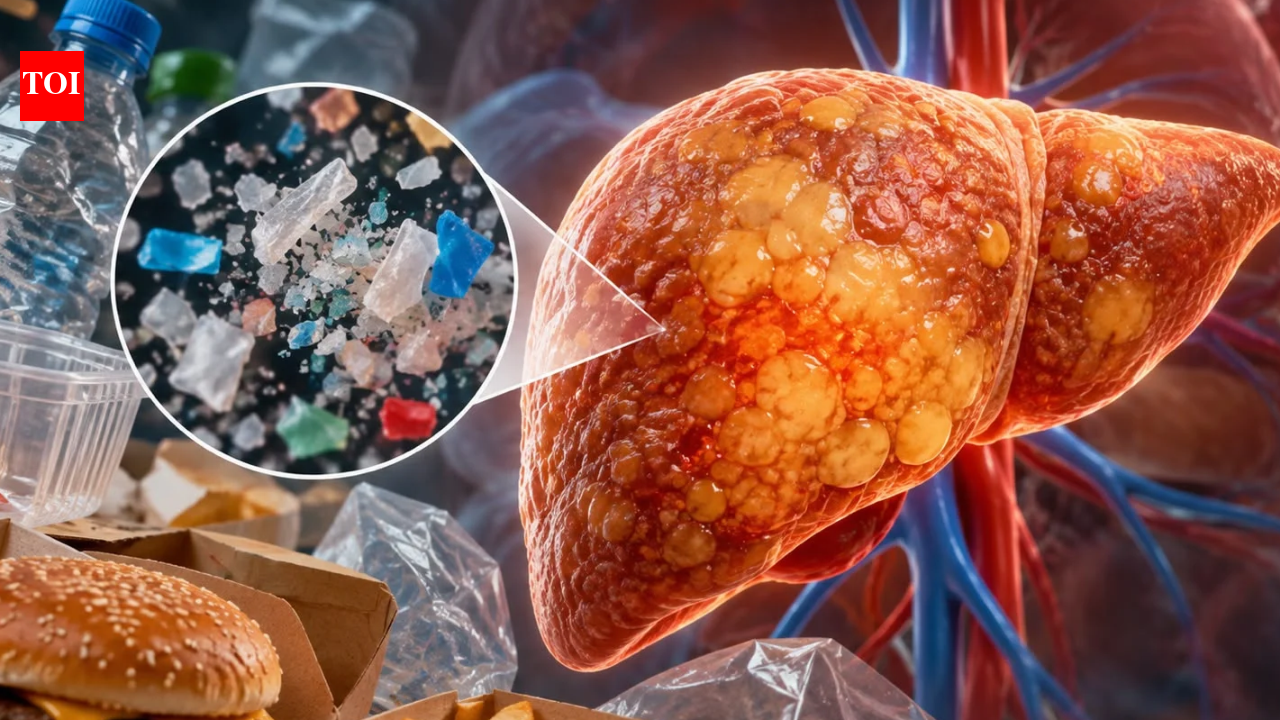
Polyethylene Microplastics And Liver Risk: Texas A&M links exposure to fatty liver signs; questions remain for human health

Read the original at Times of India ↗
Times of India · collected 2026-10-14 · by TOI Science Desk

Quick Summary

Texas A&M University researchers have linked exposure to polyethylene microplastics with signs of fatty liver disease in a study published in October 2026. The research found that even without an unhealthy diet, polyethylene exposure increased indicators of fatty liver disease, and these effects were more pronounced when combined with a high-fat, fructose, and cholesterol diet. While the findings highlight potential health risks associated with environmental exposures to microplastics, questions remain about their direct impact on human health due to limited long-term studies.
Written locally by qwen2.5:14b on 2026-10-14, using this article's own text rather than the other coverage of the same event (that is the story summary below).

AI analysis runs on qwen2.5:14b, locally

Story summary

Texas A&M University published a study in October 2026 linking exposure to polyethylene microplastics with signs of fatty liver disease, especially when combined with a diet high in fat, fructose, and cholesterol. The research, highlighted by the university’s College of Veterinary Medicine and Biomedical Sciences, suggests that these tiny plastic particles may have significant health implications for humans. Polyethylene is one of the most widely produced plastics globally, commonly found in food wrappers, storage containers, and packaging materials. While microplastics are increasingly detected in environmental samples and human tissues, their long-term impact on human health remains largely unknown, making this study a crucial addition to ongoing research on plastic exposure effects.

Written for “Polyethylene Microplastics And Liver Risk Study” on 2026-10-14, grounded in this article and the 0 other(s) covering the same event.
Why this leaning score
This article does not take a side on a contested political question, so it has no leaning score. That is an answer rather than a gap: a match report or a rescue can be warmly or critically written without being left or right, and scoring it anyway is how approval of a subject gets recorded as a political position.
No political leaning scored for article 78571 · logged 2026-10-14

Story

📰 Polyethylene Microplastics And Liver Risk Study
Health · 1 article(s) covering the same event.

Compared with similar articles

Nothing to compare against. No article is close enough to this one for the pipeline to have linked or judged the pair.

Cite this article

TOI Science Desk. (2026, October 14). Polyethylene Microplastics And Liver Risk: Texas A&M links exposure to fatty liver signs; questions remain for human health. Times of India. https://timesofindia.indiatimes.com/science/discovery/researchers-found-that-polyethylene-microplastics-worsened-signs-of-fatty-liver-especially-when-combined-with-an-unhealthy-diet-raising-questions-about-a-plastic-used-in-everyday-packaging/articleshow/134933543.cms

Dated from the outlet's own feed. Check the original for its byline.

How this article was measured signals, leaning charts, publisher record, byline, topics and claims

Signals How these are calculated →

Claims extracted
33
sentences that state something as happening or true
Uncertain
36%
12 of 33 hedged ("reportedly", "may", "according to")
Leaning
not political
takes no side on a contested political question
Publisher signals
59/100
Times of India's corrections and hedging, across everything collected from it. Not a measure of accuracy.
Outlets on this story
1
Health
Same framing elsewhere
1
articles that frame the event the way this one does
Analyzed 2026-10-14 · how these are computed

How this is being covered How these are calculated →

Article leaning vs. publisher reliability
Source leaning vs. consistency

Publisher

Times of India · 2446 article(s) · 2 correction(s) detected
Running correction rate · 2 correction(s)

Who wrote this

TOI Science Desk
249 article(s) here · 1 carrying a prediction
🔮 Lightning signals may be weak or absent for phreatic or low-intensity eruptions, and the authors say real-time lightning data should be combined with observations such as satellite imagery and meteorological radar.
🔮 Polyethylene, one of the most widely produced plastics in the world, may have implications for liver health, according to new research from Texas A&M University.
🔮 Perseverance is now operating beyond the original mission plan, with NASA approving an extended mission that will carry its crater-rim exploration through roughly the end of 2028, as per the report.
🔮 A rare wildflower once found in the scrublands of Las Vegas has not been reliably recorded in the area for nearly a century, highlighting growing concerns about species that may be disappearing before scientists can determine whether they are extinct.
🔮 Samples collected during the process are expected to undergo laboratory analysis to determine whether they contain evidence of human activity or organic material that could point to the presence of decayed wood.
🔮 The delicate teeth would probably have been poorly suited to gripping struggling, larger prey, which could have damaged them.
🔮 For park rangers working to protect endangered animals, a missed movement could have serious consequences.
🔮 She hopes the process will help developing communities that lack the infrastructure to manage large amounts of plastic waste, with fertiliser supporting farms, cleared waterways restoring irrigation, and the absence of plastic preventing accidental burning and improving air quality.
🔮 Instead of relying only on conventional laboratory models, Shen tested a potential cancer drug in clams to determine whether these animals could serve as an animal model for blood-cancer drug discovery.
🔮 But recent years have seen records broken for low sea ice in both winter and summer, raising concerns that global heating could be driving the losses.
Wire or desk byline, not an individual reporter.
Also by TOI Science Desk
Nothing else under this byline is closely related to this article, so these are simply their most recent.
All 249 articles by TOI Science Desk →

Topics

College of Veterinary Medicine and Biomedical Sciences Department of Veterinary Physiology and Pharmacology Texas A&M University Texas A&M’s the University of Oklahoma

Subjects

Adi Joshi PERSON · 1× College of Veterinary Medicine and Biomedical Sciences ORG · 1× Department of Veterinary Physiology and Pharmacology ORG · 1× Texas A&M ORG · 1× Texas A&M University ORG · 1× Texas A&M’s ORG · 1× the University of Oklahoma ORG · 1×

Narrative

The study, published in October 2026 and highlighted by the university’s College of Veterinary Medicine and Biomedical Sciences, found that exposure to polyethylene microplastics was associated with signs of fatty liver disease, with more pronounced effects when exposure coincided with a diet high in fat, fructose and cholesterol.
framing: mixed · carried by 1 article(s) · first seen 2026-10-14
🔮 Polyethylene, one of the most widely produced plastics in the world, may have implications for liver health, according to new research from Texas A&M University.

Claims (33 extracted, 12 hedged)

Polyethylene, one of the most widely produced plastics in the world, may have implications for liver health, according to new research from Texas A&M University. uncertain
Polyethylene → produce → University
The study, published in October 2026 and highlighted by the university’s College of Veterinary Medicine and Biomedical Sciences, found that exposure to polyethylene microplastics was associated with signs of fatty liver disease, with more pronounced effects when exposure coincided with a diet high in fat, fructose and cholesterol. asserted
exposure → publish → fat
The findings add to a growing body of research examining how tiny plastic particles interact with biological systems. asserted
particles → add → systems
While microplastics have been detected in the environment and human tissues, their long-term effects on health remain incompletely understood. asserted
effects → detect → health
How polyethylene may affect liver health uncertain
polyethylene → affect → health
Polyethylene is commonly used in food wrappers, storage containers, packaging and the linings of some disposable cups. asserted
Polyethylene → use → cups
Its widespread use makes understanding its potential health effects an important area of investigation. asserted
understanding → make → investigation
Researchers led by Adi Joshi, an associate professor in Texas A&M’s Department of Veterinary Physiology and Pharmacology, examined whether polyethylene microplastics could influence the development of fatty liver disease. uncertain
microplastics → lead → disease
The condition occurs when excess fat accumulates in the liver. asserted
fat → occur → liver
It can range from relatively mild fat buildup to more serious disease involving inflammation, tissue damage and, in some cases, scarring. asserted
It → range → cases
According to the researchers, polyethylene exposure increased indicators of fatty liver disease even without an unhealthy diet. uncertain
exposure → accord → diet
When the exposure was combined with a diet rich in fat, fructose and cholesterol, the signs became more severe. asserted
signs → combine → fat
The results suggest that environmental exposures and dietary risk factors may interact, although the findings do not establish how much polyethylene exposure contributes to liver disease in people. uncertain
exposure → suggest → people
Scientists investigate the biological mechanisms To understand how the plastic might affect the liver, the research team collaborated with scientists at the University of Oklahoma and used a technique known as spatial transcriptomics. uncertain
team → investigate → transcriptomics
The method allows researchers to examine gene activity while preserving information about where changes occur within a tissue. asserted
changes → allow → tissue
This can help identify specific regions of an organ affected by an exposure, rather than asserted
This → help → exposure
The analysis highlighted changes involving PPAR-alpha, a protein that helps regulate the breakdown and use of fats in the liver. asserted
that → highlight → liver
The researchers also identified ANXA2, a gene associated with cellular processes including tissue repair, as a possible contributor to the observed effects asserted
researchers → identify → effects
These findings offer potential clues about how polyethylene exposure may alter the liver’s metabolic and protective processes. uncertain
exposure → offer → processes
However, identifying these pathways does not by itself establish that they cause disease, and further work will be needed to determine their precise roles. asserted
work → identify → roles
An unhealthy diet may compound the effects uncertain
diet → compound → effects
Fatty liver disease has multiple risk factors, including obesity, metabolic disorders and dietary patterns associated with excess calorie intake. asserted
disease → have → intake
The Texas A&M findings raise the possibility that exposure to certain environmental pollutants could add to existing risks. uncertain
exposure → raise → risks
The researchers observed more pronounced signs of disease when polyethylene exposure occurred alongside a diet high in fat, fructose and cholesterol. asserted
exposure → observe → fat
This is particularly relevant to research into metabolic dysfunction-associated steatotic liver disease, or MASLD, the current medical term for the condition formerly widely known as non-alcoholic fatty liver disease. asserted
This → associate → disease
However, the study should not be interpreted as proof that eating packaged food or encountering polyethylene in daily life will cause fatty liver disease. asserted
eating → interpret → disease
The effects observed under experimental conditions may not directly reflect the doses, exposure routes or long-term outcomes experienced by humans. uncertain
effects → observe → humans
What the findings mean for future research The research team plans to investigate whether polyethylene exposure could contribute to more advanced liver damage, including fibrosis, in which persistent injury leads to scar tissue formation. uncertain
injury → mean → formation
Scientists also intend to explore the molecular pathways identified in the study, including whether changes involving PPAR-alpha could offer clues for protecting liver tissue against potential microplastic-related damage. uncertain
changes → intend → damage
Another key question is whether other types of microplastics produce similar effects. asserted
types → produce → effects
Different plastics can vary in their chemical composition, physical properties and interactions with biological systems, meaning the findings for polyethylene cannot automatically be applied to every plastic material. asserted
findings → vary → material
For now, the study offers experimental evidence of a possible link between a common plastic and changes associated with fatty liver disease. asserted
study → offer → disease
Establishing the implications for human health will require further research into real-world exposure levels, biological mechanisms and long-term outcomes. asserted
Establishing → establish → levels

💬Give feedback
🕘History 🎫Support