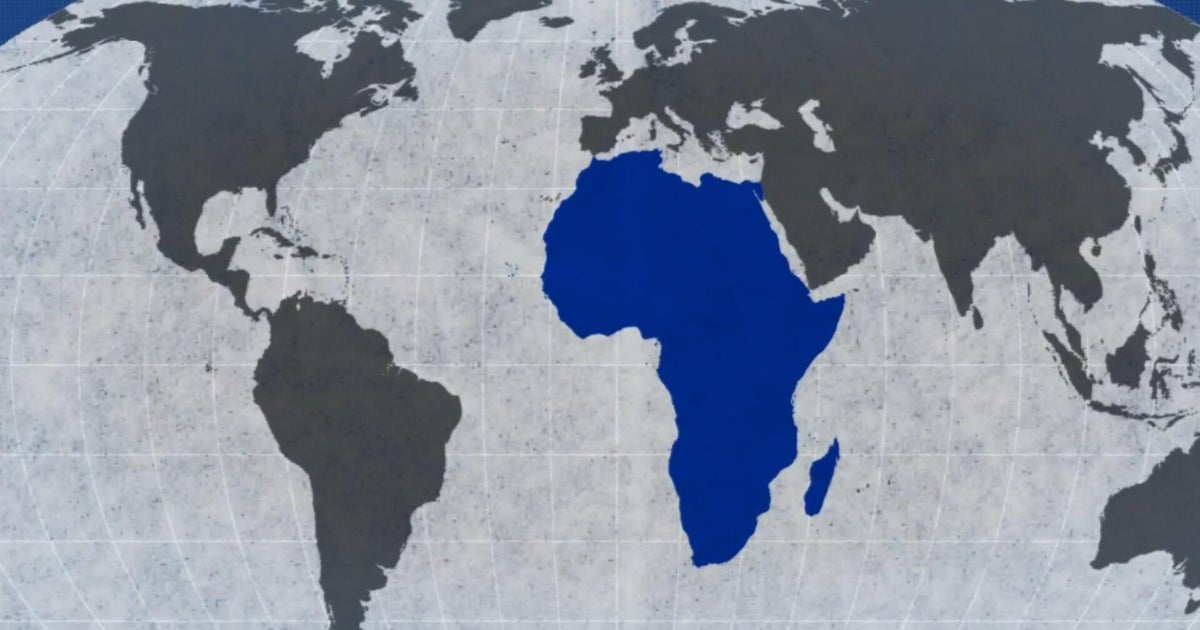
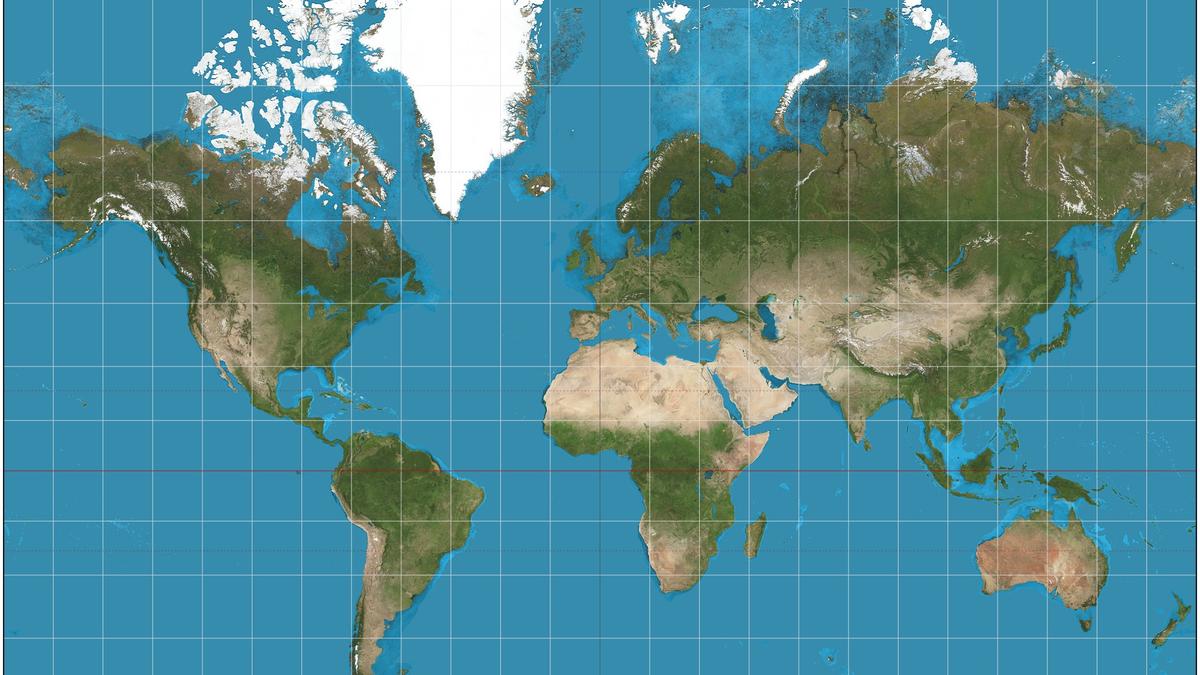
In a historic move last week, the United Nations General Assembly voted overwhelmingly to encourage the use of new world maps which more accurately depict continents with their true sizes.
asserted
which → vote → sizes
The move followed months of lobbying by the African Union, which itself adopted a new map earlier in February.
asserted
which → follow → February
A total of 164 countries voted in favour while six abstained.
asserted
six → vote → favour
you guess the real size of each country on the new world map?
asserted
you → guess → map
- list 3 of 4The Map Was Lying To You: Why the UN Just Changed How We See Africa
- list 4 of 4In maps and charts: Russian and Ukrainian attacks on civilian targets
The United States was the only member to oppose it.
asserted
States → lie → it
US representative Yaryna Ferencevych said before the vote that the resolution was “the reason this institution is losing its credibility”.
asserted
institution → say → credibility
“Instead of focusing on genuine problems … this body is debating map projects from the 16th century,” she said.
asserted
she → focus → century
But since the resolution was approved, at least three other countries have voiced concerns about the changes: India, Ukraine and Japan.
asserted
countries → approve → changes
None are explicitly opposed to adopting a new projection.
asserted
None → oppose → projection
However, they are raising concerns about how certain disputed territories should be depicted.
asserted
territories → raise → concerns
Here’s what we know:
asserted
we → ’ → what
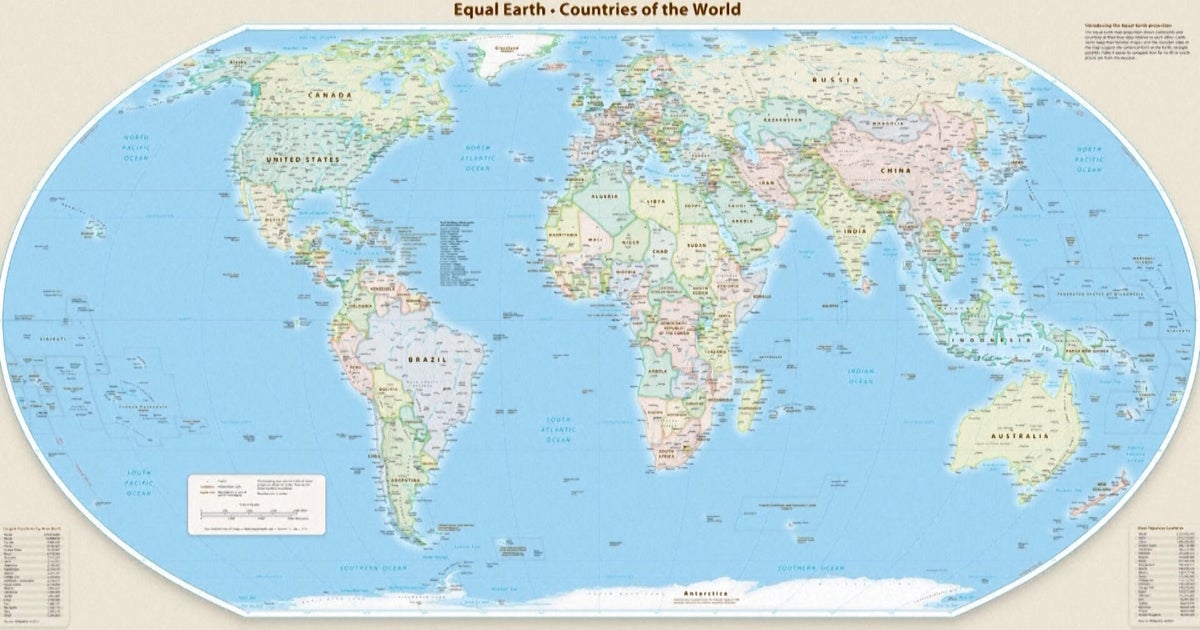
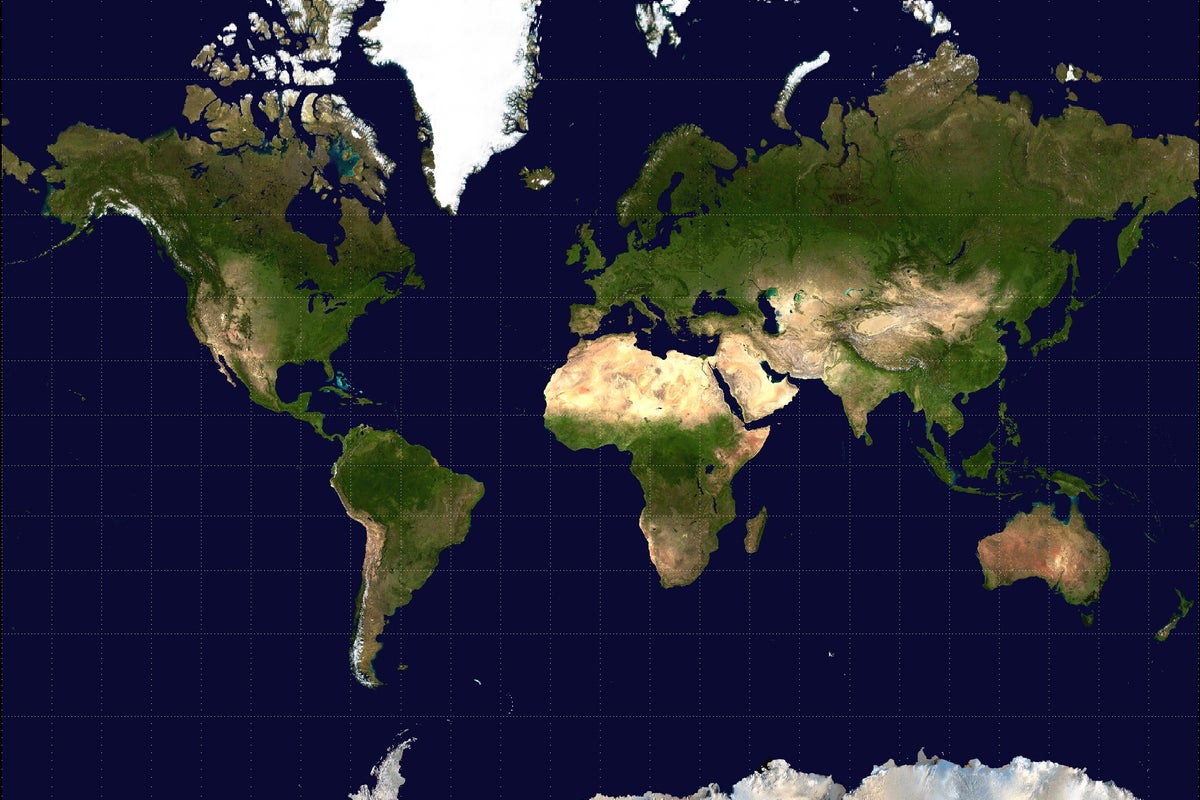
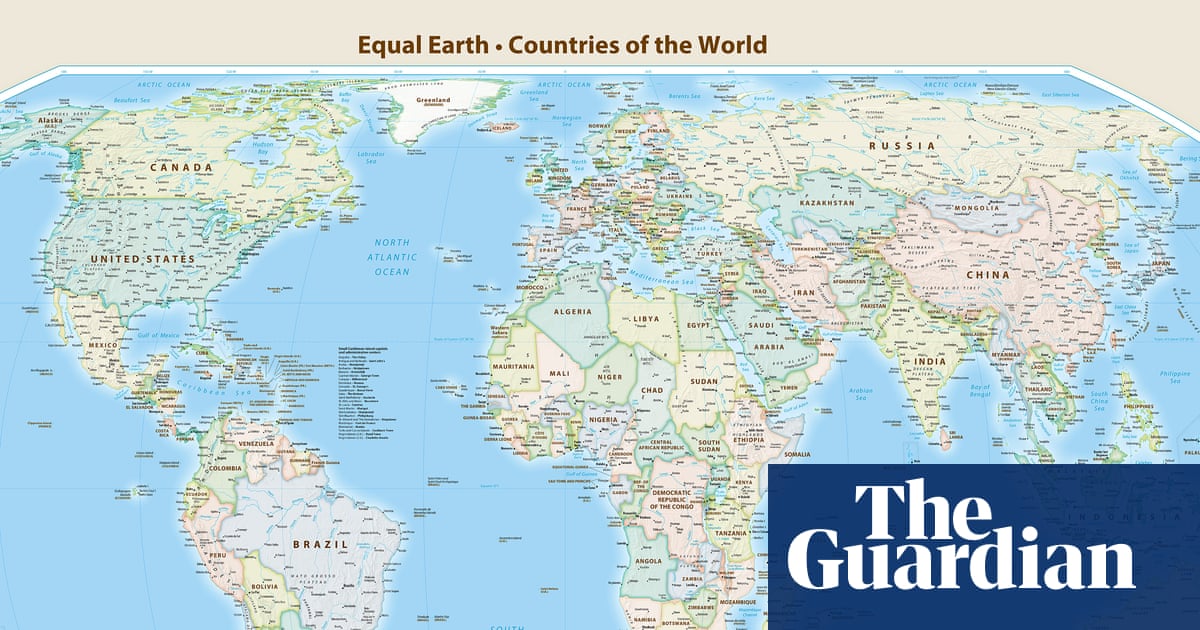
The UN endorsed a resolution promoting the Equal Earth projection of the world map, rather than the Mercator projection, which is currently widely used.
asserted
which → endorse → map
The resolution does not ban Mercator or impose a particular replacement – it merely encourages nations to adopt the Equal Earth version, which was created by three researchers in 2018.
asserted
which → ban → 2018
The Mercator projection, which was produced by Flemish cartographer Gerardus Mercator in 1569 when the West was busy “conquering” new territories, attempts to show a three-dimensional globe on a two-dimensional surface.
asserted
West → produce → surface
That is why countries closer to the poles appear much larger than countries at the equator.
asserted
countries → appear → equator
For decades, map experts have pointed out that Mercator’s projection disproportionately shrinks the true size of the African continent and that of other developing regions, while making Europe and the US seem much larger by comparison.
asserted
Europe → point → comparison
For example, Greenland is shown as roughly the same size as Africa, but, in reality, it could fit into the continent 14 times over.
uncertain
it → show → continent
Europe, which is portrayed as bigger than South America, is actually half its size.
asserted
which → portray → America
Advocates from African countries pointed out that the map is problematic because of the size issues.
asserted
map → point → issues
Importantly, they argued, it reinforces negative perceptions of Africa.
asserted
it → argue → Africa
Several cartographers have attempted to develop equal area maps.
asserted
cartographers → attempt → maps
However, African activists specifically pushed for the Equal Earth projection map, which significantly expands Africa and shrinks Europe and the US.
asserted
which → push → Europe
Experts say while maps are inherently inaccurate because of the constraints of depicting a spherical world on a flat plane, the Equal Earth projection is as close as it gets.
asserted
it → say → plane
Why is Ukraine worried about the new map?
asserted
Ukraine → worry → map
Ukraine was one of six countries which abstained from the vote at the UNGA, along with Estonia, Georgia, Moldova, Serbia and Lithuania, who voted in solidarity with Ukraine.
asserted
who → abstain → Ukraine
Kyiv has complained that the Equal Earth projection depicts the Russian-occupied Crimean peninsula in a distinctly lighter shade than mainland Ukraine.
asserted
projection → complain → Ukraine
Russia illegally occupied and annexed Crimea in February 2014, a move the UN has denounced.
asserted
UN → occupy → February
Although the peninsula is also shaded differently from mainland Russia on the new map, its yellowish tint appears closer to the Russian shade than Ukraine’s.
asserted
tint → shade → Ukraine
“Ukraine does not in principle oppose the core issue addressed in this draft resolution,” Andrii Melnyk, the country’s permanent representative to the UN, said in an address to the assembly.
asserted
Melnyk → oppose → assembly
Melnyk said Kyiv had asked for corrections before the vote but had not received positive responses.
asserted
Kyiv → say → responses
The new map, he said, could be tantamount to opening a Pandora’s box, enabling the “abuse and distortion” of the world map.
uncertain
he → say → map
“It would be a truly fatal mistake for all of us, and for this General Assembly, to seek to correct a historical injustice in the geographical depiction of countries and continents by simultaneously allowing a deeply troubling interpretation of the text of this draft resolution,” he added.
asserted
he → seek → resolution
What is Japan demanding?
asserted
Japan → demand → What
Meanwhile, on Thursday, Tokyo, which voted in favour of the new map, said it had also asked for corrections to the Equal Earth projection because the map uses the same colours and shades for Russian territory as it does for the disputed Kuril Islands.
asserted
it → vote → Islands
Russia and Japan have long fought over control of the four islands, known in Russia as the Southern Kurils and in Japan as the Northern Territories.
asserted
Russia → fight → Territories
In 1945, during World War II, the Soviet Union invaded and annexed the islands as part of a pact with Western Allies that stipulated the Soviets would take the disputed territory.
asserted
Soviets → invade → territory
The islands’ Japanese inhabitants were removed.
asserted
inhabitants → remove → ?
Subsequently, Japan and the US have claimed that the islands were not part of the original pact.
asserted
islands → claim → pact
The islands, however, remain under Russian administration.
asserted
islands → remain → administration
In August this year, Russia’s President Vladimir Putin paid his first-ever visit to the islands, drawing condemnation from Japan.
asserted
Putin → pay → Japan
…and 11 more, not listed.
 The Aporia