It’s barely 8 a.m. and Darcy Gerow is talking about tearing Alberta’s political system down to its very foundations.
asserted
Gerow → ’ → foundations
Gerow, a podcaster and former deputy leader of the Libertarian Party of Canada, is addressing a crowd of Alberta separatists in a low-ceilinged conference room a few minutes’ drive from the Calgary airport.
asserted
Gerow → address → airport
In his speech, called “the anarcho-capitalist case for Alberta,” he advocates for a system of government by the same name, which would privatize all aspects of society.
asserted
which → call → society
“The long-term goal is the complete replacement of state monopoly,” Gerow said.
asserted
Gerow → say → monopoly
“The liberal experiment in Canada has run its course, and that’s why Alberta wants to separate.
asserted
Alberta → run → course
But an independent Alberta requires independent Albertans to follow the logic of private property and consent to its consistent end, which is a fully privatized civil society.”
asserted
which → require → end
While Gerow’s address proposed a decidedly more radical approach to forming a hypothetical new nation than others at this event, he is in good company.
asserted
he → propose → company
About 100 like-minded Alberta separatists — including a few of the most prominent voices in the pro-independence movement — are gathered in this small conference space to discuss the future of Alberta.
asserted
separatists → include → Alberta
That is: How the province should break free from Canada and establish itself as a free and independent nation.
asserted
province → break → nation
The attendees are a collection of various anti-establishment or libertarian-leaning pundits, politicians and activists.
asserted
attendees → lean → pundits
Advocates for free speech on campuses network with American gun rights lobbyists.
asserted
Advocates → network → lobbyists
Anti-vaccine activists share tables with small-government libertarians and “anarcho capitalists.”
asserted
activists → share → libertarians
While each has his or her own specific issues of interest, their fundamental values are mostly in agreement.
asserted
values → have → agreement
They are united under one common belief: that the Canada of today has fallen into a state of serious disrepair.
asserted
Canada → unite → disrepair
“Our political system is extremely broken,” Drew Barnes, a former United Conservative Party MLA, tells the gathering during a speech later in the day.
asserted
Barnes → break → day
The event, held on an uncommonly cold September weekend, comes just weeks before a referendum on whether Alberta should consider triggering negotiations to leave the Canadian federation.
asserted
Alberta → hold → federation
On Oct. 19, Albertans will vote in a referendum with 10 questions on the ballot, one of which will ask them whether they want to commence the legal process to hold a binding referendum on separating from Canada.
asserted
they → vote → Canada
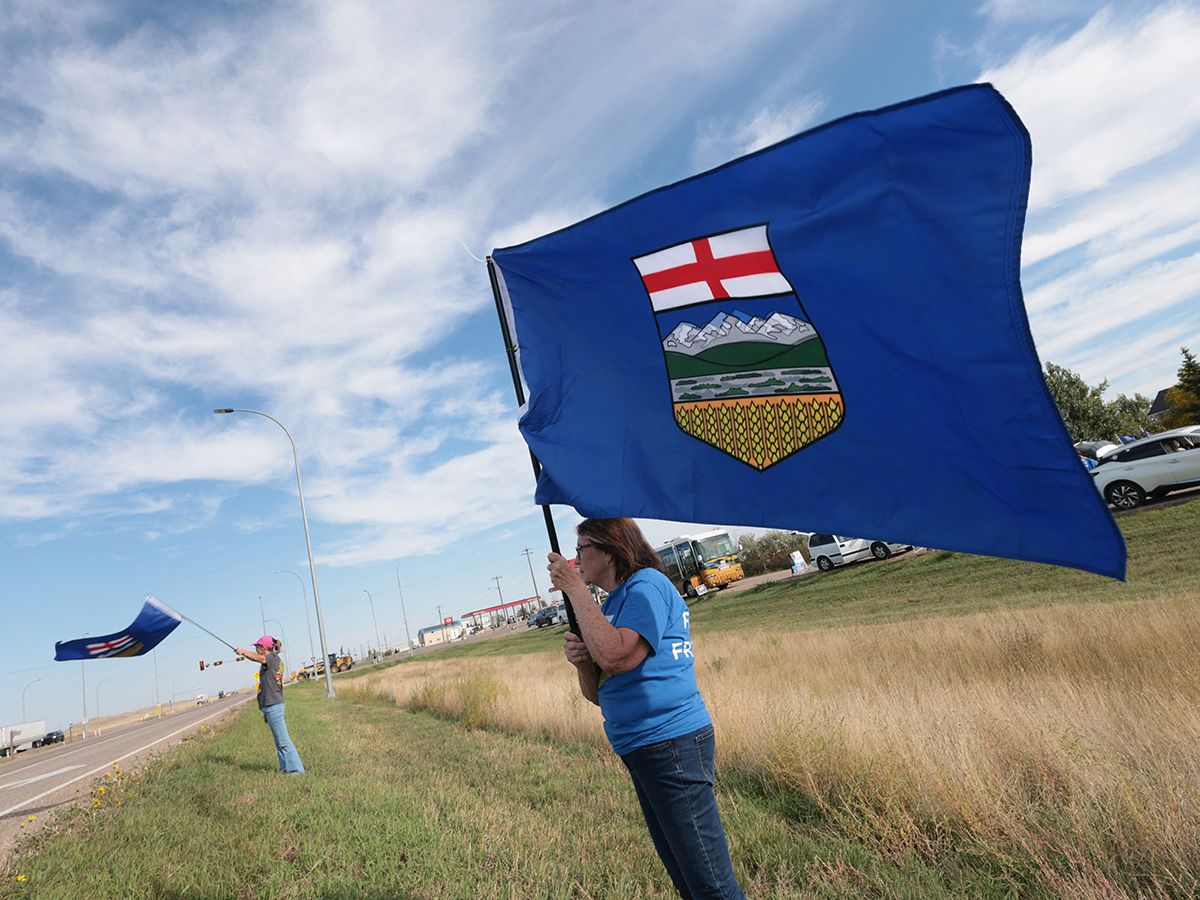
Alberta’s separatists, some of whom have been credited with getting Premier Danielle Smith elected by swaying the United Conservative Party vote in her favour, have been pushing their case for Alberta going it alone.
asserted
Alberta → credit → it
Media coverage of the resentments that have fuelled Alberta separatism tend to focus on matters such as Ottawa’s restrictive energy policies or the province’s systematic underrepresentation in Parliament.
asserted
that → fuel → Parliament
Flying more under the radar, and visible here at this gathering, is a separatism intellectually rooted in the basic beliefs of small government, God’s supremacy and individual rights.
asserted
separatism → fly → government
Barnes, who was ousted from former Alberta premier Jason Kenney’s caucus in 2021 for speaking out against the government’s COVID vaccine and other policies, tells the crowd about how he was elected to the Alberta legislature on a promise to uphold a few fundamental principles: “smaller government, lower taxes, stronger property rights and more choice,” he says.
asserted
he → oust → principles
“And then I saw my party, my colleagues, drift away from that because of a strong administrative state and a desire for power.”
asserted
party → see → power
In many ways, the views expressed here are no different than the more classical conservative beliefs of minimal government intervention and a tendency to favour local centres of government over centralized ones.
asserted
views → express → ones
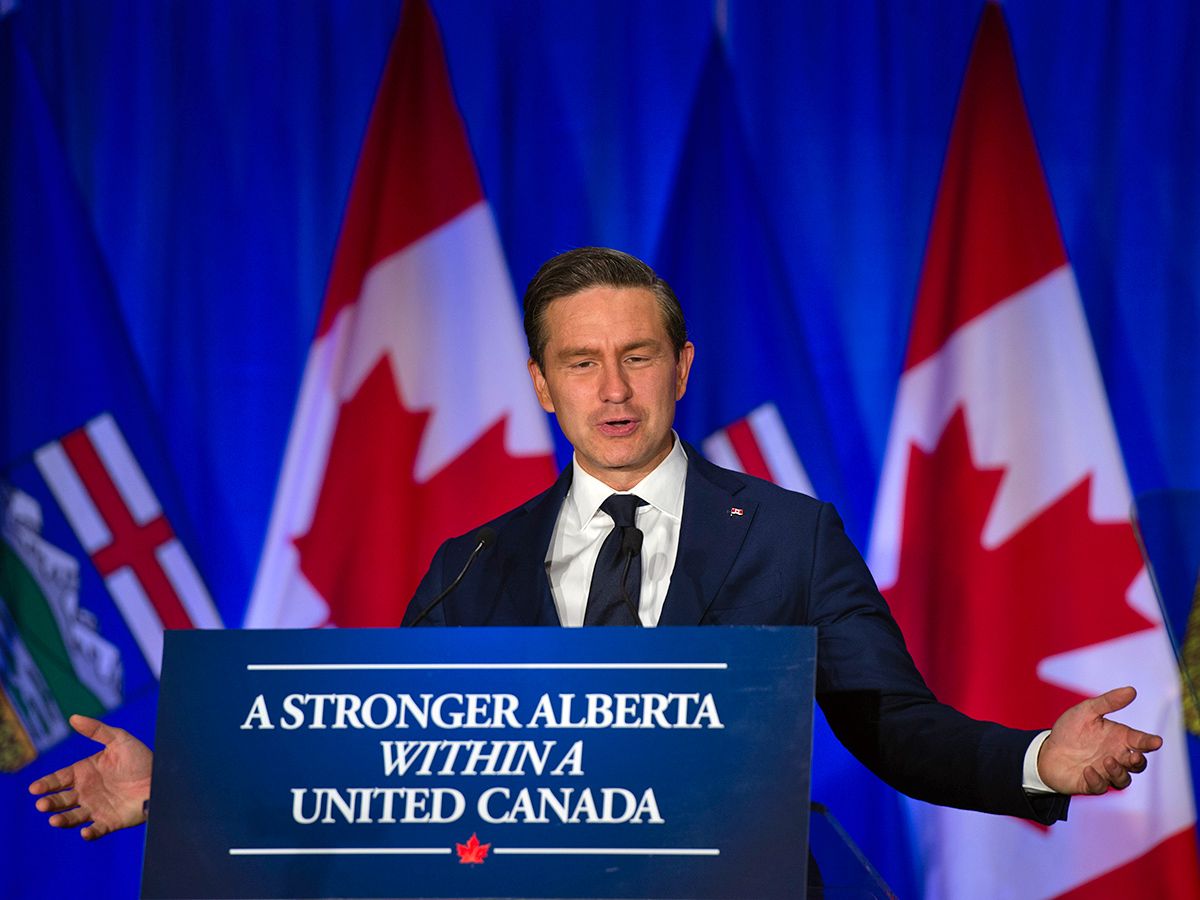
Last month, Conservative Leader Pierre Poilievre, who has long said he opposes separation, made a case for Canada based on the idea that the federal government could, and must, be narrowed down in order to give provinces more control over their affairs.
uncertain
government → say → affairs
“What Albertans are complaining about is not Canada,” he told a gathering of Conservative supporters in Edmonton.
asserted
he → complain → Edmonton
“It is the government policies that are actually inconsistent with how Canada was meant to work in the first place.”
asserted
Canada → mean → place
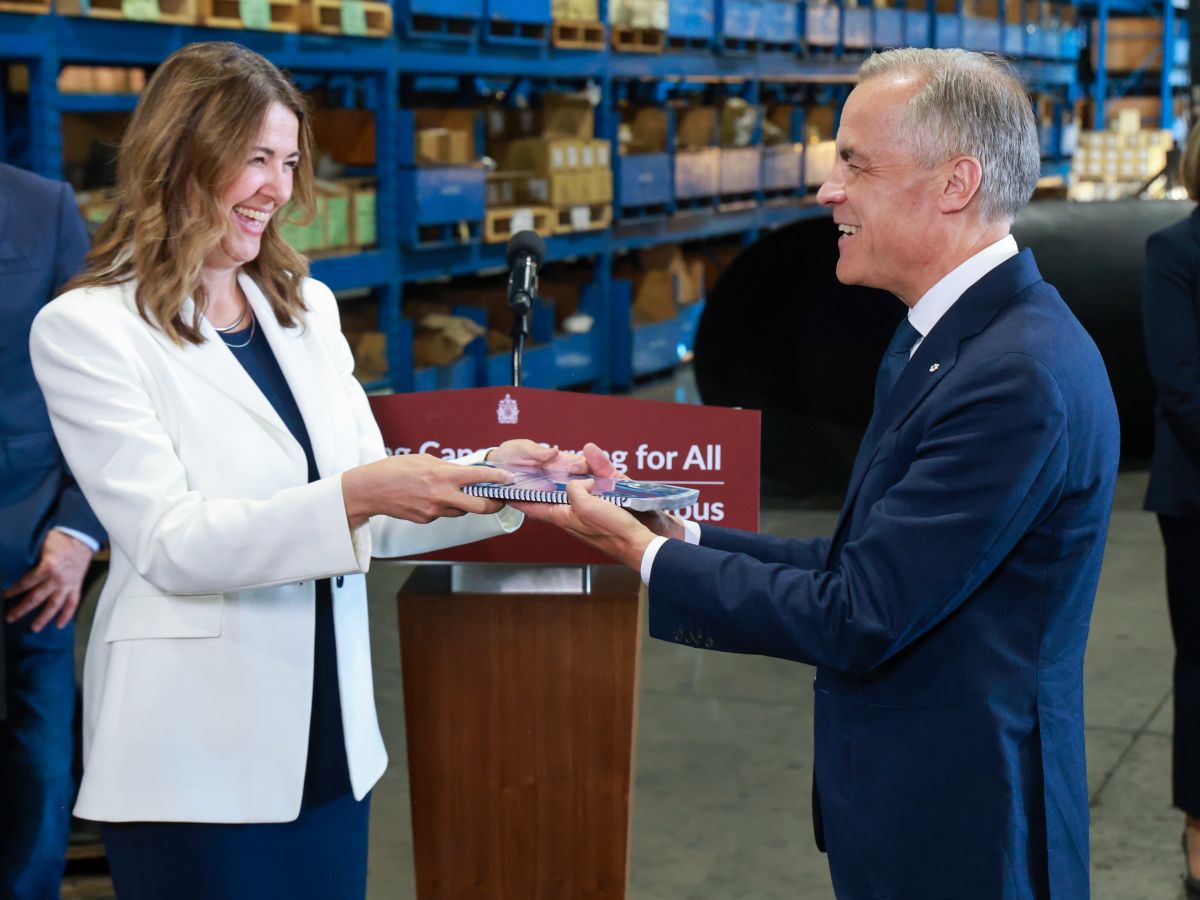
Premier Smith, for her part, has also opposed separation, instead favouring a series of constitutional or other policy changes that would put more decision-making power in the hands of provinces.
asserted
that → oppose → provinces
For Barnes, who previously represented the Cypress–Medicine Hat riding in the legislature, such efforts are prone to get intercepted by a Parliament that inherently favours non-Albertan interests.
asserted
that → represent → interests
He said he aims to combat what he views as that institutional rot with a new federal political party that will run strictly in Alberta’s 37 electoral ridings.
asserted
that → say → ridings
Called Alberta Now, the party would, according to Barnes, give the province new sway in Ottawa by explicitly representing the interests of Alberta in the House of Commons.
uncertain
party → call → Commons
Much like the Bloc Québécois represents Quebec, the theory goes, such a party could tilt the balance of power in favour of Alberta’s voters.
uncertain
party → represent → voters
“I think we have to accept that in our current first-past-the-post Westminster system, it’s going to lead to two parties,” he told attendees.
asserted
he → think → attendees
“So let’s figure out a way for libertarian values to work strongly in a conservative party.”
asserted
values → let → party
The strategy has been tried before: The Alberta Now party is reminiscent of the now-defunct Maverick Party, which ran candidates solely in Alberta and Saskatchewan ridings in the 2021 election.
asserted
which → try → election
(The party won less than two per cent of the vote in both provinces.)
asserted
party → win → provinces
Barnes’s Alberta Now gambit follows the thinking of the more pragmatic wing of the wider separatist movement, which tends to prefer to advocate for the province’s interests within Canada’s existing political system.
asserted
which → follow → system
The pragmatists — who often want to “send a message to Ottawa” rather than actually separate from the country — see the upcoming referendum more or less as a negotiating tactic.
asserted
who → want → tactic
By showing their discontent with Ottawa’s political class, they see an opportunity to gain the leverage needed to enact various policies that would reverse what they see as the country’s inherent political bias toward Ontario and Quebec.
asserted
they → show → Ontario
With that, they believe they could establish a provincial police force; push for constitutional changes that protect gun owners, secure greater provincial control over immigration rates; and eliminate Canada’s equalization program, among other things.
uncertain
that → believe → things
Such separatist sympathizers see Canada’s power structure as inherently anti-Albertan and fundamentally broken, but believe it can be reformed through effective political pressure.
asserted
it → see → pressure
…and 120 more, not listed.
 The Aporia