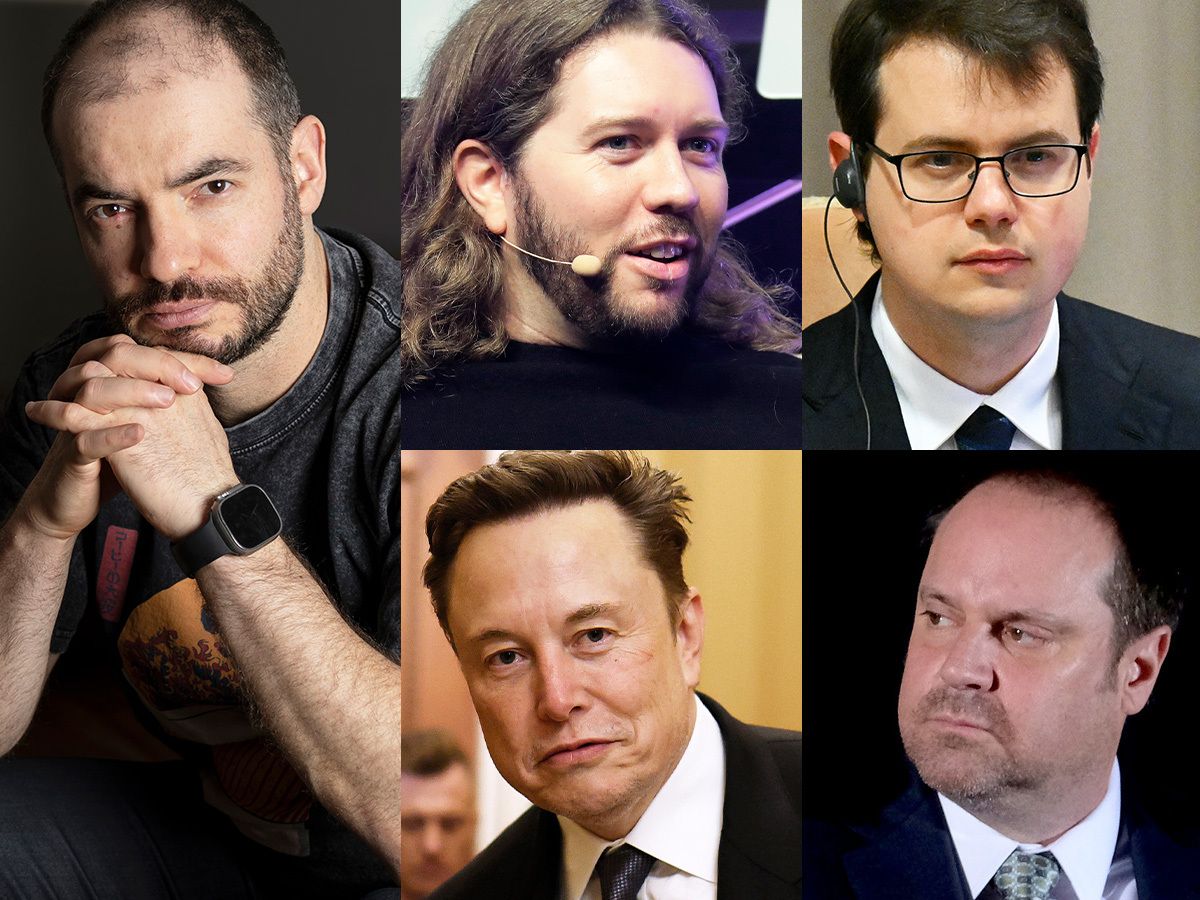
Canada’s tech industry is warning that the country continues to lose its best and brightest entrepreneurs to the U.S., an issue that has taken on new urgency as tariff threats have prompted Ottawa to try to diversify away from the U.S. economy.
asserted
threats → warn → economy
This week, various tech entrepreneurs, politicians and economists began to weigh in on data that show just how big the problem has become.
asserted
problem → begin → data
According to recent figures, there are at least 517 U.S.-based tech firms with Canadian founders — or, entrepreneurs who were educated in Canada but later left for the U.S. — that have together raised more than US$400 billion.
uncertain
that → accord → billion
“The numbers make it clear that Canada’s founders and entrepreneurs are leaving in droves — and they are taking the future value they will generate with them,” said Lucy Hargreaves, co-founder of the business advocacy group Build Canada, who issued a call to action in the form of a LinkedIn essay that triggered an online conversation about the trend.
asserted
that → make → trend
The data also show the pace of innovators leaving Canada for the U.S. has more than doubled since 2023, as U.S. tech giants have gone on a hiring spree to feed their AI ambitions.
asserted
giants → show → ambitions
Before then, just over 20 founders had left for the U.S. per year, according to the data.
uncertain
founders → leave → data
In 2023, that figure leapt to 60 people, and to 93 people in 2024.
asserted
figure → leap → 2024
Of those founders, 88 per cent were educated at Canadian universities, including the University of Waterloo, University of Toronto and McGill University.
asserted
cent → educate → Toronto
Among the most prominent Canadian entrepreneurs to decamp to the U.S. are OpenAI co-founder Ilya Sutskever, who attended University of Toronto, and Uber founder Garrett Camp, who grew up in Calgary.
asserted
who → decamp → Calgary
Others include SpaceX’s Elon Musk, who still retains Canadian citizenship, Anthropic’s Chris Olah and eBay’s Jeff Skoll.
asserted
who → include → citizenship
Canada has for decades struggled to stop its most innovative people and ideas from moving to the U.S., where entrepreneurs can take advantage of the country’s much larger capital investment pool and generally more pro-business policies.
asserted
entrepreneurs → struggle → pool
In a May 2026 blog post, Waterloo, Ont.-based tech investor Jesse Rodgers — drawing from the Dominion List, a database of U.S.-based companies with founders who were born or educated in Canada — crunched the latest numbers showing how many founders had left for U.S. cities.
uncertain
founders → draw → cities
The figures in that post began to resurface this week, as numerous Canadian voices began to weigh in on social media.
asserted
voices → begin → media
Conservative Leader Pierre Poilievre sought to place the blame for Canada’s loss of talent to the U.S. on Prime Minister Mark Carney, saying he is “driving entrepreneurs out of Canada with taxes, red tape, and inflation” while simultaneously giving “handouts, bailouts, and carveouts to the club of corporate insiders.”
asserted
he → seek → insiders
On LinkedIn and X, Hargreaves called the issue a “five alarm fire,” saying it threatens to undermine Canada’s future economic growth at a time when the country is grappling with a systemic productivity crisis.
“
asserted
country → call → crisis
Not only is it a ‘today’ problem,” she said in an interview, “but this is a leak in one of our most valuable resources, and the compounding effects over time, I think, can be incredibly devastating for the Canadian economy.”
asserted
I → say → economy
That’s become all the more relevant in the wake of U.S. President Donald Trump’s trade war with Canada, which has seen Carney seek to pivot toward new markets in Asia and Europe.
asserted
Carney → become → Asia
“We talk a lot about positioning, we talk a lot about sovereignty, about making ourselves stronger internally,” Hargreaves said.
asserted
Hargreaves → talk → sovereignty
“If the U.S. is raising walls and raising tariffs and doing more and more to put America first, I think the smartest response for Canada is to make Canada the obvious place for the next 517 founders to stay and build here.
asserted
founders → raise → Canada
Observers are aligned on their belief that Canada is losing strategic talent and ideas to the U.S., but are in less agreement over the reasons why.
asserted
Canada → align → reasons
Many point to the massive pool of investors that are available to entrepreneurs just south of the border, particularly in hubs like New York and Silicon Valley.
asserted
that → point → York
Others say Canada lacks pro-business policies that can make up for the country’s lack of scale compared to the U.S.
asserted
that → say → U.S.
Hargreaves said more generous capital gains taxes or reduced income taxes on top earners could go some way toward keeping entrepreneurs, but she said that properly addressing the problem would require a much broader response.
uncertain
addressing → say → response
Perhaps the leading reason why Canadian entrepreneurs move to the U.S. is simply so that they can be around other successful people, said Andre Charoo, managing partner at San Francisco-based venture capital fund Maple VC.
asserted
Charoo → lead → VC
While Canada has its share of homegrown success stories, he said, it simply doesn’t have the density of people who are striving to build the next $1-billion company.
asserted
who → have → company
“We produce some of the most ambitious people in the world … but ambitious people want to be around other ambitious people,” Charoo said.
asserted
Charoo → produce → people
Charoo, who helped launch Uber’s Canadian division, was educated at the University of Toronto, but moved to California in the early 2000s to take advantage of the opportunities there.
asserted
who → launch → opportunities
He’s far from alone
asserted
He → ’ → ?
According to the data drawn from the Dominion List, 287 of the 517 companies that Canadian and Canadian-educated founders have started in the U.S. are based in San Francisco.
uncertain
founders → accord → Francisco
New York hosts the next most companies at 61.
asserted
York → host → 61
 The Aporia