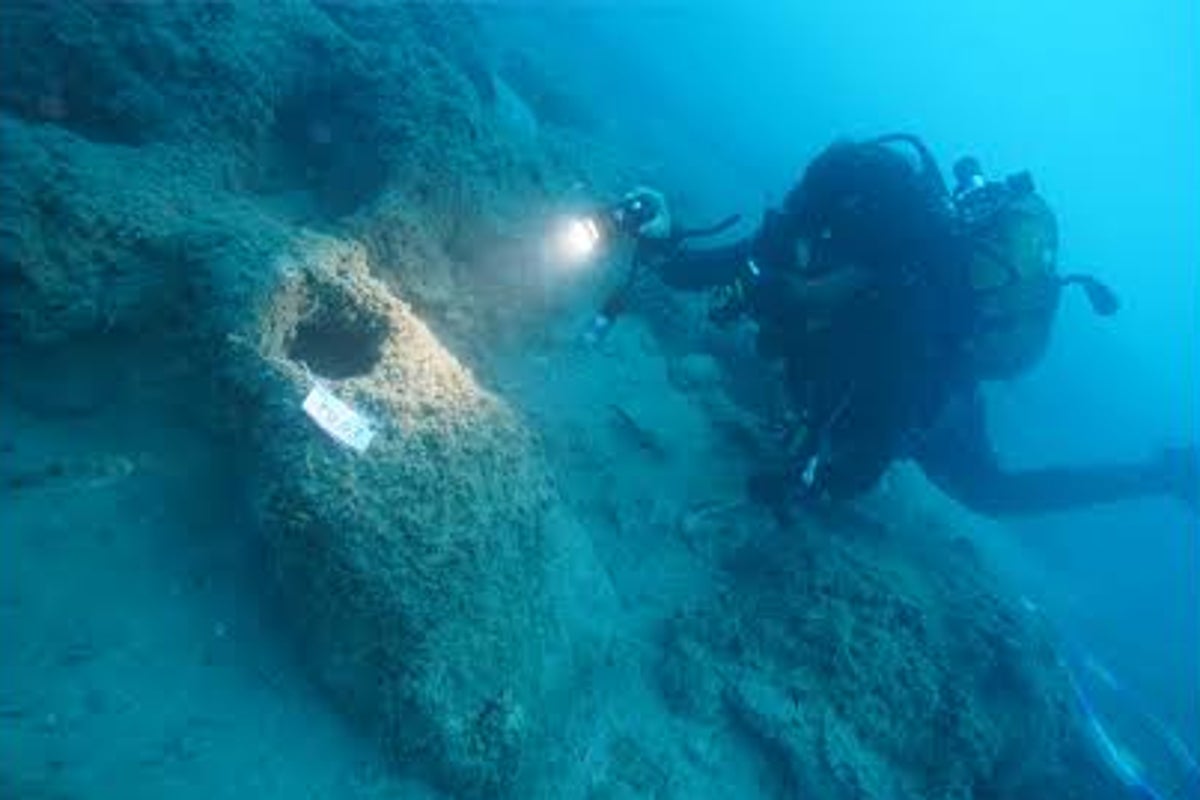
World’s oldest shipwreck discovered by archaeologists near Turkish island

Read the original at The Independent ↗
Cite

Gilliver, L. (2026, October 14). World’s oldest shipwreck discovered by archaeologists near Turkish island. The Independent. https://www.independent.co.uk/news/science/archaeology/shipwreck-turkey-archaeology-mediterranean-sea-b3066445.html

Dated from the outlet's own feed. Check the original for its byline.

The Independent · collected 2026-10-14 · by Liam Gilliver

Quick Summary

Archaeologists discovered what is believed to be the world’s oldest shipwreck off the coast of Kekova Island in Turkey. The wreck dates back to between 2600 and 2400 BC during the Early Bronze Age, predating previous records by several centuries. Researchers from the Mediterranean Archaeology Association found ceramic storage vessels and stone anchors at a depth of about 30 meters, indicating that the ship was likely used for trade across the Mediterranean Sea around the same time as the construction of the Great Pyramid.
Written locally by qwen2.5:14b on 2026-10-14, using this article's own text rather than the other coverage of the same event (that is the story summary below).

AI analysis runs on qwen2.5:14b, locally

Story summary

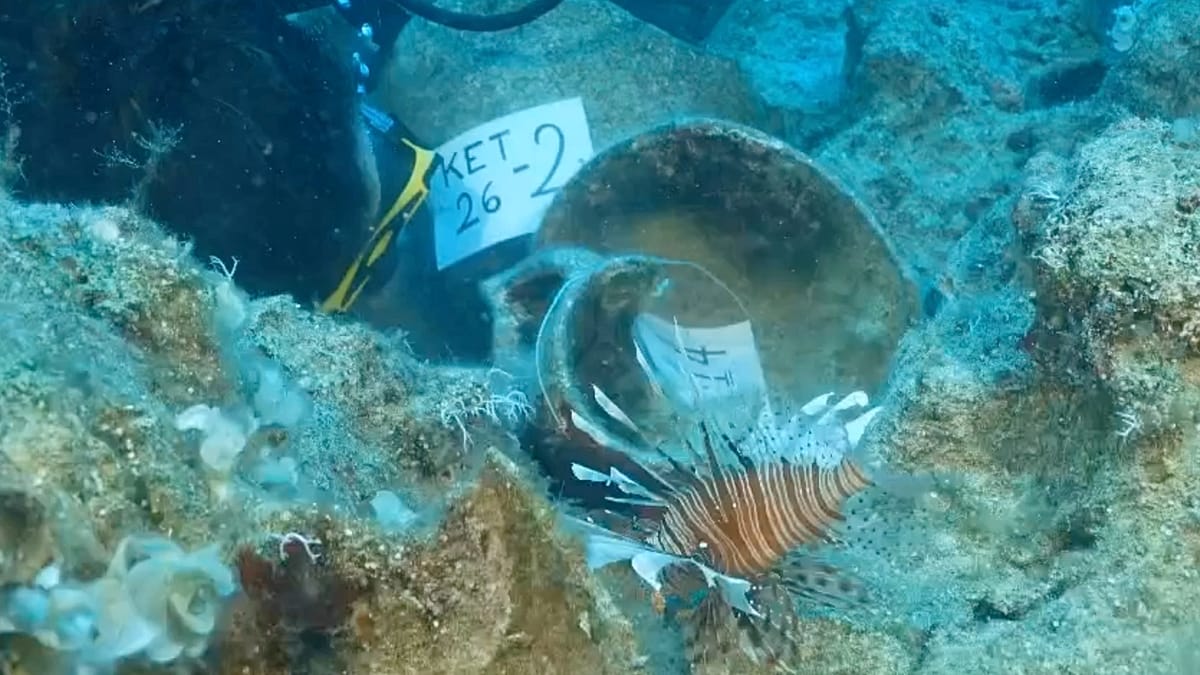
Archaeologists have discovered what is believed to be the world's oldest shipwreck off the coast of Turkey, near Kekova Island in Antalya. The wreck, dated between 4,400 and 4,700 years old (around 2600-2400 BC), predates previous records by several hundred years. Despite the wooden structure not surviving, more than 30 ceramic storage pots and three stone anchors were found scattered across the seabed at a depth of about 30 meters. Prof Hakan Öniz from Akdeniz University led the Mediterranean Archaeology Association expedition that uncovered this significant find. The artifacts are now undergoing conservation to preserve their historical value, providing crucial insights into maritime trade during the Early Bronze Age in the Mediterranean region.

Written for “World's Oldest Shipwreck Found Off Turkey” on 2026-10-14, grounded in this article and the 2 other(s) covering the same event.

Story

📰 World's Oldest Shipwreck Found Off Turkey
World · 3 article(s) covering the same event. Compare every outlet's account →

Compared with similar articles

This article reads unscored and hedges 17% of its claims. Each row says how that neighbour differs.
BBC News · 0.94 cosine similarity
⚖️ leaning not scored 🔴 9% hedged 3 of 32 📰 publisher trust 72
“Both articles describe the discovery of the world's oldest shipwreck off the coast of Turkey, dated to between 4,400 and 4,700 years old during the Early Bronze Age.”
Euronews · 0.91 cosine similarity
⚖️ leaning not scored 🔴 0% hedged 0 of 5 📰 publisher trust 60
“Both articles describe the discovery of the world's oldest shipwreck off Turkey’s Mediterranean coast near Kekova Island in Antalya, with similar details about its age and artifacts.”
How this article was measured signals, leaning charts, publisher record, byline, topics and claims

Signals How these are calculated →

Claims extracted
12
sentences that state something as happening or true
Uncertain
17%
2 of 12 hedged ("reportedly", "may", "according to")
Leaning
not political
takes no side on a contested political question
Publisher signals
59/100
The Independent's corrections and hedging, across everything collected from it. Not a measure of accuracy.
Outlets on this story
3
World
Same framing elsewhere
1
articles that frame the event the way this one does
Analyzed 2026-10-14 · how these are computed

How this is being covered How these are calculated →

Article leaning vs. publisher reliability
Source leaning vs. consistency

Publisher

The Independent · 2262 article(s) · 5 correction(s) detected
Running correction rate · 5 correction(s)

Who wrote this

Liam Gilliver
3 article(s) here · 1 carrying a prediction
🔮 South Africa will hold local elections on 4 November to decide which parties control municipal councils.
🔮 “The three-holed stone anchors found in the wreck area resemble those seen in Bronze Age Minoan, Cypriot, Anatolian, Levantine contexts,” they stated, “while the single-holed stone anchor resembles those seen on the Bronze Age Anatolian and Levantine coasts It was unclear if the anchors were indeed part of the ship, but they could shed more light on anchoring technology in use in the region during the Bronze Age.
🔮 "A clear message is required: there will be no tolerance for any attacks on Polish children, nor for the descent of public life into anarchy," said Poland’s Interior Minister Marcin Kierwinski on Sunday evening.
Also by Liam Gilliver
Nothing else under this byline is closely related to this article, so these are simply their most recent.

Topics

Akdeniz University Anatolian Antalya Independent Levantine

Subjects

Akdeniz University ORG · 2× Anatolian NORP · 2× Antalya GPE · 2× Levantine NORP · 2× Dokos GPE · 1× Hakan Öniz PERSON · 1× Independent NORP · 1× Kekova GPE · 1× Turkey GPE · 1× the Mediterranean Archaeology Association ORG · 1×

Narrative

“Akdeniz University conducted a study of the Kekova region in the Demre district of Antalya, during which a shipwreck carrying Early Bronze Age amphorae was documented,” archaeologists noted in a study detailing the discovery in the Journal of Maritime Archaeology.
framing: assertive · carried by 1 article(s) · first seen 2026-10-14
🔮 “The three-holed stone anchors found in the wreck area resemble those seen in Bronze Age Minoan, Cypriot, Anatolian, Levantine contexts,” they stated, “while the single-holed stone anchor resembles those seen on the Bronze Age Anatolian and Levantine coasts It was unclear if the anchors were indeed part of the ship, but they could shed more light on anchoring technology in use in the region during the Bronze Age.
2026-10-14 · The Independent
World’s oldest shipwreck discovered by archaeologists near Turkish island · assertive framing

Claims (12 extracted, 2 hedged)

Archaeologists have found the world’s oldest-known shipwreck off the coast of Turkey, dating the Early Bronze Age vessel to between 4,400 and 4,700 years ago. asserted
Archaeologists → find → vessel
The ship, built around the same time as the Great Pyramid, was likely a trade vessel carrying cargo across the Mediterranean Sea, researchers from the Mediterranean Archaeology Association said. asserted
researchers → build → Association
While the wooden structure of the ship was gone, archaeologists dated the ceramic storage vessels and stone anchors found in the wreck off Kekova Island to 2600-2400 BC, making it the oldest shipwreck in the world. asserted
it → go → world
It takes the title from the Dokos shipwreck in the Aegean Sea which dates to around 2200 BC. asserted
which → take → BC
The shipwreck was discovered during excavations led by underwater archaeologist Hakan Öniz from Akdeniz University in Antalya. asserted
shipwreck → discover → Antalya
“Akdeniz University conducted a study of the Kekova region in the Demre district of Antalya, during which a shipwreck carrying Early Bronze Age amphorae was documented,” archaeologists noted in a study detailing the discovery in the Journal of Maritime Archaeology. asserted
archaeologists → conduct → Archaeology
Some of these amphorae, which are large double-handled pottery vessels, are similar to Early Bronze Age pottery from the Levant, which includes modern-day Lebanon, Syria, Israel, and Palestine. asserted
which → include → Lebanon
The ceramic vessels were found scattered across a partly sandy and partly rocky seabed at a depth of about 30m. One vessel seemed similar to containers used for transporting agricultural products like wine and olive oil during the Bronze Age. asserted
vessel → find → Age
“The upper part of this amphora features two parallel lines made with a pointed tool, as well as a zigzag pattern in the middle,” archaeologists wrote. asserted
archaeologists → feature → middle
Researchers also found two three-holed stone anchors and a single-holed anchor around the wreck, similar to those found at other Bronze Age sites. asserted
Researchers → find → sites
“The three-holed stone anchors found in the wreck area resemble those seen in Bronze Age Minoan, Cypriot, Anatolian, Levantine contexts,” they stated, “while the single-holed stone anchor resembles those seen on the Bronze Age Anatolian and Levantine coasts It was unclear if the anchors were indeed part of the ship, but they could shed more light on anchoring technology in use in the region during the Bronze Age. uncertain
they → find → Age
“Current information suggests that the shipwreck is from a small vessel that sank while sailing east to west during the Early Bronze Age,” the study noted. uncertain
study → suggest → Age
💬Give feedback
🕘History 🎫Support