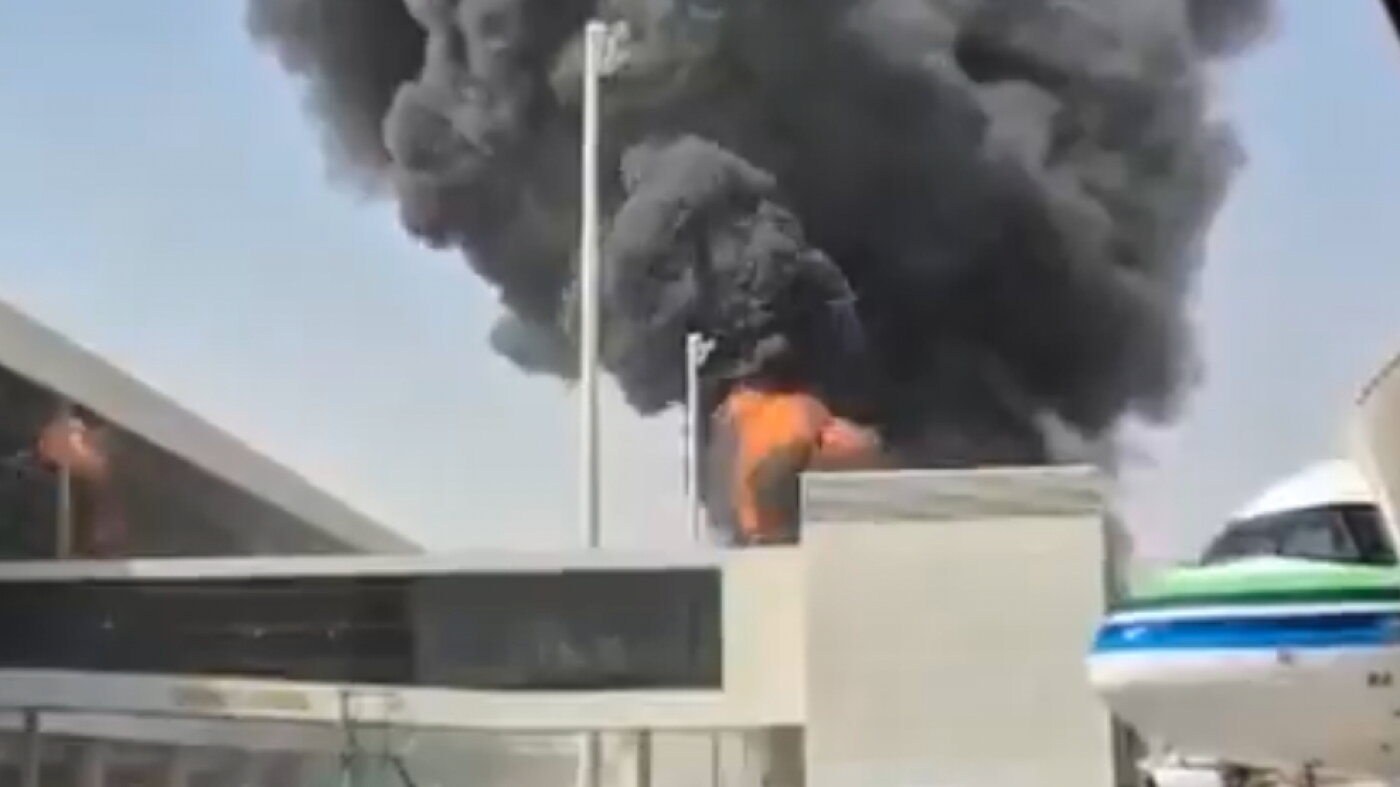
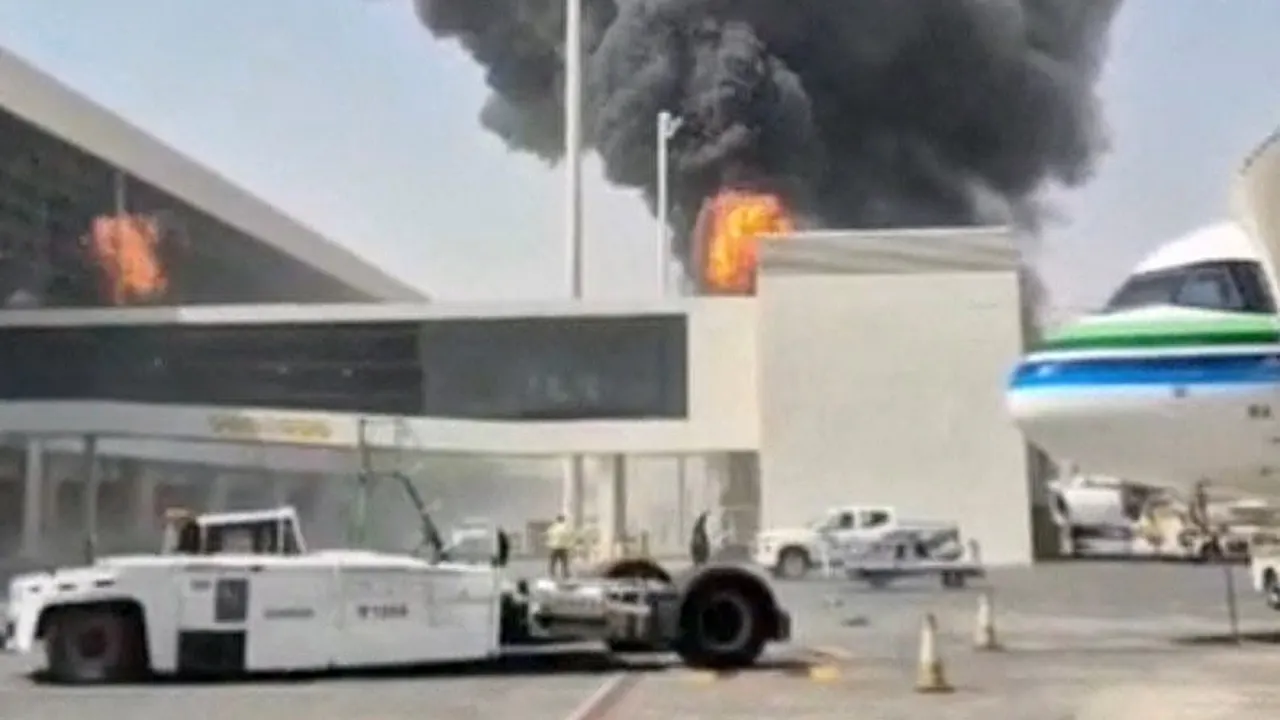
The death toll from the Houthis’ weekend attacks on Riyadh’s King Khalid International Airport has risen to over 15, including one American — and Iran’s Yemeni partner shows no signs of stopping its assaults.
asserted
partner → rise → assaults
The Islamic Republic of Iran is escalating against Saudi Arabia with two goals.
asserted
Republic → escalate → goals
Tehran hopes its proxy attacks on America’s partners will indirectly pressure Washington into ending the ongoing blockade of Iran and prevent future American airstrikes.
asserted
attacks → hop → airstrikes
Locally, the Houthis themselves want Riyadh to end its support for Yemen’s internationally recognized government, or IRG, which is fighting the group in a civil war that reignited this summer after four years of relative peace.
asserted
that → want → peace
Iran deploys the Houthis — a radical Shiite group that chants “death to America” — as a tool in Tehran’s ongoing conflict with the United States.
asserted
that → deploy → States
President Donald Trump must respond to the group as a core element of Iran’s strategy, not a separate conflict.
asserted
Trump → respond → strategy
In late August, the US Treasury targeted Iran’s aviation sector under Operation Economic Outcast, a campaign meant to financially isolate the regime in Tehran.
asserted
Treasury → target → Tehran
Secretary Scott Bessent pledged, “All the Iranian airlines will be shut down around the world.”
asserted
airlines → pledge → world
Mohsen Rezaei, Secretary of Iran’s Supreme National Security Council, warned regional countries that if they cooperate with American efforts to block Iranian aviation, “their airports will have no flights either.”
asserted
airports → warn → flights
Now, Houthi attacks have stopped operations at King Khalid International Airport until at least Oct. 17.
Yahya Saree, the group’s military spokesman, reiterated calls for airlines to avoid Saudi airports after the Houthis’ latest attack on Monday.
Saree excepted the “airports and airspace” of the holy cities of Mecca and Medina, despite recent Houthi attacks on both of them.
asserted
Saree → stop → them
The Houthis homed in on Riyadh’s major airport after Yemen’s IRG, with Saudi support, launched a counteroffensive on Oct. 5.
asserted
IRG → home → Oct.
That came after the Houthis seized Yemen’s entire Red Sea coast — including the critical southern chokepoint of Bab al-Mandeb — in mid-September, an advance that Yemeni forces and Riyadh hope to reverse.
asserted
forces → come → that
In July and August, the Houthis launched attacks on the Abha and Najran International Airports in southern Saudi Arabia — retaliatory strikes after Riyadh hit the airport in Sanaa, the Houthi-controlled capital of Yemen, to prevent an Iranian plane carrying IRGC commanders from landing.
asserted
Riyadh → launch → commanders
Houthi fighters have launched all these recent attacks using Iranian weapons, deploying lessons learned from years of assaults on Saudi Arabia and on Israel.
asserted
fighters → launch → Israel
An initial Saudi investigation indicates the group targeted King Khalid on Saturday first with a swarm of drones that overwhelmed air defenses, creating an opening for the cruise and ballistic missiles that followed.
asserted
that → indicate → missiles
The Houthis’ ballistic missiles arsenal comprises carbon copies of Iranian short- and medium-range ballistic missiles; the group relies heavily on Iranian technology and components for its weapons systems.
asserted
group → comprise → systems
They replicate Iran’s strategy of using weapons that are cheap to manufacture but costly for enemies to intercept
At the same time, the Islamic Republic is supporting Houthi efforts to expand indigenous weapons production.
asserted
Republic → replicate → production
The group has invested in diversifying its supply chain and increasing domestic weapons production, using ever more dual-use technologies from China, particularly for drones.
asserted
group → invest → drones
The Houthi war machine has been fueled by Tehran’s steady state sponsorship for more than a decade — allowing the group to build up an arsenal larger than some European militaries.
asserted
group → fuel → militaries
The group has established de facto rule over the majority of Yemen’s 42 million people, and exploits the population to keep the military effort humming.
asserted
group → establish → effort
By focusing their fire on Yemeni forces and on Saudi Arabia, the Houthis have thus far avoided a direct American response.
asserted
Houthis → focus → response
However, the attacks on Riyadh’s crucial international airport, and the loss of an American life, may be a bridge too far for Trump — who said Tuesday that “the Houthis are behaving very badly.”
uncertain
Houthis → say → Trump
Washington cannot be half in-half out when it comes to answering Houthi aggression.
asserted
it → come → aggression
Trump must increase US support to Saudi Arabia, and to the forces of Yemen’s IRG, as they fight to drive back the Houthi advance.
asserted
they → increase → advance
When escalation in the Arabian Peninsula began in July, Trump said “the US will hold Iran responsible” for Houthi attacks on Saudi tankers.
asserted
Iran → begin → tankers
Now, this must extend to all Houthi attacks.
asserted
this → extend → attacks
Washington cannot allow Tehran to use its proxies to foster chaos without paying a price.
asserted
Tehran → allow → price
As Trump pursues a policy of maximum pressure against the Islamic Republic, he must do the same against the Houthis.
asserted
he → pursue → Houthis
If not, Tehran will continue to brandish the Houthis as a deadly weapon against the United States and America’s partners.
asserted
Tehran → continue → States
 The Aporia