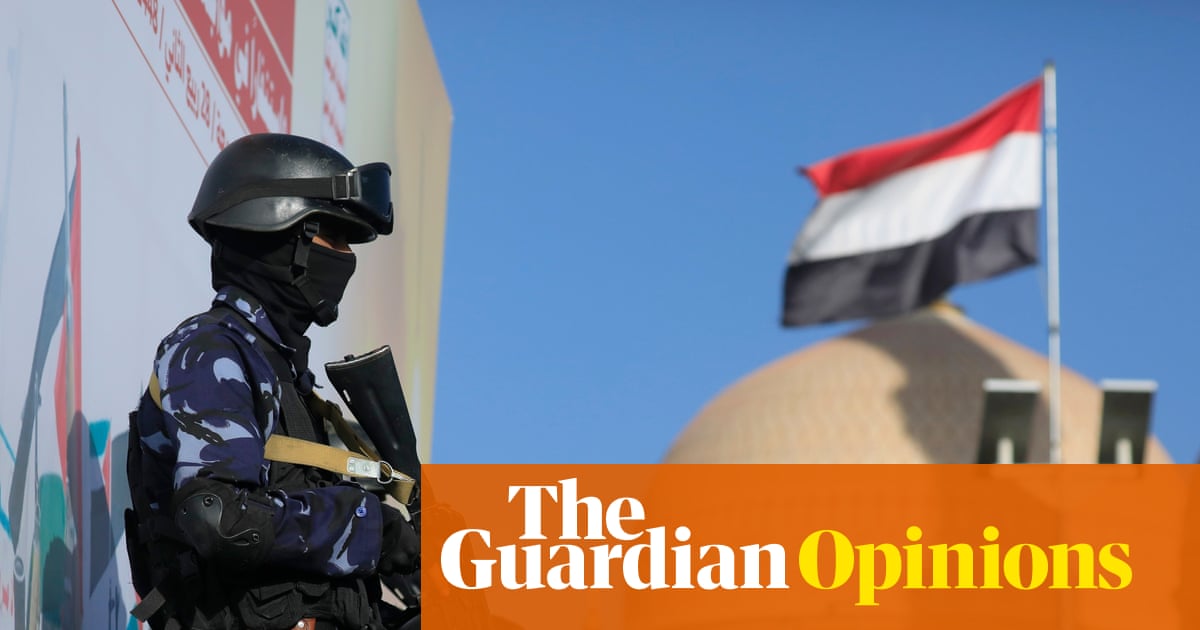
How the Houthis’ Zaydi heritage influences their strikes in Iran

Read the original at Semafor ↗
Semafor · collected 2026-10-13 · by Manal Albarakati

Quick Summary

The article explains how the Houthis’ actions in Yemen are influenced by their Zaydi heritage rather than solely by Iranian support. It details how Hussein al-Houthi, the group's founder, combined Zaydism with revolutionary Shia doctrine after visiting Iran in 1995. This fusion led to the establishment of a militia resembling Hezbollah and culminated in the Houthis seizing control of Sanaa in 2014. The piece describes how the Houthis have taken over much of Yemen's government structure, imposing their own officials on ministries and neighborhoods while engaging in extortion and child soldier recruitment.
Written locally by qwen2.5:14b on 2026-10-13, using this article's own text rather than the other coverage of the same event (that is the story summary below).

AI analysis runs on qwen2.5:14b, locally

Story summary

The Houthis' recent missile strikes on Riyadh are rooted in their unique Zaydi heritage rather than being solely Iranian proxies. Baraa Shiban, a RUSI fellow who previously criticized the group's abuses, explains that after a 1995 trip to Iran, Hussein al-Houthi, the founder of the Houthis, combined Zaydism with Tehran’s revolutionary ideology and modeled his militia after Hezbollah. Zaydism emphasizes rule by descendants of the Prophet Muhammad rather than elected officials.

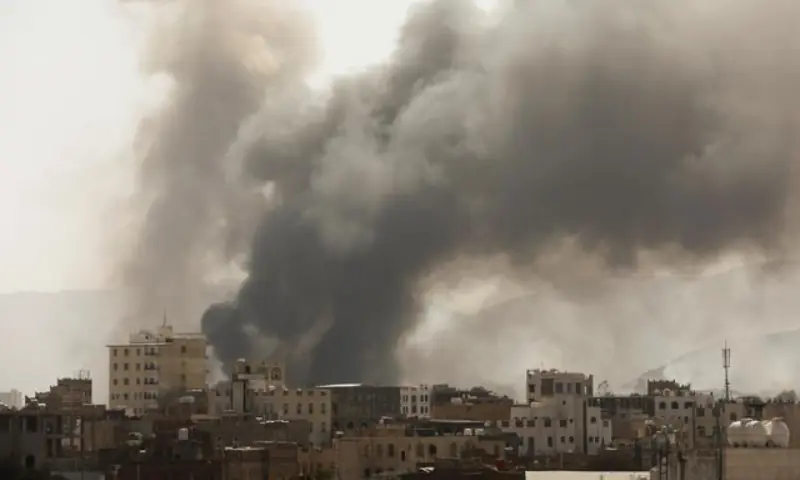
The Houthis seized control of Sanaa in 2014 following their founder's death a decade earlier. Instead of replacing Yemen’s state apparatus, they have undermined it by placing “supervisors” over every ministry and neighborhood, engaging in extortion, indoctrination, and child soldier recruitment. Today, the Houthis control most of Yemen's population and dominate one of the world's busiest shipping lanes.
Written for “Houthis Heritage And Strikes” on 2026-10-13, grounded in this article and the 0 other(s) covering the same event.
Why this leaning score
The model judged this article politically coded and scored it -0.35, but all 1 of its quote(s) are attributed speech - words the article quotes from someone, not the article's own narration, so the score is not published.
Written under an earlier scoring contract, which gave a paragraph rather than checkable quotes. Re-analysing this article replaces it.
Leaning score withheld for article 76470: attributed speech only · logged 2026-10-13

Story

📰 Houthis Heritage And Strikes
Politics · 1 article(s) covering the same event.

Compared with similar articles

This article reads unscored and hedges 0% of its claims. Each row says how that neighbour differs.
Yemen escalation different event · 90%
Dawn
⚖️ Leans left 🔴 24% hedged 5 of 21 📰 publisher trust 71
“Article A discusses a specific Houthi attack on Riyadh airport that occurred on Saturday, resulting in casualties. Article B is an analysis of the historical and religious background of the Houthis' actions without mentioning any specific event.”
The Straits Times
⚖️ Leans right 🔴 0% hedged 0 of 3 📰 publisher trust 59
“Article A discusses Saudi Arabia's response to recent Houthi attacks, while Article B focuses on the historical and religious background of the Houthis' actions.”
The Independent
⚖️ Leans strongly right 🔴 8% hedged 4 of 53 📰 publisher trust 59
“Article A discusses recent military actions by Houthis against Saudi Arabia, while Article B focuses on the historical and religious background of the Houthi movement.”
The Guardian
⚖️ Leans left 🔴 6% hedged 2 of 35 📰 publisher trust 68
“Article A describes the specific missile attack on Riyadh by Houthi rebels that killed at least 13 people, while Article B focuses on the historical and ideological background of the Houthis without mentioning this particular event.”
Al Jazeera
⚖️ leaning not scored 🔴 0% hedged 0 of 5 📰 publisher trust 60
“Article A describes an attack on Riyadh airport by Houthis resulting in casualties, while Article B is an analysis of the historical and religious context of the Houthis' actions.”

Cite this article

Albarakati, M. (2026, October 13). How the Houthis’ Zaydi heritage influences their strikes in Iran. Semafor. https://www.semafor.com/article/10/13/2026/how-the-houthis-zaydi-heritage-influences-their-strikes-in-iran

Dated from the outlet's own feed. Check the original for its byline.

How this article was measured signals, leaning charts, publisher record, byline, topics and claims

Signals How these are calculated →

Claims extracted
6
sentences that state something as happening or true
Uncertain
0%
0 of 6 hedged ("reportedly", "may", "according to")
Leaning
withheld
no quote in the article backed the model's score
Publisher signals
95/100
Semafor's corrections and hedging, across everything collected from it. Not a measure of accuracy.
Outlets on this story
1
Politics
Same framing elsewhere
1
articles that frame the event the way this one does
Analyzed 2026-10-13 · how these are computed

How this is being covered How these are calculated →

Article leaning vs. publisher reliability
Source leaning vs. consistency

Publisher

Semafor · 945 article(s) · 0 correction(s) detected
No corrections detected for this publisher. That may mean careful reporting, or simply that nothing has been checked.

Who wrote this

Manal Albarakati
12 article(s) here · 0 carrying a prediction
🔮 The new project joins others along the strip that may eventually form a megalopolis in the coming decades.
2026-10-02 · assertive framing · Abu Dhabi-Dubai gap draws billion dollar projects
🔮 The twice-rescheduled Arabian Travel Market finally opens this week, while GITEX will bring 200,000 tech visitors in December.
2026-09-14 · assertive framing · Dubai crams events delayed by the war into autumn
🔮 Saudi Arabia’s sovereign wealth fund backs EV maker Lucid, whose assembly plant near Jeddah will reach full production this year, and owns CEER, the kingdom’s homegrown EV brand expected to roll out this year.
2026-09-08 · assertive framing · Chinese carmaker ROX begins production in Abu Dhabi
🔮 When Sheikh Rashid bin Saeed Al Maktoum, Dubai’s ruler at the time, began building Jebel Ali in the 1970s, 35 kilometers outside his city, Dubai’s merchants worried the new port would starve the one they already had.
🔮 For anyone wondering whether Wall Street would still fly to Riyadh in wartime, Saudi Arabia’s flagship investment conference has published its RSVPs.
🔮 In November, Jeddah-born brothers Turki and Abdulrahman Gazzaz will open Post-Oil 2026 at Qatar’s design biennial.
2026-09-04 · assertive framing · New museum reflects on Saudi's post-oil future
Also by Manal Albarakati
Nothing else under this byline is closely related to this article, so these are simply their most recent.
All 12 articles by Manal Albarakati →

Topics

Houthis Iranian Riyadh Yemen Zaydi

Subjects

Yemen GPE · 3× Houthis NORP · 2× Zaydi NORP · 2× Baraa Shiban PERSON · 1× Iranian NORP · 1× National Dialogue ORG · 1× Prophet PERSON · 1× RUSI NORP · 1× Riyadh GPE · 1× Zaydism PERSON · 1×

Narrative

In an explainer video, Baraa Shiban, a RUSI fellow who sat on Yemen’s National Dialogue before being exiled for criticizing the group’s abuses, describes how, after a 1995 trip to Iran, the group’s founder, Hussein al-Houthi, fused the Zaydi branch of Shia Islam with Tehran’s revolutionary doctrine and built a militia in Hezbollah’s image.
framing: assertive · carried by 1 article(s) · first seen 2026-10-13
2026-10-13 · Semafor
How the Houthis’ Zaydi heritage influences their strikes in Iran · assertive framing

Claims (6 extracted, 0 hedged)

The Houthis firing missiles at Riyadh are not just Iranian proxies — they’re heirs to a 1,000-year-old Zaydi imamate that ruled northern Yemen on and off until the modern state was established in 1962. asserted
state → fire → 1962
Zaydism holds that power belongs to the Prophet’s descendants, not elected officials. asserted
power → hold → descendants
In an explainer video, Baraa Shiban, a RUSI fellow who sat on Yemen’s National Dialogue before being exiled for criticizing the group’s abuses, describes how, after a 1995 trip to Iran, the group’s founder, Hussein al-Houthi, fused the Zaydi branch of Shia Islam with Tehran’s revolutionary doctrine and built a militia in Hezbollah’s image. asserted
founder → sit → image
The group seized Sanaa in 2014, a decade after its founder was killed. asserted
founder → seize → 2014
Rather than replace the state, the Houthis hollowed it out, Shiban said, assigning a “supervisor” to sit over every ministry and neighborhood, extorting businesses, indoctrinating the public, and recruiting children as soldiers. asserted
Shiban → replace → soldiers
They now rule most of Yemen’s population and sit on one of the world’s busiest shipping lanes. asserted
They → rule → lanes
💬Give feedback
🕘History 🎫Support