The Gulf has entered a new era of instability. If its leaders think they can rely on old alliances, they are wrong | Nesrine Malik

Read the original at The Guardian ↗
The Guardian · collected 2026-10-12 · by Nesrine Malik

Quick Summary

Nesrine Malik writes an opinion piece discussing the recent escalation of violence in the Gulf region, particularly noting a Houthi rebel attack on Riyadh that killed at least 13 people and injured 300 others. The article argues that this event marks a new era of instability for Gulf countries, no longer shielded by traditional alliances with the US or Israel due to recent conflicts involving Iran. Malik emphasizes how these attacks have disrupted the region's economic integration into the global community, impacting tourism and infrastructure critical to their economies.
Written locally by qwen2.5:14b on 2026-10-12, using this article's own text rather than the other coverage of the same event (that is the story summary below).

AI analysis runs on qwen2.5:14b, locally

Story summary

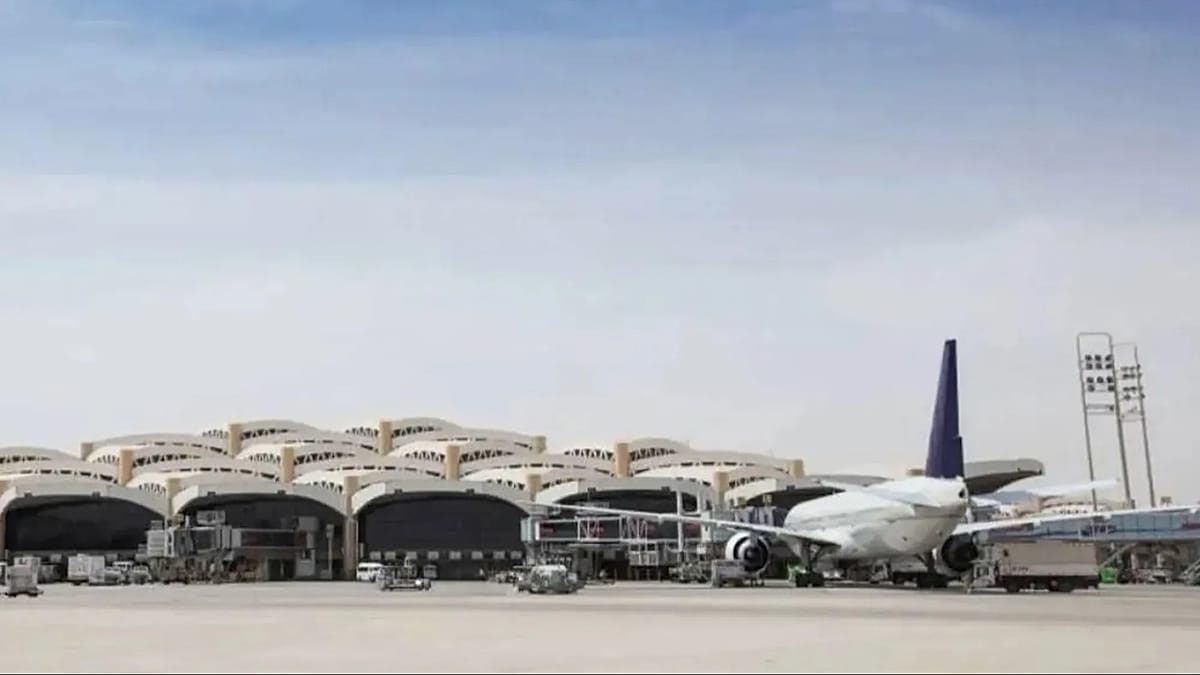
Saudi Arabia's King Khalid International Airport in Riyadh was hit by Houthi rebels from Yemen twice within 24 hours. The first attack on Saturday killed at least 13 people and injured over 300, marking the deadliest strike on Saudi soil in more than a decade. On Sunday, another attack killed one Pakistani resident and wounded eleven others. These strikes came as Israel's former attorney general testified in corruption cases against Prime Minister Benjamin Netanyahu. Meanwhile, U.S. President Donald Trump considered joining Saudi-led military operations against the Houthi rebels, who are backed by Iran. The attacks heightened tensions and raised concerns about a wider conflict in the Middle East, with experts warning of further cross-domain escalation involving aviation infrastructure.

Written for “Saudi Airport Attacks Houthi War” on 2026-10-12, grounded in this article and the 97 other(s) covering the same event.
Why this leaning score
The article's own words the score was based on. Each is quoted verbatim and was checked against the article text before being stored, so you can find it in the original.
Reading Leans left (beta estimate) Confidence high
Leaning: leans left for article 73369 (high confidence, 3 verified quotes) · logged 2026-10-12

Signals How these are calculated →

Claims extracted
35
claim-shaped sentences
Uncertain
6%
2 of 35 hedged
Leaning
Leans left
of the writing, not the subject · beta estimate
Correction & hedging signals
59.9
corrections and hedging in what we collected; not a measure of accuracy
Outlets on this story
98
World
Narrative spread
1
articles carrying this framing
Analyzed 2026-10-12 · how these are computed

Story

📰 Saudi Airport Attacks Houthi War
World · 98 article(s) covering the same event. See how they differ ↓

How this is being covered How these are calculated →

Article leaning vs. publisher reliability
Source leaning vs. consistency

Compared with similar articles

This article reads leans left and hedges 6% of its claims. Each row says how that neighbour differs.
Toronto Star
⚖️ leaning not scored 🔴 12% hedged 3 of 26 📰 publisher trust 63
“Both articles describe the same deadly attack on King Khalid International Airport in Riyadh, allegedly by Yemen's Houthi rebels.”
Euronews
⚖️ leaning not scored 🔴 7% hedged 2 of 30 📰 publisher trust 60
“Both articles describe the same specific missile attack by Houthi rebels on Riyadh's international airport over the weekend, resulting in a similar death toll.”
Semafor
⚖️ Leans left 🔴 19% hedged 3 of 16 📰 publisher trust 95
“Both articles describe the same deadly missile strike on King Khalid International Airport in Riyadh by Houthi rebels, occurring around the same time.”
The Straits Times
⚖️ Leans strongly right further right than this 🔴 0% hedged 0 of 12 📰 publisher trust 59
“The casualty numbers do not match between the two articles (3 killed vs at least 13 killed), indicating they are describing different occurrences.”
Al Jazeera
⚖️ leaning not scored 🔴 0% hedged 0 of 16 📰 publisher trust 60
“Both articles describe the same Houthi attack on Riyadh International Airport that killed at least 12 people and wounded over 300 others.”
Dawn
⚖️ leaning not scored 🔴 10% hedged 4 of 42 📰 publisher trust 71
“Both articles describe the exact same attack on Riyadh's King Khalid International Airport, with matching casualty figures and timing.”
Dawn
⚖️ leaning not scored 🔴 9% hedged 4 of 45 📰 publisher trust 71
“Both articles describe the same Houthi attack on Riyadh's King Khalid International Airport, with similar casualty figures and condemnations.”
Dawn
⚖️ Leans right further right than this 🔴 0% hedged 0 of 20 📰 publisher trust 71
“Both articles refer to the same Houthi attack on Riyadh's international airport that occurred on Saturday, resulting in casualties.”
Dawn
⚖️ leaning not scored 🔴 10% hedged 4 of 40 📰 publisher trust 71
“Both articles describe the same Houthi attack on Riyadh's international airport, resulting in similar casualty figures.”
South China Morning Post
⚖️ Leans left 🔴 0% hedged 0 of 2 📰 publisher trust 67
“The articles discuss different events: one focuses on the vulnerability of sports events due to regional conflicts, while the other reports on a specific missile attack in Riyadh.”

Publisher

The Guardian · 1221 article(s) · 3 correction(s) detected
Running correction rate · 3 correction(s)
2026-10-03
Prison chief in Christa Pike case oversaw five ‘botched’ executions, lawyers say
2026-09-20
Judge orders Kennedy Center to give 30 days’ notice before major physical changes
2026-09-07
Former Louisiana mayor completes 90-day jail term for raping 16-year-old boy

Who wrote this

Nesrine Malik
3 article(s) here · 1 carrying a prediction
🔮 This may feel like an overstatement – casualties have been relatively low, after all, compared with Gaza and Iran – but the gradual erosion of peace and security in places such as Saudi Arabia, Qatar and the UAE has changed the region more dramatically than its leaders would like to acknowledge. The first audacious and unthinkable thing happened just over a year ago, when Iran fired missiles at an airbase in Qatar that hosts American troops, in retaliation for US strikes on Iranian nuclear facilities.
🔮 Iran’s president, Masoud Pezeshkian, responded in his own speech by saying that Iran has been the victim of US terrorism and aggression, and would defend itself with the “utmost strength”.
🔮 In the other, Vanity Fair describes calls for Zohran Mamdani to not attend the 9/11 memorial ceremony as partly founded in “inchoate, emotional” impulses, that see “the city’s first Muslim mayor as a stand-in for the 19 Muslims who hijacked four planes and turned them into deadly weapons, part of the ‘them’ who attacked ‘us’.”
Also by Nesrine Malik
Nothing else under this byline is closely related to this article, so these are simply their most recent.

Topics

Iran Israel Qatar Saudi Arabia UAE

Subjects

Iran GPE · 11× Saudi Arabia GPE · 5× Houthi NORP · 3× Houthis NORP · 3× Qatar GPE · 3× Yemen GPE · 3× Doha GPE · 2× Israel GPE · 2× UAE GPE · 2× Saudi Arabia’s GPE · 1×

Narrative

The most disastrous consequence of all, from the perspective of Gulf rulers, has been the way the attacks have disrupted the integration of these countries into the cosmopolitan international community as places for tourism, entrepreneurs, sports and entertainment.
framing: assertive · carried by 1 article(s) · first seen 2026-10-12
🔮 This may feel like an overstatement – casualties have been relatively low, after all, compared with Gaza and Iran – but the gradual erosion of peace and security in places such as Saudi Arabia, Qatar and the UAE has changed the region more dramatically than its leaders would like to acknowledge. The first audacious and unthinkable thing happened just over a year ago, when Iran fired missiles at an airbase in Qatar that hosts American troops, in retaliation for US strikes on Iranian nuclear facilities.

Claims (35 extracted, 2 hedged)

On Saturday, Houthi rebels launched a shocking and deadly attack on Saudi Arabia’s capital city, Riyadh. asserted
rebels → launch → city
At the time of writing, the missile strike on King Khalid international airport has killed at least 13 people and left 300 injured, marking a significant turn in a regional conflagration that is only getting more intense. asserted
that → kill → conflagration
It was the single most deadly attack on any Gulf country since the US and Israel launched their war on Iran in February. asserted
US → launch → February
In Saudi Arabia, a country that is unaccustomed to such fatalities, the death toll is bewilderingly high and likely to prompt a bloody response. asserted
toll → prompt → response
Over the past year, the Gulf has entered a new era of instability that is not temporary and cannot be reversed. asserted
that → enter → instability
This may feel like an overstatement – casualties have been relatively low, after all, compared with Gaza and Iran – but the gradual erosion of peace and security in places such as Saudi Arabia, Qatar and the UAE has changed the region more dramatically than its leaders would like to acknowledge. The first audacious and unthinkable thing happened just over a year ago, when Iran fired missiles at an airbase in Qatar that hosts American troops, in retaliation for US strikes on Iranian nuclear facilities. uncertain
that → feel → facilities
Lighting up Doha’s skies and scattering shrapnel, it was a dismaying moment for the Qataris, who have tried to maintain good relations with Iran. asserted
who → light → Iran
But even then there was a degree of warning and coordination that signalled this was a face-saving measure on the part of the Iranians. asserted
this → be → Iranians
Yet later in 2025, with no similar warning or choreography, Israel struck Doha, targeting Hamas members and killing five Palestinians and one Qatari. asserted
Israel → strike → Palestinians
That was the beginning of the end of a longstanding norm and expectation – that there was a sanctity to Gulf lives and sovereignty, one secured by the management of the relationship with Iran and alliances with the US. asserted
That → be → US
Then came Donald Trump and Benjamin Netanyahu’s war on Iran, which drew the Gulf once and for all into the fray. asserted
which → come → fray
In retaliation for what Iran perceives to be political, military and logistical support for the offensive against it, Tehran struck Saudi Arabia, Qatar, the UAE, Bahrain, Kuwait and Oman. asserted
Tehran → perceive → Arabia
Iran targeted military sites, energy facilities, desalination plants – an entire infrastructure that underpins the economies of these countries. asserted
that → target → countries
Much damage was inflicted by the suspension of normal life, the shuttering of schools for months, the closure of airports and airspace. asserted
damage → inflict → airports
The most disastrous consequence of all, from the perspective of Gulf rulers, has been the way the attacks have disrupted the integration of these countries into the cosmopolitan international community as places for tourism, entrepreneurs, sports and entertainment. asserted
attacks → disrupt → tourism
They spent billions in securing Formula One, golf and boxing franchises and tournaments, only for a flurry of cheap drones to put it all at risk. asserted
flurry → spend → risk
The result is a fractious unravelling that has reactivated hostilities that had laid dormant. asserted
that → unravel → hostilities
Yemen’s civil war began in 2014 when Iran-backed Houthi rebels, in aspiration to greater autonomy in the minority Shia homelands, took over the capital city, Sana’a. asserted
rebels → begin → city
In 2015, a coalition of countries led by Saudi Arabia led a brutal campaign to dislodge the Houthis from territories they had gained, intensifying a grinding civil war that killed hundreds of thousands and triggered a humanitarian catastrophe. asserted
that → lead → catastrophe
The war deescalated in 2022 with a de facto but unformalised division of the country between the Houthis and an internationally recognised, Saudi-backed government; the ceasefire was followed by rapprochement between Saudi Arabia and Iran. asserted
ceasefire → deescalate → Arabia
But the 2026 war against Iran opened up strategic opportunities and stirred political loyalties, triggering a surge of Houthi advancement in Yemen. asserted
war → open → Yemen
The closure of the strait of Hormuz, for example, shifted more commercial traffic along Yemen’s coastline, prompting the Houthis to make advances and seize territory in order to gain control of the now crucial Bab al-Mandab strait in the Red Sea. asserted
closure → shift → Sea
Tensions came to a head five months after the start of the war, with Saudi Arabia escalating strikes against the Houthis, and the Saudi-backed government bombing its own airport in Sana’a to prevent an Iranian plane from landing. asserted
government → come → plane
These developments are not just the result of a mischievous group seizing the moment, acting as spoiler in a bigger contest between Iran and the west. asserted
group → seize → Iran
The Houthis are backed by Iran, but they are not empty proxies for Iran; they have domestic ambitions and sharp regional animosities, particularly against the House of Saud, which they see an imperious and arrogant master to whom they shall never submit. asserted
they → back → whom
A senior Houthi official said that Saturday’s attack took place “so that the world understands” that Yemeni civilian infrastructure has been, and is being, targeted by the Saudis, gesturing towards that sense that Riyadh treats Yemeni lives as cheap. asserted
Riyadh → say → lives
From another perspective, what we are witnessing in the region is another consequence of Hamas’s 7 October attacks on Israel, and what followed in Gaza, Lebanon and Iran. asserted
what → witness → Gaza
The final piece that was stabilising the region’s tense equilibriums fell away when Trump decided that the safety and security of the US’s Gulf allies was secondary to his Iran “excursion”, as he called it. asserted
he → stabilise → it
The limits of relying on the US security umbrella became clear both to allies and enemies. asserted
limits → rely → allies
Last month, the Trump administration refused to extend military assistance to Saudi Arabia to fight the Houthis, after a meeting of US officials with the Houthis, who assured them that they would not attack US ships in the Red Sea, only Saudi vessels. asserted
they → refuse → Sea
What is upon Saudi Arabia now is a long, intractable war with a resourceful and impassioned antagonist, one willing to sustain a high degree of pain in ways that Riyadh can’t match without orienting itself entirely towards war. asserted
Riyadh → sustain → war
If the 2015 campaign is anything to go by, it will claim thousands of lives with only a remote possibility of a decisive outcome. uncertain
it → go → outcome
And so Saudi, and the entire Gulf, are pulled further into the relentless storm. asserted
Saudi → pull → storm
Trump cannot bring the Iran war to an end, Gaza remains an open wound, Israel continues to strike and occupy parts of Lebanon. asserted
Israel → bring → Lebanon
The Houthi resurgence represents a new reality in a region that is bewildered and losing lives and capital, stuck between old alliances that no longer work and new hostilities that are too calamitous to confront. asserted
that → represent → alliances

💬Give feedback
🕘History 🎫Support