'No choice': IMF says developing countries must cut spending despite Iran war shock

Read the original at Dawn ↗
Dawn · collected 2026-10-13 · by AFP

Quick Summary

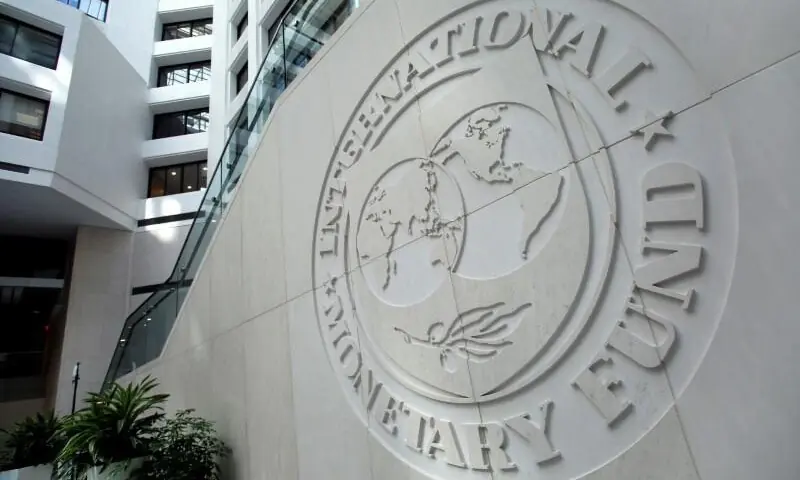
The International Monetary Fund (IMF) warned that developing countries, especially those heavily reliant on oil imports, face severe economic challenges due to the Iran war-induced energy crisis. IMF deputy director Petya Koeva Brooks stated during the organization’s Annual Meetings in Bangkok that these nations have no choice but to cut spending or risk debt restructuring amid rising inflation and depleted fiscal buffers. The IMF advises targeted subsidies while urging countries to rebuild financial reserves, highlighting the stark trade-offs for vulnerable nations already burdened by high debt levels.
Written locally by qwen2.5:14b on 2026-10-13, using this article's own text rather than the other coverage of the same event (that is the story summary below).

AI analysis runs on qwen2.5:14b, locally

Story summary

Finance officials from around 60 nations are gathering in Bangkok this week for the annual meetings of the International Monetary Fund (IMF) and World Bank. The event, which drew a record 18,000 attendees, is overshadowed by the ongoing US-Israel war on Iran and its economic ramifications, including soaring oil prices and inflation. IMF Managing Director Kristalina Georgieva highlighted that while advanced economies are benefiting from investments in artificial intelligence (AI), developing countries face significant challenges due to high energy costs exacerbated by the conflict. The IMF revised its forecast for global growth to 3.1% for 2026, up slightly from previous estimates but still sluggish, and warned that poorer nations must cut spending or risk debt restructuring despite the economic shock from the Iran war.

Written for “IMF Economic Forecasts And Advice” on 2026-10-13, grounded in this article and the 4 other(s) covering the same event.
Why this leaning score
The model judged this article politically coded and scored it +0.35, but 1 quote(s) could not be found in the article and the other 1 are attributed speech rather than the article's own narration, so the score is not published.
Written under an earlier scoring contract, which gave a paragraph rather than checkable quotes. Re-analysing this article replaces it.
Leaning score withheld for article 76018: no verified evidence · logged 2026-10-13

Story

📰 IMF Economic Forecasts And Advice
Economy/Business · 5 article(s) covering the same event. Compare every outlet's account →

Compared with similar articles

This article reads unscored and hedges 6% of its claims. Each row says how that neighbour differs.
The Hindu · 0.97 cosine similarity
⚖️ leaning not scored 🔴 5% hedged 1 of 19 📰 publisher trust 94
“Both articles report on the identical warning from the IMF about developing countries needing to cut spending due to the Iran war-fuelled energy shock, given during the IMF's Annual Meetings in Bangkok.”
The Hindu
⚖️ Leans right 🔴 13% hedged 3 of 23 📰 publisher trust 94
“Both articles describe the IMF's forecast and warnings during its Annual Meetings in Bangkok on October 13, 2026.”
Al Jazeera
⚖️ leaning not scored 🔴 33% hedged 4 of 12 📰 publisher trust 60
“The articles discuss related economic forecasts by the IMF due to the Iran war but describe different aspects and recommendations, not a single specific incident.”
Al Jazeera
⚖️ Leans left 🔴 14% hedged 3 of 21 📰 publisher trust 60
“The articles cover related topics during the same meetings but describe different aspects and do not focus on the exact same specific incident.”
Semafor
⚖️ leaning not scored 🔴 0% hedged 0 of 5 📰 publisher trust 95
“The articles discuss different aspects of economic forecasts and challenges related to the Iran war's impact but do not describe the same specific incident or time frame.”

Cite this article

AFP. (2026, October 13). 'No choice': IMF says developing countries must cut spending despite Iran war shock. Dawn. https://www.dawn.com/news/2036858/no-choice-imf-says-developing-countries-must-cut-spending-despite-iran-war-shock

Dated when The Aporia collected the article, usually within hours of publication. Check the original for its exact date and byline.

How this article was measured signals, leaning charts, publisher record, byline, topics and claims

Signals How these are calculated →

Claims extracted
18
sentences that state something as happening or true
Uncertain
6%
1 of 18 hedged ("reportedly", "may", "according to")
Leaning
withheld
no quote in the article backed the model's score
Publisher signals
71/100
Dawn's corrections and hedging, across everything collected from it. Not a measure of accuracy.
Outlets on this story
5
Economy/Business
Same framing elsewhere
1
articles that frame the event the way this one does
Analyzed 2026-10-13 · how these are computed

How this is being covered How these are calculated →

Article leaning vs. publisher reliability
Source leaning vs. consistency

Publisher

Dawn · 1595 article(s) · 3 correction(s) detected
Running correction rate · 3 correction(s)

Who wrote this

AFP
516 article(s) here · 1 carrying a prediction
🔮 Sometimes a doctor would join the ride.
🔮 The 71-year-old will head to the Gemelli hospital in the late morning, Vatican spokesman Matteo Bruni told AFP.
2026-10-13 · assertive framing · Pope Leo heads to Rome hospital for lung operation
🔮 In its World Economic Outlook, the IMF raised its forecast for 2026 global growth, largely on the back of advanced economies enjoying a boost from AI-related investments and economic activity.
🔮 In May 2025, a man stabbed three police officers, while three people were stabbed to death at a Seoul pizza restaurant that September.
🔮 Australia will do whatever it can to stop the "completely abhorrent" livestreaming of the execution of a U.S. prisoner from being available to view in the country, Prime Minister Anthony Albanese said on Tuesday (October 13, 2026).
🔮 The IMF warned on Tuesday (October 13, 2026) of "elevated" risks faced by the global financial system, with potential perils including an AI-related market correction and cyber threats that could have "severe" consequences.
🔮 In its World Economic Outlook, the IMF raised its forecast for 2026 global growth, largely on the back of advanced economies enjoying a boost from AI-related investments and economic activity.
🔮 he International Monetary Fund on Tuesday (October 13, 2026) forecast global growth in 2026 would slow less than previously expected because of advanced economies’ “resilience” in the face of war-fuelled energy prices, but warned low-income countries remained vulnerable to the supply shock.
🔮 Naila, a 17-year-old student in the city of Rennes who said she would participate in Tuesday’s demonstration, hoped it would “converge” with the wider one on Saturday.
🔮 British Prime Minister Andy Burnham met Manchester City Chairman Khaldoon Al Mubarak at an investment summit several years ago when he was mayor of the city, the Greater Manchester Combined Authority has said.
Wire or desk byline, not an individual reporter.
Also by AFP
Nothing else under this byline is closely related to this article, so these are simply their most recent.
All 516 articles by AFP →

Topics

AFP Annual Meetings IMF Iran The International Monetary Fund

Subjects

IMF ORG · 6× Koeva Brooks PERSON · 4× AFP ORG · 3× Iran GPE · 2× Bangkok GPE · 1× Petya Koeva Brooks PERSON · 1× Taiwan GPE · 1× Tehran GPE · 1× The International Monetary Fund ORG · 1× Washington GPE · 1×

Narrative

The IMF has called on countries to offer narrow, targeted subsidies in the wake of the crisis, while also recommending all governments work to rebuild fiscal buffers and address rising debt after years of fighting economic shocks since the pandemic. “Our messages indeed apply to most countries, but again, the trade-offs and the choices that have to be made are much more difficult for the most vulnerable countries,” Koeva Brooks said.
framing: assertive · carried by 1 article(s) · first seen 2026-10-13
🔮 In its World Economic Outlook, the IMF raised its forecast for 2026 global growth, largely on the back of advanced economies enjoying a boost from AI-related investments and economic activity.

Claims (18 extracted, 1 hedged)

The International Monetary Fund (IMF) warned on Tuesday that while low-income developing countries were dealing with the disproportionate impacts of the Iran war-fuelled energy shock, many had “no choice” but to cut spending or potentially face debt restructuring. asserted
many → warn → restructuring
Speaking to AFP on the sidelines of the organisation’s Annual Meetings in Bangkok, IMF deputy director of research, Petya Koeva Brooks, said that the heavily indebted oil-importing countries were facing the worst of the energy shock, and had difficult choices in helping their citizens through the crisis. asserted
countries → speak → crisis
“Unfortunately, after years of the global economy being hit [by] shock after shock, debt levels have increased quite a lot, and at the same time, inflation has become a problem,” she said. asserted
she → hit → time
The US war on Iran has plunged the Middle East into conflict and sent global energy prices soaring, as Tehran’s retaliatory action targeted Washington’s Gulf allies and curtailed oil and gas supplies. asserted
action → plunge → supplies
Those prices have begun to bleed into other goods, with the crisis also having an effect on crucial fertiliser supplies. asserted
crisis → begin → supplies
The IMF has called on countries to offer narrow, targeted subsidies in the wake of the crisis, while also recommending all governments work to rebuild fiscal buffers and address rising debt after years of fighting economic shocks since the pandemic. “Our messages indeed apply to most countries, but again, the trade-offs and the choices that have to be made are much more difficult for the most vulnerable countries,” Koeva Brooks said. asserted
Brooks → call → countries
The IMF’s World Economic Outlook, released on Tuesday, identified low-income developing countries that are net oil importers and are not exposed to the ongoing artificial intelligence technology investment boom as being the most vulnerable to the shocks from the Iran war. asserted
that → release → war
“For those countries that are most vulnerable, this is where the consumption basket is heavily weighted towards energy and food, and so indeed it is much much more difficult,” she said. “ asserted
she → weight → energy
The senior IMF official added that “many” low-income countries were in debt distress, or close to it, and that they should seek debt restructuring if they were not able to address the issue. asserted
they → add → issue
“Where debt is not sustainable, then resolving that debt and having orderly and timely restructuring is always better than waiting, because then the cost of restructuring down the road is going to be much higher,” she said. asserted
she → resolve → road
In its World Economic Outlook, the IMF raised its forecast for 2026 global growth, largely on the back of advanced economies enjoying a boost from AI-related investments and economic activity. asserted
IMF → raise → investments
Growth outcomes were highly uneven across economies, depending on their exposure to the war and whether they were integrated into AI supply chains. asserted
they → depend → chains
The world’s advanced economies were forecast to grow 2.1 per cent in 2026, with those in the AI supply chain such as Taiwan and South Korea posting significantly higher figures. asserted
those → forecast → figures
Koeva Brooks told AFP that if AI investment activity were to slow, the world economy “would see a negative impact on output, not only in advanced countries like the US but again through trade linkages also in Asia”. asserted
economy → tell → Asia
In the IMF’s worst-case scenario — of AI not delivering promised productivity gains — global GDP forecasts for 2028 would fall by as much as 0.4pc. asserted
forecasts → deliver → 0.4pc
Climate-related risks were another key part of the World Economic Outlook this year, and Koeva Brooks told AFP that some of the effects of a particularly intense El Niño phenomenon had already been taken into account in higher prices for certain food items. asserted
some → relate → items
The warming phase of a natural climate cycle, El Niño raises sea temperatures in the tropical Pacific, triggering changes in weather that can increase the risk of drought and flooding, and exacerbate man-made global warming. “We have a significant increase in beverage prices, in the prices of rice, and so on,” said Koeva Brooks. asserted
Brooks → warm → rice
“Of course, it could turn out that the domino effect is even bigger than what we currently have.” uncertain
we → turn → what

💬Give feedback
🕘History 🎫Support