Toronto Star
· collected 2026-10-13 · by Elaine Kurtenbach The Associated Press
The International Monetary Fund (IMF) has slightly increased its global growth forecast for this year to 3.1%, up from a previous estimate of 3.0% in July. The report notes that while AI is boosting economic activity, particularly in the U.S. and China, oil prices are expected to rise by nearly 41% this year, leading to higher inflation at 4.7%. IMF Managing Director Kristalina Georgieva highlighted during a meeting in Bangkok that AI's impact on jobs globally could be significant, with around 40% of jobs either augmented, downgraded, or eliminated due to technological changes.
Written locally by qwen2.5:14b on 2026-10-13,
using this article's own text rather than the other coverage of the
same event (that is the story summary below).
Story summary
Finance officials from around the world are gathering in Bangkok for the annual meetings of the International Monetary Fund (IMF) and World Bank, with 18,000 attendees registered, up by 4,000 since the last off-site meeting in Morocco. The events come amid the ongoing US-Israel war on Iran, now entering its eighth month, which has caused significant inflationary pressures globally. IMF Managing Director Kristalina Georgieva noted that rising interest rates, coupled with a severe energy supply shock due to the conflict, pose major risks to global economic growth, currently forecasted at 3.1% for 2026, up slightly from July's projection but still sluggish. The war has exacerbated high energy prices and debt issues in low-income countries, while advanced economies have benefited from increased investment in artificial intelligence (AI). IMF Deputy Director of Research Petya Koeva Brooks stressed that developing nations must cut spending or risk severe fiscal crises due to the compounded effects of debt and inflation, urging them to implement targeted subsidies amidst these challenges.
Written for “IMF Economic Forecasts And Policy Advice” on 2026-10-13,
grounded in this article and the 3 other(s) covering the same event.
BANGKOK (AP) — The International Monetary Fund on Tuesday slightly upgraded its outlook for the world economy for this year, but it’s still forecasting growth at a sluggish 3.1%.
asserted
it → upgrade → %
The IMF had forecast global growth at 3.0% in July.
asserted
IMF → forecast → July
The world economy expanded at a 3.5% annual pace in 2025.
asserted
economy → expand → 2025
The IMF Economic Outlook predicts that growth in the United States will remain steady at 2.3% in 2026 and 2027.
asserted
growth → predict → 2026
It said it now expects oil prices to be up nearly 41% this year, at an average of $96 a barrel, boosting global inflation to 4.7% in 2026 from 4.1% last year.
asserted
prices → say → %
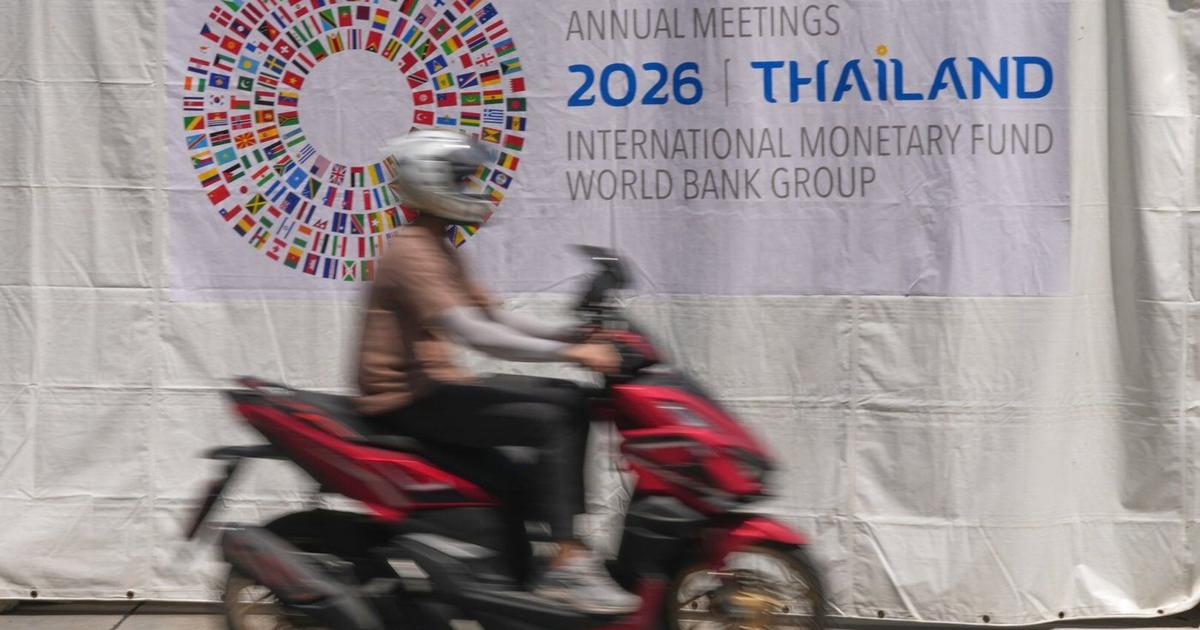
The update released Tuesday, as world economic and financial leaders gather in Bangkok for the fall meetings of the IMF and World Bank, says the boom in artificial intelligence is offsetting damage from sharply higher prices for oil and gas.
asserted
boom → release → oil
AI has uneven impacts
But the benefits of the AI boom are not shared equally: the U.S. and China account for more than three-quarters of net demand for imports of computer chips and other AI-related equipment, it said.
asserted
it → have → chips
“The outlook is highly uneven,” Silvana Tenreyro, the IMF’s director of research, told reporters in Bangkok.
asserted
Tenreyro → tell → Bangkok
Growth is increasingly concentrated, with 32 countries accounting for 95% of global growth, the report said.
asserted
report → account → growth
That compares with 54 countries as of April.
asserted
That → compare → April
“The global economy is not simply slowing or accelerating; rather, growth is being reallocated across countries according to their exposure to the war-induced supply shock and AI-related demand strength,” it says.
uncertain
it → slow → shock
AI’s effects on employment are a key focus of the meetings in Bangkok, which IMF Managing Director Kristalina Georgieva described during an event Monday as “a slow moving tsunami, but tsunami nonetheless.”
asserted
Georgieva → describe → tsunami
“The impact over time on jobs globally we estimate to be around 40% — jobs either augmented or downgraded or eliminated.
asserted
we → estimate → jobs
And we are already seeing some of this impact,” she said.
asserted
she → see → impact
Debt remains a key concern
Last week, the IMF chief urged countries both rich and poor to do a better job of improving their national finances, noting that mounting levels of debt pose a growing risk to global financial stability.
asserted
levels → remain → stability
That’s especially true at a time of high borrowing costs, Tenreyro said.
asserted
Tenreyro → ’ → costs
The report said growth in the advanced economies is forecast to pick up slightly this year, to 2.1% from 2.0% in 2025, and then to slow to 1.9% next year.
asserted
growth → say → %
It based its forecasts on the assumption that shipments of oil and gas through the Strait of Hormuz will resume by March, and that the boom in AI demand will moderate.
asserted
boom → base → demand
Growth in the U.S. will remain flat, at 2.3%, it said.
asserted
it → remain → %
Countries that are somewhat insulated from the energy shocks of the Iran war and that are benefiting from rapid adoption of AI are managing to keep growth on track.
asserted
that → insulate → track
But developing economies and emerging markets more vulnerable to higher costs for oil and gas will see growth slow to 3.7% this year from 4.5% in 2025, the report says.
asserted
report → develop → 2025
It forecasts they will regain momentum next year, expanding at a 4.4% annual pace.
asserted
they → forecast → pace
The situation is much worse in the Middle East and Central Asia, where those regions’ economies are expected to contract this year before recovering to a 6.3% rate of growth in 2027.
asserted
economies → expect → 2027
Outlooks vary by region
asserted
Outlooks → vary → region
The 21 European countries that share the euro currency are expected to grow by 1.1% this year and 1.2% in 2027.
asserted
that → share → 2027
China, the world’s No. 2 economy, is expected to expand 4.5% this year, down from 5% in 2025, in line with the government’s official target.
asserted
China → expect → target
India is once again forecast to be the world’s fastest-growing major economy, advancing at a 7% clip, down from a sizzling 7.7% last year.
asserted
India → forecast → %
The IMF is a 191-nation lending organization that works to promote economic growth and financial stability and to reduce global poverty.
asserted
that → work → poverty
At the meetings in Bangkok, finance ministers and central bank governors will assess the state of the world economy and discuss strategies to support financial stability and sustained growth.
asserted
ministers → assess → stability
_
AP journalists Haruka Nuga and Tian Macleod Ji contributed.
asserted
Nuga → contribute → ?
 The Aporia