That is 0 articles you have read today.
The Aporia is free and carries no advertising, so readers are the only
thing paying for it. If you are getting this much out of it, a small
donation is what keeps it independent.
Daily limit reached
You have read 0 articles today.
That is more than the 15 a day The Aporia gives away,
and well past what it can carry on nothing. Your allowance resets at
midnight.
There is no advertising here and nothing about you is sold, so readers
are the only thing paying for it. If the site is worth this much of
your day, it is worth a few dollars.
Everything else stays open: the
maps, the
directory and
search do
not count against this, and neither does re-opening something you have
already read today.
The United Nations Conference on Trade and Development (UNCTAD) projects that global economic growth will slow to 2.6% in 2026 and 2.7% in 2027 from 2.9% in 2025, with developing economies experiencing a decline to 4% from 4.7%. The report attributes this slowdown to increasing technological barriers and policy restrictions that affect access to markets and higher-value activities for developing countries. Global trade hit $35 trillion in 2025 but is being driven by rising prices due to an energy shock, with shifts seen particularly in the trade dynamics between China, the United States, and East Asia.
Written locally by qwen2.5:14b on 2026-10-11,
using this article's own text rather than the other coverage of the
same event (that is the story summary below).
Story summary
The United Nations Conference on Trade and Development (UNCTAD) released its Trade and Development Report 2026, projecting that global economic growth will slow to 2.6% in 2026 and 2.7% in 2027, down from 2.9% in 2025. Growth for developing economies is expected to drop to 4% from 4.7%, due to technological and policy barriers. The report highlights that governments are increasingly using industrial, trade, financial, and technology policies to achieve economic and national security goals.
Global trade reached a record high of $35 trillion in 2025, but rising prices amid an energy crisis and shifting trade patterns are impacting this trend. Notably, trade between China and the United States has fallen by over 20% since 2024, indicating significant geopolitical changes affecting global commerce.
The report warns that developing countries will face uneven impacts from these shifts in global trade dynamics. Some nations may position themselves as alternative suppliers or intermediary hubs but maintaining such gains requires robust productive, regulatory, and institutional capabilities.
Written for “Economic Slowdown” on 2026-10-11,
grounded in this article and the 0 other(s) covering the same event.
Why this leaning score
This article does not take a side on a contested political
question, so it has no leaning score. That is an
answer rather than a gap: a match report or a rescue can be warmly
or critically written without being left or right, and scoring it
anyway is how approval of a subject gets recorded as a political
position.
No political leaning scored for article 71470 · logged 2026-10-11
Global economic growth is projected to slow to 2.6 per cent in 2026 and 2.7pc in 2027, from 2.9pc in 2025, while growth in developing economies is expected to fall to 4pc from 4.7pc, amid mounting technological and policy barriers, according to the Trade and Development Report 2026.
uncertain
growth → project → Report
The flagship report by the United Nations Conference on Trade and Development (UNCTAD) finds that governments increasingly use industrial, trade, financial, and technology policies to pursue economic and national security objectives.
asserted
governments → find → objectives
Access to markets and the ability to move into higher-value activities now depend more heavily on technology, finance and geopolitics.
asserted
Access → move → technology
Developing countries will be affected unevenly by the reconfiguration of global trade.
asserted
countries → develop → trade
Some may emerge as alternative suppliers or intermediary hubs, but sustaining these gains will require stronger productive, regulatory and institutional capabilities, the report warns.
uncertain
report → emerge → capabilities
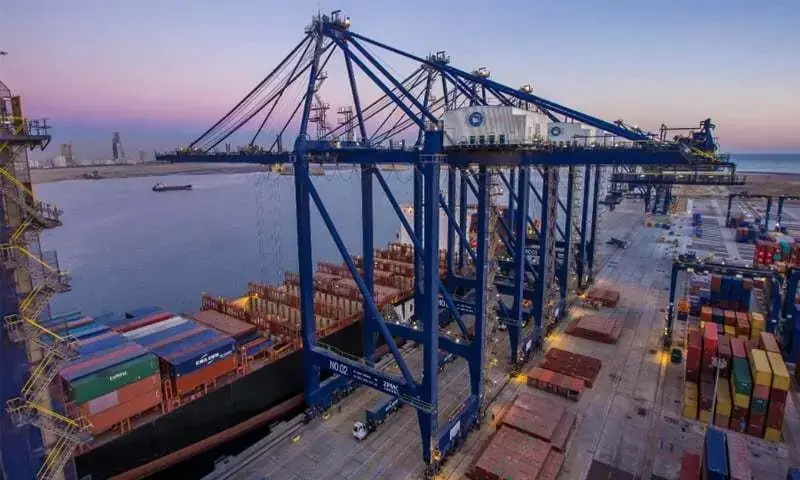
Global trade reached a record $35 trillion in 2025.
asserted
trade → reach → 2025
Higher trade values in 2026 are being driven by rising prices amid the energy shock.
asserted
values → drive → shock
Trade patterns are also shifting, with trade between China and the United States falling by more than 20pc since 2024, while East Asia has expanded trade with both China and North America.
asserted
Asia → shift → China
Export controls, investment screening and supply-chain conditions are making it harder for new entrants to access strategic sectors.
asserted
entrants → make → sectors
Asia remains the most dynamic exporting region, with intra-Asian merchandise trade rising markedly. South-South trade is also deepening as China and other major Asian exporters increase shipments to emerging markets.
asserted
China → remain → markets
On the import side, Asia is expected to record the strongest growth in 2026, followed by North America, where demand for artificial intelligence-related goods has supported overall imports.
asserted
demand → expect → imports
 The Aporia