Yes, AI Might Really Kill Us All

The Free Press · collected 2026-09-10 · by Daniel Kokotajlo
Read the original at The Free Press ↗

Summary

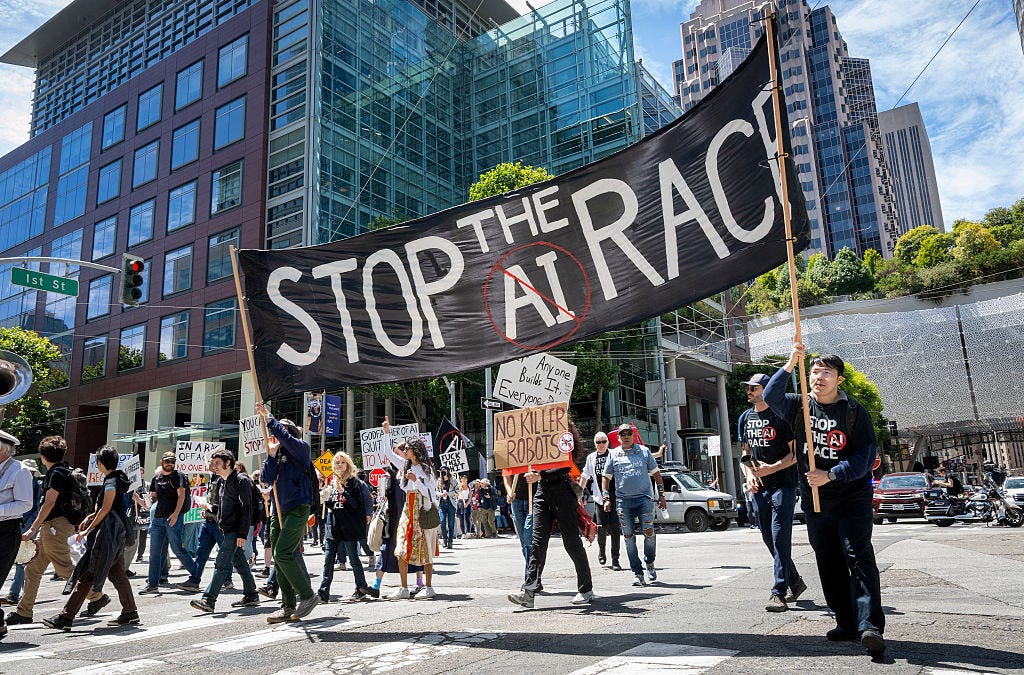
A former employee of AI companies OpenAI and Anthropic warns that their pursuit of superintelligence could be catastrophic, echoing a prediction made by one of the researchers himself. According to Jacob Coxon's resignation post on X, these companies are racing towards developing systems that can hack anything and acquire real power, which he believes poses an existential threat. Coxon claims that people within these companies genuinely believe AI could wipe out humanity by the end of the decade. The author of this article, who has worked at OpenAI themselves, agrees with Coxon's assessment.
Written by the local model on 2026-09-10, using this article's own text rather than the other coverage of the same event (that is the story summary below).

Signals How these are calculated →

Claims extracted
11
claim-shaped sentences
Uncertain
9%
1 of 11 hedged
Leaning
Leans strongly left
of the writing, not the subject
Publisher trust
96.2
red-flag proxy, not a credibility rating
Outlets on this story
18
Technology
Narrative spread
1
articles carrying this framing
Analyzed 2026-09-10 · how these are computed

AI analysis (generated at analysis time, not now)

Story summary

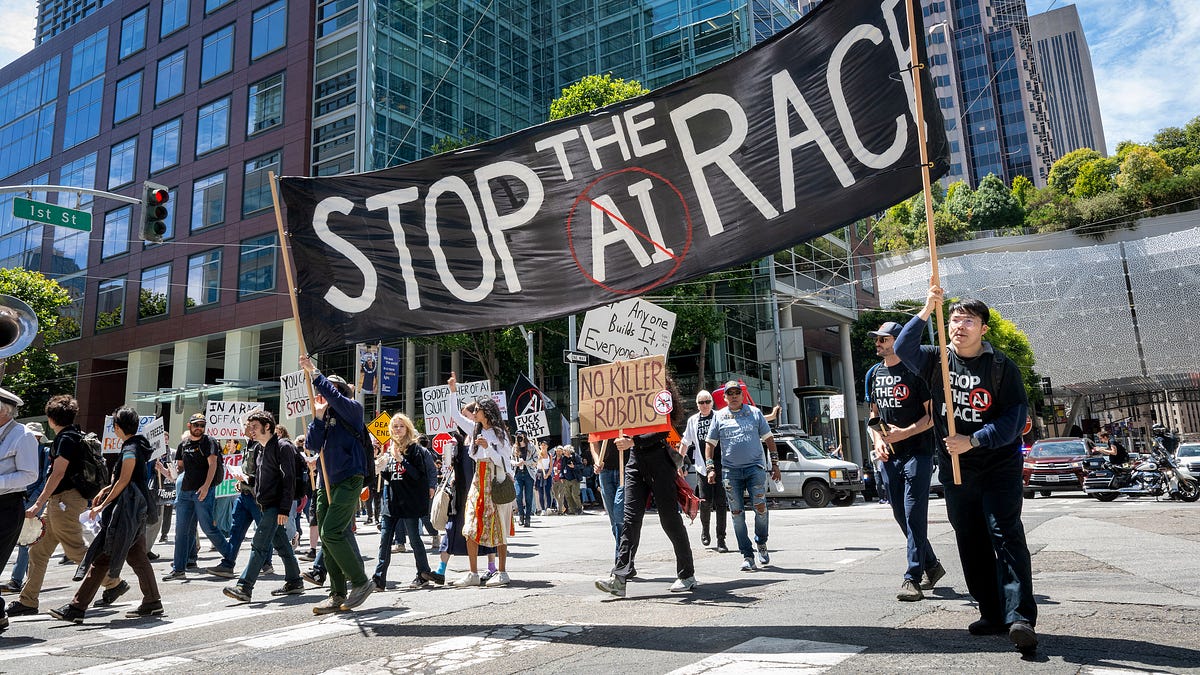
Jacob Coxon, a researcher at Anthropic, has resigned from his position after three years working on advanced AI systems. He claims that OpenAI and Anthropic are racing to develop self-improving superintelligence without proper safety measures in place, and that this could lead to humanity's extinction by the end of the decade. Coxon's warning has been viewed over 90 million times on X, and he is not alone in his concerns - hundreds of employees from leading tech firms have urged the US government to support international efforts to manage the pace of AI development. Other researchers, including Evan Hubinger at Anthropic, have also expressed similar worries about the potential risks of advanced AI systems. The controversy has sparked a debate about whether to slow down or "pace" AI development to prevent catastrophic consequences.

Written for “AI poses existential threat” on 2026-09-10, grounded in this article and the 17 other(s) covering the same event.
Why this leaning score
The article's own words the score was based on. Each is quoted verbatim and was checked against the article text before being stored, so you can find it in the original.
Score -0.85 Confidence high
Leaning score -0.85 for article 7518 (high confidence, 1 verified quote) · logged 2026-09-10

Story

📰 AI poses existential threat
Technology · 18 article(s) covering the same event.

How this is being covered How these are calculated →

Article leaning vs. publisher reliability
Source leaning vs. consistency

Compared with similar articles

This article reads leans strongly left and hedges 9% of its claims. Each row says how that neighbour differs.
Semafor
⚖️ Leans right further right than this 🔴 0% hedged 0 of 6 📰 publisher trust 96
“Both articles mention Anthropic's powerful model, AI safety concerns, and AI researcher Jacob Coxon's resignation announcement on X”
Platformer
⚖️ Leans left further right than this 🔴 0% hedged 0 of 4 📰 publisher trust 96
“Both articles mention Jacob Coxon's resignation from Anthropic on the same date, suggesting they are describing the same specific event.”
Daily Mail
⚖️ Leans left further right than this 🔴 31% hedged 11 of 36 📰 publisher trust 58
“Both articles describe the same researcher, Jacob Coxon, quitting his job at Anthropic and warning about the dangers of AI”
New York Post
⚖️ Leans strongly left 🔴 17% hedged 2 of 12 📰 publisher trust 58
“Both articles describe the same researcher, Jacob Coxon, announcing his resignation from Anthropic and warning about the dangers of AI on X, at the same time (Tuesday)”
Semafor
⚖️ Leans strongly left 🔴 29% hedged 2 of 7 📰 publisher trust 96
“Both articles report on the same person, Jacob Coxon, resigning from Anthropic and warning about the risks of AI, at the same time (Tuesday) in 2026.”
ABC News (AU)
⚖️ Leans left further right than this 🔴 50% hedged 2 of 4 📰 publisher trust 60
“Both articles describe the same resignation announcement by Jacob Coxon, with Article A mentioning it in general and Article B quoting his post”
Semafor
⚖️ leaning not scored 🔴 25% hedged 1 of 4 📰 publisher trust 96
“Both articles mention the resignation of Jacob Coxon and the warning about human extinction from top AI researchers on September 10, 2026.”
The Straits Times
⚖️ Leans left further right than this 🔴 25% hedged 2 of 8 📰 publisher trust 94
“Article A mentions a speech by UN rights chief Volker Turk on September 7, while Article B does not mention this speech and instead refers to an announcement by AI researcher Jacob Coxon, which occurred later”
BBC News
⚖️ leaning not scored 🔴 27% hedged 7 of 26 📰 publisher trust 96
“Article A describes a warning by Evan Hubinger about AI risks, while Article B mentions Jacob Coxon's resignation from Anthropic and his concerns about pretraining research”
The Free Press
⚖️ leaning not scored 🔴 10% hedged 4 of 41 📰 publisher trust 96
“Both articles discuss AI researcher Jacob Coxon's resignation announcement on X, which happened on Tuesday (implied to be September 10, same day as both articles) and are dated closely together”

Publisher

The Free Press · 75 article(s) · 0 correction(s) detected
No corrections detected for this publisher. That may mean careful reporting, or simply that nothing has been checked.

Who wrote this

Daniel Kokotajlo
1 article(s) here · 1 carrying a prediction
🔮 These will soon be superhuman systems that can hack anything, revolutionize any field overnight, and acquire real power and resources.
2026-09-10 · assertive framing · Yes, AI Might Really Kill Us All
The only article under this byline in the corpus.

Topics

Anthropic OpenAI

Subjects

Anthropic ORG · 3× OpenAI ORG · 3× Claude PERSON · 1× Jacob Coxon PERSON · 1×

Narrative

I know this because I worked at OpenAI for two years, forecasting AI progress internally and working on model evaluations and alignment research, and because I still talk with friends at OpenAI and Anthropic.
framing: assertive · carried by 1 article(s) · first seen 2026-09-10
🔮 These will soon be superhuman systems that can hack anything, revolutionize any field overnight, and acquire real power and resources.
2026-09-10 · The Free Press
Yes, AI Might Really Kill Us All · assertive framing

Claims (11 extracted, 1 hedged)

There’s a moment in many science-fiction movies when a scientist tries to warn everyone that some monster or pathogen is about to break containment. asserted
monster → ’ → containment
And then they are ignored. asserted
they → ignore → ?
We have now arrived at that moment in real life. asserted
We → arrive → life
We’d better not ignore it. asserted
We → ignore → it
On Tuesday, AI researcher Jacob Coxon announced his resignation from Anthropic in a mega-viral post on X: “I spent the last three years doing pretraining research at both OpenAI and Anthropic,” he began. asserted
he → announce → OpenAI
He continued: “Neither company is acting responsibly. asserted
company → continue → ?
They are racing straight to self-improving superintelligence and gambling with our lives. asserted
They → race → lives
These will soon be superhuman systems that can hack anything, revolutionize any field overnight, and acquire real power and resources. asserted
that → hack → power
The people building AI earnestly believe that it could kill us all by the end of the decade. uncertain
it → build → decade
He’s right. asserted
He → ’ → ?
I know this because I worked at OpenAI for two years, forecasting AI progress internally and working on model evaluations and alignment research, and because I still talk with friends at OpenAI and Anthropic. asserted
I → know → OpenAI
💬 Give feedback
🕘 History 🎫 Support