A recent Resolve Political Monitor poll in Victoria shows Premier Ben Carroll’s popularity declining by nine points to minus 11, indicating voter skepticism. Meanwhile, Opposition Leader Jess Wilson has seen her approval rating rise four percentage points to 23, positioning the Coalition well ahead on issues like economic management and crime. The polling also notes that while Labor remains at 25% primary support and the Coalition is at 28%, One Nation and the Greens show potential shifts in electoral strategy with implications for preference flows on election day.
Written locally by qwen2.5:14b on 2026-10-12,
using this article's own text rather than the other coverage of the
same event (that is the story summary below).
As Victorians start to lock in to the choice before them at next month’s state election, the political contest is being fought overwhelmingly on the Coalition’s preferred ground, with the economy, financial management and crime the dominant issues on voters’ minds.
asserted
economy → start → minds
The latest Resolve Political Monitor conducted for this masthead shows that Premier Ben Carroll’s personal popularity has taken a 9-point dive to minus 11, suggesting voters have weighed up Labor’s newest leader and aren’t convinced by what they see.
asserted
they → conduct → what
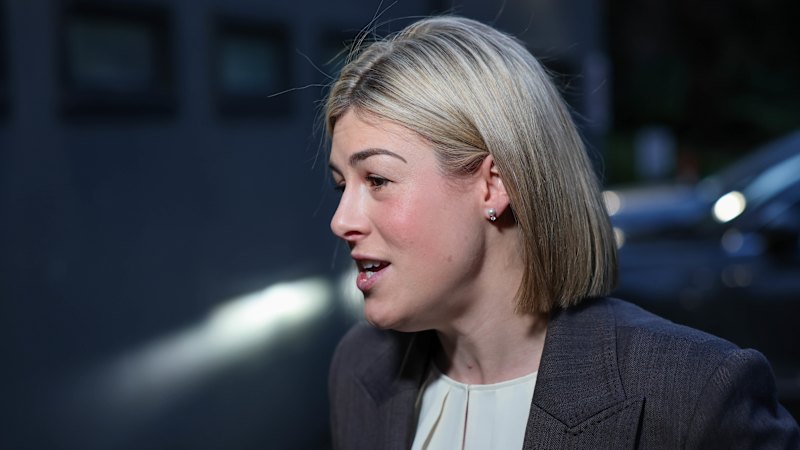
Opposition Leader Jess Wilson, by contrast, has established herself as one of Australia’s most popular political leaders, with her already strong personal likeability climbing 4 percentage points to 23.
asserted
likeability → establish → 23
While these numbers, if replicated on November 28, would almost certainly deliver a change of government, it is less clear whether the Coalition would be able to form a majority government without the help of One Nation or another minor party.
asserted
Coalition → replicate → Nation
The only significant movers in this latest poll are the Victorian Greens, who for the first time in three years are showing signs of electoral growth with a 3-point boost to their primary support.
asserted
who → show → support
This has come at the expense of independents, who attracted support from only 4 per cent of the 1000 respondents surveyed.
asserted
who → come → respondents
If replicated on election day, this could deliver stronger preference flows to Labor in some seats.
uncertain
this → replicate → seats
Early polling in Victoria opens in just over six weeks.
asserted
polling → open → weeks
Resolve founder Jim Reed said one of the key findings of the survey was that people were now paying closer attention.
asserted
people → say → attention
“Fewer and fewer voters are telling us they are uncommitted each month, and the number of people undecided on their preferred leader is also dropping, which is evidence that they are starting to pay attention and lock in,” he said.
asserted
he → tell → attention
“Victorians were willing to give Carroll a fair go, but after a few months they are increasingly unconvinced.
asserted
they → give → months
His net likeability and preferred premier metrics are both down.
asserted
likeability → prefer → ?
And Wilson is benefiting from that.”
The most encouraging news for the Coalition from this survey, other than the level of personal support for Wilson, is that its areas of perceived relative strength – economic and financial management, and crime and policing – are at the top of voters’ priority lists.
asserted
areas → benefit → lists
When asked what their highest priority issue was for deciding how to vote, 33 per cent of respondents nominated the state’s economy and finances, while 24 per cent said crime and policing.
asserted
cent → ask → crime
The second-highest priority – the traditional Labor strength of hospitals and health services – was nominated by 12 per cent of respondents.
asserted
priority → nominate → respondents
When asked to nominate things that will most influence their vote from a list of more specific issues and policy announcements, 27 per cent chose government spending and debt, while 21 per cent went for youth crime.
asserted
cent → ask → crime
Greens voters nominated artificial intelligence and data centres as their biggest vote-shaping concern.
asserted
voters → nominate → concern
The survey was conducted between October 6 and October 10, in the aftermath of One Nation’s Victorian policy and campaign launch, which featured a grab bag of uncosted promises.
asserted
which → conduct → promises
The boldest policy announcement of the week was Jess Wilson’s $1.27 billion promise to halve the elective surgery waiting list by booking 25,000 additional patients into private hospitals to have surgery on the public tab.
asserted
announcement → halve → tab
This masthead on Monday revealed the policy involved bringing forward $1.1 billion of borrowed money earmarked for future capital investment over the next decade to cover the cost of the urgent surgeries.
asserted
policy → reveal → surgeries
Previously unpublished budget figures show the opposition’s accounting would create an $880 million shortfall in its election costings.
asserted
accounting → show → costings
Carroll leapt on the revelation on Monday, telling 3AW, “The opposition leader says she knows everything and can do both treasury and leader.
asserted
she → leap → treasury
That has now seen a billion-dollar budget black hole in her costings on health.”
asserted
That → see → health
Wilson defended the credibility of her costings by saying she would not be “lectured by the Labor Party on economic mismanagement in this state”.
asserted
she → defend → state
“Budgets don’t just look at one policy in isolation.
asserted
Budgets → look → isolation
They don’t just look at the spend of one policy in isolation.
asserted
They → look → isolation
They look at policies – that’s both savings and expenditure – in aggregate over those four years, taking into account the net debt position, looking at the forecast, and of course, the operating position in the state,” Wilson said.
asserted
Wilson → look → state
She repeated her goal of returning the state’s finances to cash surplus by 2032 if elected in November, and said it was only at this point – when the state is raising more in revenue than it spends on operating expenses and capital investments – that reducing net debt becomes possible.
asserted
reducing → repeat → debt
Reed said the electoral challenge before the Coalition – to gain an additional 16 seats required to form majority government – remained a big ask, but noted the dominant issues and the respective likeability of the leaders are pointing in the right direction for the Liberal and National parties.
asserted
issues → say → parties
“Things like potholes and the Suburban Rail Loop are handy icons for voters to talk about, but our polling is telling us that the foundational issues of economic health, debt and crime are what’s driving votes,” Reed said.
asserted
Reed → talk → votes
 The Aporia