Cement is one of the most widely used materials in construction, but its production comes with a high environmental cost.
asserted
production → use → cost
Circular Design Cement, a 2026 James Dyson Award project, is exploring a new approach to construction materials.
asserted
Cement → explore → materials
The project uses everyday waste and industrial byproducts as recycled aggregates in cement-based materials designed for architectural applications.
asserted
project → use → applications
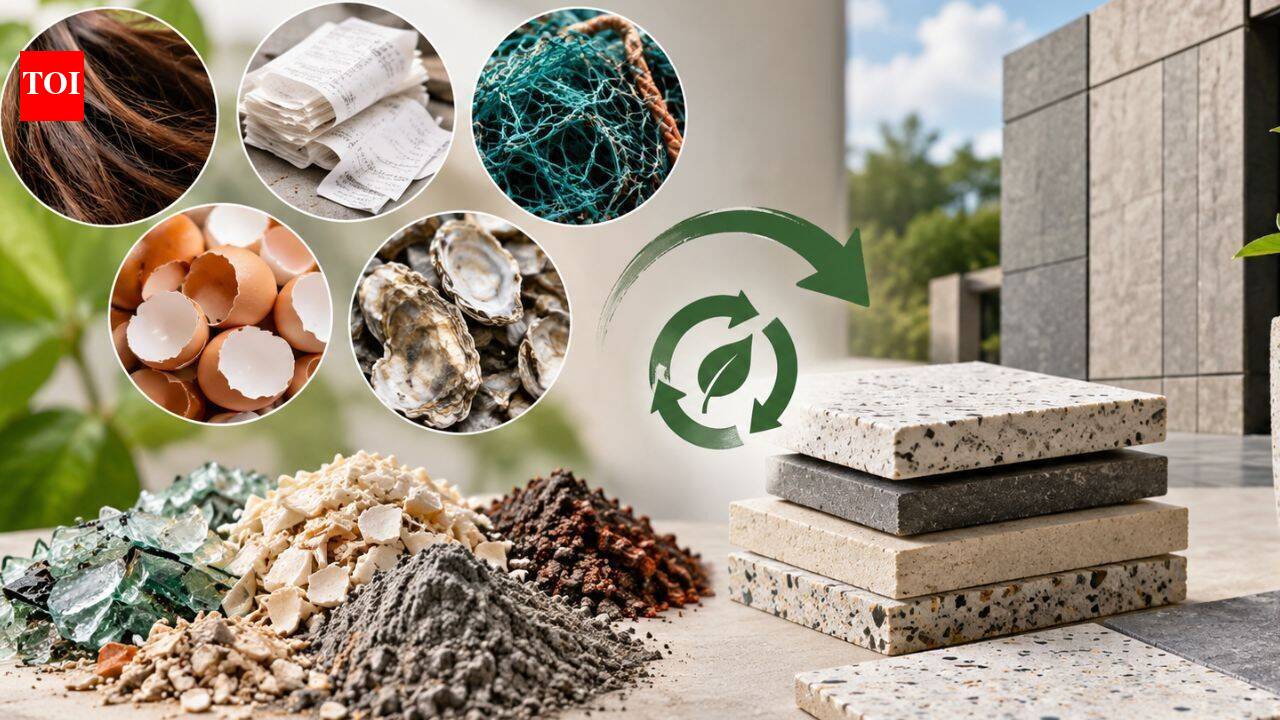
The work replaces some conventional aggregates with materials such as eggshells, glass, ceramics and oyster shells while using blast furnace slag cement as a lower-carbon binder.
asserted
work → replace → binder
These recycled materials can be turned into thin boards, tiles and small architectural products that retain strength, function and visual appeal while using fewer natural resources.
asserted
that → recycle → resources
How Circular Design Cement turns waste into building material
asserted
Cement → turn → material
Circular Design Cement starts with the idea that construction materials do not always need to rely on newly extracted resources.
asserted
materials → start → resources
The project uses recycled waste as aggregates and combines them with blast furnace slag cement.
asserted
project → use → cement
Materials are crushed, cut, or separated before being mixed with the binder.
asserted
Materials → crush → binder
The mixture is poured into moulds and shaped through press dewatering, which compacts the material while removing excess water.
asserted
which → pour → water
It is cured naturally or with steam rather than being fired at high temperatures.
asserted
It → cure → temperatures
The approach can produce cement boards, tiles, and architectural products.
asserted
approach → produce → boards
Testing examined bending strength, impact resistance, and dimensional stability across formulations.
asserted
Testing → examine → formulations
PC: AI Generated
How recycled materials are changing the design of cement boards
asserted
materials → generate → boards
The project addresses two major challenges in construction that are the environmental impact of cement production and pressure on resources such as sand and gravel.
asserted
that → address → sand
Circular Design Cement explores thinner cement boards that can reduce material use while providing useful performance.
asserted
that → explore → performance
Its inspiration partly came from thick, heavily coated cement boards seen in Japan.
asserted
inspiration → come → Japan
The designers explored fibre reinforcement and lower-carbon binders to develop a different approach to these products.
asserted
designers → explore → products
The project also draws inspiration from early reinforced cement innovations associated with Joseph Monier.
asserted
project → draw → Monier
By combining a thinner form with recycled inputs, it aims to make construction materials more efficient without losing practical qualities.
asserted
materials → combine → qualities
17 waste materials tested for stronger building tiles
asserted
materials → test → tiles
The design process tested 17 waste materials in 7.5-centimetre tiles.
asserted
process → test → tiles
The materials included glass, ceramics, wood chips, denim fibres, hair, eggshells, oyster shells, ocean plastics, fishing nets, receipts and iron oxide from disposable hand warmers.
asserted
materials → include → warmers
Different mixture ratios revealed possibilities and limitations.
asserted
ratios → reveal → possibilities
Wood-chip mixtures retained too much water, while eggshell-based mixtures presented other challenges.
asserted
mixtures → retain → challenges
Hair was found to be incompatible with the alkaline cement environment.
asserted
Hair → find → environment
After this testing, eggshells, ceramics, glass, oyster shells, and iron oxide were selected for validation.
asserted
eggshells → select → validation
The team then refined the mixing, pressing, and curing process before comparing materials with conventional cement boards through mechanical tests.
asserted
team → refine → tests
How recycled materials can strengthen cement products
The selected materials were tested after the manufacturing process.
asserted
materials → strengthen → process
Some formulations recorded bending strengths of up to 16.1 N/mm², exceeding those of conventional cement boards.
asserted
formulations → record → boards
The material also uses Type B blast furnace slag cement, which has a lower reported carbon emission factor than ordinary Portland cement.
asserted
which → use → cement
The binder can reduce the need for conventional sand after combining with recycled aggregates.
asserted
binder → reduce → aggregates
The designers also explored the visual possibilities of waste materials, including the textures and colours they could create.
uncertain
they → explore → textures
A denim-reinforced flowerpot prototype further showed how the approach could be used beyond flat cement boards.
uncertain
approach → reinforce → boards
Further tests will focus on durability and recycling
The project is being developed, with next steps focused on making the material more reliable and practical.
asserted
material → focus → durability
The team plans to carry out further testing, including assessments of fire and water resistance.
asserted
team → plan → fire
It also aims to scale the work from small prototypes to full-size boards while refining the life cycle assessment.
asserted
It → aim → assessment
As production grows, securing a consistent supply of suitable waste materials will become important.
asserted
securing → grow → materials
The team also plans to explore whether the products can be recycled after use.
asserted
products → plan → use
The project ultimately brings waste recovery and lower-impact construction together through a single material approach.
asserted
project → bring → approach
 The Aporia