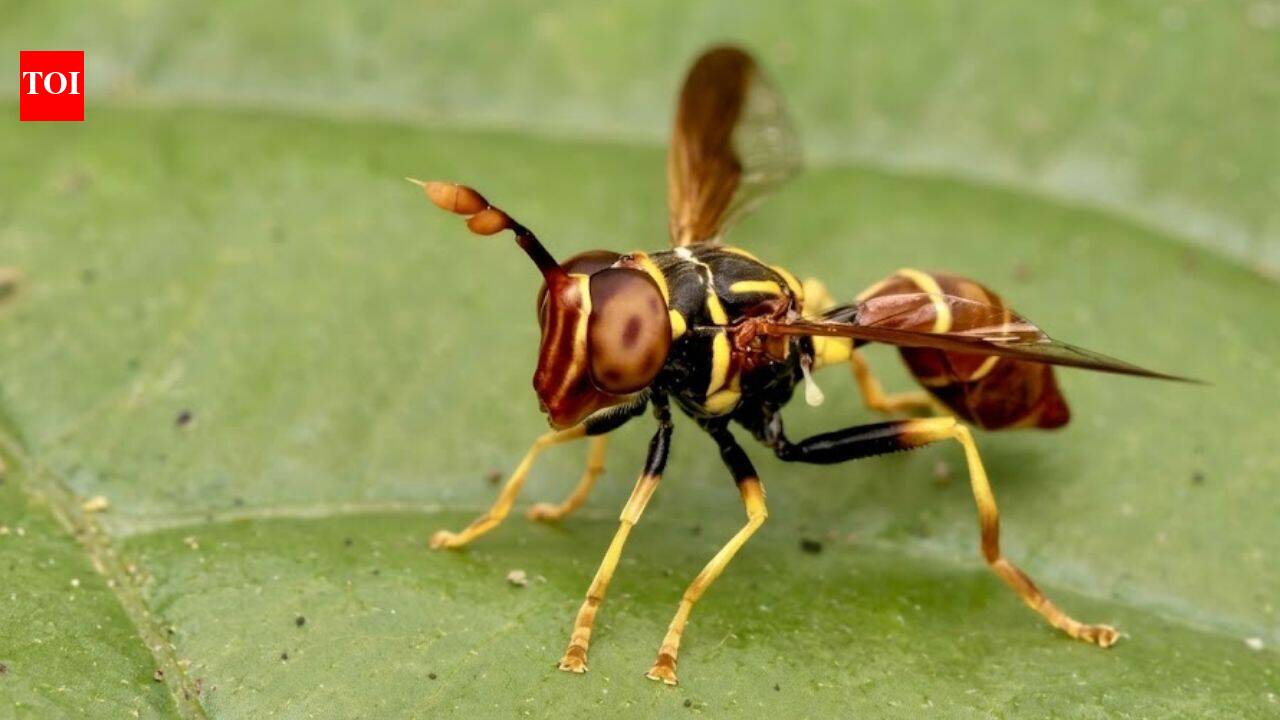
A photograph shared online has helped scientists identify a hoverfly species that had remained a mystery for years.
asserted
that → share → years
The insect, named ‘Monoceromyia ndidiae’, was photographed in the Dominican Republic and posted on iNaturalist.
asserted
insect → name → iNaturalist
Its unusual appearance caught the attention of an entomologist, who began asking whether the fly represented something unknown.
asserted
fly → catch → something
The mystery was finally solved when researchers found a corresponding specimen during a field expedition to Valle Nuevo National Park.
asserted
researchers → solve → Park
Laboratory work at the University of Lausanne confirmed that it was an undescribed species.
asserted
it → confirm → Lausanne
According to the Swiss Academy of Sciences (SCNAT), the discovery has earned the Swiss Systematics Society’s New Species of the Year 2026 title, highlighting how amateur observations can help reveal biodiversity.
uncertain
observations → accord → biodiversity
How Franklin Howley-Dumit Serulle’s photograph helped scientists discover a new hoverfly
Franklin Howley-Dumit Serulle is an amateur naturalist whose interest in insects led him to photograph the unusual hoverfly in the Dominican Republic.
asserted
interest → help → Republic
He shared the photograph on iNaturalist, where it caught the attention of researchers because the insect could not be identified with certainty.
uncertain
insect → share → certainty
Serulle’s observation became an important starting point in the search for its identity.
asserted
observation → become → identity
Although he was not working as part of the research team, his photograph preserved a record of the unusual insect and helped bring it to the attention of specialists.
asserted
photograph → work → specialists
Researchers later found a specimen during fieldwork, allowing them to examine the insect and establish that it was a new species.
How researchers confirmed the new hoverfly species in the Dominican Republic
The discovery took researchers to Valle Nuevo National Park in the Dominican Republic.
asserted
discovery → find → Republic
During a field expedition, they used a light trap and captured a specimen that appeared to be the insect from the online photograph.
asserted
that → use → photograph
The specimen allowed scientists to examine its features closely and carry out further laboratory tests.
asserted
scientists → allow → tests
Researchers at the University of Lausanne examined the specimen and confirmed that it belonged to a species previously unknown to science.
asserted
it → examine → science
The insect was formally described as Monoceromyia ndidiae.
asserted
insect → describe → ndidiae
Its discovery brought together the original photograph shared by an amateur naturalist and the specimen collected during fieldwork.
asserted
discovery → bring → fieldwork
The photograph first drew attention to the unusual insect, while the specimen gave researchers the chance to study it in detail.
asserted
specimen → draw → detail
What makes ‘Monoceromyia ndidiae’ different from other hoverflies
Monoceromyia ndidiae belongs to the hoverfly family, a group known for an unusual form of protection.
asserted
ndidiae → make → protection
Many hoverflies have yellow or orange patterns that make them resemble wasps.
asserted
them → have → wasps
The resemblance helps protect them from predators even though hoverflies are harmless and cannot sting.
asserted
hoverflies → help → predators
This striking appearance may be one reason hoverflies often catch people’s attention.
uncertain
hoverflies → catch → attention
It also gives scientists a better understanding of the biodiversity in the Dominican Republic.
asserted
It → give → Republic
The discovery adds another species to the region’s biodiversity records and gives researchers a clearer picture of the hoverflies found there.
asserted
discovery → add → hoverflies
Why hoverflies matter to ecosystems and biodiversity
The larvae of many hoverfly species feed on aphids, while adult hoverflies help pollinate plants.
asserted
hoverflies → matter → plants
Their presence can also give researchers clues about the health of an ecosystem and changes taking place in a habitat.
asserted
presence → give → habitat
About 500 hoverfly species are known in Switzerland, showing the wide variety within this group.
asserted
species → know → group
SCNAT notes that nearly eight million plant, fungal and animal species may still be unknown to science.
uncertain
species → note → science
Amateur naturalists often discover unusual insects and share their photographs online, giving scientists a chance to notice species that might otherwise be overlooked.
uncertain
that → discover → species
 The Aporia