That is 0 articles you have read today.
The Aporia is free and carries no advertising, so readers are the only
thing paying for it. If you are getting this much out of it, a small
donation is what keeps it independent.
Daily limit reached
You have read 0 articles today.
That is more than the 15 a day The Aporia gives away,
and well past what it can carry on nothing. Your allowance resets at
midnight.
There is no advertising here and nothing about you is sold, so readers
are the only thing paying for it. If the site is worth this much of
your day, it is worth a few dollars.
Everything else stays open: the
maps, the
directory and
search do
not count against this, and neither does re-opening something you have
already read today.
Dhruv Atreja, head of AI research at Fastino Labs, discusses India's dilemma in choosing between US and Chinese AI models. On June 12, Anthropic’s AI models were temporarily shut down due to U.S. export restrictions, demonstrating how easily access can be revoked. Meanwhile, China offered to establish an open-source AI community for Brics nations, promising flexibility but with built-in biases, such as a chatbot refusing to acknowledge Arunachal Pradesh as Indian territory. India is pursuing its own development of large-scale AI models and exploring significant investments, including up to 200 billion rupees in a new AI fund, to maintain independence from foreign controls.
Written locally by qwen2.5:14b on 2026-10-11,
using this article's own text rather than the other coverage of the
same event (that is the story summary below).
Story summary
On June 12, two leading artificial intelligence models went offline due to an American export directive that restricted foreign users' access. The AI models, developed by Anthropic, were later reactivated on July 1 but highlighted the vulnerability of India's reliance on U.S.-developed technology. In September, during the Brics summit in New Delhi, Chinese President Xi Jinping offered to establish a Brics AI open-source community, promising accessible and adaptable Chinese models that would not face similar restrictions from Washington. Dhruv Atreja, head of AI research at Fastino Labs in New York, emphasizes India's need to adapt any available AI model to meet its specific requirements while ensuring continued functionality without external control.
Written for “India AI Policy Choices” on 2026-10-11,
grounded in this article and the 0 other(s) covering the same event.
Why this leaning score
The article's own words the score was based on. Each is quoted
verbatim and was checked against the article text before being
stored, so you can find it in the original.
Leaning: leans left for article 71159 (high confidence, 2 verified quotes) · logged 2026-10-11
Claims extracted
13
claim-shaped sentences
Uncertain
15%
2 of 13 hedged
Leaning
Leans left
of the writing, not the subject · beta estimate
Correction & hedging signals
66.8
corrections and hedging in what we collected;
not a measure of accuracy
Outlets on this story
1
Technology
Narrative spread
1
articles carrying this framing
Advertisement
In AI, India’s choice needn’t be between a US leash or Chinese hook
What matters most is the ability to take any AI model – American or Chinese – make it serve Indian needs, prove it works and keep it running
3-MIN READ3-MIN
Dhruv Atreja is head of AI research at Fastino Labs in New York, where he has led post-training collaborations with leading US technology companies, working with open-weight models from American and Chinese developers.
On June 12, two of the world’s most capable artificial intelligence models went dark.
asserted
two → matter → models
An American export directive barred foreigners from using Anthropic’s two flagship AI models, and because the company could not check every user’s nationality, it switched them off.
uncertain
it → bar → them
Access returned on July 1 but the warning is clear: India’s AI future can be switched off from Washington.
asserted
future → return → Washington
In September, Beijing came calling.
asserted
Beijing → call → September
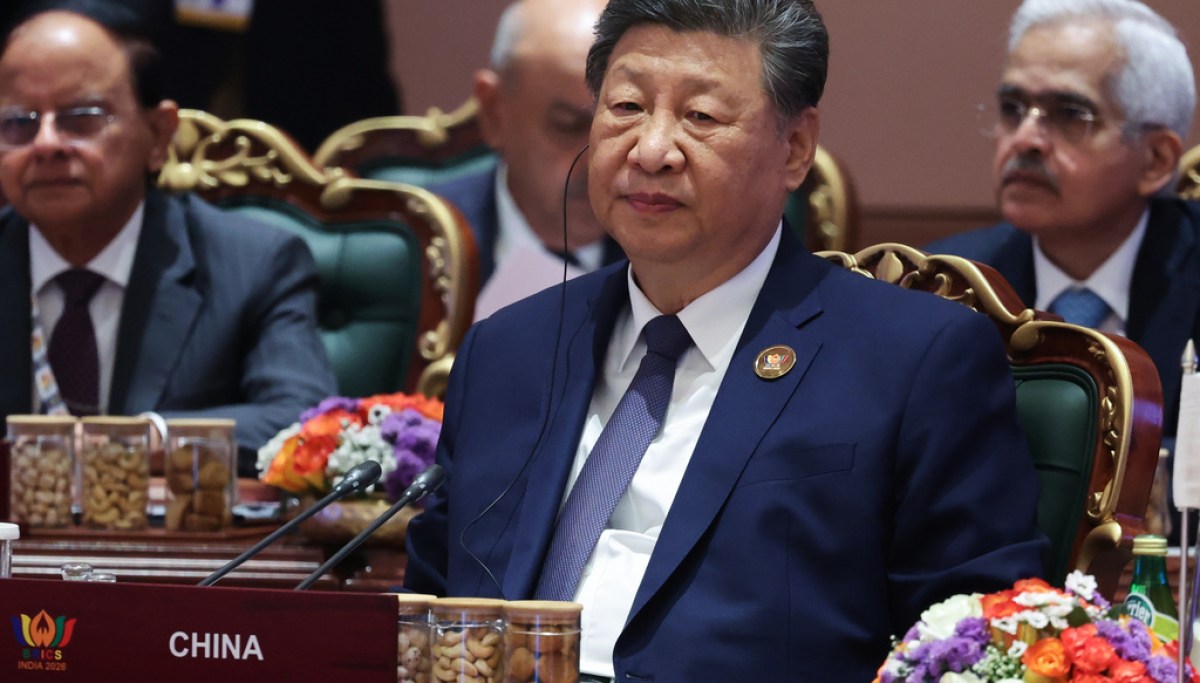
At the Brics summit in New Delhi, Chinese President Xi Jinping promised China would “be a pioneer in establishing a Brics AI open-source community”.
asserted
China → promise → community
Chinese open models are capable, cheap and free to adapt; once downloaded, no one in Washington can take them away.
But this is a choice between a leash and a hook.
asserted
this → adapt → leash
American access can be yanked away overnight.
asserted
access → yank → ?
Chinese models cannot be switched off once downloaded, but they arrive with Beijing’s sensitivities built in.
asserted
sensitivities → switch → ?
Asked whether Arunachal Pradesh is an Indian state, DeepSeek’s chatbot declined to answer.
asserted
chatbot → ask → ?
No country of 1.4 billion people should run its banks, courts and public services on either.
asserted
country → run → either
Delhi’s response so far has been to chase size.
asserted
response → chase → size
Start-up Sarvam AI plans to build a trillion-parameter model; so does state-backed BharatGen.
asserted
BharatGen → plan → model
The government is reportedly exploring an anchor investment of up to 200 billion rupees (US$2.08 billion) in a new frontier AI fund, on top of the 103.7 billion rupees the “IndiaAI Mission” approved in 2024.
uncertain
Mission → explore → 2024
 The Aporia