Log in
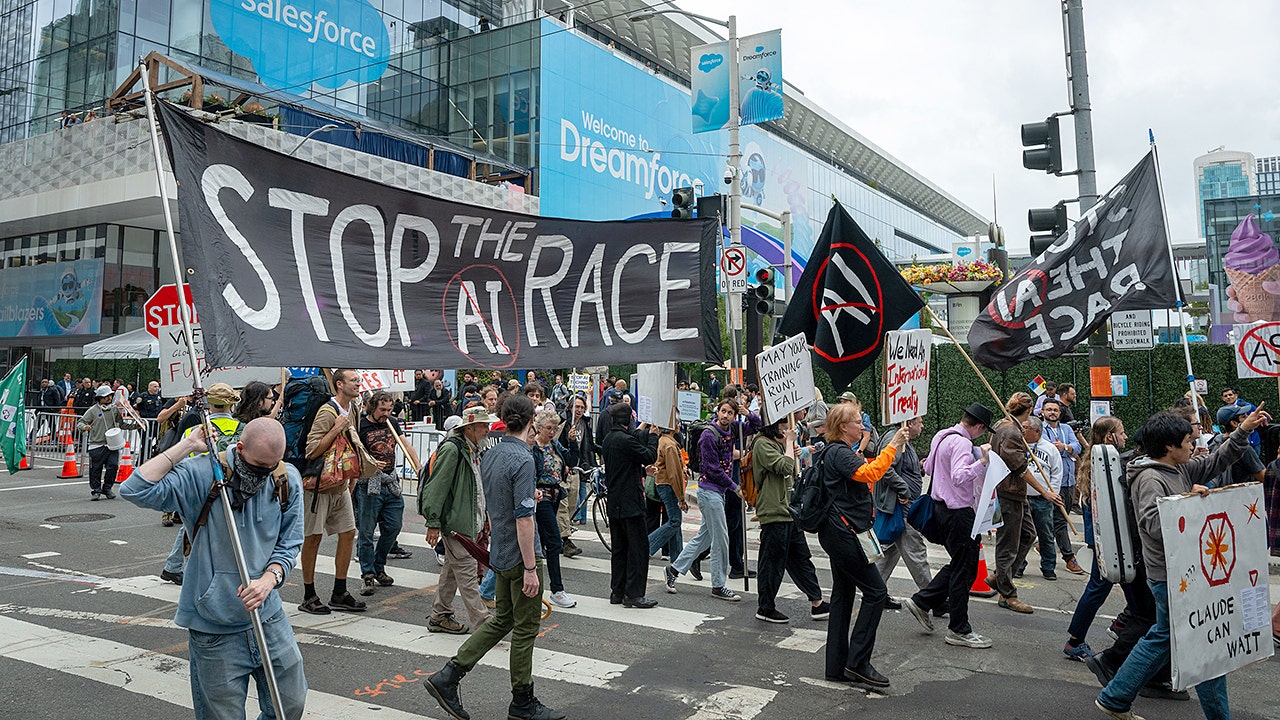
Tech Week is in full bloom in San Francisco, packing the city’s restaurants this week with venture capitalists and AI founders ebullient about the White House’s stance on regulating artificial intelligence — namely, don’t do it.
And after months of debate about leading AI companies’ unchecked AI agents meddling with everything from U.S. government websites to healthcare data, the nation now finds itself further from governing AI systems than it was a few years ago.
asserted
it → log → systems
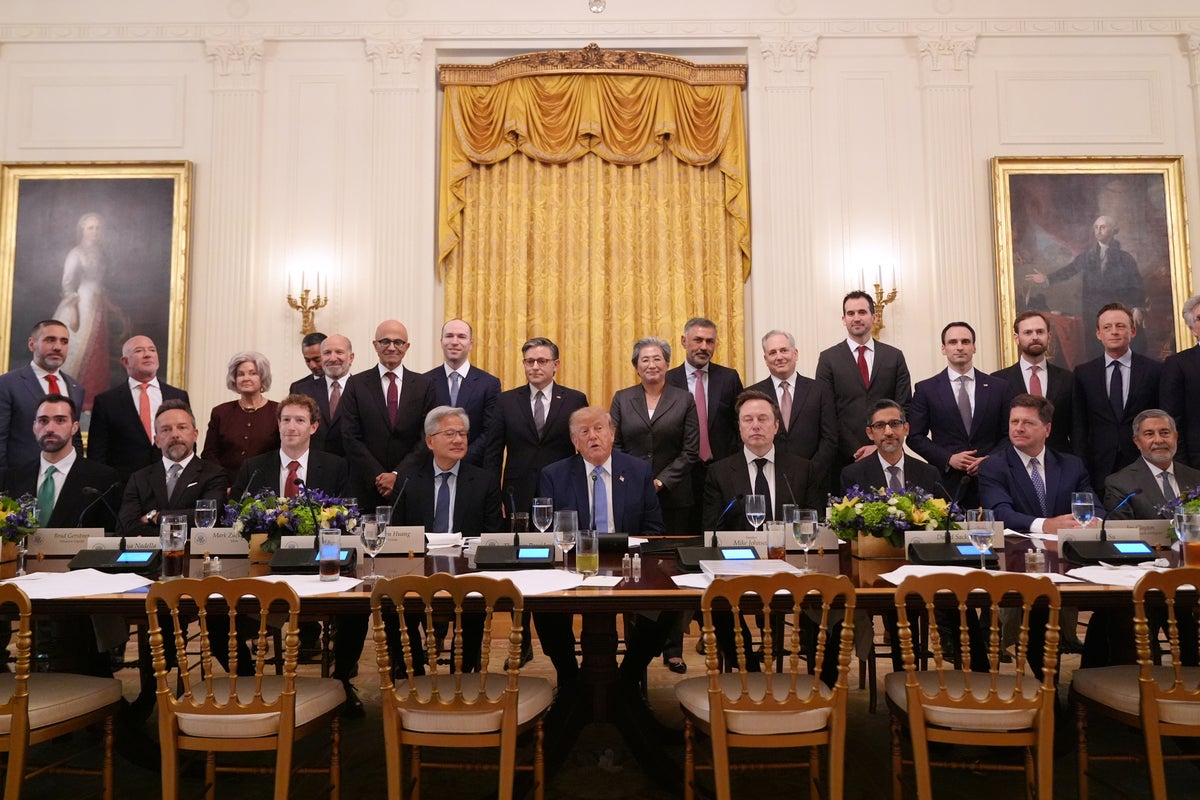
President Donald Trump brought tech titans to Washington late last month for a luncheon and ceremonial signing of a voluntary safety pact he described as “almost a constitution” surrounding “Super Intelligence,” the administration’s new preferred term for AI.
asserted
he → bring → AI
The 308-word agreement lays out that advanced AI labs should follow safety protocols and set up internal teams to monitor their own progress, but the administration has yet to provide details on how, in OpenAI CEO Sam Altman’s words, to keep “bad things” from happening.
asserted
administration → lay → things
Safety challenges were not top of mind inside a crowded event space in San Francisco on Wednesday, where founders and funders said the government’s hands-off approach would net higher profits for companies building AI-powered defense and security systems.
asserted
approach → say → systems
Panelists praised the government’s bullish industry support at one meeting aimed at “investing in the forefront,” part of the blitz of popup events organized by Andreessen Horowitz, a venture firm whose head is a Trump science and tech adviser.
asserted
head → praise → Horowitz
“I want to start with one figure that I think really emphasizes the investment opportunity of defense, and that’s $1 trillion.
asserted
that → want → defense
The U.S. government, for the first time, is allocating $1 trillion to its defense spending.
asserted
government → allocate → spending
And $13.5 billion of that will go to autonomous systems and AI,” said Kyle Stanford, a venture capital research director at PitchBook, a market intelligence platform.
asserted
Stanford → go → PitchBook
“That has obviously brought a lot of capital into defense tech spending, more than we’ve ever seen.”
asserted
we → bring → spending
New concerns emerge on AI safety
A day later, three researchers at OpenAI's headquarters said the ChatGPT maker had fired them, posting that “fear and unclear rules stymie AI safety work.”
uncertain
fear → emerge → work
Separately, David Robinson, a leader on OpenAI’s safety team until he recently resigned, said he was worried about letting the advanced labs police themselves.
asserted
labs → resign → themselves
“This is no substitute for hard law, and it does give a lot of freedom to the companies,” Robinson said.
asserted
Robinson → give → companies
“The time between model generations is measured in weeks … and I think we have some very serious safety challenges in front of us in the nearer term.”
asserted
we → measure → term
Trump has staked his political capital on the AI industry’s success, saying its unbridled development is key to winning the AI race against China.
asserted
development → stake → China
On the first day of his second term, the Republican president repealed a Biden-era executive order aimed in part at guarding against the risks that AI systems pose to consumers, workers and national security.
asserted
systems → repeal → consumers
His administration has since reoriented federal policy away from oversight and toward rapid growth, including by canceling previous requirements for AI developers to share safety test results with the federal government.
asserted
developers → reorient → government
In December, Trump signed an executive order aimed at blocking AI regulations at the state level, saying a patchwork of rules could stifle the industry.
uncertain
patchwork → sign → industry
Even as Silicon Valley companies have disclosed their models’ involvement in troubling cyberattacks throughout the year, the burgeoning tech sector has continued to drive economic growth.
asserted
sector → disclose → growth
Concerns about AI safety centered on existential risk, rather than current real-world harms, landed at the center of debates last month, when a relatively unknown Anthropic engineer quit and called for a pause on tech development to keep “superhuman” systems from eluding controls.
asserted
engineer → center → controls
Then, Anthropic and OpenAI CEOs echoed the call to slow AI development.
asserted
CEOs → echo → development
To some critics, their public manifestos appeared aimed at currying favor with investors ahead of their public listings and the midterm elections, when the political tides could turn with many voters opposed to data centers.
uncertain
voters → appear → centers
“The only control or ‘guardrails’ that AI needs is a STRONG AND SMART (High IQ!) PRESIDENT, and the U.S.A. has that, in spades!”
asserted
U.S.A. → need → spades
Trump posted in response on Truth Social, warning voters not to “kill the Golden Goose,” a term he has used to refer to both AI and data centers.
asserted
he → post → AI
White House pact preserves wide latitude for AI companies
As calls mounted for stricter control of AI, the administration brought tech executives to the White House for lunch, followed by a ceremonial signing of the agreement on AI safety.
“I'm seeing tremendous self-policing,” Trump told reporters after the event.
asserted
Trump → preserve → event
The document was signed by representatives of OpenAI, Anthropic, Meta, Google, SpaceXAI and Nvidia.
OpenAI is committed to embedding external assessors and finalizing contracts with third-party safety assessors, said a spokesperson, who referred AP to a company post stating that the researchers were fired for violating “clear policies on handling sensitive information.
asserted
researchers → sign → information
Google referred to CEO Sundar Pichai's post that the company does appropriate testing and evaluations and is collaborating “to establish norms and build public confidence.”
asserted
company → refer → confidence
Meta recently updated its standards for training, evaluating and releasing its most capable AI models, and spokesman Andy Stone pointed to the company's efforts to refine its board of directors’ governance structure.
asserted
Stone → update → structure
Nvidia and SpaceXAI did not respond to requests for comment.
asserted
Nvidia → respond → comment
Anthropic, which voluntarily disclosed Friday that its agents had meddled with U.S. government websites, is bringing in independent evaluators and discussing collaborations with industry groups, a spokesperson said.
asserted
spokesperson → disclose → groups
In a statement, the White House reiterated Trump’s comments about working with industry to balance innovation and security and did not directly answer questions about how the administration plans to monitor the AI companies’ implementation.
asserted
administration → reiterate → implementation
Following the new Anthropic disclosure, it added that the Trump administration expected full transparency from the company, saying notification and remediation was “not optional.
asserted
notification → follow → company
Under Democratic President Joe Biden, leading AI companies also made voluntary commitments to promote “safe, secure, and transparent development” of their models that included specific guidelines for tests and transparency reports.
asserted
that → lead → tests
The current accord lacks that, said Sarah Myers West, a former senior AI adviser to the Federal Trade Commission.
asserted
West → lack → Commission
“Across the board, this self-regulatory approach has consistently done one thing, which is failed to work.
asserted
which → do → thing
It’s failed to in any meaningful way ensure that these companies are honestly even keeping their house in order, let alone ensuring that they are compliant with existing law,” said Myers West, now co-executive director of the New York-based nonprofit AI Now.
asserted
West → fail → nonprofit
“All that they’re getting is grace from this government.
asserted
they → get → government
After last month's luncheon with Trump, the FTC said it had opened an investigation into OpenAI, Anthropic and other companies over dangers their technology may pose to consumers.
uncertain
technology → say → consumers
The FTC didn't immediately respond to a request for comment.
asserted
FTC → respond → comment
Trump recently appointed National Intelligence Director Jay Clayton and FTC Chairman Andrew Ferguson to serve on his new “Super Intelligence Force,” which the president said would keep the U.S. dominant in AI development.
asserted
president → appoint → development
He posted Thursday that the White House would consider anyone who does not refer to AI using his preferred term as “THE ENEMY!”
asserted
who → post → ENEMY
…and 3 more, not listed.
 The Aporia