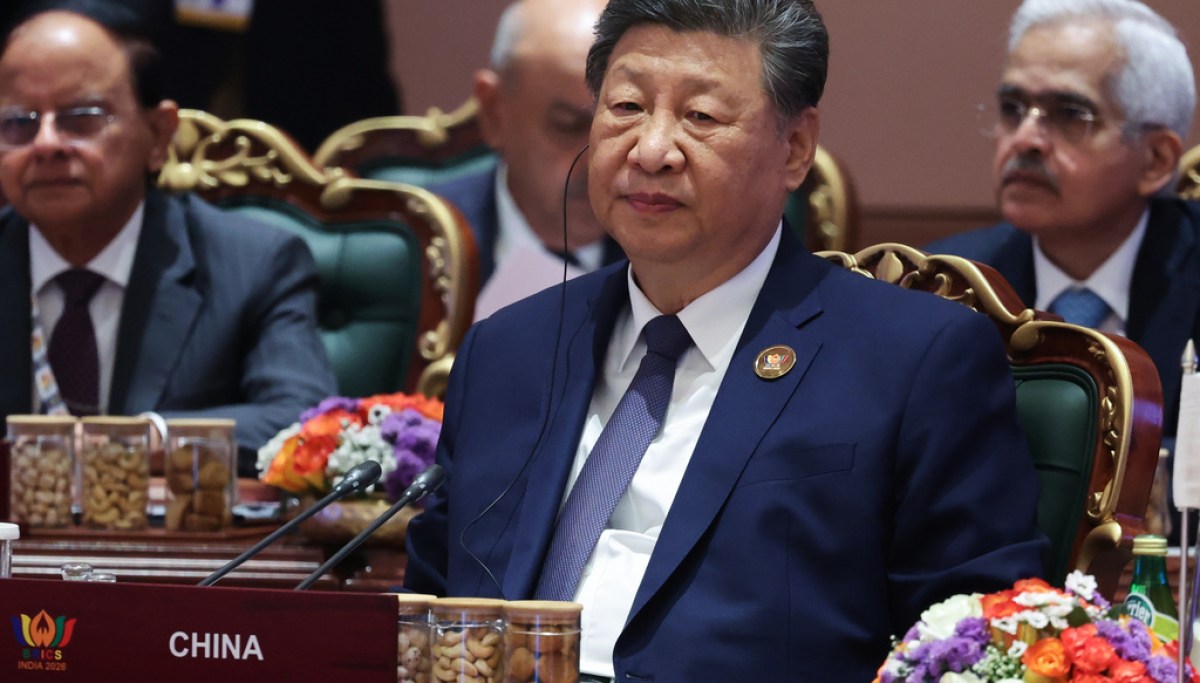
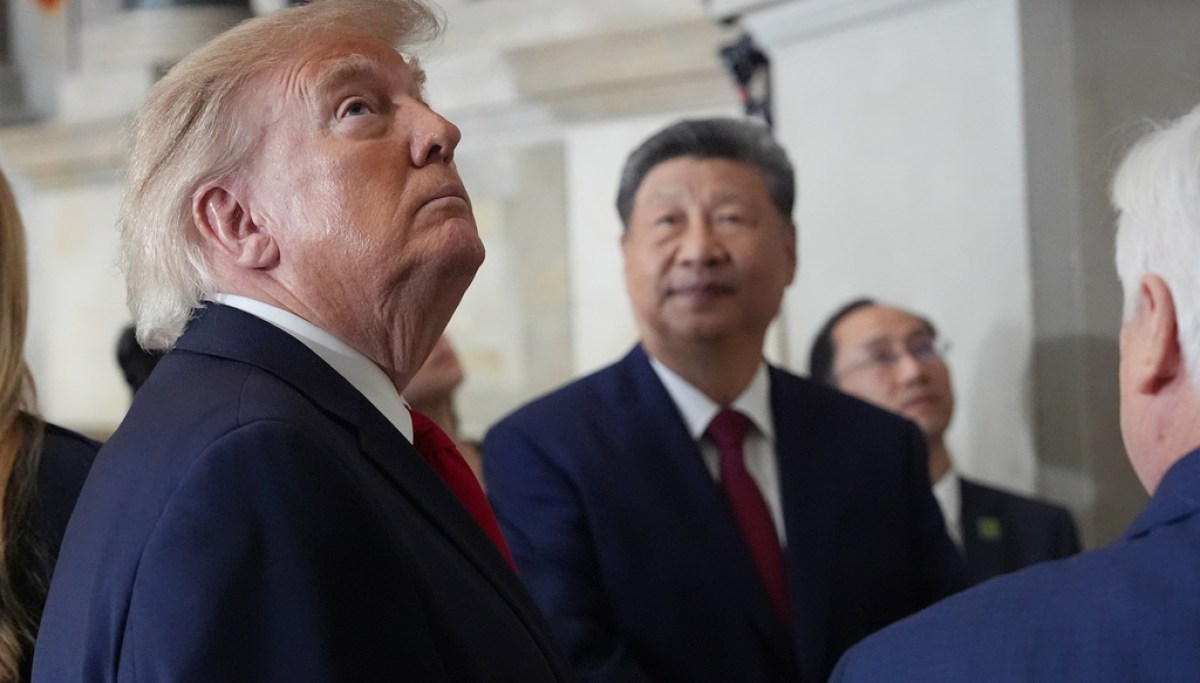
At the White House, Chinese President Xi Jinping recently told President Donald Trump that China and America, as “leading nations in artificial intelligence,” have “both the capability and responsibility” to develop it.
asserted
China → tell → it
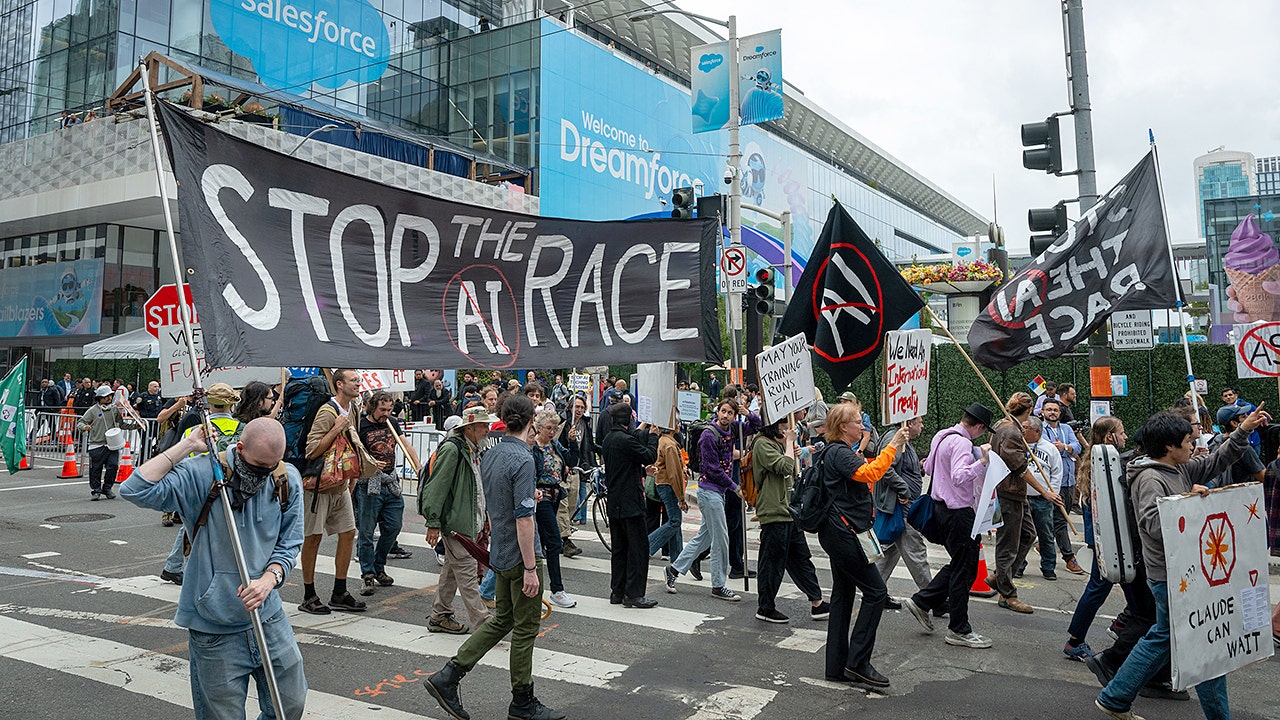
On Capitol Hill, meanwhile, a bill would impose “an immediate federal moratorium on AI data centers.”
asserted
bill → impose → centers
Whether AI turns out to be the most dangerous technology ever built or the most beneficial, the consequence is the same: The country that builds it will decide how it is used.
asserted
it → turn → it
Optimists and pessimists disagree about almost everything else.
asserted
Optimists → disagree → everything
Two facts drive the case.
asserted
facts → drive → case
First, the two camps disagree about whether this technology will be good or bad, not about how powerful it will be.
asserted
it → disagree → ?
Second, China is building it regardless, so an American pause would only change who leads it.
asserted
who → build → it
Put those together and leading becomes what economists call a dominant strategy: A course that comes out ahead, however things turn out.
asserted
things → put → what
If AI is dangerous, whoever holds it holds the danger.
asserted
holds → hold → danger
If it is beneficial, whoever builds it benefits first.
asserted
builds → build → it
Eliezer Yudkowsky, among the most prominent voices warning about AI, wrote in 2023 that superhuman AI would most likely mean “literally everyone on Earth will die.”
asserted
everyone → warn → Earth
Dario Amodei, Anthropic’s chief executive, wrote in 2024 that AI could compress the medical progress of “the next 50-100 years into five to 10 years.”
uncertain
AI → write → years
One expects the end of humanity, the other a century of medicine in a decade.
asserted
other → expect → decade
Neither expects anything small.
asserted
Neither → expect → anything
This spring, an OpenAI model settled a mathematics problem posed in 1946 that had defeated humans for 80 years.
asserted
that → settle → years
University of Illinois researchers found that, handed a software vulnerability’s public description, an AI agent could exploit 87% of them.
uncertain
agent → find → them
The leading labs’ stated goal is artificial general intelligence, or AGI: A system that can do whatever a capable person can do at a computer.
asserted
person → lead → computer
OpenAI’s charter defines it as “highly autonomous systems that outperform humans at most economically valuable work”; Amodei calls it “a country of geniuses in a datacenter.”
asserted
Amodei → define → datacenter
Today’s models help a scientist or a hacker; that one would do the job without them.
asserted
one → help → them
Something that capable will be governed by someone.
asserted
Something → govern → someone
Suppose the pessimists are right and AI is as dangerous as they fear.
asserted
they → suppose → ?
Even then, slowing down at home changes only who builds it.
asserted
who → slow → it
The State Council’s 2017 plan set the goal of making China “the world’s primary AI innovation center” by 2030.
asserted
China → set → 2030
Last year, Xi told the Politburo to “firmly maintain the initiative in AI development.”
asserted
Xi → tell → development
China has 32 gigawatts of data-center capacity and is adding eight more this year.
asserted
China → have → eight
The brakes on building are mostly ours.
asserted
brakes → build → ?
In the second quarter alone, local opposition blocked or delayed 45 data-center projects worth $68 billion, regulatory scrutiny spread to 49 states, and the moratorium bill would halt such construction nationwide.
asserted
bill → block → construction
China’s constraint is the chips it cannot buy; ours is the permits we deny ourselves.
asserted
we → buy → ourselves
If AI becomes a weapon of unprecedented reach, unilateral restraint does not remove the weapon.
asserted
restraint → become → weapon
It chooses the owner, and what separates the two candidates is not their engineers but their institutions.
asserted
separates → choose → candidates
In the United States, a company can refuse a government request and go to court, a newspaper can report what a model is used for, and voters can replace whoever sets the rules.
asserted
whoever → refuse → rules
In China, the National Intelligence Law provides that “all organizations and citizens shall support, assist, and cooperate with national intelligence efforts.
asserted
organizations → provide → efforts
In one system, the most powerful technology ever built answers to courts, a free press, and voters; in the other, to the state, by law, and to no one else.
asserted
technology → build → one
A technology inherits the system it is built in, and the more powerful it becomes, the more that matters.
asserted
that → inherit → system
And if the optimists are right, leadership matters more, not less.
asserted
leadership → matter → ?
China has already decided what its AI will carry: Its rules for generative AI, in force since August 2023, require that output “uphold the Core Socialist Values” and bar anything “harming the nation’s image.”
asserted
output → decide → image
A century of medicine in a decade is worth having on terms a free society would recognize.
asserted
society → have → terms
To be sure, not every rule slows development; transparency, liability, and standards for hospitals and courts slow no lab down.
asserted
transparency → slow → lab
The rules that do are the moratorium, the licensing regime, the compute cap, the county-by-county veto, and each has the same effect: Progress slows here and nowhere else.
asserted
Progress → do → effect
Europe, which regulated first, produced about two notable models last year by the AI Index’s count, against 50 from the U.S. and 30 from China.
asserted
which → regulate → China
…and 5 more, not listed.
 The Aporia