That is 0 articles you have read today.
The Aporia is free and carries no advertising, so readers are the only
thing paying for it. If you are getting this much out of it, a small
donation is what keeps it independent.
Daily limit reached
You have read 0 articles today.
That is more than the 15 a day The Aporia gives away,
and well past what it can carry on nothing. Your allowance resets at
midnight.
There is no advertising here and nothing about you is sold, so readers
are the only thing paying for it. If the site is worth this much of
your day, it is worth a few dollars.
Everything else stays open: the
maps, the
directory and
search do
not count against this, and neither does re-opening something you have
already read today.
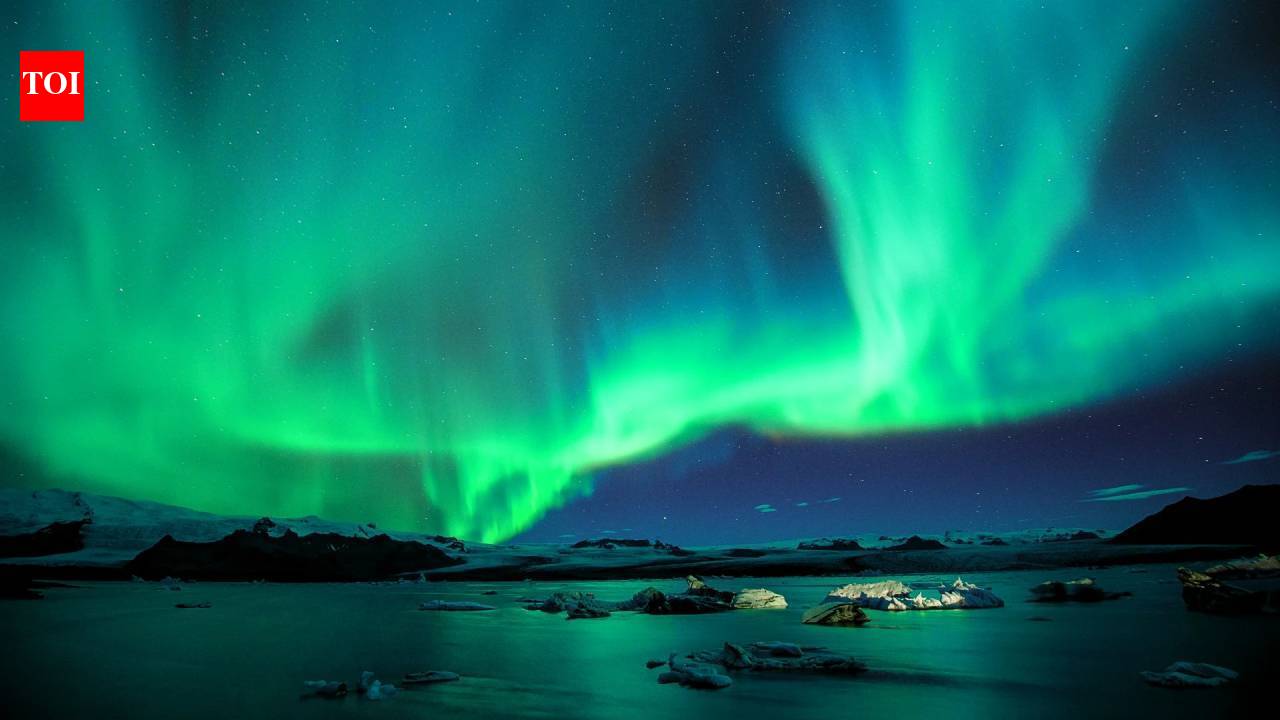
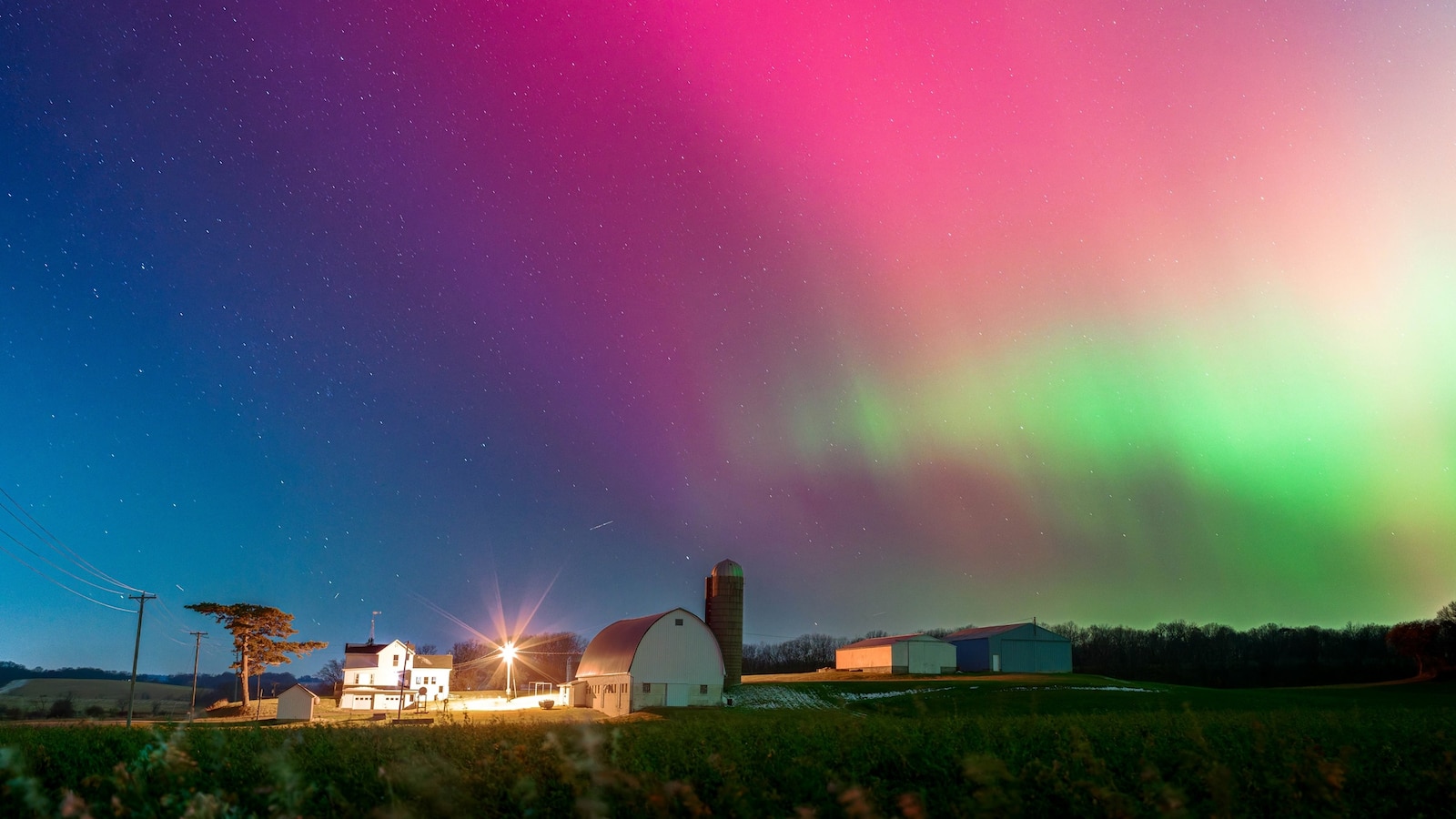
Residents across the UK witnessed the Northern Lights, or Aurora Borealis, on Friday and Saturday evenings due to increased solar activity. While typically visible only near the Arctic Circle and northern Scotland, strong geomagnetic storms allowed sightings as far south as Devon, Hampshire, and Kent. The Met Office reported that aurora activity levels reached 600 nanotesla (nT), making it visible across the entire UK, though such widespread visibility is rare. Sighting opportunities could continue through Tuesday with clear skies, encouraging people to look northward away from light pollution for the best view.
Written locally by qwen2.5:14b on 2026-10-10,
using this article's own text rather than the other coverage of the
same event (that is the story summary below).
Story summary
On Friday and Saturday nights, residents across the UK were stunned by sightings of the Northern Lights as far south as Devon, Hampshire, and Kent. Usually visible only near the Arctic Circle or northern Scotland, this unusual occurrence was due to increased solar activity with coronal mass ejections (CMEs) from the Sun reaching Earth. These CMEs cause charged particles to interact with Earth's magnetic field and atmosphere, emitting colorful light when they collide with oxygen and nitrogen atoms. The Met Office predicted that clear skies could allow for continued aurora sightings until Tuesday. For visibility as far south as these locations, solar activity had to reach levels of 200nT (nanotesla).
Written for “Northern Lights Visibility Expansion” on 2026-10-10,
grounded in this article and the 0 other(s) covering the same event.
- Published
Residents across the UK were left stunned as the sky was illuminated by the spectacular colours of the Northern Lights on Friday and Saturday evenings.
asserted
sky → publish → evenings
The natural phenomenon, known as the Aurora Borealis, is the result of increased solar activity.
asserted
phenomenon → know → activity
Such occurrences are mostly visible near the Arctic Circle and northern Scotland, but particularly strong activity levels meant they could be seen as far south as Devon, Hampshire and Kent on Saturday night.
uncertain
they → mean → night
The Met Office has said sightings could continue to be possible during clear skies until Tuesday.
uncertain
sightings → say → Tuesday
Northern Lights are caused by powerful solar eruptions from the Sun, called coronal mass ejections (CMEs).
asserted
Lights → cause → Sun
Towards the end of last week, the Sun was observed to unleash CMEs directed towards the Earth.
asserted
Sun → observe → Earth
This stream of charged particles can get captured by the Earth's magnetic field and directed into our atmosphere, especially towards polar regions.
asserted
stream → charge → regions
When these charged particles collide with oxygen and nitrogen, photons of coloured light are emitted - this is the aurora.
asserted
this → charge → light
The chances of seeing the aurora vary across the UK depending upon its strength.
asserted
chances → see → strength
When activity levels reach 200nT (nanotesla) the aurora would be visible in the north of the UK, but not the south.
asserted
aurora → reach → UK
On Saturday evening, those levels reached 600nT, meaning it would be visible across the whole of the UK, even in the south, which is a much rarer phenomenon.
asserted
which → reach → south
Experts have previously said 2026 will be a peak year for aurora-spotting as the Sun has been in a heightened state of activity as part of its 11-year natural cycle.
asserted
Sun → say → cycle
If you missed out this time, the aurora may return on Sunday.
uncertain
aurora → miss → Sunday
The Met Office has said sightings remain possible across Scotland and similar geomagnetic longitudes during clear skies until Tuesday.
asserted
sightings → say → Tuesday
To see them, you need to look northwards, away from bright streetlights, and look through a mobile phone camera.
asserted
you → see → camera
The reason you need to use a camera is because in low-light conditions at night our eyes use rod cells to see - these cells do not perceive colour and so we actually see in black and white.
asserted
we → need → black
Cameras do not have the same limitations.
asserted
Cameras → have → limitations
 The Aporia