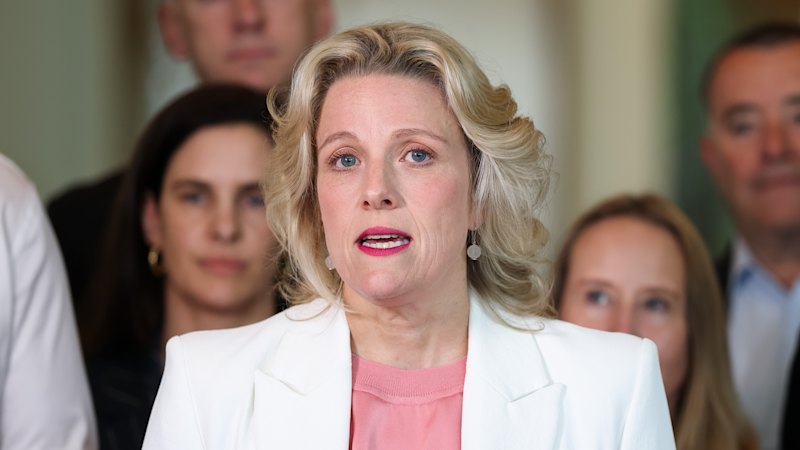
NSW small businesses are facing challenges following the October 1 implementation of a ban on card payment surcharges by the Reserve Bank of Australia (RBA). Some business owners like Sydney cafe owner Philip Barbaro have raised prices to cover $150,000 in annual merchant fees, while others such as Jamaican Patty Bakehouse’s Chris Skuce are temporarily absorbing costs. Business advocate Paul Nicolaou argues that rising expenses force businesses to pass on these costs to consumers eventually. The Australian Competition & Consumer Commission (ACCC) suggests offering discounts for cash or PayID payments instead.
Written locally by qwen2.5:14b on 2026-10-10,
using this article's own text rather than the other coverage of the
same event (that is the story summary below).
Story summary
Small businesses across Sydney, including cafes and restaurants like Cranes Newsagency and La Botte Doro, are facing significant financial challenges due to a new ban on credit card surcharges that took effect on October 1. This ban, implemented by the Reserve Bank of Australia in what it deemed was "public interest," aims to reduce payment confusion for consumers and potentially lower prices slightly. However, many business owners argue this will force them to raise prices or absorb costs, leading to estimated annual losses ranging from $12,000 to $16,000 per business. The Australian Competition & Consumer Commission (ACCC) has advised businesses they can adjust their pricing but must be transparent about it and avoid misleading consumers. Despite the government's intention for a fairer payment system, economists warn this could lead to inflation as prices increase to compensate for the costs of electronic payments.
Written for “Card Surcharge Ban” on 2026-10-10,
grounded in this article and the 1 other(s) covering the same event.
Why this leaning score
The model judged this article politically coded and scored it +0.35, but 1 quote(s) could not be found in the article and the other 1 are attributed speech rather than the article's own narration, so the score is not published.
Written under an earlier scoring contract, which gave a paragraph
rather than checkable quotes. Re-analysing this article replaces it.
Leaning score withheld for article 71076: no verified evidence · logged 2026-10-10
In short:
NSW small businesses are looking at how to cover the cost of merchant fees after the ban on card payment surcharges took effect on October 1.
asserted
ban → look → October
Some owners have increased the price of items, while others have opted to absorb the cost.
asserted
others → increase → cost
The consumer watchdog says businesses have the option of offering "discounts to consumers, who pay using a particular payment method, such as cash or PayID."
asserted
who → say → cash
Small businesses across New South Wales are grappling with how they will cover the cost of merchant fees.
asserted
they → grapple → fees
The Reserve Bank of Australia's (RBA) last week introduced a ban on business owners adding extra fees for credit or debit card payments on EFTPOS, Mastercard, Visa and American Express.
asserted
owners → introduce → EFTPOS
The changes, according to the RBA, are in the "public interest", and designed to make the system more transparent and less confusing for both businesses and customers.
uncertain
system → accord → businesses
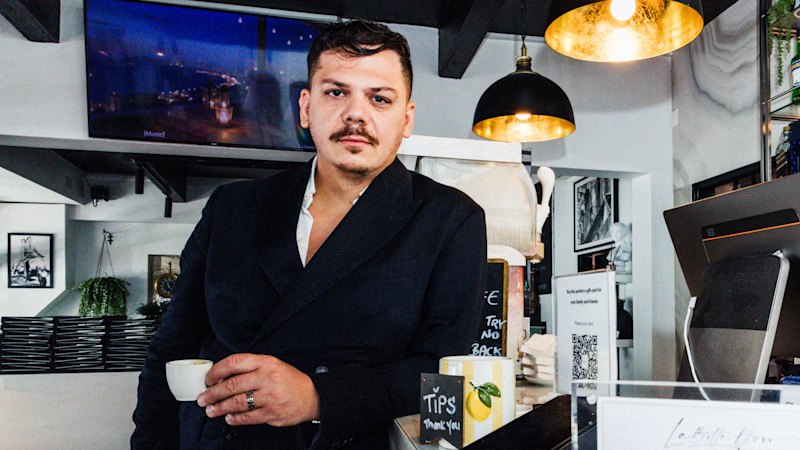
Sydney cafe owner Philip Barbaro said he had been forced to put prices up for some items, as his fees to the bank must still be paid for the use of cards.
asserted
fees → say → cards
"For the group, we pay about $150,000 in merchant fees per year. Now that is a big hit to my business,"he said.
asserted
that → pay → business,"he
Mr Barbaro said the cafe business was tough in the Sydney market.
asserted
business → say → market
"In my very competitive market in the city we have not touched the price of our coffee, but there were other items on the menu we had to increase this week, to offset the bank surcharge."
asserted
we → touch → surcharge
Specialist baker and owner of the Jamaican Patty Bakehouse in Sydney's inner west, Chris Skuce, said he opened his shop a year ago as a nod to his Jamaican heritage.
asserted
he → say → heritage
Mr Skuce said he had been absorbing the cost of the bank fee in order to keep making the patties that were part of his childhood.
asserted
that → say → childhood
"I haven't passed the cost on yet, but I will increase my prices at some stage probably in the new year," he said.
asserted
he → pass → year
Businesses 'need to cover their cost'
Executive director of advocacy group Business Sydney, Paul Nicolaou, said people were struggling.
asserted
people → need → Sydney
"There have been rising interest rates, energy costs and the subsequent drop in discretionary spending affecting both households and business," he said.
asserted
he → rise → households
Price rises were now being introduced across the board, he added.
asserted
he → introduce → board
"Business owners need to cover their costs, and unfortunately someone has to pay, and it is going to be the consumer."
asserted
it → need → costs
Mr Nicolaou said the banks should be doing something about merchant fees, along with other payment platforms.
asserted
banks → say → platforms
"It is all electronic now, does it require a fee?"
asserted
it → require → fee
A spokesperson for the Australian Competition & Consumer Commission (ACCC) said that while businesses were able to build the fee into their pricing structure, they "must not mislead consumers about their prices or the reasons for any price changes".
asserted
they → say → changes
"Businesses can also offer discounts to consumers, who pay using a particular payment method, such as cash or PayID," the spokesperson added in a statement.
asserted
spokesperson → offer → statement
"Where a business offers a discount for a particular payment method, this should be clearly disclosed before consumers choose to book, order or pay.
asserted
consumers → offer → method
"Businesses should not display only the discounted price or make the discounted price more prominent than the full price."
asserted
price → display → price
Mr Barbaro said he was now looking at alternatives for customers.
asserted
he → say → customers
"I am currently looking at potentially giving people a discount if they pay with cash."
asserted
they → look → cash
Mr Barbaro said that could be an incentive.
uncertain
that → say → ?
"There is the old saying that cash is king."
asserted
cash → be → ?
Mr Skuce said, however, he was not looking at cash discounts.
asserted
he → say → discounts
"Most people want to pay by card.
asserted
people → want → card
It is just a hassle to handle cash."
asserted
It → handle → cash
Mr Skuce said he did not see any net benefits to the consumer, as prices would increase.
asserted
prices → say → consumer
 The Aporia