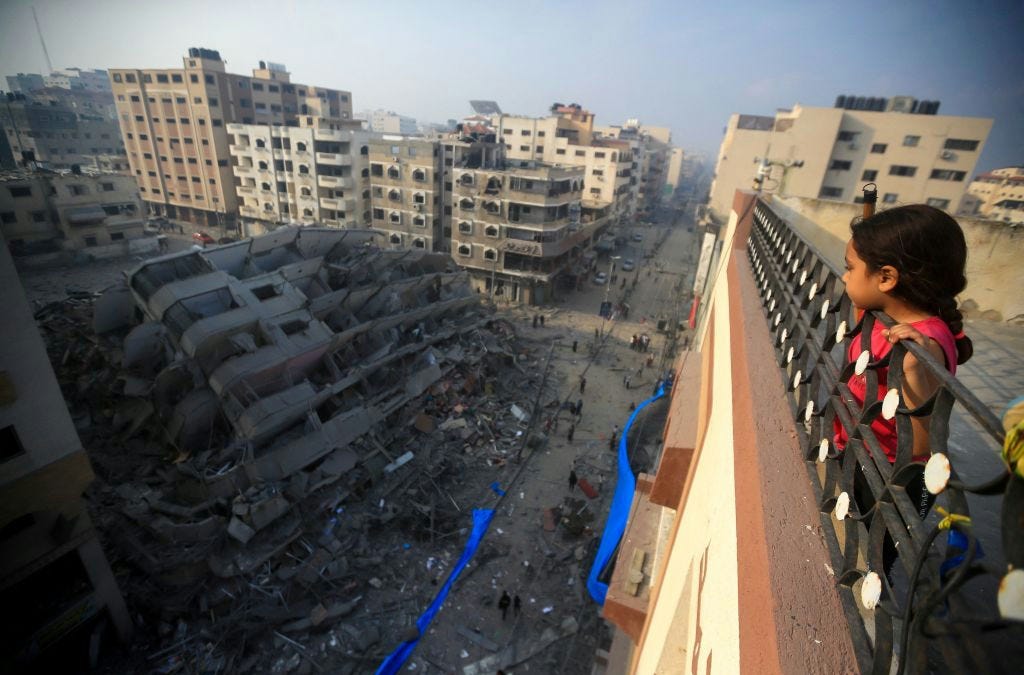
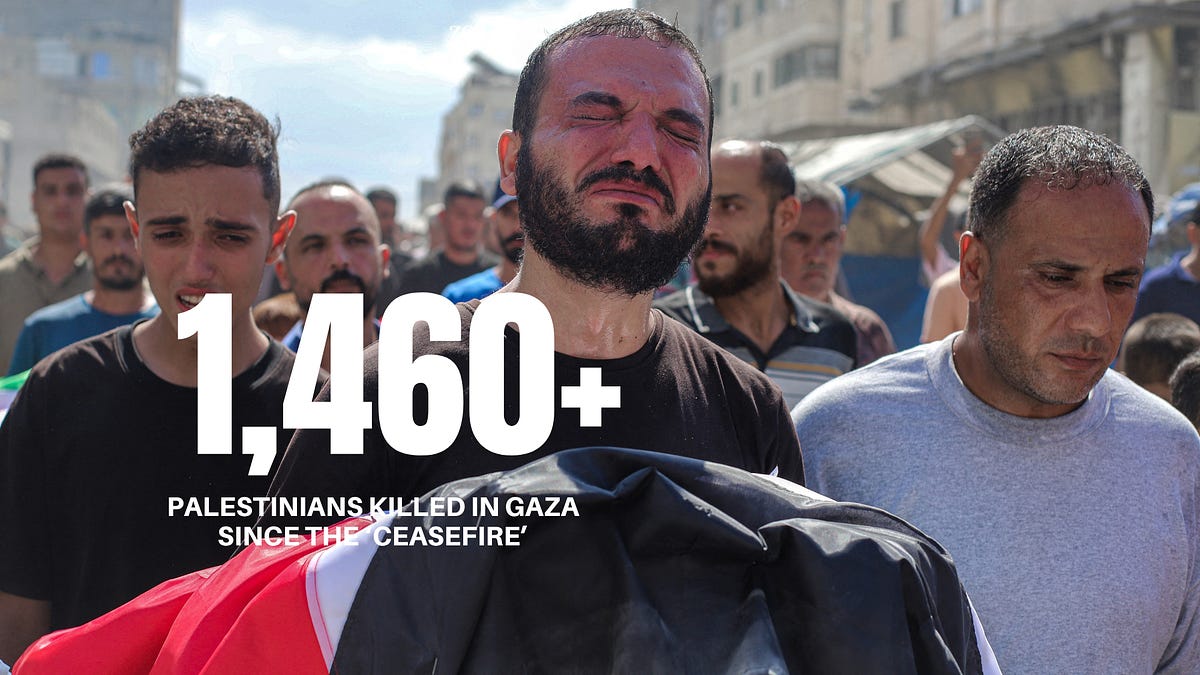
As we begin the fourth year of a war that has brought the near-total destruction of Gaza, calls for Hamas to surrender administrative authority and evacuate the Strip are intensifying.
asserted
Hamas → begin → Strip
For Gaza to have any viable future, it is argued, the group’s political and military wings must be dismantled.
asserted
wings → have → future
While Hamas’s fate is a critical question, charting a meaningful path towards recovery is impossible without addressing the realities that gave rise to it in the first place.
asserted
that → chart → place
What is happening today in Gaza is directly related to the origins of the Palestinian-Israeli question, which has little to do with any particular armed group.
asserted
which → happen → group
Hamas did not exist in 1948, when hundreds of Palestinian villages, including Naj and Huj, were depopulated and destroyed during the Nakba – the Palestinian catastrophe that accompanied the creation of the State of Israel – to make way for the establishment of Sderot, Or HaNer and numerous other Israeli cities and villages built upon their ruins.
asserted
that → exist → ruins
The group had not yet been established in 1967, when the Arab-Israeli War took place and Israel initiated its military occupation of the Gaza Strip and the West Bank, while simultaneously seizing and unilaterally annexing East Jerusalem—actions that actively set the stage for the broader Israeli settlement project.
asserted
that → establish → project
In the following decades, the occupation profoundly affected Palestinian society.
asserted
occupation → follow → society
That, combined with growing religious influence—as the number of local mosques tripled from 200 to 600 between 1967 and 1987 — and a vacuum left behind by a fading secular nationalist leadership, prepared the ground for the rise of faith-based nationalist factions.
asserted
number → combine → factions
The outbreak of the First Intifada in 1987 was a political turning point that directly triggered the creation of Hamas.
asserted
that → trigger → Hamas
The group was established by a group of Palestinian men, including three prominent figures.
asserted
group → establish → figures
Ibrahim al-Yazouri, was born in Bait Daras, near today’s Ashdod, and was just eight years old when soldiers of the Haganah killed members of his family and expelled the survivors to Khan Younis, south of Gaza City.
asserted
soldiers → bear → City
Another founder, Abdulaziz al-Rantisi, was born in Yibna—a village near Jaffa whose ruins now sit beneath the Israeli city of Yavne.
asserted
ruins → bear → Yavne
He was only a year old when Israeli forces expelled his family to Khan Younis.
asserted
forces → expel → Younis
Lastly, Ahmed Yassin, was born in al-Jura, a village near Ashkelon that was razed to the ground by the Israeli military.
asserted
that → bear → military
He was 12 years old, when he and his family had to flee their home and settle in al-Shati refugee camp on the Gaza coast.
asserted
he → have → coast
Highlighting this history should not be misunderstood as an attempt to downplay Hamas’s responsibilities.
asserted
Highlighting → highlight → responsibilities
However, the group’s actions cannot be separated from the historical context and the role the State of Israel has played throughout this process.
asserted
State → separate → process
Unlike the self-proclaimed ISIL (ISIS) and other groups that have emerged in recent years—which lack deep roots in local societies and rely on obsolete ideologies—Palestinian factions are deeply intertwined with local society and national identity.
asserted
factions → proclaim → society
While Hamas’s trajectory is marked by several disastrous decisions—most notably its fatal decision to launch the assault on Israel on October 7, 2023—the group remains, above all, a symptom of a century of suffering, oppression and a relentless struggle for self-determination.
asserted
group → mark → determination
Any proposed solution – with or without Hamas – to the war in Gaza that fails to address these underlying realities is bound to fail.
asserted
that → propose → realities
It must be emphasised here that the widespread tendency in the West to frame the Palestinian people’s right to self-determination as a “reward for Hamas” is deeply flawed.
asserted
tendency → emphasise → Hamas
It stems from a systemic prejudice that must not be normalised.
asserted
that → stem → prejudice
The right was enshrined in international law and supported by an overwhelming majority of nations long before Hamas’s attack.
asserted
right → enshrine → attack
It is also a mistake to equate Hamas’s actions with the will of the Palestinian people.
asserted
It → equate → people
Today, nearly 50 percent of the population of the Gaza Strip is under the age of 18; when Hamas won the elections in 2006, more than half of Gaza’s current residents had not even been born.
asserted
half → win → residents
Furthermore, in an Arab Barometer survey conducted in the West Bank and Gaza between late September and early October 2023, only 29 percent of Gaza respondents said they trusted the Hamas-led government.
asserted
they → conduct → government
The majority blamed poverty on internal factors; 31 percent directly pointed to the Hamas authorities as being responsible for the situation.
asserted
percent → blame → situation
Crucially, a majority (54 percent) supported a two-state solution to the conflict; 73 percent favoured a peaceful resolution.
asserted
percent → support → resolution
Just 20 percent favoured military action.
asserted
percent → favour → action
The presence of Hamas in Gaza cannot justify the Strip’s wholesale destruction and the crimes committed against civilians that have resulted in Israeli officials facing accusations of war crimes and crimes against humanity.
asserted
officials → justify → humanity
Hamas was not present at al-Nasr Hospital in November 2023, when the Israeli army left newborns to die in incubators after forcing their caregivers to evacuate and prevented their return.
asserted
army → leave → return
Hamas was not in the car with Hind Rajab, the young Palestinian girl, when Israeli forces fired 335 bullets into it in January 2024.
asserted
forces → fire → January
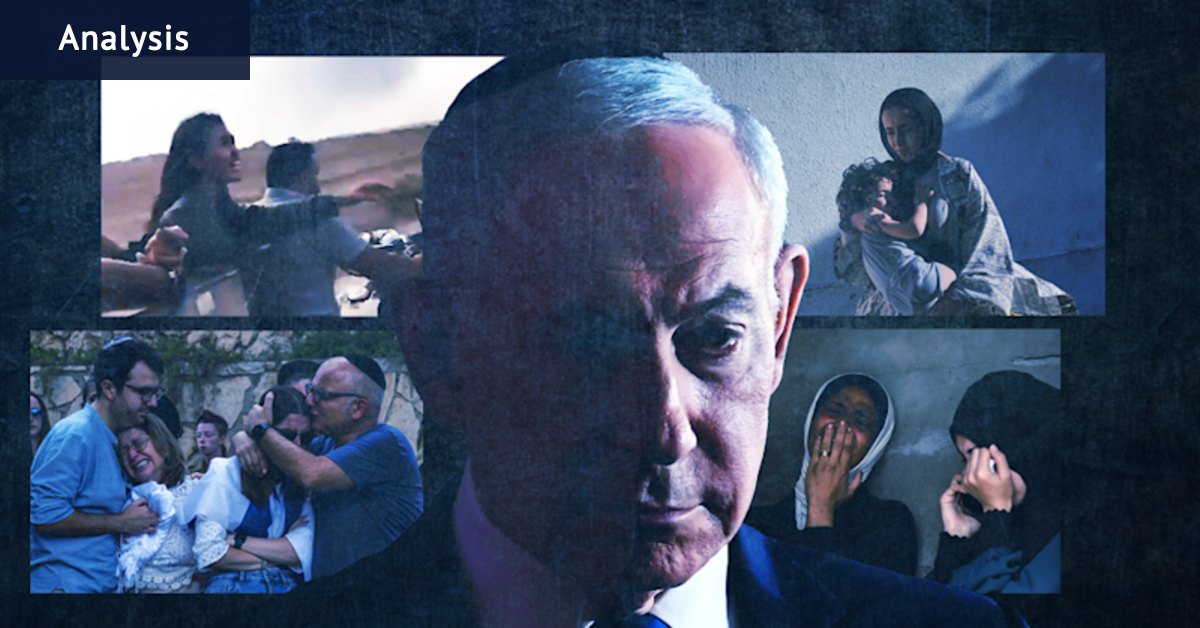
Ironically and unsurprisingly, Hamas has long been viewed as useful by Israeli Prime Minister Benjamin Netanyahu to maintain the argument that there are no moderate Palestinian partners with whom to negotiate.
asserted
Hamas → view → whom
This strategy aligns closely with the 2017 Subjugation Plan—officially titled “Israel’s Decisive Plan”—a political and ideological framework presented by Israeli far-right politician Bezalel Smotrich in 2017, which explicitly advocated for disregarding Palestinian national aspirations.
asserted
which → align → aspirations
This refusal to address the structural roots has frozen the contemporary diplomatic landscape.
asserted
refusal → address → landscape
The Israeli unwillingness to engage in dialogue with Palestinian interlocutors contrasts sharply with the pragmatic realism historically articulated by Israeli General Moshe Dayan, who famously observed that peacemaking requires negotiating with enemies rather than friends.
asserted
peacemaking → engage → friends
Today’s diplomatic landscape is defined by a deep imbalance in expectations.
asserted
landscape → define → expectations
For many years, Palestinian factions have faced strict, non-negotiable prerequisites to attain international political legitimacy—such as the explicit recognition of Israel, the renunciation of violence and adherence to past accords.
asserted
factions → face → accords
Conversely, no reciprocal demands have been placed on Israeli authorities, who face no requirement to recognise a sovereign Palestinian state, honour previous treaties, or renounce violence.
asserted
who → place → violence
In fact, Israel’s own political evolution is intertwined with factions that utilised political violence.
asserted
that → intertwine → violence
…and 7 more, not listed.
 The Aporia