Story summary
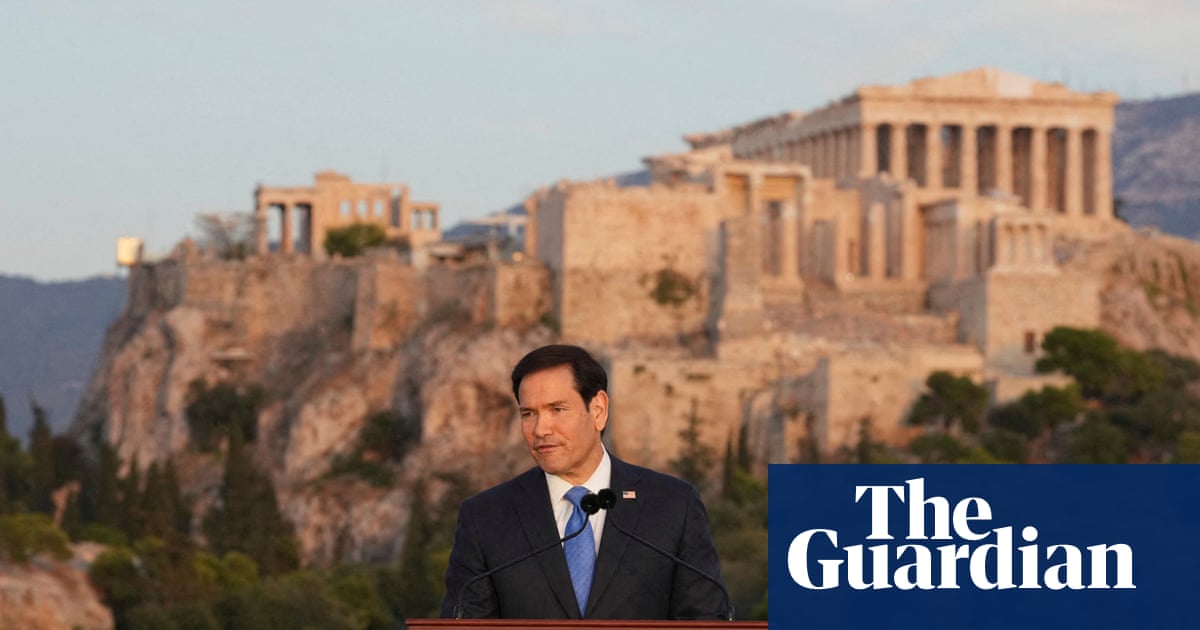
Marco Rubio, the US Secretary of State, delivered a speech on Wednesday, October 7, 2026, near the Acropolis ruins in Athens, Greece. In his address, he called for Western nations to return to their civilizational roots and uphold founding democratic values. Rubio emphasized that modern Europe needs to "awaken from its long slumber" and rekindle the ancient Greek spirit of heroism, honor, and duty, aligning these ideals with President Donald Trump's "America First" agenda.
Rubio highlighted that Western civilization is at a critical juncture where nations must confront contemporary threats, such as those posed by Iran and China, while also defending their sovereignty. He urged countries to deepen economic, energy, and security cooperation, much like the historic cooperation seen in Europe's past, exemplified by the Cold War summit between Reagan and Gorbachev.
The speech was part of efforts to strengthen alliances within NATO, with Rubio praising recent commitments from European nations to increase defense spending to 5% of GDP by 2035. He also criticized globalist politics for undermining national interests and warned against a future where the West faces atrophy, servitude, and decline if it fails to act decisively.
Written for “Rubio Greece Speech Western Values” on 2026-10-10,
grounded in this article and the 15 other(s) covering the same event.
A speech by US Secretary of State Marco Rubio invoking memories of ancient Persia has been met with coldness or disdain across the Iranian political spectrum amid Washington’s ongoing war on Iran.
asserted
speech → invoke → Iran
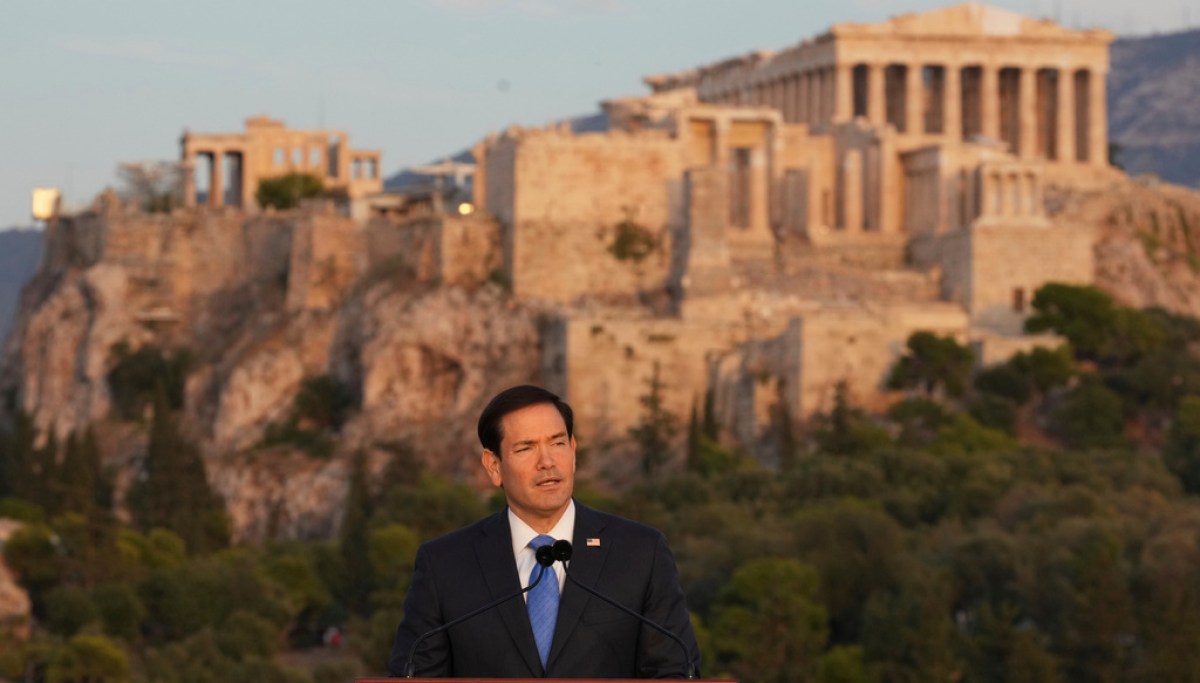
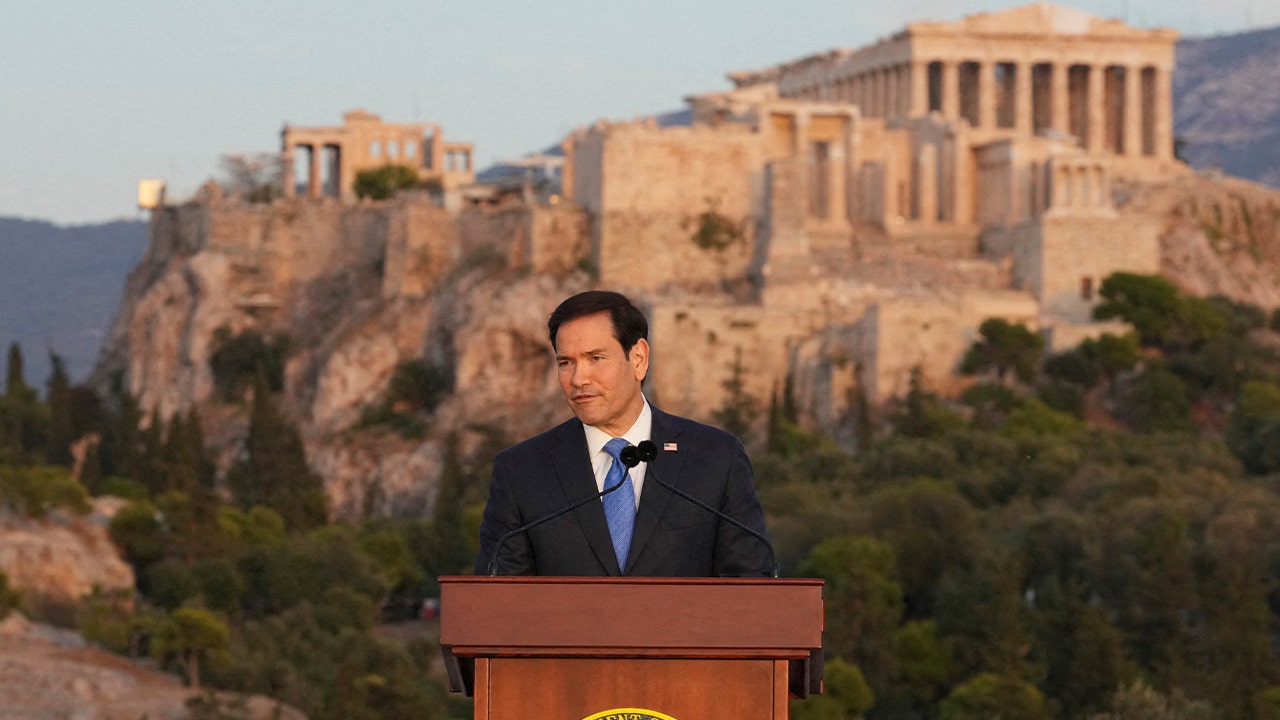
With the Acropolis in Athens as a backdrop, Rubio presented the United States, founded in the 18th century, as the inheritor of ancient Western civilisation running from Greece to Rome.
asserted
Rubio → present → Rome
Recommended Stories
list of 3 items- list 1 of 3Are the US and Israel waging war on Iran’s cultural heritage?
- list 2 of 3How
asserted
US → wag → heritage
US, Israel are waging a war on Iranian culture, education
asserted
Israel → wag → education
- list 3 of 3Why has Iraq decided to ban online map service Waze?
asserted
Iraq → decide → Waze
During the speech, he argued that modern-day Western countries have lost their confidence, weakened their industries and militaries, and need renewed ambition and power in the future.
asserted
countries → argue → future
Referencing the ancient Greco-Persian Wars, he used the Persian destruction of Athens in 480 BC under King Xerxes I as an example of Western civilisation surviving an external enemy.
asserted
civilisation → reference → enemy
“The Persians plundered the temples, burned the shrines and razed the Acropolis to the ground,” Rubio said.
asserted
Rubio → plunder → ground
He subsequently hailed the return of the Athenians and the construction of the Parthenon under Pericles.
asserted
He → hail → Pericles
The top US diplomat also directed his rhetoric against Iran’s current leaders, who have been in power since a 1979 Islamic revolution, calling them “fanatics” who run a “death cult” that wields martyrdom as a tool to achieve their political objectives.
“The threats we face today are every bit as real as they were on the dramatic stage of antiquity,” Rubio claimed.
asserted
Rubio → direct → antiquity
He boasted that the choice of President Donald Trump’s administration was the “unapologetic pursuit of national power”.
asserted
choice → boast → power
The US and Iran have been at war since the US and Israel launched strikes on Iran on February 28.
asserted
US → launch → February
While fighting between the two sides has subsided, the US has continued a naval blockade on Iran while shipping through the vital Strait of Hormuz remains disrupted.
asserted
shipping → subside → Hormuz
Iran’s security chief, Mohsen Rezaei, and parliament Speaker and chief negotiator Mohammad Bagher Ghalibaf both responded by invoking the Roman Emperor Valerian, who was captured alive by Persian King Shapur I’s forces in battle in 260 AD.
asserted
who → respond → AD
“Anyone who brings history into this must be prepared for its repetition,” Rezaei said.
asserted
Rezaei → bring → repetition
Iran’s Ministry of Foreign Affairs accused Rubio of flattening Greek, Roman, Christian and modern history.
asserted
Ministry → accuse → history
It also accused the secretary of state of incorporating an “America First” narrative to legitimise a military escalation against Iran after a relative decrease in fighting since June when a now-defunct memorandum of understanding was agreed.
asserted
memorandum → accuse → understanding
“It appears that the US has concluded it is better to justify its policy of coercion and force to the world under the beautiful neon lights of ‘philosophy of history’, instead of naked bullying that uses the language of cowboys,” Foreign Ministry spokesman Esmaeil Baghaei said in a statement.
asserted
Baghaei → appear → statement
He added that Rubio was resorting to “anachronism”, rehashing long buried historical events for modern-day legitimacy.
asserted
Rubio → add → legitimacy
After the 2020 assassination of Qassem Soleimani, a commander in Iran’s Islamic Revolutionary Guard Corps, Trump threatened to hit 52 Iranian sites “very hard”, including places “important to Iran & the Iranian culture”.
asserted
Trump → threaten → Iran
Since February, the US has been criticised for damaging Iranian historical and cultural sites during its bombing of Iran.
asserted
US → criticise → Iran
Culture Minister Reza Salehi-Amiri urged Western politicians to speak about Iran with a “language of respect” since “it is not an enemy created in a political speech but a living civilisation, a great nation and a lasting reality in world history” that dates back millennia.
asserted
that → urge → history
Iranian historian Touraj Daryaei told local media on Friday that while Rubio’s account of the sack of Athens was true, he omitted an important fact cited by Greek historian Herodotus and others – a major motivation for the Persian attack was retaliation.
asserted
motivation → tell → attack
In 498 BC, Athens’ forces burned Sardis, a provincial Persian capital in western Anatolia.
asserted
forces → burn → Anatolia
For Iranians who feel they were subject to an unprovoked attack by the US and Israel, this event could have modern-day relevance.
uncertain
event → feel → relevance
Shima, a 26-year-old resident of Tehran, told Al Jazeera that she did not appreciate Rubio’s attempt to use conflicts 2,500 years ago to muster support for the ongoing war with Iran.
asserted
she → tell → Iran
“They want to continue the war, and they will say whatever they think will work in the moment,” she said.
asserted
she → want → moment
During his January 2025 Senate confirmation hearing, Rubio had referred to Iranians as “the people of an ancient civilisation and culture with tremendous pride and advances who take great pride in their Persian heritage and identity”.
asserted
who → refer → heritage
“I don’t know of any nation on Earth in which there’s a bigger difference between the people and those who govern them,” he said at the time.
asserted
he → know → time
“In no way are the clerics who run the country representative of the people and its history and contributions it’s made to humanity.
asserted
it → run → humanity
But the US war on Iran, its naval blockade of southern Iranian ports and isolating sanctions have not had the worst impact on Iran’s government and leaders but on Iranians themselves and have failed to change the behaviour of the government.
asserted
war → isolate → government
Trump’s comments on the potential “death of a civilisation” in Iran in case of a military escalation have instilled more pessimism among Iranians about the goals of the US war, which was initially cited as an attempt to free the people from their government.
asserted
which → instill → government
Most Iranians reacted negatively to Rubio’s latest speech although some members of the diaspora or others opposed to the Islamic Republic argued that the US secretary of state is against Iranian authorities, not an entire ancient civilisation.
asserted
secretary → react → authorities
Iranian state media were quick to slam Rubio for his remarks with the hardline Vatan-e Emrouz newspaper on Saturday publishing a front page image of Rubio in ancient Roman military attire and holding a shield and sword.
asserted
newspaper → slam → shield
“Ancient war” read the headline.
asserted
headline → read → ?
The newspaper claimed that Rubio was trying to “create historical-ideological backing for the US war against Iran”.
asserted
Rubio → claim → Iran
Vali Nasr, professor of international affairs and Middle East studies at the Johns Hopkins School of Advanced International Studies in Washington, DC, told Al Jazeera he believes Rubio’s aim was to define a common enemy for the US and Europe to rebuild their relations around.
asserted
US → tell → relations
“He decided that Iran, rather than Islam, which was previously viewed as the civilisational enemy, should play that role to bind the West together,” he said.
asserted
he → decide → West
“It also reflects US frustration that Europe has not played a major role in the war and seeks to paper over deep divisions between the US and Europe on Russia and Ukraine.”
asserted
Europe → reflect → Russia
Rubio delivered his speech as Trump struck a deal with Russian President Vladimir Putin to sell diesel fuel to the US and global markets despite sanctions on Russia.
asserted
Trump → deliver → Russia
…and 4 more, not listed.
 The Aporia