Today in Supreme Court History: October 10, 2012

Read the original at Reason ↗
Reason · collected 2026-10-10 · by Josh Blackman

Quick Summary

Not summarized yet. This article was analyzed before summaries existed, or the model was unreachable at the time. python maintenance.py backfill-article-summaries fills these in.

AI analysis runs on qwen2.5:14b, locally

Story summary

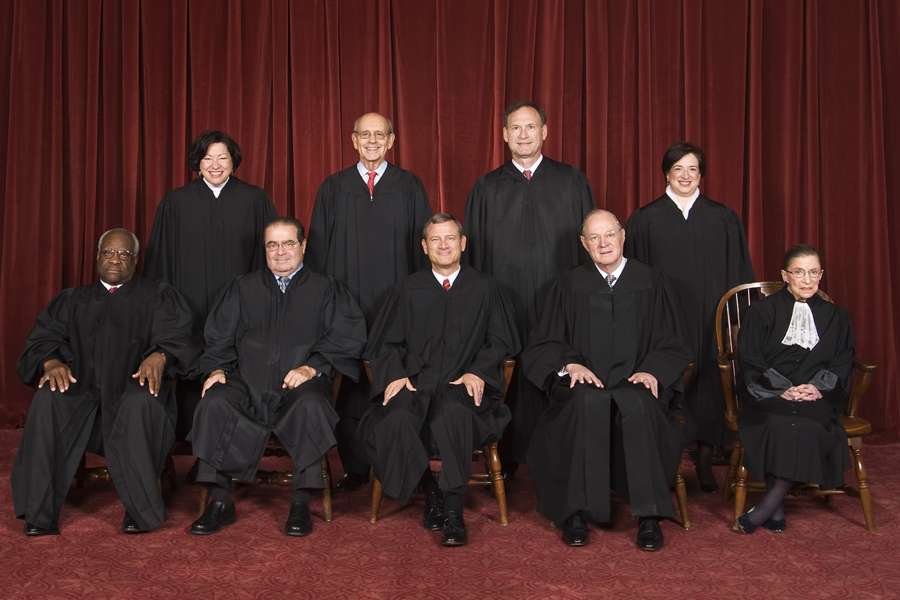
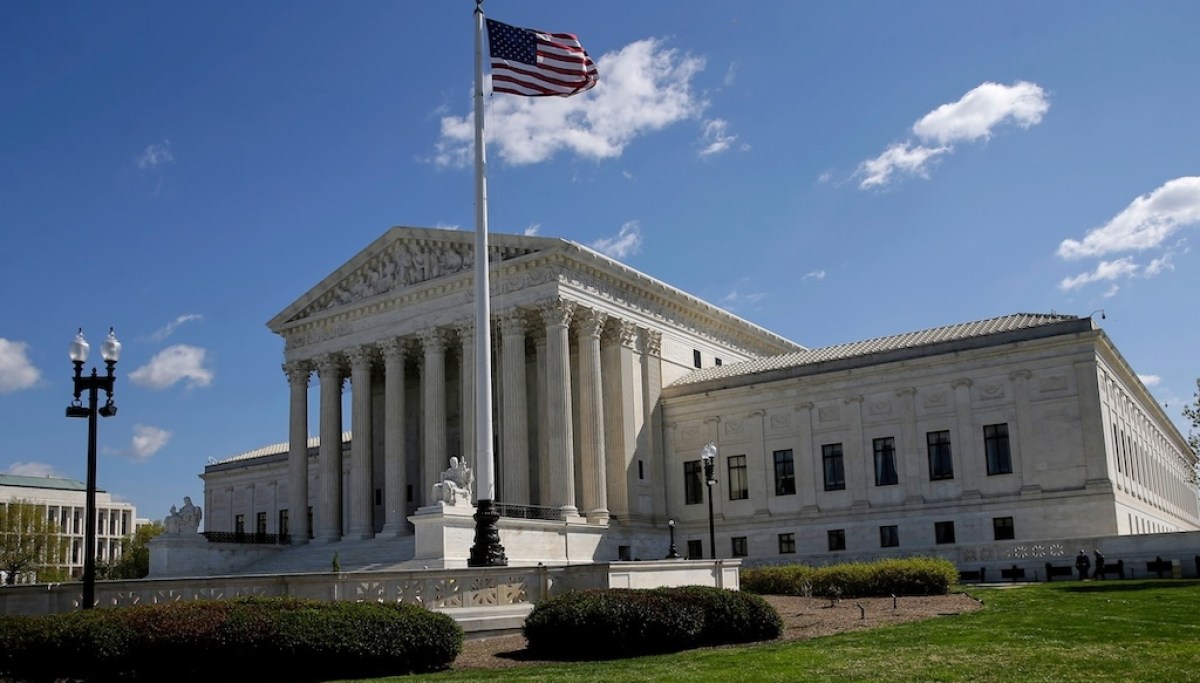
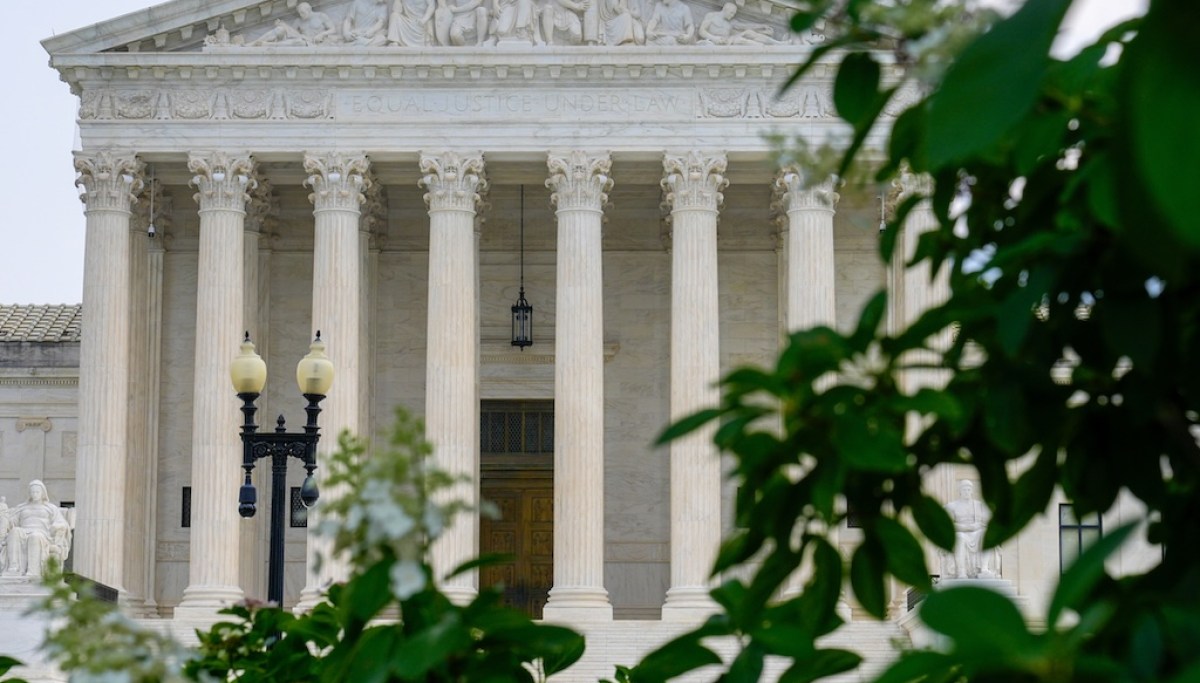
On October 10, 2012, the Supreme Court heard arguments in *Arizona v. Inter Tribal Council of Arizona Inc.*, a case that focused on voter registration requirements. The key issue was whether Arizona had the authority to demand proof of citizenship beyond what is federally required for voter registration under the National Voter Registration Act (NVRA). The outcome of this decision impacted state powers over elections and federal mandates regarding voting rights, specifically addressing the tension between states' ability to regulate elections and federal oversight of those regulations.
Written for “Supreme Court Historical Dates” on 2026-10-10, grounded in this article and the 0 other(s) covering the same event.
Why this leaning score
This article does not take a side on a contested political question, so it has no leaning score. That is an answer rather than a gap: a match report or a rescue can be warmly or critically written without being left or right, and scoring it anyway is how approval of a subject gets recorded as a political position.
No political leaning scored for article 70277 · logged 2026-10-10

Signals How these are calculated →

Claims extracted
0
claim-shaped sentences
Uncertain
no claims
nothing to measure
Leaning
not political
takes no side on a contested political question
Correction & hedging signals
66.3
corrections and hedging in what we collected; not a measure of accuracy
Outlets on this story
1
Politics
Narrative spread
none derived
Analyzed 2026-10-10 · how these are computed

Story

📰 Supreme Court Historical Dates
Politics · 1 article(s) covering the same event.

How this is being covered How these are calculated →

Article leaning vs. publisher reliability
Source leaning vs. consistency

Compared with similar articles

This article reads unscored and hedges an unknown share of its claims. Each row says how that neighbour differs.
Washington Examiner
⚖️ leaning not scored 🔴 18% hedged 7 of 40 📰 publisher trust 69
“Article A describes the opening of the Supreme Court's new term in 2026, while Article B is a historical reference to an event from October 10, 2012.”
Unpacking the Suncor Oral Argument different event · 98%
Reason
⚖️ leaning not scored 🔴 20% hedged 2 of 10 📰 publisher trust 66
“The articles refer to different dates and contexts, with Article A discussing an upcoming oral argument in October 2026, while Article B reflects on a historical Supreme Court event from October 10, 2012.”
Washington Examiner
⚖️ Leans strongly right 🔴 16% hedged 6 of 37 📰 publisher trust 69
“Article A discusses a future case to be heard by the Supreme Court, while Article B refers to historical events on October 10, 2012.”
CBS News
⚖️ leaning not scored 🔴 0% hedged 0 of 2 📰 publisher trust 66
“The articles describe different terms of the Supreme Court and cover distinct historical dates.”
Fox News
⚖️ Leans right 🔴 31% hedged 11 of 35 📰 publisher trust 70
“Article A describes the Supreme Court starting its new term on October 5, 2026, while Article B is a historical reference to an event in 2012.”
Fox News
⚖️ leaning not scored 🔴 32% hedged 12 of 38 📰 publisher trust 70
“The articles refer to different dates and contexts, one discussing a recent hearing in 2026 while the other refers to historical events from 2012.”
SUNCOR Gets Complicated different event · 98%
The Dispatch
⚖️ leaning not scored 🔴 4% hedged 1 of 26 📰 publisher trust 61
“The articles discuss different dates and topics within the Supreme Court, with Article A focusing on a recent Suncor SCOTUS oral argument and Article B mentioning historical events from October 10, 2012.”
New York Post
⚖️ Leans left 🔴 15% hedged 4 of 26 📰 publisher trust 67
“The articles discuss different time periods and contexts related to prediction markets and the Supreme Court, with Article A focusing on a recent conference and potential future threats from the Supreme Court, while Article B appears to be about historical events in Supreme Court history.”
Washington Examiner
⚖️ Leans left 🔴 6% hedged 1 of 18 📰 publisher trust 69
“The articles refer to different dates and contexts, indicating they are not describing the same specific Supreme Court event.”

Publisher

Reason · 656 article(s) · 4 correction(s) detected
Running correction rate · 4 correction(s)
2026-10-02
Would a Firing Squad Have Been More 'Humane' for Christa Pike?
2026-09-26
"I Will Not Stand for Being Jerked Around … by Any Lawyer Who Practices Before Me"
2026-09-18
New Article: Landor v. Louisiana Department of Corrections: Bringing Clarity To The Necessary and Proper Clause
2026-09-05
Lawyers' Responsibility for Hallucinations in Briefs That They Sign

Who wrote this

Josh Blackman
64 article(s) here · 0 carrying a prediction
🔮 Kyle asks: Well, I don't know how much coverage of the court you read, but you may not be surprised to learn that one light motif is that you are brooding figure.
🔮 Just as there are no doubt those on the bench who have strong ambitions for future office, there are others who are happy to be public servants, but who would be just as happy earning their living by some other means.
2026-10-06 · assertive framing · Lurching Through The Audition Trap
🔮 "But within a relatively short period of time, the thought occurred to me, and I think to the others in the majority, that this would endanger us.
🔮 He could have served in government, but he didn't.
🔮 (Southwick's already fragile reputation would be irreparably tarnished by such a move.)
🔮 The conduct caused disturbances that would have resulted in violence had law enforcement not intervened.
🔮 "It follows that if the underpinning is removed, the increasing professionalism will also disappear.
2026-10-02 · assertive framing · Todd Butler's Problematic Publications
🔮 In December 2017, I wrote in National Review that Republican-appointed judges should consider taking senior status so President Trump could fill those seats.
2026-10-01 · assertive framing · When Judges Pick Their Law Clerks As Replacements
🔮 Since he joined the Court, Roberts and his family would seek solace from the swamp at Hupper Island after the Court dismisses for the term.
🔮 Even if Congress were to enact a law clearly empowering Article III courts to vacate agency rules or regulations and automatically cause their erasure from the Code of Federal Regulations, vacatur would likely still be inconsistent with the limited nature of the judicial power and the non-delegability of core legislative power to the judiciary.
Also by Josh Blackman
Nothing else under this byline is closely related to this article, so these are simply their most recent.
All 64 articles by Josh Blackman →

Topics

No topics tagged.

Subjects

No subjects extracted.

Narrative

No narrative derived. That requires at least one asserted claim.

Claims (0 extracted, 0 hedged)

No claims extracted from this article.
💬Give feedback
🕘History 🎫Support