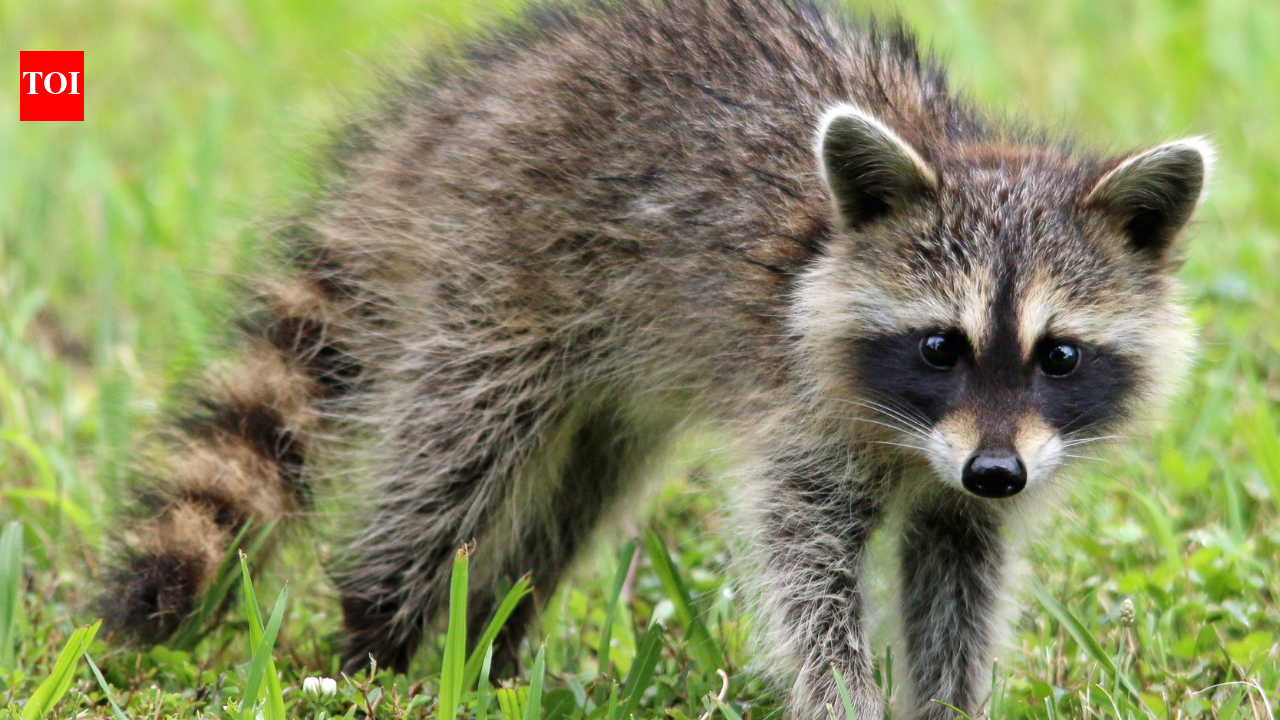
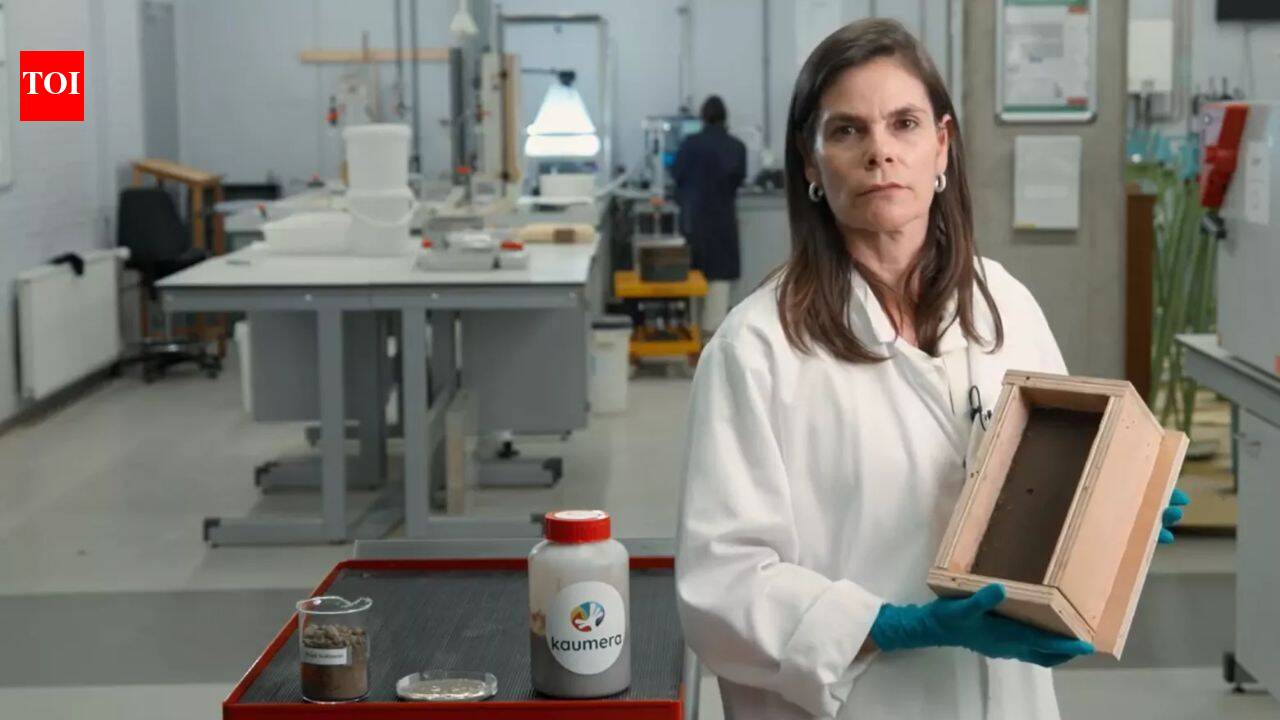
University of British Columbia researchers tested raccoons with a custom puzzle box containing nine entry points categorized as easy, medium, and hard. The study involved sixteen adult raccoons at the United States Department of Agriculture's National Wildlife Research Center in Fort Collins, Colorado; fourteen completed all three difficulty levels. Each 20-minute trial included a single marshmallow, but raccoons often continued to solve new mechanisms even after eating it, demonstrating persistent problem-solving behavior beyond immediate reward.
Written locally by qwen2.5:14b on 2026-10-10,
using this article's own text rather than the other coverage of the
same event (that is the story summary below).
Raccoons have long been credited with outwitting latches, and a study has tested that reputation.
asserted
study → credit → reputation
University of British Columbia researchers Hannah Griebling and Dr Sarah Benson-Amram gave captive raccoons a custom puzzle box with nine entry points, grouped as easy, medium and hard.
asserted
Griebling → give → points
Each 20-minute trial held a single marshmallow; the raccoons often kept opening new mechanisms after eating it.
asserted
raccoons → hold → it
Sixteen adult raccoons were tested in Colorado, and fourteen completed all three difficulty levels.
asserted
fourteen → test → levels
The authors call the behaviour information foraging, and the paper reports that all but one raccoon solved multiple solutions within single trials.
asserted
raccoon → call → trials
How did scientists test raccoons with a nine-way puzzle
According to the University of British Columbia news release, the researchers used a custom multi-access puzzle box with mechanisms such as latches, sliding doors and knobs.
uncertain
researchers → test → latches
The box had nine entry points, grouped as easy, medium and hard.
asserted
box → have → points
The paper states that the box was a Plexiglas cube measuring 25.4 centimetres on each side, with removable panels.
asserted
box → state → panels
One panel was plain Plexiglas, and the other three held solutions that gave access to the food in the centre, so each raccoon faced three solutions at a time.
asserted
raccoon → hold → time
The easy ones were a door, a slide latch and a pull-down window.
asserted
ones → pull → ?
The medium ones were a hook-and-eye latch, a hasp latch and a push-up window.
asserted
ones → push → ?
The hard ones were a draw-catch latch, a turn knob and an unlocked padlock placed in the hasp.
asserted
ones → draw → hasp
According to the paper, sixteen adult raccoons were tested at the United States Department of Agriculture's National Wildlife Research Centre in Fort Collins, Colorado.
uncertain
raccoons → accord → Collins
Eight were captive-reared males, six were captive-reared females, and two were wild-caught males.
asserted
two → rear → ?
Fourteen completed all three difficulty levels.
asserted
Fourteen → complete → levels
Why did raccoons keep solving the puzzle after eating the marshmallow
asserted
raccoons → keep → marshmallow
According to the study published in ScienceDirect, titled ‘
Raccoons optimally forage for information: exploration–exploitation trade-offs in innovation’, each raccoon had five trials a night for 10 nights, giving 50 trials in total.
uncertain
raccoon → accord → total
Trials lasted 15 to 20 minutes, and most ran for the full 20.
asserted
most → last → 20
The raccoons were not deprived of food, although their second daily ration was held back until testing finished each night.
asserted
testing → deprive → food
Before the puzzle trials, a food preference test showed that the raccoons were more likely to choose a marshmallow than a dried prune dipped in sardine juice or a sardine.
asserted
raccoons → show → juice
Each raccoon met the easy solutions first.
asserted
raccoon → meet → solutions
It moved on to the next level only after opening one solution 15 cumulative times.
asserted
It → move → solution
The box held a single marshmallow in each 20-minute trial, yet raccoons often continued opening new mechanisms after eating it.
asserted
raccoons → hold → it
"They kept problem-solving even when there was no marshmallow at the end," Griebling said.
asserted
Griebling → keep → end
The paper reports that all but one raccoon solved multiple solutions within single trials at all three difficulty levels.
asserted
raccoon → report → levels
The raccoons could see and feel with their forepaws that no further food was inside the box.
uncertain
food → see → box
How did raccoons change their puzzle-solving strategies
The raccoons took longer to solve their first hard solution than their first easy or medium one.
asserted
raccoons → change → one
The mean number of solutions solved per trial was 1.79 for easy, 1.63 for medium and 1.44 for hard.
asserted
number → solve → hard
The paper also scored how varied the raccoons' solving order was, on a scale from 0 to 1.
asserted
order → score → 1
The authors say this shows the raccoons explored more on easier problems and relied on known solutions more on harder ones.
asserted
raccoons → say → ones
UBC states that raccoons tried multiple openings and varied their order when solutions were easy.
asserted
solutions → state → order
As difficulty rose, they favoured a dependable solution, but they still explored several solutions at the hardest level.
asserted
they → rise → level
Griebling compared the pattern to ordering at a restaurant, choosing a favourite dish or trying something new.
asserted
Griebling → compare → something
In her words, as reported by UBC, raccoons explore when the cost is low and play it safe when the stakes are higher.
asserted
stakes → report → it
The paper adds that the more time raccoons spent exploring the box, the more solutions they solved.
asserted
they → add → solutions
That exploration also slowed how quickly they opened the first solution and reached the food.
asserted
they → slow → food
The authors report that this effect diminished as trials continued.
asserted
trials → report → ?
PC: Canva
How do raccoons’ problem-solving skills help them thrive in cities
asserted
them → help → cities
The findings help explain why raccoons thrive in urban centres such as Vancouver.
asserted
raccoons → help → Vancouver
The release says their forepaws are rich in sensory nerves for foraging in streams, which suits them to handling latches and handles as humans do.
asserted
humans → say → latches
…and 7 more, not listed.
 The Aporia