Story summary
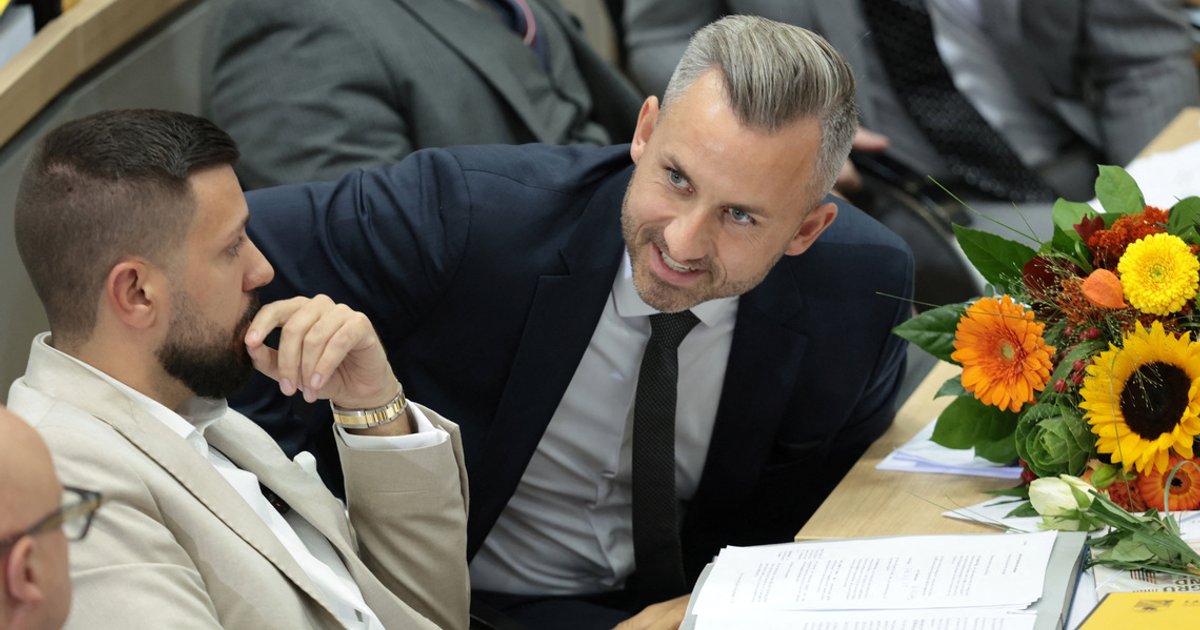
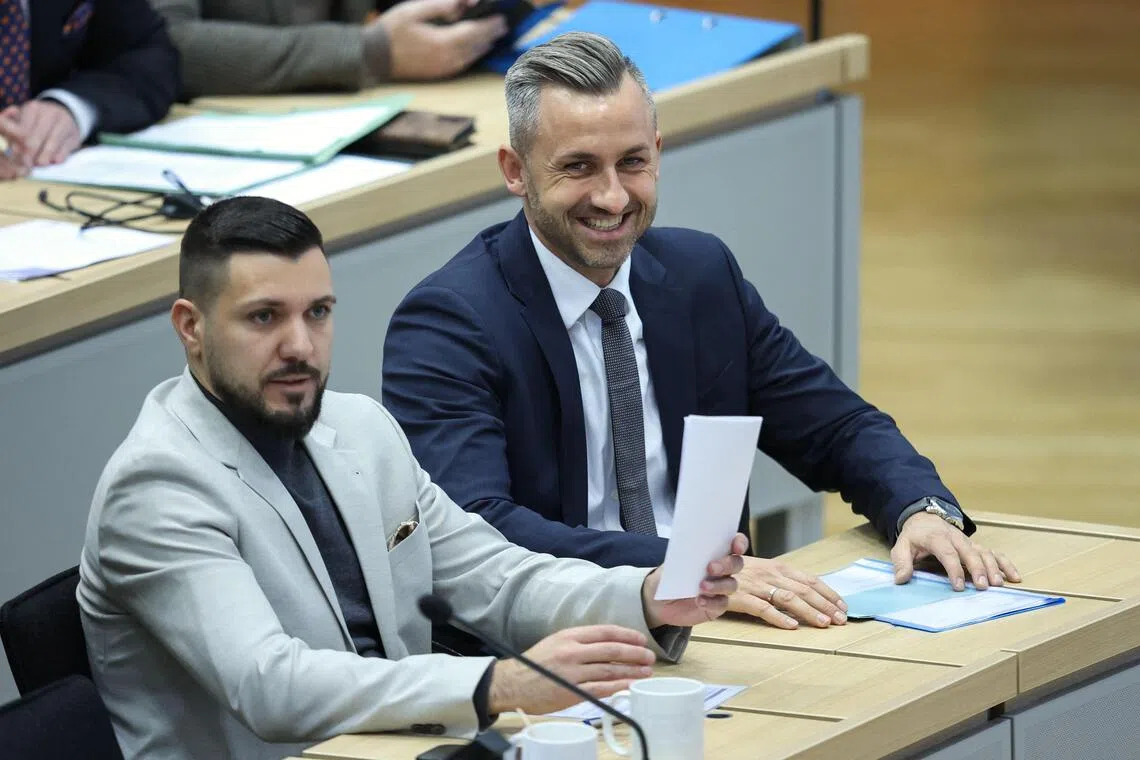
On October 6, Tobias Rausch, a member of Germany's far-right party Alternative for Germany (AfD), was elected as the Speaker of the state parliament in Saxony-Anhalt. This marks the first time since World War II that a far-right party has held such an important position in post-war German history. The AfD won nearly 44% of votes in September, easily surpassing the center-right CDU led by Chancellor Friedrich Merz, who is unpopular among many voters.
The election took place amidst concerns from activist groups and migrant communities about potential cooperation with the AfD, which has been classified as a "confirmed extremist" organization by domestic intelligence agencies. About 400 protesters gathered outside the parliament building in Magdeburg to oppose any collaboration with the far-right party. Despite these protests, Rausch won the election comfortably, securing 48 out of 82 votes cast.
While this victory is seen as a symbolic win for the AfD, forming a government remains challenging due to a lack of majority support from other parties. The AfD's stance on restricting immigration and restoring ties with Russia has caused significant debate and concern among both German citizens and international observers.
Written for “German Far Right Wins Power” on 2026-10-10,
grounded in this article and the 5 other(s) covering the same event.
Germany's firewall against the far-right AfD feels the heat
asserted
firewall → feel → heat
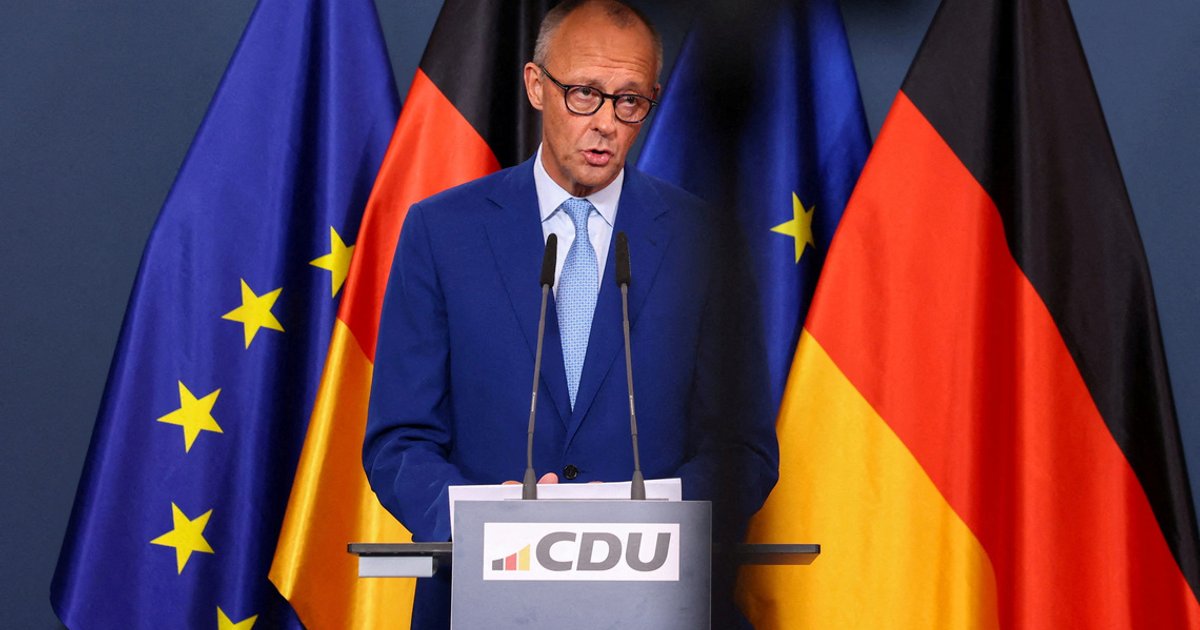
Chancellor Friedrich Merz's warning this week that extremism was entering Germany's parliamentary system was the latest in a series of signs that mainstream parties' "firewall" to isolate the far-right Alternative for Germany (AfD) has begun to buckle.
asserted
firewall → enter → Germany
This week, at least four lawmakers from mainstream parties in the eastern state of Saxony-Anhalt appear to have defied party orders and voted to give the AfD, which wants to restrict immigration and restore energy ties with Russia, its first regional assembly speaker.
asserted
which → appear → speaker
The ballot was secret but suspicion immediately fell on the 15 members of Merz's conservative Christian Democrats (CDU) in parliament, who had been told to abstain.
asserted
who → fall → parliament
Karin Prien, deputy chair of the national CDU, said if CDU lawmakers were to blame, "there must be consequences".
asserted
lawmakers → say → CDU
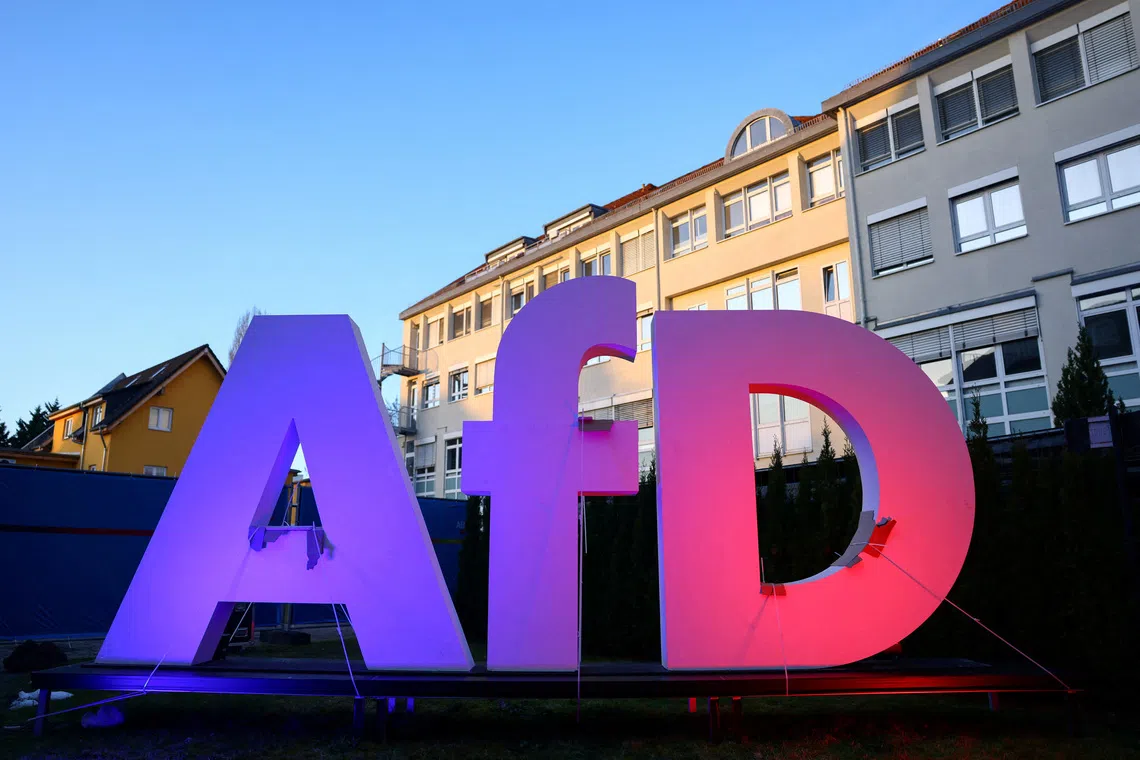
The AfD itself, which has been leading the CDU in nationwide surveys for more than a year and declared its aim of winning a national election due in 2029, hailed a "political turning point".
asserted
which → lead → point
"For the first time, it was clear that the so-called 'firewall' doesn't have to be stronger than the freedom of action of members of parliament," said Martin Reichardt, head of the AfD in Saxony-Anhalt.
asserted
Reichardt → call → Anhalt
COULD AFD WIN A NATIONAL ELECTION IN GERMANY?
uncertain
AFD → win → GERMANY
The AfD's record victory last month has alarmed rivals, who consider it an anti-democratic party opposed to the values that helped Germany to rebuild after World War Two and renounce the horrors of Nazism and its nationalist, racist ideology.
asserted
Germany → alarm → Nazism
The AfD rejects their label of "extreme right" as a slur.
asserted
AfD → reject → slur
Across Europe and beyond, the result, which left the AfD just short of an absolute majority in the state parliament, was seen as one of the clearest indications yet that it could win a national election in 2029.
uncertain
it → leave → 2029
Merz's coalition with the centre-left Social Democrats in Berlin has been under increasing strain, riven by disagreements and sliding in opinion polls as voters, like many across Western Europe, blame the mainstream parties for declining living standards.
asserted
voters → increase → standards
On Wednesday, the parties held talks to iron out differences over issues including pensions and tax, and said they were "determined not to hand our country over to extremists".
asserted
they → hold → extremists
Set up over a decade ago during the euro zone debt crisis, the AfD has grown from a fringe movement into the most popular party in Germany in opinion polls.
asserted
AfD → Set → polls
Yet parts of the AfD - including its Saxony-Anhalt branch - have been designated as extremist by German security services, meaning that they are considered to be opposed to constitutional principles of human rights, democracy and the rule of law.
asserted
they → include → law
The Federal Office for the Protection of the Constitution (BfV), the domestic intelligence agency, compiled a 1,100-page confidential report last year that found the AfD incited resentment of migrants, as well as racism and Islamophobia.
asserted
AfD → compile → migrants
For its part, the AfD says it is restoring German national pride and values, and ensuring that migrants are not prioritised at the expense of German citizens.
asserted
migrants → say → citizens
So far, the "firewall" approach - under which the established parties have refused to cooperate with the AfD - has kept it from joining any coalition government.
asserted
parties → establish → government
In Saxony-Anhalt, where it needs three more seats for a majority, it is still unclear how it can form a government after talks over a possible coalition with the populist far-left BSW made no progress.
FEARS OF COOPERATION WITH AFD
However, the AfD's Ulrich Siegmund, who dismisses the firewall as "childish", says he can persuade enough members of other parties to defy party orders to enable him to be confirmed as state premier by the end of the year.
uncertain
he → need → year
In this week's speaker ballot, the AfD's Tobias Rausch won 48 votes - four more than the combined total held by the AfD and the BSW.
asserted
Rausch → win → AfD
Merz has ruled out any arrangement with the AfD, which he says aims to destroy the CDU, and the issue is expected to be discussed at a CDU's leadership meeting on Sunday and Monday.
asserted
issue → rule → Sunday
But whether it remains realistic to refuse to cooperate with a party attracting almost a third of the vote, and more in the formerly communist eastern states where it is strongest, has become an urgent question.
asserted
it → remain → states
CDU deputy leader Prien said any sign of accommodation could open divisions that could "jeopardise the very existence of the entire party".
uncertain
that → say → party
The AfD has gained ground nationwide but remains weaker in western Germany than in the east, and appears unlikely to repeat its Saxony-Anhalt result in state elections next year.
asserted
AfD → gain → elections
However, the problems that have helped create the conditions for its rapid rise resist easy answers.
asserted
that → help → answers
War in Ukraine has cut off the supply of cheap energy that fuelled Germany's economy while competition from China has eaten away at its once-invincible industrial base.
asserted
competition → cut → base
Economists warn continually that fundamental reforms are needed to pensions and taxes to meet the needs of an ageing population, while deep divisions remain between the eastern and western regions, almost four decades after the fall of the Berlin Wall.
asserted
divisions → warn → Wall
Marking the anniversary last week of German reunification in 1990, President Frank-Walter Steinmeier acknowledged that many felt overlooked by the political system and that a generalised feeling of insecurity had undermined confidence.
asserted
feeling → mark → confidence
But, in an unusually bleak assessment, he said the bitter political climate was threatening to send Germany back into the chaos that ended the democracy of the prewar Weimar Republic.
asserted
that → say → Republic
"Today is about the survival of democracy," he said.
asserted
he → say → democracy
"We must stand up for what remains important."
asserted
what → stand → ?
 The Aporia