That is 0 articles you have read today.
The Aporia is free and carries no advertising, so readers are the only
thing paying for it. If you are getting this much out of it, a small
donation is what keeps it independent.
Daily limit reached
You have read 0 articles today.
That is more than the 15 a day The Aporia gives away,
and well past what it can carry on nothing. Your allowance resets at
midnight.
There is no advertising here and nothing about you is sold, so readers
are the only thing paying for it. If the site is worth this much of
your day, it is worth a few dollars.
Everything else stays open: the
maps, the
directory and
search do
not count against this, and neither does re-opening something you have
already read today.
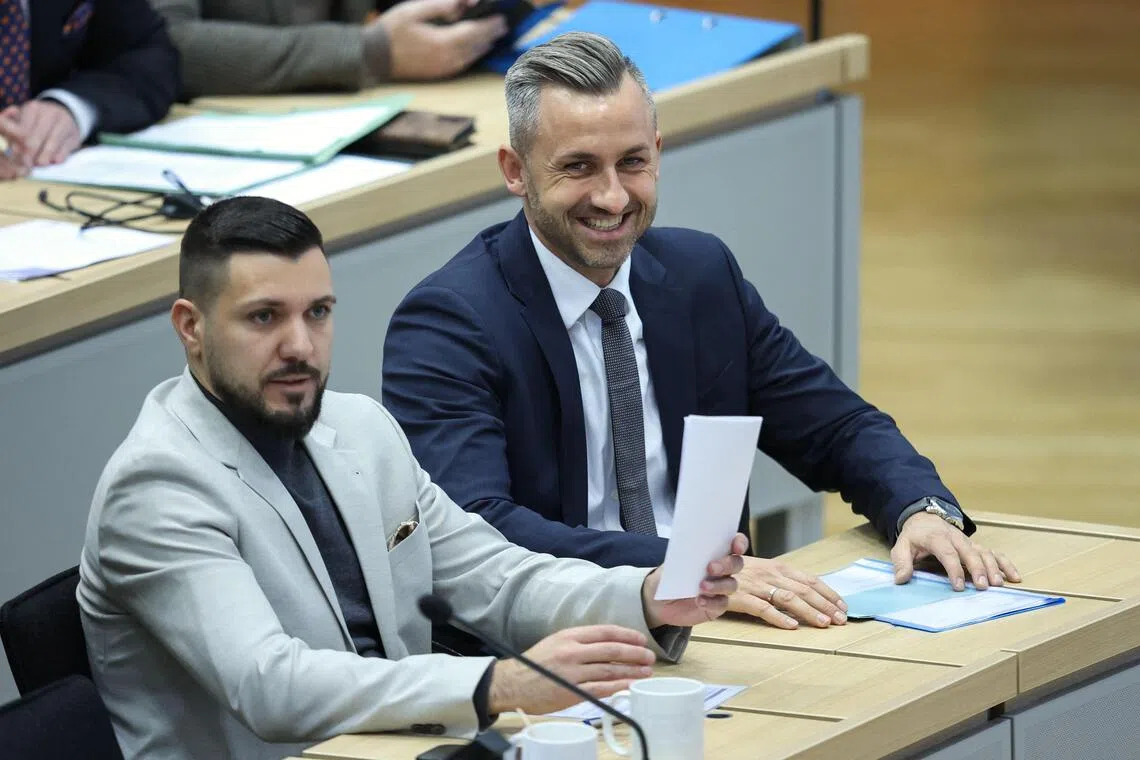
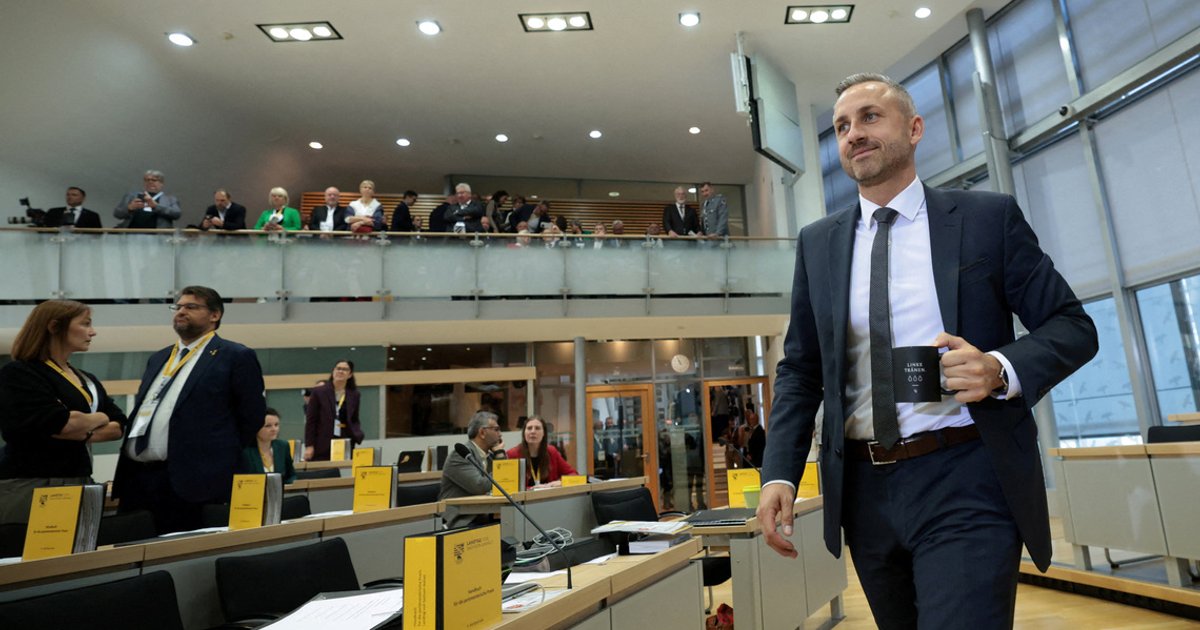
A month after Germany's far-right AfD won a significant victory in Saxony-Anhalt, Tobias Rausch, an AfD candidate, was elected as the speaker of the regional parliament. This is the first time since World War II that a far-right party has held this position. The election took place with support from nine MPs across different parties, including five from the hard-left BSW and four unidentified MPs. Protesters outside the parliament building in Magdeburg expressed their disapproval through banners reading "Never again is now."
Written locally by qwen2.5:14b on 2026-10-06,
using this article's own text rather than the other coverage of the
same event (that is the story summary below).
Story summary
In Saxony-Anhalt, Germany's far-right Alternative for Germany (AfD) party secured a significant victory in September, taking nearly 44% of the vote and easily outpacing the center-right CDU. On October 6, newly elected state lawmakers gathered in Magdeburg to elect a Speaker, with Tobias Rausch winning comfortably with support from nine MPs from other parties. This marks the first time since World War II that a far-right party has held such an influential position in German politics. Protesters outside the parliament building called for non-cooperation with the AfD, which is classified as "confirmed extremist" by domestic intelligence services due to its anti-immigrant stance and pro-Russian views. The election of Rausch underscores growing electoral support for the AfD but also highlights challenges in forming a government without broader party cooperation.
Written for “AfD Far Right Win In Germany” on 2026-10-06,
grounded in this article and the 4 other(s) covering the same event.
Why this leaning score
The article's own words the score was based on. Each is quoted
verbatim and was checked against the article text before being
stored, so you can find it in the original.
Leaning: leans left for article 60382 (high confidence, 2 verified quotes) · logged 2026-10-06
- Published
A month after Germany's far-right AfD scored a decisive victory in the eastern state of Saxony-Anhalt, the party's candidate Tobias Rausch has been elected as parliament speaker there too.
asserted
Rausch → publish → speaker
Not since World War Two has a far-right party secured the post of speaker, and protesters outside the building in Magdeburg held up banners saying, "Never again is now".
asserted
protesters → secure → banners
Although the AfD fell three seats short of a majority in last month's election, Rausch, 35, comfortably won Tuesday's vote with the support of 9 MPs from other parties.
"The days of political firewalls should be a thing of the past," Rausch said after the vote, rejecting a post-war consensus in German politics not to work with the far right.
asserted
Rausch → fall → right
This was the first time since last month's state vote that Saxony-Anhalt's newly elected representatives had gathered in parliament, and regional Greens party leader Susan Sziborra-Seidlitz said "a line has been crossed" with the election of a far-right speaker of parliament, and it was a watershed moment.
asserted
it → elect → parliament
"We will not let ourselves be intimidated, and we will not sit by when rights are curtailed either here or for people in the state," she said.
asserted
she → let → state
The AfD is considered pro-Russian and anti-immigrant, with plans to segregate child refugees in schools, as well as intolerant towards the LGBT community.
asserted
AfD → consider → community
Within Saxony-Anhalt it is also classed as "right-wing extremist" by domestic intelligence, a description rejected by party leaders.
asserted
it → class → leaders
Until now its members have sat on the right fringe of the state parliament, but ahead of Tuesday's inaugural session it successfully argued that it should now sit in the centre.
asserted
it → sit → centre
Rausch, a trained estate agent, has been a member of the parliament for 10 years and he is seen as a close confidant of local AfD leader Ulrich Siegmund, a charismatic figure who is now seeking to become state premier in December.
asserted
who → see → December
His new role is largely symbolic, but Rausch will now chair debates, have the power to control access to the parliament building and represent parliament at official events.
asserted
Rausch → chair → events
Although his victory was secured by five MPs from the hard-left BSW, there was surprise that four other unidentified MPs also voted for Rausch.
asserted
MPs → secure → Rausch
Commentators immediately asked if he had secured the backing of members of the conservative CDU of Chancellor Friedrich Merz, who has ruled out working with the AfD.
Fourteen of the CDU's state MPs took part in the vote, but only five of them abstained as planned, and one unconfirmed report suggested four may have backed Rausch.
uncertain
four → ask → Rausch
Ahead of the vote, all 15 had ruled out voting for the AfD.
Outside parliament, more than 300 protesters voiced their anger at the AfD's victory, and they crowded around Ulrich Siegmund as he spoke to German media.
asserted
he → rule → media
Siegmund's bid to become state premier is by no means secure.
asserted
bid → become → means
Like Rauch he will need the backing of 42 MPs in the 83-seat legislature.
asserted
he → need → legislature
The BSW has refused to enter into a coalition with the AfD and has said it would instead back a non-partisan candidate for state premier and abstain in December's vote.
asserted
it → refuse → vote
 The Aporia