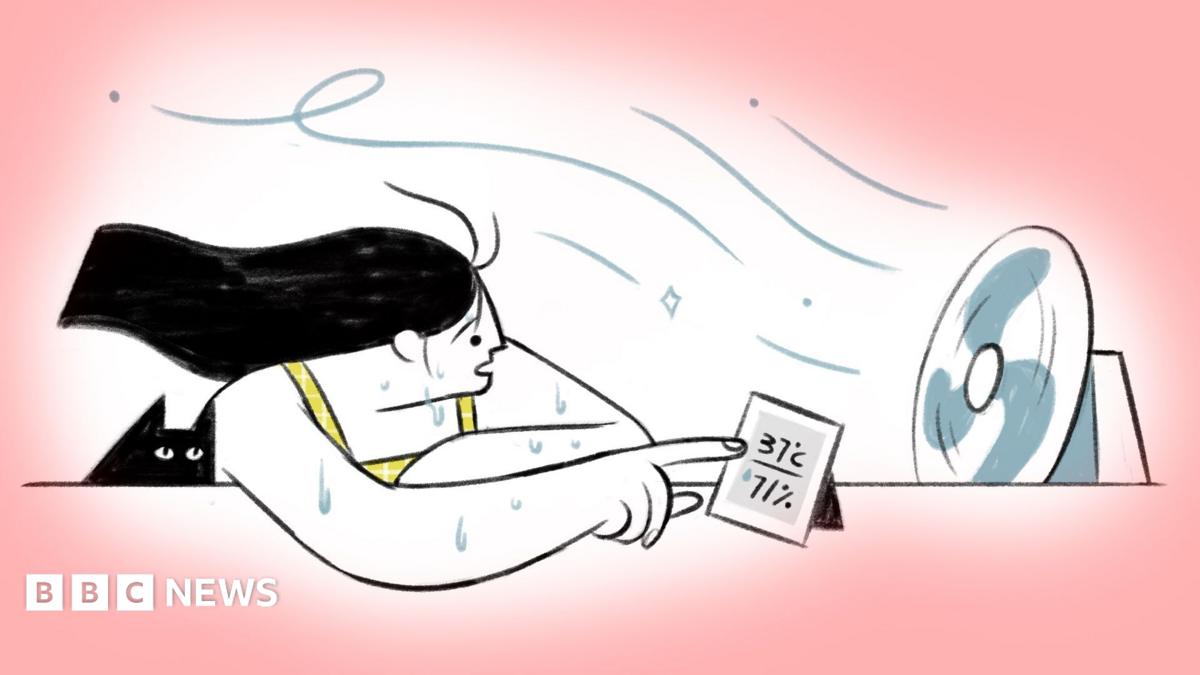
Your trusty electric fan could help more than you think - but only if you put it in the right place.
uncertain
you → help → place
During the recent heatwaves, social media was full of advice on how to make your fan work harder - but some of it was conflicting.
asserted
some → make → it
So, to try to clear up any confusion, we asked experts to separate fact from fiction - from which part of your body to direct your electric fan at, to the best room in the house to put it.
asserted
part → try → it
The first thing most people will want to know is if opening a window and using a fan at the same time will cool down their home.
asserted
opening → want → home
It depends, says Becci Taylor, a specialist in building physics at the engineering firm Arup.
asserted
Taylor → depend → firm
She says it's best to try to keep the air in your home as cool as possible, so you should keep the windows closed during the daytime, when temperatures outside are likely to be at their highest.
asserted
temperatures → say → highest
She recommends drawing curtains and blinds in rooms facing direct sunlight to stop the air inside heating up.
asserted
air → recommend → sunlight
"If the air is cooler than your skin temperature, it's going to cool you down even without sweating," she says.
asserted
she → go → you
You could place a fan in the coldest room and use that to direct its air towards the rest of your home.
uncertain
You → place → home
Though she advises only doing so if you have a reasonably large or powerful fan.
asserted
you → advise → fan
If you have a small fan, then it doesn't particularly matter where in the room you place it on a hot day, says Taylor - provided you keep your windows shut.
asserted
you → have → windows
"You just want it to be near you."
asserted
it → want → you
At night-time, when the air outside is likely cooler than the air in your home, you should consider opening a window and using a fan to bring in the cooler air.
asserted
you → consider → air
Placing the fan next to the open window and pointing it inwards, towards the rest of the room, can help.
asserted
Placing → place → room
But pointing the fan towards the window - to try and blow the hot air in your home outwards, as some social media posts advise - isn't particularly useful as you would not get the cooling benefits of having it pointed towards you.
asserted
it → point → you
Where you should point it
Pointing the fan directly at your face may be tempting during periods of extreme heat, says Prof Mike Tipton from the University of Portsmouth.
uncertain
Tipton → point → Portsmouth
But he says that will only give you the perception of "thermal comfort" - in other words you will feel cooler but you're not actually cooling as much as you might think.
uncertain
you → say → words
A specialist in human and applied physiology, he says a fan should be directed more broadly at your body and, crucially, placed far enough away so it "provides air movement over the [whole] body".
asserted
it → say → body
That air movement improves the effectiveness of your sweating, he says, which is caused by your body naturally trying to cool itself down.
asserted
body → improve → itself
Using a fan this way works particularly well if you combine it with other methods of keeping your body temperature down, adds Prof Tipton, such as keeping your hands cool and taking tepid showers.
asserted
Tipton → use → showers
However, if you have young children, you should not point a fan directly at them as it could cause dehydration.
uncertain
it → have → dehydration
Instead, you can use the fan to circulate air around the room.
asserted
you → use → room
Putting a bowl of water or ice in front of a fan will also help, Taylor says.
asserted
Taylor → put → fan
That's because the air movement encourages water in the bowl to evaporate, which takes heat out of the air, making the room a little cooler.
asserted
room → encourage → air
You can buy fans that come with a misting device, she adds.
asserted
she → buy → device
Taylor says smaller, handheld versions are most effective indoors.
asserted
versions → say → ?
Too much mist increases humidity, which reduces your body's ability to sweat and cool down as there's more moisture in the air.
asserted
which → increase → air
Buying a version that is too large means "you just end up with a very sweaty, damp room", she says.
asserted
she → buy → room
"Sweating and misting work in the same way, which is also why it's comfortable and cooler to be near a fountain or open body of water," she says.
"
asserted
she → work → water
You can harness that mechanism by putting some liquid in front of the fan, which can evaporate."
asserted
which → harness → fan
One important tip is never cover your fan with a wet or frozen towel to try and achieve the same effect, as some social media posts demonstrate, as it can cause electrical safety problems.
asserted
it → cover → problems
The 35C debate
Your body's temperature is about 37C, while your skin is likely to be about 34C.
When the air temperature in your home is less than this a fan is helping you sweat, feel cooler and take away heat from the skin.
asserted
you → help → skin
As the air temperature moves above this, Taylor says a fan can still help to evaporate your sweat - as long as it is not too humid - but it will also bring more heat to your skin.
asserted
it → move → skin
The government advice is not to use a fan once it exceeds 35C inside.
asserted
it → use → 35C
Met Office scientists have said there is an increasing likelihood of extreme temperatures in the UK, and that the chance of exceeding 40C is accelerating.
asserted
chance → say → 40C
Taylor adds: "If people can understand how the physiology of cooling works, then we can start to help them deal with the heat better."
Illustrations by Jodi Lai.
asserted
them → add → Lai
 The Aporia