The U.S. military plans to livestream the December 3 execution by firing squad of Nidal Hasan, who was convicted for killing 13 people at Fort Hood in 2009. This would be a first, as death penalty experts consulted by Reuters confirm there has never been a known public broadcast or livestream of an official execution before. The article explores how this practice contrasts with global trends towards conducting executions privately and the challenges posed by internet distribution of violent content.
Written locally by qwen2.5:14b on 2026-10-09,
using this article's own text rather than the other coverage of the
same event (that is the story summary below).
Story summary
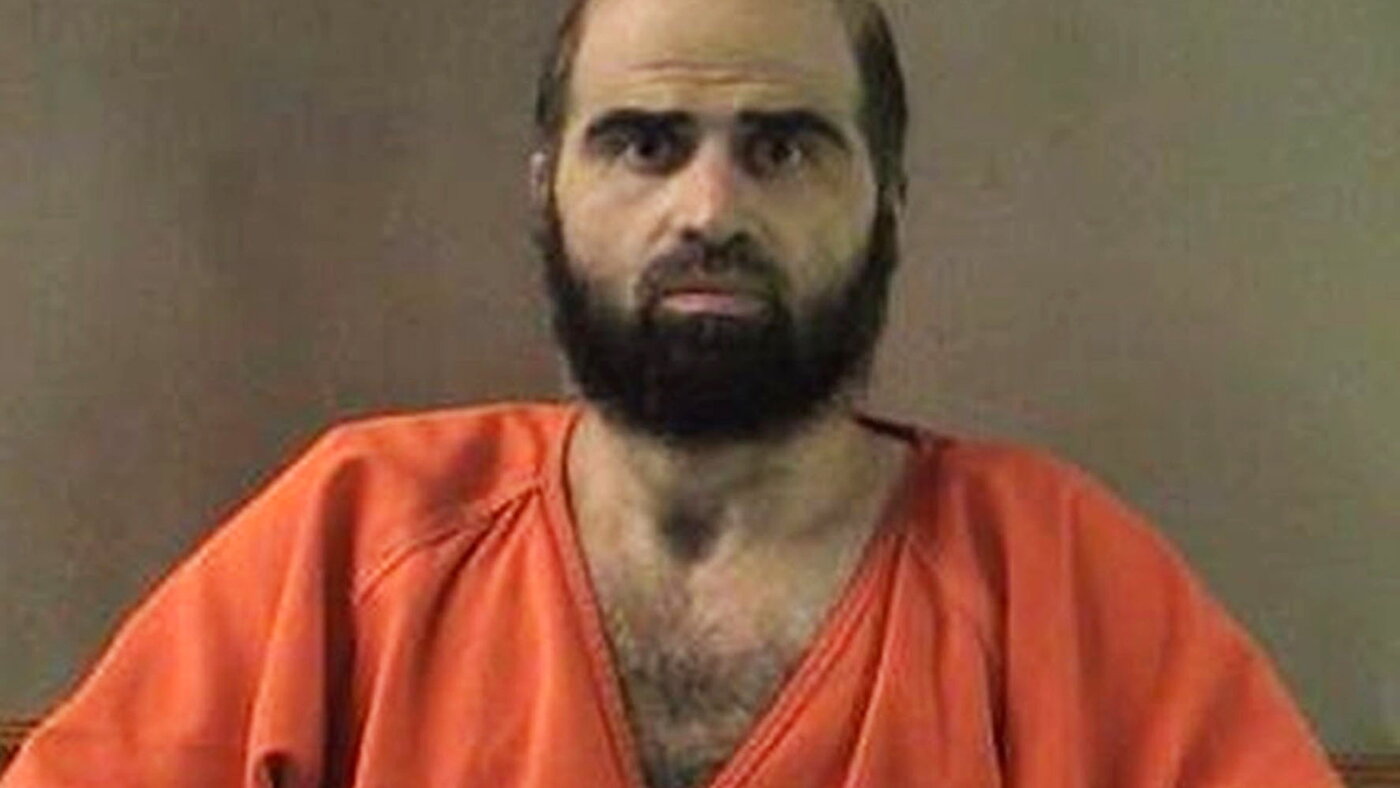
Nidal Hasan, convicted in the 2009 Fort Hood shooting where he killed 13 and wounded 32 soldiers while shouting "Allahu Akbar," will be executed by firing squad on December 3, at 2 p.m. EST at Fort Hood, Texas. Acting Army Secretary Adam Telle announced this decision after President Donald Trump approved it based on a recommendation from War Secretary Pete Hegseth. Hegseth stated that the execution would be public and livestreamed to demonstrate serious consequences for such acts. Retired Staff Sgt. Alonzo Lunsford, shot in the head during the attack, plans to attend the execution for closure. This will mark the first US military execution by firing squad since 1945.
Written for “Firing Squad Execution Livestreamed” on 2026-10-09,
grounded in this article and the 60 other(s) covering the same event.
Why this leaning score
This article does not take a side on a contested political
question, so it has no leaning score. That is an
answer rather than a gap: a match report or a rescue can be warmly
or critically written without being left or right, and scoring it
anyway is how approval of a subject gets recorded as a political
position.
No political leaning scored for article 68711 · logged 2026-10-09
Explainer: How the US plan to livestream an execution compares with global practice
asserted
plan → livestream → practice
The U.S. military plans to livestream the Dec. 3 execution by firing squad of Nidal Hasan, the former Army psychiatrist convicted of killing 13 people in the 2009 Fort Hood shooting.
asserted
military → plan → shooting
If carried out as planned, death penalty experts said it would mark the first known broadcast or livestream of a lawful execution.
asserted
it → carry → execution
Executions are generally conducted behind prison walls, and internet platforms and governments have spent years trying to limit the circulation of violent execution footage.
asserted
platforms → conduct → footage
HAS A LAWFUL EXECUTION EVER BEEN LIVESTREAMED OR BROADCAST TO THE PUBLIC BEFORE?
asserted
EXECUTION → livestreame → PUBLIC
Death penalty experts consulted by Reuters said they were unaware of any previous lawful execution that had been livestreamed or broadcast to a public audience.
asserted
that → consult → audience
Execution footage has occasionally emerged after the event.
asserted
footage → emerge → event
The hanging of former Iraqi leader Saddam Hussein in 2006, for example, was seen around the world after official and unofficial recordings circulated online and through broadcasters, though it was not shown live.
asserted
it → see → broadcasters
HOW UNUSUAL IS THIS COMPARED WITH MODERN EXECUTION PRACTICES AROUND THE WORLD?
asserted
THIS → compare → WORLD
Public executions have become rare worldwide, with most countries that retain the death penalty carrying out executions away from public view.
asserted
that → become → view
According to Amnesty International, public executions recorded in recent years have largely been concentrated in Iran and Taliban-run Afghanistan.
uncertain
executions → accord → Iran
Public executions largely disappeared during the 20th century, and death penalty experts cited by Reuters said the last legally sanctioned public execution took place in 1936.
asserted
execution → disappear → 1936
Hasan's execution would be the first carried out by firing squad by the U.S. military since the 1945 execution of Eddie Slovik, who was convicted of desertion during World War Two.
asserted
who → carry → War
HOW HAS THE INTERNET CHANGED THE CIRCULATION OF EXECUTION FOOTAGE?
asserted
INTERNET → change → FOOTAGE
The internet has transformed execution imagery from a local event into content capable of reaching global audiences within minutes.
asserted
internet → transform → minutes
Militant groups such as Islamic State became notorious for producing professionally edited execution videos that were distributed online as propaganda and recruitment tools.
asserted
that → become → propaganda
Criminal organisations, including Mexican drug cartels, have also circulated violent footage to intimidate rivals and project power.
asserted
organisations → include → power
The ability of users to rapidly copy, repost and redistribute content has made it more difficult for governments and technology companies to control the spread of such material.
asserted
governments → copy → material
Governments and technology companies have generally moved in the opposite direction, attempting to reduce rather than expand access to graphic execution footage.
asserted
Governments → move → footage
Major social media platforms have spent years removing execution videos linked to extremist organisations and other violent groups.
asserted
platforms → spend → organisations
One of the first public governmental reactions came from New Zealand, whose chief censor said authorities would have little practical ability to prevent residents from accessing a livestream while it was taking place.
asserted
it → come → place
Livestreams pose particular challenges for platforms because footage can be viewed, copied and redistributed before moderation systems can intervene.
asserted
systems → pose → platforms
Even countries that still conduct public executions have often restricted filming and broadcast rights.
asserted
that → conduct → rights
Saudi Arabia historically carried out public executions before spectators, but recording them was prohibited and such public executions had largely ceased by 2019.
asserted
executions → carry → 2019
 The Aporia