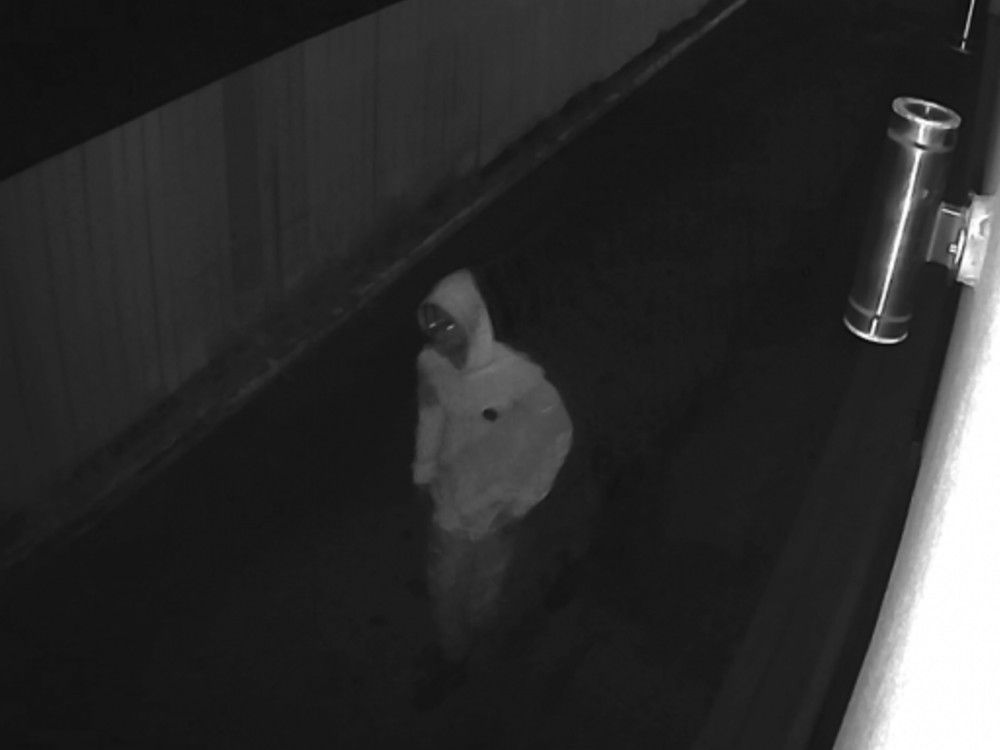
A man who brutally beat and raped a woman, leaving her unrecognizable and “choking on blood” in the bushes of a Calgary subdivision, was sentenced to 12 years in prison last month.
asserted
who → beat → prison
Alberta Court of Justice Judge Allan Fradsham convicted Kepra Udup Bang, 27, earlier this year of the 2019 aggravated sexual assault of the woman identified as MM in court documents under a publication ban to protect her identity.
asserted
Fradsham → convict → identity
Although the decision does not mention it, under Canadian law, Udup Bang, a permanent resident who immigrated to Canada from Ethiopia with his family in 2017, could face deportation after serving his time.
uncertain
who → mention → time
Under the Immigration and Refugee Protection Act, anyone found guilty of an offence under federal law and sentenced to more than six months is automatically deemed inadmissible to Canada, which can lead to a removal order and deportation.
asserted
which → find → order
That complex legal process begins with a Canada Border Services Agency (CBSA) admissibility report, followed by a hearing with the Immigration Division of the Immigration and Refugee Board (IRB).
asserted
process → begin → Board
If deemed inadmissible, a removal order is issued and can’t be appealed for sentences of six months or more.
asserted
order → deem → months
As highlighted by a different Alberta judge’s sentencing of another Ethiopian man in Calgary earlier this year for pointing a loaded handgun at someone during a road rage incident, a stay of removal could be granted due to recurring political violence in the African nation.
uncertain
stay → highlight → nation
Nor is it on CBSA’s temporary suspension of removal list of countries where “general conditions, such as armed conflict or an environmental disaster, pose a risk to the entire civilian population.”
asserted
conditions → pose → population
“Individuals with serious inadmissibility, such as national security and criminality, do not benefit from a stay of removal under these provisions,” the agency writes online.
asserted
agency → benefit → provisions
“However, no one is removed from Canada without consideration for their individual needs for protection.
asserted
one → remove → protection
When the situation in a country stabilizes, the deferral and suspension of removals can be lifted, and the CBSA will resume removals for all individuals who have an enforceable removal order.”
asserted
who → stabilize → order
CBSA does not comment on individual cases due to privacy laws.
asserted
CBSA → comment → laws
National Post has contacted the agency for more information on current policies regarding removal orders to Ethiopia.
asserted
Post → contact → Ethiopia
IRCC deferred to CBSA for comment.
asserted
IRCC → defer → comment
During trial last December, the court heard that police were called to a Forest Lawn neighbourhood around 5 a.m. on July 14, 2019, on reports of someone being attacked and the sound of screaming.
asserted
police → hear → screaming
“I could tell he was raping her,” testified one witness who looked out her window to see a man with his pants down holding up a woman from behind.
uncertain
man → tell → behind
“After a few minutes of searching, the attending officer heard sounds of someone choking and struggling to breathe” and found MM lying on her back with no clothes below her waist, her legs spread open and her face a mess of blood.
asserted
face → search → blood
“The officer said that the facial trauma which MM had suffered was so extensive that even if he had found photo identification with the victim… he would not have been able to identify her using it,” Fradsham wrote.
asserted
Fradsham → say → it
The victim, then a 28-year-old transient with drug addiction issues, was taken to hospital where she remained unconscious for eight days and underwent surgeries to reconstruct her nose, fix her orbital bone and repair a laceration under her chin over the next three months.
asserted
she → take → months
As a result of her severe traumatic brain injury, she did not recognize her own mother for several weeks after waking up, lost a month of memory after the attack, and to this day has no recollection of it.
asserted
she → recognize → it
Today, she lives at her mother’s house with her husband and 10-year-old child.
asserted
she → live → husband
While now “clean and sober,” she’s unable to work and “does not often leave the residence because she is bothered by noise and collections of people.”
asserted
she → ’ → people
“This aggravated sexual assault has had severe and permanent detrimental effects on MM and her family,” Fradsham noted.
asserted
Fradsham → have → MM
Udup Bang, now a father of two with a common-law partner, wasn’t charged until 2025 after DNA he’d submitted as part of a separate criminal investigation in 2024 — a break-in conviction, according to CBC — matched the samples obtained from MM and a wristband found at the scene of her attack in 2019.
uncertain
he → charge → 2019
Under questioning by police, he initially alleged that he did not recognize MM when shown a photo of her, but during trial testified that he and MM had met at a child’s birthday party a month before, connected via Snapchat and then engaged in consensual sex on a night in July he was unsure of.
asserted
he → allege → July
The victim maintained all along that she did not know Udup Bang.
asserted
she → maintain → Bang
“He explained that he lied to police because he had been arrested for aggravated sexual assault resulting in another person being injured, which he understood to be very serious, and was afraid that admitting he knew MM would lead to the police concluding he was guilty,” Fradsham wrote in his March verdict.
asserted
Fradsham → explain → verdict
That lie and the DNA evidence led Fradsham to dismiss Udup Bang’s version of events and find him guilty.
asserted
him → lead → events
His lack of a criminal record at the time was his only mitigating factor and the judge decided the evidence didn’t support his race as a “significant mitigating weight… on his moral blameworthiness.”
asserted
evidence → mitigate → blameworthiness
The Crown wanted Udup Bang to spend 10-12 years behind bars, while the defence argued for seven to nine.
asserted
defence → want → nine
Fradsham respectfully disagreed, noting the Crown’s “does not adequately address denunciation and deterrence, and gives insufficient weight to the degree of responsibility of the offender.”
asserted
Crown → disagree → offender
As for the defence submission, the judge said he was “mindful of his difficult time growing up” — Udup Bang was born in a refugee camp and “described an unstable upbringing marked by frequent relocations, multiple school changes, and exposure to conflict” —
asserted
Bang → say → conflict
said none of the evidence allowed him “to conclude that his experiences would materially diminish his moral culpability.’
asserted
experiences → say → culpability
Udup Bang, in custody since his arrest, was granted credit for 893 days, leaving him with roughly nine years and seven months in prison.
asserted
Bang → grant → prison
In his pre-sentence report, Udup Bang said “his short-term goal is to become a book publisher within five years,” and long-term goals include “owning an online store… and developing a food-production company within” the next decade.
“He plans to return to school, complete high school, and pursue post-secondary education with the intention of obtaining degrees in business and law,” the report states, per Fradsham.
asserted
report → say → Fradsham
 The Aporia