That is 0 articles you have read today.
The Aporia is free and carries no advertising, so readers are the only
thing paying for it. If you are getting this much out of it, a small
donation is what keeps it independent.
Daily limit reached
You have read 0 articles today.
That is more than the 15 a day The Aporia gives away,
and well past what it can carry on nothing. Your allowance resets at
midnight.
There is no advertising here and nothing about you is sold, so readers
are the only thing paying for it. If the site is worth this much of
your day, it is worth a few dollars.
Everything else stays open: the
maps, the
directory and
search do
not count against this, and neither does re-opening something you have
already read today.
Italian Prime Minister Giorgia Meloni’s ruling right-wing coalition has passed a controversial electoral law change that introduces bonus seats for coalitions winning more than 42% of the vote, aimed at ensuring political stability but criticized as undemocratic by opposition parties. The bill was approved in a secret ballot with 227 votes in favor and 164 against, sparking protests from opponents who claim it distorts voter representation. Opposition leaders have vowed to challenge this amendment in Italy’s constitutional court, arguing that the new system unfairly advantages those currently in power.
Written locally by qwen2.5:14b on 2026-10-08,
using this article's own text rather than the other coverage of the
same event (that is the story summary below).
Story summary
On October 8, 2026, Italy's Parliament approved a new electoral law in a final vote, a move seen as advantageous by Prime Minister Giorgia Meloni’s coalition. The reform introduces a fully proportional system where any alliance securing more than 42% of the vote would receive bonus seats, ensuring a parliamentary majority. This includes an extra 70 seats in the 400-member Chamber of Deputies and 35 seats in the 200-member Senate for coalitions surpassing this threshold.
Opposition parties view the reform as politically motivated to favor Meloni's coalition ahead of upcoming elections, while supporters claim it will enhance political stability. Critics argue that by requiring alliances to name their prime ministerial candidate before elections, the law exposes internal divisions within opposition groups. Despite these criticisms, the measure passed with 227 votes in favor and 164 against, sparking protests from dissenting MPs who see it as undermining fair representation.
Opposition politicians have vowed to contest this electoral reform in Italy’s constitutional court, challenging its legitimacy due to potential distortions of voter representation.
Written for “Italian Electoral Law Reform” on 2026-10-08,
grounded in this article and the 4 other(s) covering the same event.
Why this leaning score
The model judged this article politically coded and scored it -0.45, but every quote it verified points right, so the score is not published.
Written under an earlier scoring contract, which gave a paragraph
rather than checkable quotes. Re-analysing this article replaces it.
Leaning score withheld for article 65803: score contradicts its own evidence · logged 2026-10-08
A controversial overhaul to electoral law that critics say is aimed at boosting Giorgia Meloni’s chances of clinging on to power in elections next year has been given final approval by the Italian parliament.
asserted
critics → say → parliament
Meloni, the Italian prime minister, says the new system, which introduces a fully proportional model, including bonus seats for any coalition that wins the most votes, will bring about greater political stability, while opposition parties argue that it mainly serves the interests of those in power.
asserted
it → say → power
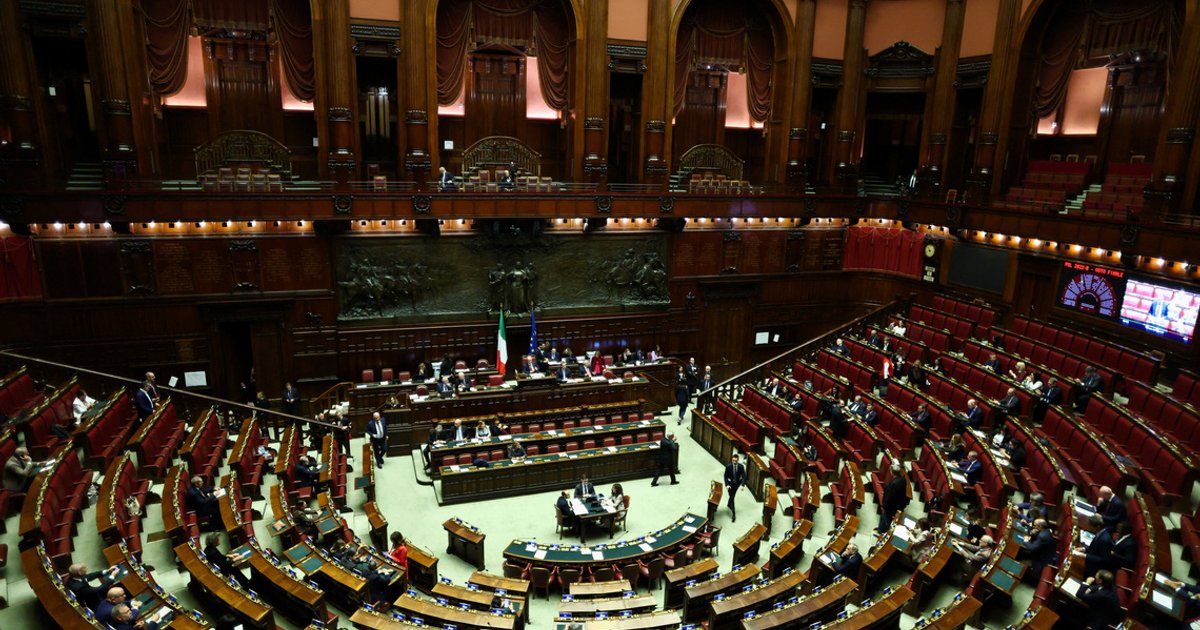
The change was passed in a secret ballot in the lower house with 227 MPs voting in favour and 164 against.
asserted
MPs → pass → favour
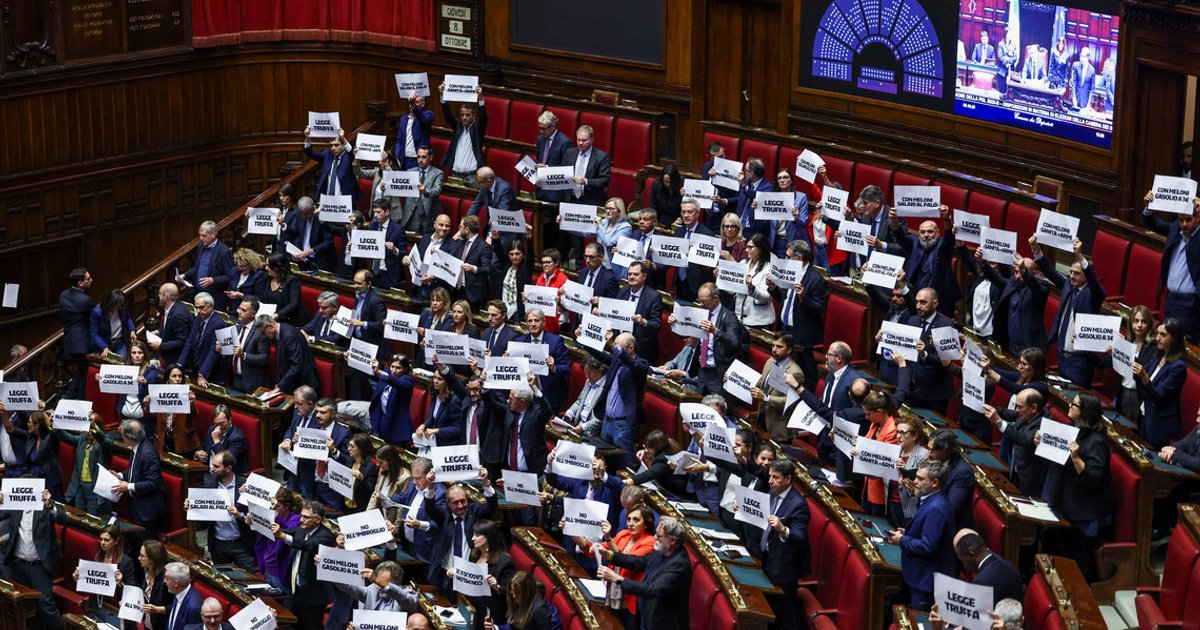
There were protests from opposition politicians who held up signs decrying the law as a “scam” and a “con” when the result was announced.
asserted
result → be → scam
Opposition parties have vowed to challenge the changes in the constitutional court, arguing that the bonus seat element, which would be granted to any coalition that reaches a vote threshold of 42% of the vote, distorts voter representation.
asserted
that → vow → representation
Another contentious requirement of the changes is that parties and alliances would be required lay out their government programme and name their candidate for prime minister well before a general election.
asserted
parties → require → election
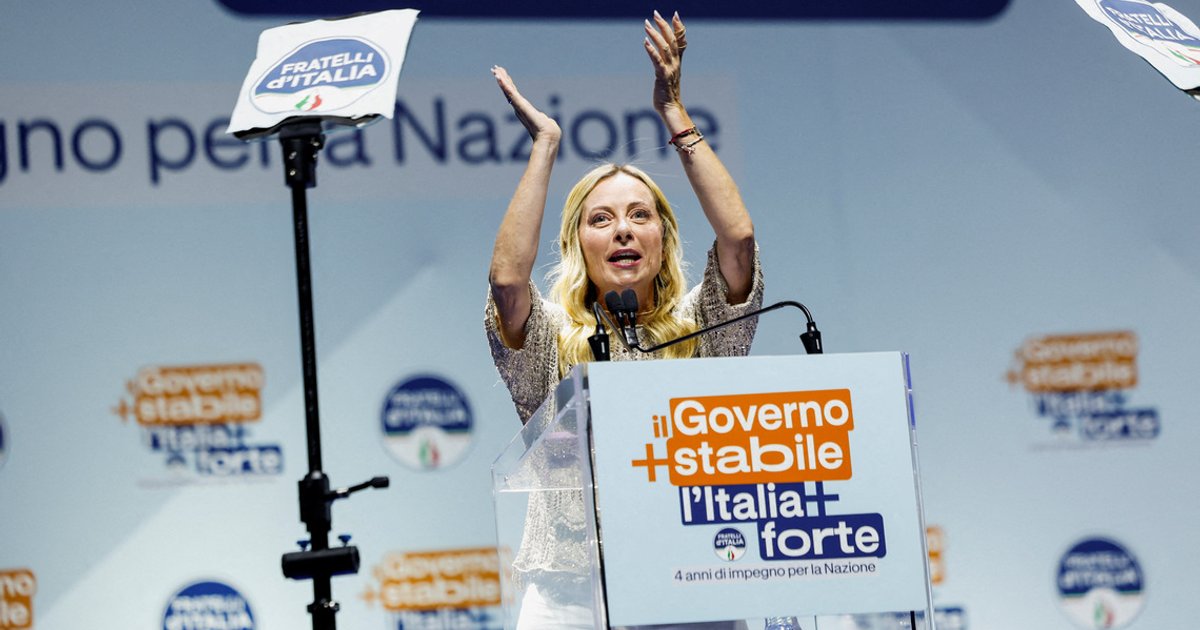
Meloni, who leads the far-right Brothers of Italy, had made the vote a test for her ruling rightwing coalition, warning MPs from her allies, including Forza Italia and the League, that, if defeated, the government would face a crisis.
asserted
government → lead → crisis
While there are tensions within the coalition, which has suffered setbacks in recent months and is under threat from the rise of new far-right rival Roberto Vannacci, leader of Futuro Nazionale, it has put on a show of unity and has stability on its side after becoming Italy’s longest serving government since the second world war in early September.
asserted
it → be → September
Whereas the broad leftwing alliance, led by the Democratic party, is highly fractious with no clear leader or programme.
asserted
alliance → lead → leader
Meloni said the victory was a response to those who wanted to see her coalition divided.
asserted
coalition → say → those
“Today we respond with action: we are united, cohesive and determined to fulfil the commitments made to citizens,” she wrote on social media.
asserted
she → respond → media
Elly Schlein, the leader of the Democratic party, said Meloni’s alliance sought to change the electoral system because it feared losing the next general election, which is officially due to be held before October 2027 but could be brought forward to April or May.
uncertain
which → say → April
According to a recent survey by Ipsos Doxa, the opposition coalition could reach the 42% threshold if it overcame internal divisions and managed to convince two small radical parties to join forces.
uncertain
it → accord → forces
 The Aporia