Italy’s Parliament votes on October 8, 2026, regarding a proposed electoral law reform that Prime Minister Giorgia Meloni's government claims will ensure political stability by granting automatic parliamentary majorities to any coalition winning over 42% of the vote. Opposition parties argue this reform unfairly favors the current administration and could backfire at the upcoming 2027 elections. The proposal has already passed the Senate and must now be approved in the lower house, where some coalition members might secretly oppose it due to internal tensions within Meloni’s camp.
Written locally by qwen2.5:14b on 2026-10-08,
using this article's own text rather than the other coverage of the
same event (that is the story summary below).
Story summary
On October 8, 2026, Italy's Parliament voted on a proposed electoral law reform that opposition parties claim was designed by Prime Minister Giorgia Meloni’s hard-right government to boost its re-election chances in the upcoming year. The new proposal would introduce a fully proportional system guaranteeing a parliamentary majority for any alliance securing more than 42% of the vote. Currently, Italy uses an electoral model combining first-past-the-post and proportional representation, making it unlikely that either the right or left will achieve an outright majority in the next election. Minister Luca Ciriani argues this reform would ensure political stability by compelling parties to outline their programs and select a prime ministerial candidate before elections. However, critics warn such changes could backfire and potentially favor the opposition at the 2027 polls due to internal disagreements within the center-left coalition.
Written for “Italian Electoral Law Vote” on 2026-10-08,
grounded in this article and the 0 other(s) covering the same event.
Why this leaning score
The article's own words the score was based on. Each is quoted
verbatim and was checked against the article text before being
stored, so you can find it in the original.
Leaning: leans right for article 64853 (high confidence, 1 verified quote) · logged 2026-10-08
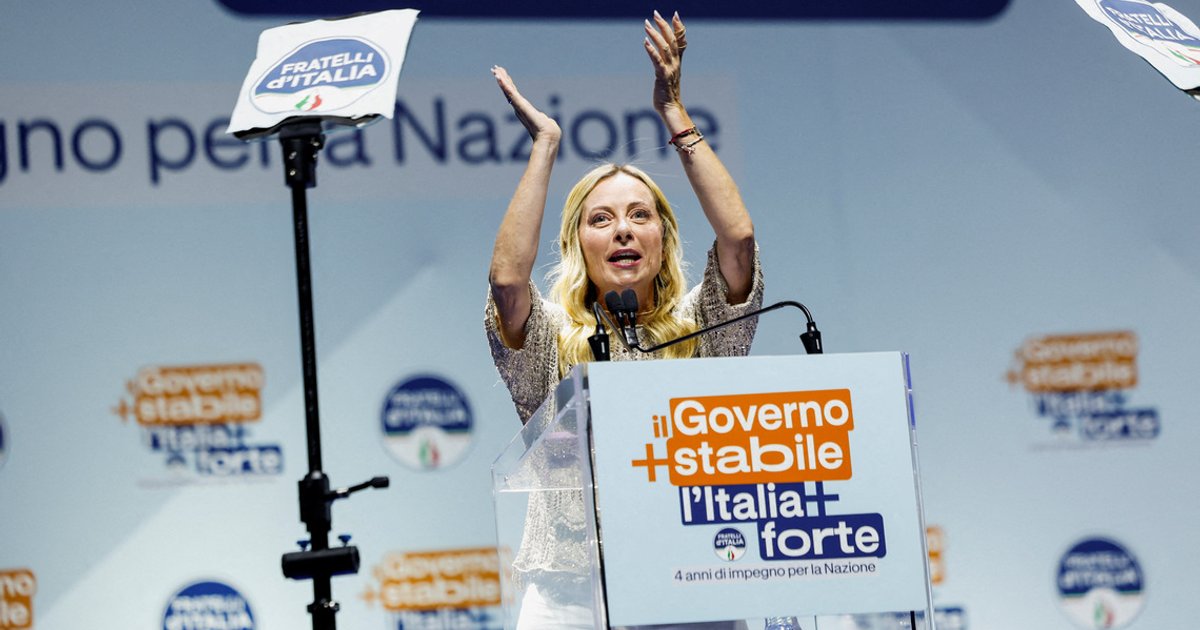
Italy's Parliament votes Thursday (October 8, 2026) on a reform of the country's electoral law that opposition parties say Prime Minister Giorgia Meloni's hard-right government has designed to boost its chances of re-election next year.
asserted
government → vote → election
The proposal would introduce a fully proportional system that guarantees a parliamentary majority to any alliance winning more than 42% of the vote.
asserted
that → introduce → vote
Italy's current electoral model combines first-past-the-post and proportional representation, with neither the right nor the left expected to secure an outright parliamentary majority at the next election.
asserted
right → combine → election
Ms. Meloni's coalition argues a new law is needed to bring greater political stability to Italy, but experts warn it could backfire and hand the left a clear path to victory at the 2027 polls.
uncertain
it → argue → polls
The electoral reform would "guarantee governability", Luca Ciriani, minister for parliamentary relations, told AFP.
asserted
Ciriani → guarantee → AFP
It would also benefit voters by requiring parties and coalitions to spell out their governing programme and name their candidate for premier "well before the election", he said.
asserted
he → benefit → election
That could prove problematic for the centre-left, which disagrees on key policy issues and has yet to rally around a single leader.
uncertain
which → prove → leader
The opposition has vowed to vote against the reform, which has already cleared the Senate and now needs approval in the lower house.
asserted
which → vow → house
Chiara Braga, lower-house leader for the main opposition Democratic Party (PD), told AFP the proposal "bends democratic rules to serve the interests of those in power".
asserted
proposal → tell → power
Ms. Meloni's Brothers of Italy party and its allies hold a parliamentary majority, but tensions have emerged within the coalition ahead of the next general election, and Thursday's (October 8, 2026) ballot is secret, meaning rebels could vote against it.
Ms. Meloni has warned she would resign if the reform fails; however, analysts say lawmakers are unlikely to risk triggering an election now.
uncertain
lawmakers → hold → election
Giovanni Orsina, a political scientist at Rome's Luiss University, said it was "extremely likely" the law would be adopted.
asserted
law → say → University
"Meloni faces little risk" in the lower-house vote, "but the law creates a completely open competitive landscape, so she does risk losing the election," he said.
asserted
he → face → election
Under the proposed system, an alliance winning more than 42% of the vote would automatically receive a parliamentary majority, gaining an additional 70 seats in the lower house and 35 in the Senate.
asserted
alliance → propose → Senate
Legal challenges
Reaching that threshold, however, may prove difficult for either side.
uncertain
Reaching → reach → side
Ms. Meloni last month became the leader of the longest-running administration in Italy's postwar history, but her coalition has been losing support to former army general Roberto Vannacci and his new National Future (FN) party.
asserted
coalition → become → Vannacci
Although Ms. Meloni has so far ruled out an alliance with Vannacci, the far-right FN is polling ahead of both Meloni's allies, the anti-immigrant League and centre-right Forza Italia, and she may yet need him.
uncertain
she → rule → him
According to a recent survey by Ipsos Doxa, the centre-left coalition could surpass the 42% threshold, provided it overcomes internal divisions and persuades two small radical parties to join forces.
uncertain
it → accord → forces
Ms. Meloni's term officially ends in October 2027, but she could opt to bring elections forward to April or May.
uncertain
she → end → April
Opposition parties have already vowed to challenge the new electoral law in court before then.
asserted
parties → vow → court
 The Aporia