Logan Gornbein is very clear: his presence at the US Open is dependent on his ability to gamble.
asserted
presence → gamble → ability
“I would not be here if I did not have my Kalshi account,” the 23-year-old New Yorker says, naming the booming prediction market company that has just inked a multi-year deal with the US Tennis Association.
“I just love being able to watch live and watch my prediction.
asserted
I → have → prediction
It makes it a lot more fun.
asserted
it → make → ?
I think that prediction markets are the future.
asserted
markets → think → ?
If I was able to invest in a prediction market, I would.”
asserted
I → invest → market
Sports betting has become increasingly popular in the US since the Supreme Court struck down a federal ban in 2018.
asserted
Court → become → 2018
In the stands, plenty of people – young men, mostly – can be seen flicking through Kalshi or Polymarket, the other major US prediction market, monitoring trades and stats.
asserted
plenty → see → trades
These platforms are now worth tens of billions of dollars and are growing exponentially.
asserted
platforms → grow → dollars
So far, they are not licensed to operate in Australia – in the case of Polymarket, it has been explicitly banned by the Australian Communications and Media Authority.
asserted
it → license → Authority
Prediction markets offer odds on future events: the results of sporting matches, whether or when something will occur, what Donald Trump will say in a speech.
asserted
Trump → offer → speech
People buy contracts in the outcome, and the price – or perceived likelihood of something happening – is set by the market.
asserted
something → buy → market
The companies dress this up as a financial product, but it is effectively just wagering.
asserted
it → dress → product
Live betting is allowed, and it’s where the action happens.
asserted
action → allow → ?
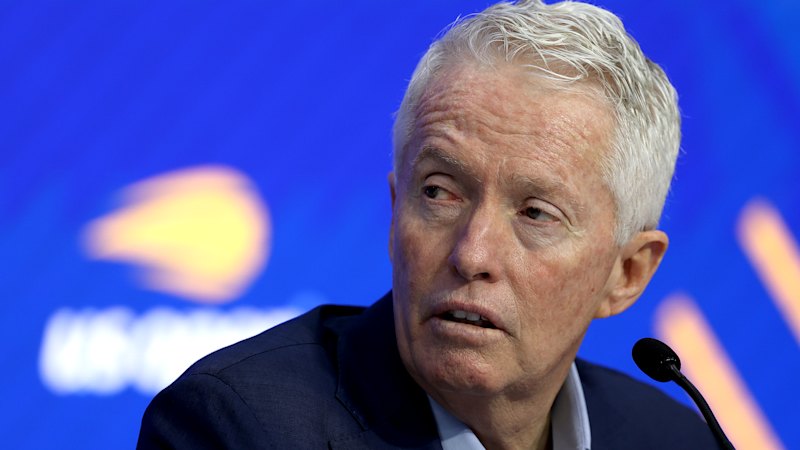
As the tournament began, new USTA chief executive Craig Tiley, formerly the long-time boss of Tennis Australia and tournament director of the Australian Open, announced a multi-year partnership making Kalshi the official prediction market of the US Open.
asserted
Kalshi → begin → Open
“We’re relentless about keeping tennis at the cutting edge of global sports innovation and fan connection,” he said.
asserted
he → ’re → innovation
“Partnering with Kalshi gives us an opportunity to pioneer that next generation of fan engagement while ensuring the integrity of our sport.”
asserted
Partnering → partner → sport
Kalshi chief executive Tarek Mansour said tennis was one of the fastest growing sports on the platform.
asserted
tennis → say → platform
In August, Polymarket became the official prediction market partner for the ATP, the body that runs the men’s tennis tour, covering about 20,000 matches per season.
asserted
that → become → season
The deal includes exclusive streaming rights, meaning Polymarket users can watch matches live through that platform, along with real-time data, side-by-side with betting options (or “opportunities to trade”).
asserted
users → include → options
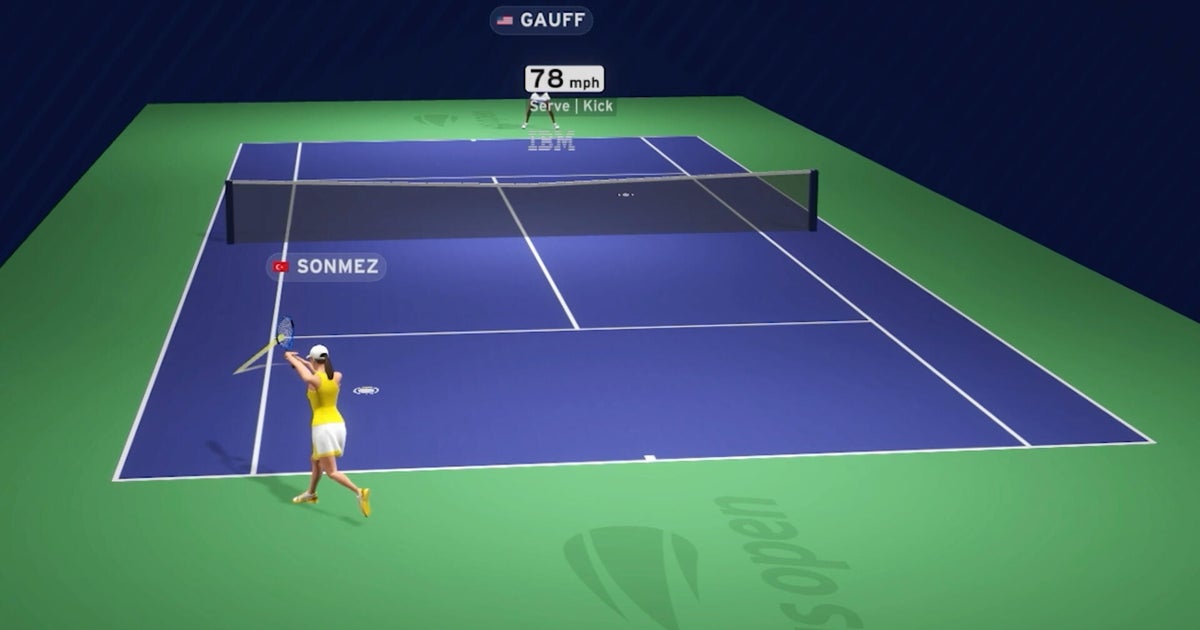
Polymarket’s head of sports business development, Ari Borod, noted tennis was a “natural fit” for prediction markets because of how momentum shifted point-by-point.
asserted
momentum → note → point
That created “opportunities for expectations to change in real time”.
asserted
expectations → create → time
And prediction markets enable real-time wagering on highly specific outcomes: who wins a set, the exact match score, total number of games, you name it.
asserted
you → enable → it
The US Open has even started sending push notifications to people’s phones about match predictions, “presented by Kalshi”.
asserted
Open → start → Kalshi
On the grounds, it was not difficult to find prediction market enthusiasts in the throng.
asserted
it → find → throng
Outside centre court, a man was walking around with a Kalshi microphone and camera, interviewing punters.
asserted
man → walk → punters
Among every group of young men that this masthead approached, at least one – typically most – were avid sports gamblers.
asserted
one → approach → that
“It’s fantastic, absolutely fantastic,” said Jordan Levy, a 26-year-old New Yorker, who prefers the sports betting website DraftKings.
asserted
who → ’ → website
“Tennis is honestly my favourite sport to bet on.
asserted
Tennis → bet → ?
You’re only betting on one guy … to me, you have a better chance of winning.”
asserted
you → bet → chance
Levy says he is up a few thousand dollars since the tournament began.
asserted
tournament → say → ?
He and his friend Josh Russ have bets on as we speak – for Jiri Lehecka to beat Stefanos Tsitsipas, and for Ben Shelton to prevail over Denis Shapovalov (Lehecka lost, but Shelton won).
asserted
Shelton → have → Shapovalov
Just because someone is betting does not mean they are gambling away their entire savings.
asserted
they → bet → savings
Gornbein, who said he wouldn’t be here unless he could play the prediction markets, says he is down about $US12.50 (about $17.30).
uncertain
he → say → markets
His friend Adam Meitus, also 23, says he has lost $5 – although he struggles to name the player he was just betting on.
asserted
he → say → player
Kalshi’s website shows just over $US11 million (about $15.3 million) was traded on the Lehecka-Tsitsipas match by the time it ended.
asserted
it → show → time
As it entered a fifth set on Saturday, a match between Taylor Fritz and Francisco Cerundolo had eclipsed $US8 million ($11.1 million).
asserted
match → enter → million
People have already wagered $US21 million (almost $30 million) on the tournament’s eventual winner.
asserted
People → wager → winner
Most people bet responsibly and say it adds to their enjoyment of the experience.
asserted
it → bet → experience
Obviously, the dangers of gambling addiction are well known.
asserted
dangers → know → addiction
But there can also be impacts on the players from gamblers who turn ugly when things don’t go their way.
asserted
things → turn → way
…and 17 more, not listed.
 The Aporia