How AI is reshaping the U.S. Open for players and fans

Home - CBSNews.com · collected 2026-09-04 · by Lauren Fichten
Read the original at Home - CBSNews.com ↗

Summary

At this year's U.S. Open tennis tournament, IBM is using its Watsonx software development platform to generate live AI insights through the official app, tracking key moments and player data such as serve quality and likelihood to win. According to IBM technical program director Tyler Sidell, over a billion data points will be produced by the end of the tournament. Players like Jessica Pegula are also using the AI features to identify patterns in their opponents' serves before matches. The "likelihood to win" feature has been available through the app for about six years and allows fans to track real-time odds as a match plays out.
Written by the local model on 2026-09-04, using this article's own text rather than the other coverage of the same event (that is the story summary below).

Signals How these are calculated →

Claims extracted
28
claim-shaped sentences
Uncertain
14%
4 of 28 hedged
Leaning
not political
takes no side on a contested political question
Publisher trust
58.8
red-flag proxy, not a credibility rating
Outlets on this story
2
Sports
Narrative spread
1
articles carrying this framing
Analyzed 2026-09-04 · how these are computed

AI analysis (generated at analysis time, not now)

Story summary

The U.S. Open tennis tournament is incorporating artificial intelligence (AI) in various ways to enhance the experience for players and fans. The AI-powered analysis, developed by IBM's Watsonx, is tracking key moments and player performance metrics through cameras installed around Arthur Ashe Stadium. For example, during a match between Coco Gauff and Zeynep Sönmez of Turkey, the U.S. Open app provided real-time insights on serve quality, likelihood to win, and other data points. By the end of the tournament, it's expected that there will be over 1 billion data points collected. This integration of AI is allowing fans to access more detailed information about the game, creating a new digital experience for viewers.

Written for “AI Reshapes US Open” on 2026-09-05, grounded in this article and the 1 other(s) covering the same event.
Why this leaning score
This article does not take a side on a contested political question, so it has no leaning score. That is an answer rather than a gap: a match report or a rescue can be warmly or critically written without being left or right, and scoring it anyway is how approval of a subject gets recorded as a political position.
No political leaning scored for article 4012 · logged 2026-09-04

Story

📰 AI Reshapes US Open
Sports · 2 article(s) covering the same event.

How this is being covered How these are calculated →

Article leaning vs. publisher reliability
Source leaning vs. consistency

Compared with similar articles

This article reads unscored and hedges 14% of its claims. Each row says how that neighbour differs.
Home - CBSNews.com
⚖️ leaning not scored 🔴 0% hedged 0 of 2 📰 publisher trust 59
“Both articles describe the use of AI-generated analysis at the U.S. Open on the same day, specifically mentioning Coco Gauff's match against Zeynep Sönmez”
Washington Examiner
⚖️ Leans strongly right 🔴 4% hedged 2 of 45 📰 publisher trust 96
“The articles cover different topics, with Article A discussing AI insights at the U.S. Open tennis tournament and Article B discussing the collapse of LIV Golf”
ABC News: Top Stories
⚖️ leaning not scored 🔴 0% hedged 0 of 2 📰 publisher trust 94
“Article A mentions Taylor Fritz's strong start and Alexander Zverev's run at the U.S. Open, which are not mentioned in Article B, and Article B specifically refers to a match between Coco Gauff and Zeynep Sönmez of Turkey on Tuesday night”
Sydney Morning Herald - Latest News
⚖️ leaning not scored 🔴 8% hedged 3 of 38 📰 publisher trust 97
“Article A describes an AI-generated analysis during Coco Gauff's match, while Article B reports on a different match featuring the Williams sisters”

Publisher

Home - CBSNews.com · 189 article(s) · 1 correction(s) detected
SignalValueWeight
Correction rate 0.005 0.4
Uncertainty density 0.095 0.25
Assertive mismatch rate 1.000 0.35
Running correction rate · 1 correction(s)
2026-08-24
Sean Grayson, convicted in killing of Sonya Massey, dies in prison, attorney says

Who wrote this

Lauren Fichten
1 article(s) here · 1 carrying a prediction
🔮 Seeing fans with their phones out during a tennis match would've been a strange sight even a decade ago.
2026-09-04 · assertive framing · How AI is reshaping the U.S. Open for players and fans
The only article under this byline in the corpus.

Topics

IBM Turkey U.S. Open Watsonx the U.S. Open

Subjects

Gauff PERSON · 3× IBM ORG · 3× Zverev PERSON · 2× CBS News ORG · 1× Coco Gauff PERSON · 1× Jessica Pegula PERSON · 1× Pegula PERSON · 1× Turkey GPE · 1× Tyler Sidell PERSON · 1× Zeynep Sönmez PERSON · 1×

Narrative

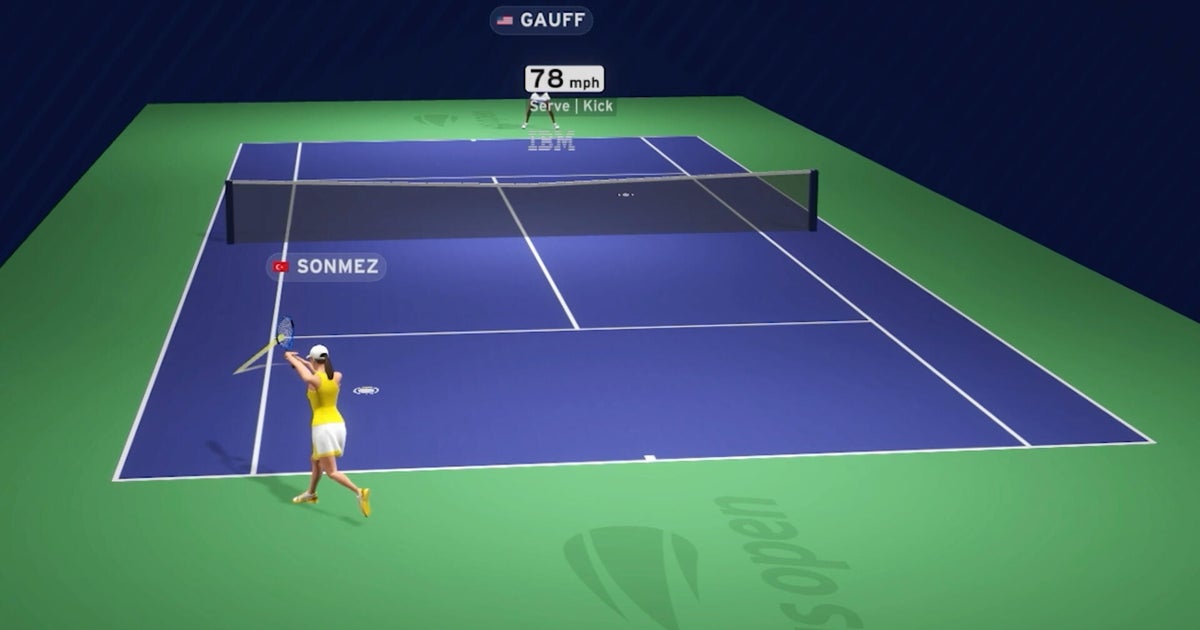
On Tuesday night, when Coco Gauff faced off against Zeynep Sönmez of Turkey, AI-generated analysis trickled in through the U.S. Open app, tracking key moments, each player's likelihood to win and a new metric called "serve quality." Cameras lining the perimeter of Arthur Ashe Stadium track the ball, racket and players' limbs, collecting data points like elbow and knee flexion and wrist flex velocity.
framing: assertive · carried by 1 article(s) · first seen 2026-09-04
🔮 Seeing fans with their phones out during a tennis match would've been a strange sight even a decade ago.
2026-09-04 · Home - CBSNews.com
How AI is reshaping the U.S. Open for players and fans · assertive framing

Claims (28 extracted, 4 hedged)

Seeing fans with their phones out during a tennis match would've been a strange sight even a decade ago. asserted
Seeing → see → match
But at the U.S. Open this year, the digital world has become intertwined with the game as live AI insights reshape the tournament experience. asserted
insights → become → experience
On Tuesday night, when Coco Gauff faced off against Zeynep Sönmez of Turkey, AI-generated analysis trickled in through the U.S. Open app, tracking key moments, each player's likelihood to win and a new metric called "serve quality." Cameras lining the perimeter of Arthur Ashe Stadium track the ball, racket and players' limbs, collecting data points like elbow and knee flexion and wrist flex velocity. asserted
Cameras → face → flexion
Then, IBM's agentic software development platform, Watsonx, processes the data from the court to measure the efficiency, accuracy and consistency of a player's serve, a number out of 100 that can be seen in the U.S. Open app postmatch. asserted
that → process → postmatch
Gauff's winning serves had a "controlled racket preparation and deep knee bend during her setup," according to the serve quality summary. uncertain
serves → win → summary
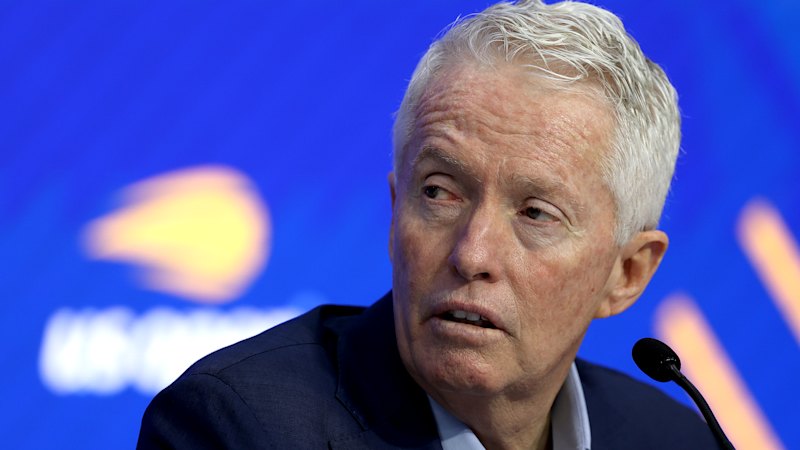
There will be over a billion data points produced by the end of the tournament, said Tyler Sidell, IBM's technical program director for sports and entertainment partnerships. asserted
Sidell → produce → partnerships
The data-driven experiences, he said, are meant to be a conversation starter for fans. asserted
he → drive → fans
"There's so much unpredictability in sports — you could take a look at all the data, but anything can happen out there on the court," he said. uncertain
he → be → court
We want to provide an insight, but still, let's watch the matches play out. asserted
matches → want → insight
AI insights are not just about the fans who can access them in the app (about 14 million of them, according to IBM). uncertain
who → access → IBM
The features have also become a tool for players. asserted
features → become → players
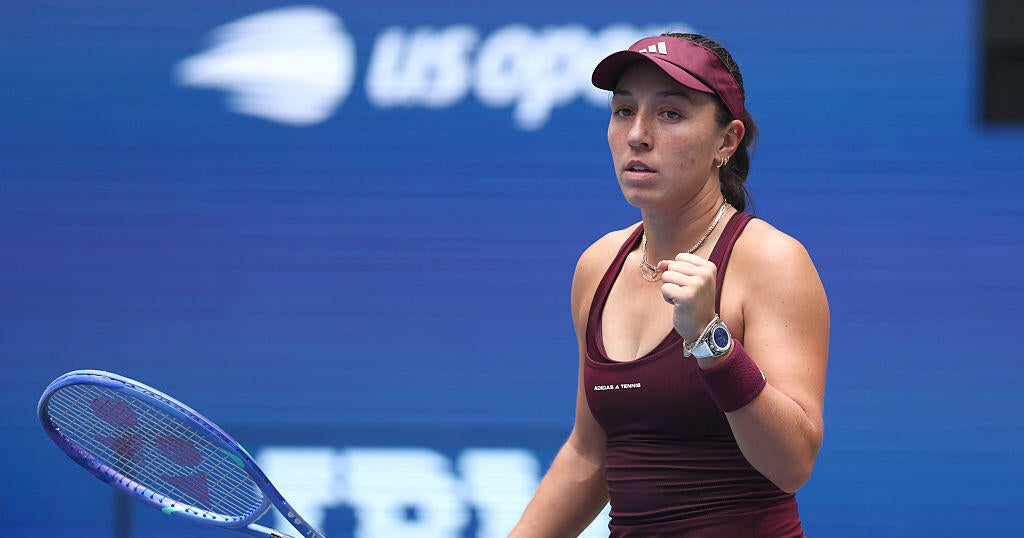
Jessica Pegula, who advanced to the fourth round of the U.S. Open on Friday, uses AI to identify patterns in her opponents' serves before facing them in a match. asserted
who → advance → match
"Tennis is a lot of problem solving on the court, so it's a lot of patterns, and I think serve is a really big one," she told CBS News. asserted
she → think → News
"It's the one controllable shot we have in tennis." asserted
we → have → tennis
Although the game can turn around at any moment, for Pegula, the data remains useful. asserted
data → turn → Pegula
"You can get a lot of analytics, but sometimes things change during the match, sometimes someone changes their strategy, or they maybe go against the grain of what you thought they were going to do, and you still have to really trust your instinct," she said. asserted
she → get → instinct
"But I think mentally it just gives you that feeling of being prepared before you go into a match." asserted
you → think → match
The "likelihood to win" feature has been a staple of the U.S. Open digital experience for about six years, Sidell said, but this is the second year fans can track the fluctuating likelihoods in real time as a match plays out. asserted
match → win → time
The feature is built on trusted media sources and recent performances, which are aggregated to generate a player's odds of winning. asserted
which → build → odds
Gauff was predicted to win Tuesday by 72%, a number that rose as she built momentum in the first set. asserted
she → predict → set
Another AI-powered feature, "key moments," provides brief blurbs of analysis as a game unfolds. asserted
game → power → analysis
"Gauff has three opportunities to win the match, with Sonmez needing a heroic response," said a key moment in the second set of the match. asserted
moment → have → match
A dramatic fluctuation in likelihood to win prediction came later that evening when the men's No. 1 seed, Alexander Zverev of Germany, played a nail-biting match against Italy's Lorenzo Sonego that dragged into the early morning. asserted
that → win → morning
Zverev had an 87% likelihood of winning before the match. asserted
Zverev → have → match
But toward the end of the fourth set, Sonego had a 93% chance of winning. asserted
Sonego → have → chance
It flipped again when Zverev made a comeback. asserted
Zverev → flip → comeback
Match Chat, an AI-powered assistant in the app, also can answer questions about players, matches and the venue. asserted
Chat → power → players
When asked where one could get a Honey Deuce, the signature cocktail of the U.S. Open, it swiftly sent the locations of the bars and asked, "Do you want the nearest Honey Deuce bar to your gate?" uncertain
you → ask → gate

💬 Give feedback
🕘 History 🎫 Support