A blood-cancer treatment that Stanford researchers have spent more than two decades developing has now reached an important milestone.
asserted
researchers → spend → milestone
Its first commercial patient has been treated following U.S. Food and Drug Administration approval.
asserted
patient → treat → approval
According to the Stanford Cancer Institute, the therapy, known as Orca-T, was given to a patient at Stanford Medicine outside a clinical trial.
uncertain
therapy → accord → trial
The treatment received FDA approval in June 2026 after a phase 3 trial found that 78% of patients receiving Orca-T were free from moderate-to-severe graft-versus-host disease (GVHD) one year after transplantation.
asserted
% → receive → transplantation
Among patients who received a standard transplant, the figure was 38.4%.
asserted
figure → receive → transplant
Why GVHD remains a concern
For people with blood cancers, a stem cell transplant can offer a chance to rebuild the blood and immune system with healthy cells from a donor.
asserted
transplant → remain → donor
But the procedure also carries serious risks, including GVHD.
asserted
procedure → carry → GVHD
The condition occurs when immune cells from the donor recognise the patient's tissues as foreign and begin attacking them.
asserted
cells → occur → them
GVHD can affect different parts of the body and can become a significant complication following transplantation.
asserted
GVHD → affect → transplantation
At the same time, donor immune cells have an important role in fighting cancer.
asserted
cells → have → cancer
This creates a difficult balance for doctors: they want the new immune system to help eliminate cancer cells without causing excessive damage to healthy tissue.
asserted
system → create → tissue
Orca-T was developed with that problem in mind.
asserted
T → develop → mind
A different approach to donor cells
In a conventional transplant, different types of donor cells are generally delivered together.
asserted
types → deliver → cells
Orca-T takes a more controlled approach.
asserted
T → take → approach
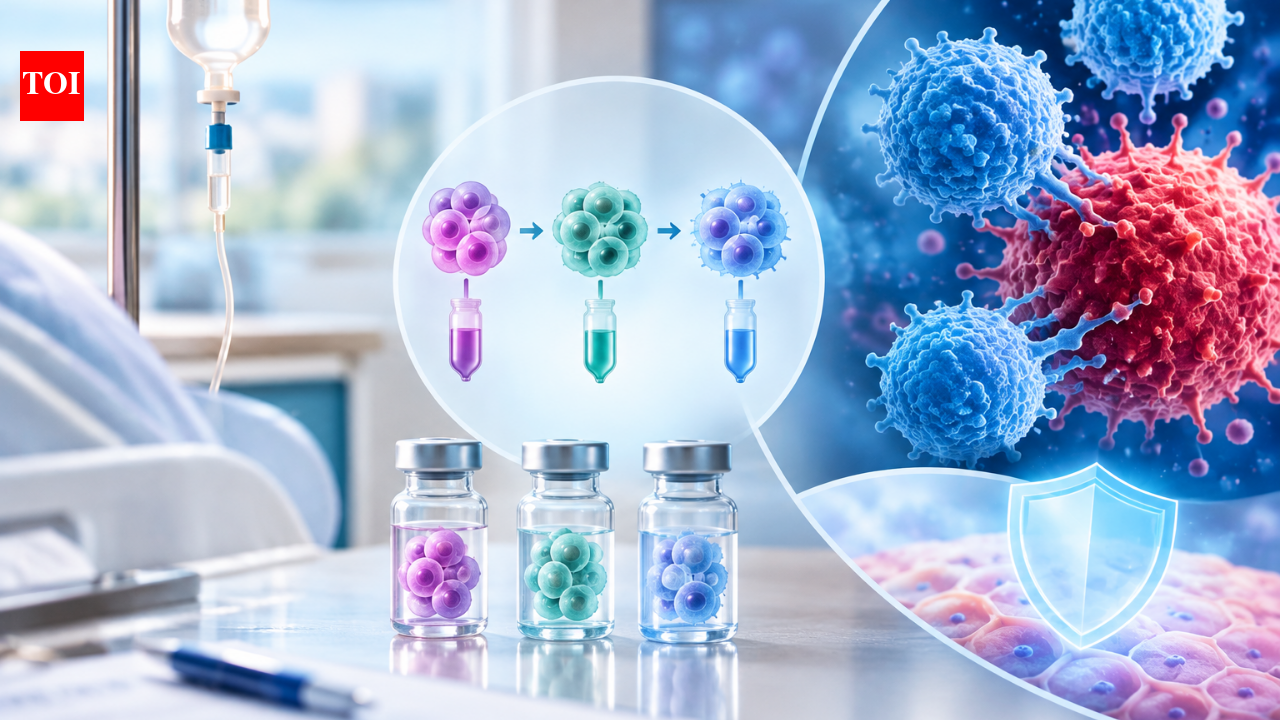
The treatment separates the cells and gives them to the patient in a specific sequence.
asserted
treatment → separate → sequence
It begins with stem and early blood-forming cells.
asserted
It → begin → cells
Patients then receive regulatory T cells, or Tregs, which play a role in controlling immune responses.
asserted
which → receive → responses
Several days later, mature immune cells are administered.
asserted
cells → administer → ?
The thinking behind the approach is relatively straightforward: if the different cell populations can be carefully controlled, doctors may be able to support blood and immune-system recovery while reducing the immune reaction responsible for GVHD.
uncertain
doctors → control → GVHD
The treatment is the result of research at Stanford that stretches back more than 20 years.
asserted
that → stretch → Stanford
Researchers spent years studying Treg cells and their potential role in making donor stem cell transplantation safer.
asserted
transplantation → spend → cells
What the clinical trial showed
The results from a phase 3 clinical trial became an important part of the treatment's path towards approval.
asserted
results → show → approval
One year after transplantation, 78% of patients who received Orca-T were free from moderate-to-severe GVHD.
asserted
who → receive → GVHD
That compared with 38.4% of patients who underwent standard transplantation, according to the Stanford Cancer Institute.
uncertain
who → compare → Institute
The findings helped support the FDA's approval of Tregzi, the approved form of Orca-T, in June 2026.
asserted
findings → help → June
Stanford said the treatment became the first Treg cell-based immunotherapy approved by the FDA for clinical use.
asserted
treatment → say → use
The difference seen in the trial is significant because GVHD can be one of the most difficult complications following a donor stem cell transplant.
asserted
GVHD → see → transplant
A treatment that can lower the risk of moderate-to-severe GVHD could therefore change how some patients experience the recovery period following transplantation.
uncertain
patients → lower → transplantation
First commercial patient treated
asserted
patient → treat → ?
The first commercial patient to receive Orca-T at Stanford has high-risk leukemia.
asserted
patient → receive → leukemia
According to Stanford, the patient was interested in the therapy partly because it requires less chemotherapy and has a lower side-effect profile.
uncertain
it → accord → profile
The treatment was administered as an approved therapy rather than as part of a clinical trial.
asserted
treatment → administer → trial
For the researchers involved, the treatment represents a major moment after years of work.
asserted
treatment → involve → work
Robert Negrin, a Stanford Cancer Institute member and former chief of the Blood and Marrow Transplantation & Cellular Therapy Division, was among those involved in the research and development of the therapy.
asserted
Negrin → involve → therapy
Stanford said some of Negrin's first discoveries related to Orca-T were published more than two decades ago.
asserted
some → say → T
What began as laboratory research has since moved through clinical development and testing before reaching patients as an FDA-approved treatment.
asserted
began → begin → treatment
Research continues after approval
FDA approval does not mark the end of Stanford's work on Orca-T.
asserted
approval → continue → work
Researchers are continuing to study how the therapy could be used in other groups of patients and in combination with other treatments.
uncertain
therapy → continue → treatments
Recent and ongoing research includes a completed trial involving older patients, work looking at Orca-T alongside CAR-T cell therapy and trials involving people who do not have matched donors.
asserted
who → include → donors
These studies could help determine how widely the approach can eventually be used.
uncertain
approach → help → ?
…and 4 more, not listed.
 The Aporia