MORE THAN A YEAR AND A HALF after Donald Trump was supposed to end the war in Ukraine on Day One of his second presidency—remember that promise?—his administration’s Russia/Ukraine peace effort may be limping back into action.
uncertain
effort → suppose → action
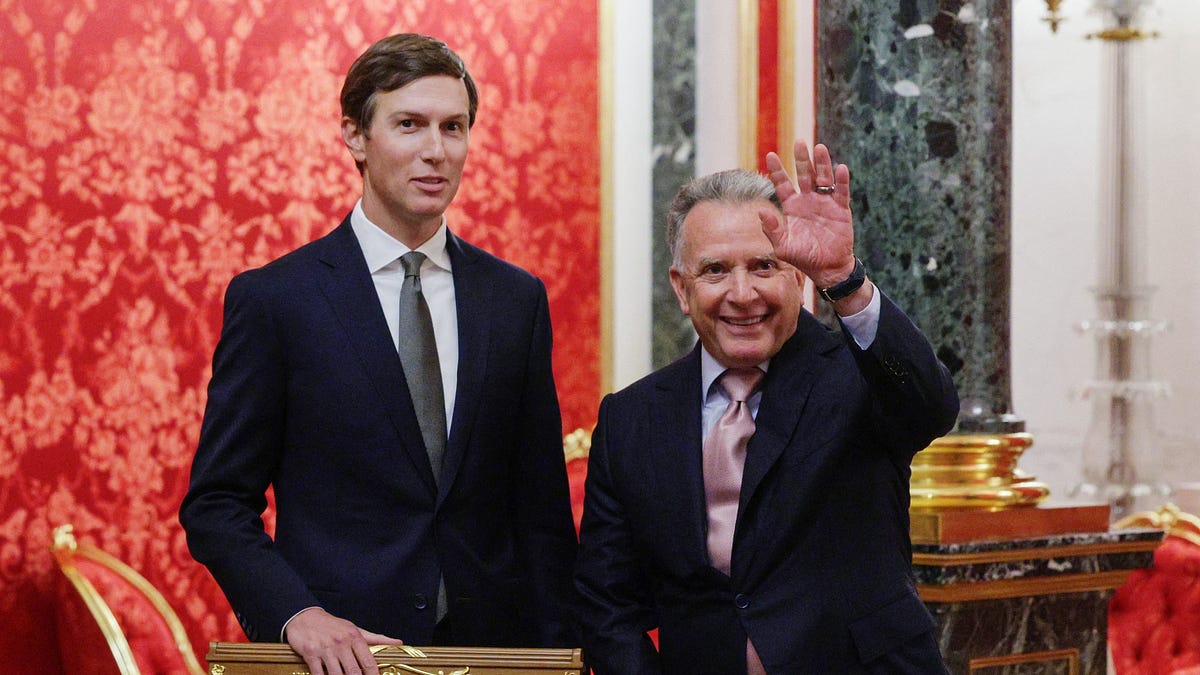
Trump special envoy Steve Witkoff and presidential son-in-law Jared Kushner are back in the picture: Earlier this month, the duo traveled to Moscow—for at least the ninth time, in Witkoff’s case—and then finally made it to Kyiv for a sitdown with Ukrainian president Volodymyr Zelensky.
asserted
duo → travel → Zelensky
There are also reports that CIA Director John Ratcliffe, who made a trip to Moscow last month with an undisclosed mission that may have involved warning Vladimir Putin off military action against NATO countries, may be stepping into a more extensive role in the negotiations.
uncertain
that → be → negotiations
Also, Congress seems about to pass tough new sanctions against Russia; Trump seems to be back to his old Ukraine-bashing tricks; and Ukraine seems to be having a remarkably good week on the frontlines.
asserted
Ukraine → seem → frontlines
Meanwhile, winter gets closer, and with it new hardships and dangers for Ukraine’s civilian population.
asserted
winter → get → population
LET’S START WITH THE OBVIOUS:
asserted
’S → start → OBVIOUS
It’s safe to say that in the entire known history of diplomacy, there has never been a more clownish team of envoys than Witkoff and Kushner.
asserted
It → ’ → Witkoff
It’s hard to find as much unanimity on anything in the Ukrainian media and among the independent Russian punditry as there is on this pair: The contempt in which they are held is reflected in the widely circulating sobriquet Vityok i zyatyok, a pun involving a Russian nickname for “Victor” and a diminutive for “son-in-law.”
asserted
they → ’ → law
(It’s untranslatable, but “the Two Stooges” would do nicely in English.)
asserted
Stooges → ’ → English
Witkoff’s cluelessness and obsequiousness with Putin have long been legendary, and this time he did not disappoint: “When we retire, we’ll have all these incredible stories and incredible memories, and yours will be right at the top of it all,” he gushed to the Kremlin autocrat.
asserted
he → disappoint → autocrat
Tweedledum and Tweedledumber reportedly came to Moscow with nothing but updates to the same old “peace proposals”—and came away with nothing beyond the usual verbiage about “constructive” and “candid” conversations.
uncertain
Tweedledum → come → conversations
However, most Russian-speaking observers noticed one richly symbolic detail.
asserted
observers → speak → detail
At one point on their visit to Moscow, the envoys had dinner with Putin’s special envoy Kirill Dmitriev at a Moscow restaurant whose exterior featured the large slogan, “EVERYTHING FOR VICTORY!”
asserted
exterior → have → VICTORY
It doesn’t seem especially suggestive of a desire for peace.
asserted
It → seem → peace
The Witkoff/Kushner trip to Ukraine was also notable mainly for the symbolism: The fact that it happened at all brought at least a semblance of balance to the blatantly skewed optics of their earlier missions: “Thank God they finally came to Kyiv too,” expatriate Russian journalist and fierce Putin critic Evgenia Albats remarked on her YouTube channel.
asserted
Albats → happen → channel
The visit also brought Trump’s envoys into active contact with some outspoken Ukrainians.
asserted
visit → bring → Ukrainians
Perhaps most memorably, during the Witkoff/Kushner press conference with Zelensky, Ukrainian journalist and television host Dmytro Gordon asked Witkoff about his past meetings with Putin with a very undiplomatic bluntness:
asserted
Gordon → ask → bluntness
Don’t you think Putin has been lying to you all along?
asserted
Putin → think → you
Don’t you think that Putin, the Russians, and Russia understand only one language—the language of strength?
asserted
Putin → think → strength
And finally, aren’t you disgusted to sit at the same table with an international war criminal, a butcher of the Ukrainian people who is personally responsible for Ukraine’s tragedy?
asserted
who → sit → tragedy
“Told Witkoff the whole truth,” Gordon wrote on his Instagram page.
asserted
Gordon → tell → page
Witkoff, of course, responded with platitudes about the need for better communication channels and the “respect” with which Putin has always treated him.
asserted
Putin → respond → him
Albats believes, like many other observers, that the comeback of the Kushner/Witkoff diplomatic shuffle is largely intended for American domestic consumption: stuck in the Iran quagmire, Trump desperately wants to score some points somewhere before the midterms.
asserted
Trump → believe → midterms
It’s hard to say if that’s part of the calculus, given that Ukraine is not a particularly high priority for most American voters in 2026.
asserted
Ukraine → ’ → 2026
However, there is no question that Trump tried to use Ukraine for deflection from Iran on Sunday when, on his trip to Ireland, he blamed Zelensky for “causing a shortage of diesel fuel” by continuing to order Ukrainian strikes on Russian oil processing facilities:
asserted
he → be → facilities
“This isn’t done by the Middle East, this is done by what’s happening with Russia and Ukraine.”
asserted
what → do → Russia
(He then doubled down on this claim.)
uncertain
He → double → claim
That means we don’t need to explain to you why our work matters.
asserted
work → mean → you
Join the side you’re already on.
asserted
you → join → side
Even aside from the fact that the closure of the Strait of Hormuz as a result of the war in Iran is the principal factor in the spike in fuel prices, the sniping at Ukraine and Zelensky omits a key fact: Zelensky has repeatedly proposed an “energy truce” in which both countries would refrain from striking at energy-related targets, including power stations and fuel-processing facilities, at least for the winter months.
asserted
countries → omit → months
The Kremlin, meanwhile, says only that “no talks are being held” on an energy truce.
asserted
talks → say → truce
Most likely, Putin believes that Ukraine has more to gain from such a truce—just as he believes, more generally, that time is on his side.
asserted
time → believe → side
In any case, the salient fact is that Moscow, not Kyiv, is rejecting a suspension of strikes on oil facilities (just as Putin is the one rejecting Zelensky’s proposals for a meeting).1
asserted
Putin → reject → meeting).1
“Maybe Trump doesn’t know that,” Russian émigré military analyst Yuri Fedorov speculated, charitably, in a YouTube interview.
asserted
Fedorov → know → interview
It seems that every time Trump remembers that Putin is the problem, he promptly unremembers it.
asserted
he → seem → it
And, while his hostility toward Zelensky is at far lower levels than in early 2025, thanks partly to Zelensky’s considerable skills at Trump ego management, the Ukrainian president remains his scapegoat of choice.
asserted
president → remain → choice
Put that together with Kushner’s comments, which amount, at best, to a bothsidesism that treats Russian and Ukrainian goals in this war as equally legitimate—while stressing Ukraine’s unwillingness to give up land as the obstacle to a peace deal—and it seems clear that the Trump administration’s peace efforts remain favorable to the Kremlin.
asserted
efforts → put → Kremlin
You don’t need to believe that Trump is literally on Putin’s payroll or in his pocket via blackmail; it can be simply his dictator-fanboy instinct, or his belief that Putin can offer him a better deal.
asserted
Putin → need → deal
Either way, it doesn’t bode well for a just peace.
asserted
it → bode → peace
The reports that Ratcliffe is gearing up to take a more prominent role in the negotiations apparently have some Republican insiders thrilled.
asserted
insiders → gear → negotiations
…and 13 more, not listed.