
Virtual, underground classrooms offer lifeline to girls under the Taliban

Read the original at The Globe and Mail ↗
Cite

Hassan, S. (2026, September 6). Virtual, underground classrooms offer lifeline to girls under the Taliban. The Globe and Mail. https://www.theglobeandmail.com/canada/video-virtual-underground-classrooms-offer-lifeline-to-girls-under-the/

Dated when The Aporia collected the article, usually within hours of publication. Check the original for its exact date and byline.

The Globe and Mail · collected 2026-09-06 · by Sharif Hassan

Quick Summary

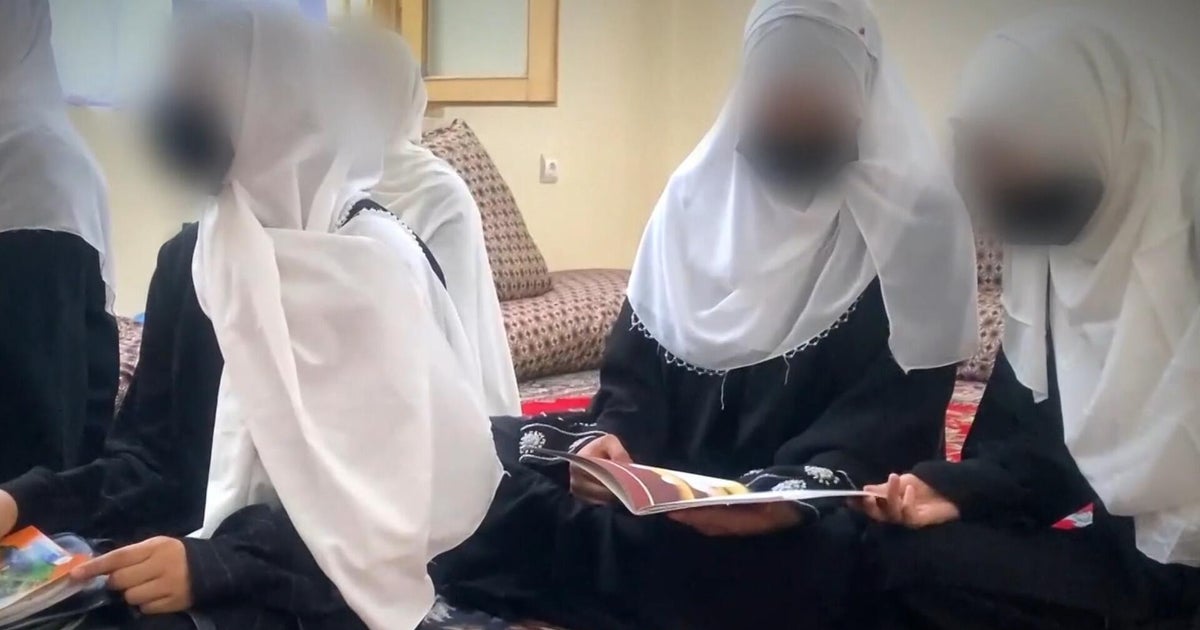
Virtual classrooms based in countries like Canada are secretly providing education to Afghan girls who are banned from attending school under the Taliban regime. According to the United Nations, 2.4 million girls have been denied secondary education, a number that could rise to 4 million by 2030. These underground schools offer a crucial lifeline for thousands of girls in Afghanistan. The UN estimates are based on current data and projections for the future.
Written locally by qwen2.5:14b on 2026-09-07, using this article's own text rather than the other coverage of the same event (that is the story summary below).

AI analysis runs on qwen2.5:14b, locally

Story summary

The Taliban has banned secondary education for girls, but some educators are finding ways to continue teaching them in secret schools or through virtual classes based overseas, including Canada. According to the United Nations, 2.4 million Afghan girls have been denied access to secondary education and this number could rise to 4 million by 2030. These hidden schools offer a lifeline for girls who want to learn but are barred from doing so in public institutions.
Written for “Girls Education Under Taliban Rule” on 2026-10-22, grounded in this article and the 1 other(s) covering the same event.

Story

📰 Girls Education Under Taliban Rule
Education · 2 article(s) covering the same event. See how they differ ↓

Compared with similar articles

This article reads leans left and hedges 50% of its claims. Each row says how that neighbour differs.
CBS News
⚖️ Leans left 🔴 0% hedged 0 of 3 📰 publisher trust 66
“Both articles discuss the ban on female education in Afghanistan and the secret/underground schools for girls, both published on the same date”
The Globe and Mail
⚖️ Leans left 🔴 6% hedged 3 of 52 📰 publisher trust 53
“While both articles discuss Afghan girls banned from school under Taliban rule and virtual classes as a lifeline, they do not describe the same specific happening”
NPR
⚖️ leaning not scored 🔴 5% hedged 3 of 66 📰 publisher trust 60
“Article A reports on virtual and underground schools as a solution for girls under the Taliban ban, while Article B discusses past statements from the Taliban about corporal punishment methods, with no direct connection to the specific event of virtual schooling”
How this article was measured signals, leaning charts, publisher record, byline, topics and claims

Signals How these are calculated →

Claims extracted
2
sentences that state something as happening or true
Uncertain
50%
1 of 2 hedged ("reportedly", "may", "according to")
Leaning
Leans left
of the writing, not the subject · beta estimate
Publisher signals
53/100
The Globe and Mail's corrections and hedging, across everything collected from it. Not a measure of accuracy.
Outlets on this story
2
Education
Same framing elsewhere
1
articles that frame the event the way this one does
Analyzed 2026-09-07 · how these are computed

How this is being covered How these are calculated →

Article leaning vs. publisher reliability
Source leaning vs. consistency

Publisher

The Globe and Mail · 869 article(s) · 28 correction(s) detected
Running correction rate · 28 correction(s)

Who wrote this

Sharif Hassan
7 article(s) here · 1 carrying a prediction
🔮 In the 2023 mayoral byelection won by Olivia Chow, 37 per cent of eligible voters participated.
🔮 As Toronto’s leading mayoral candidates criss-cross the city, pitching their vision ahead of this month’s municipal elections, voters say affordability, housing, public safety and transit are the top issues they want to see addressed.
🔮 These incidents followed separate coyote attacks on a child and a teenager in Markham, Ont., in May.
🔮 The United Nations estimates 2.4 million of girls have been barred from getting secondary education, a number it said could increase to four million by 2030.
🔮 Before the Taliban’s return to power five years ago, the women were studying in high school or university, hoping education would give them a better future.
🔮 If you’re angered by U.S. President Donald Trump’s renaming of Lake Ontario to “Lake America,” chances are that an American living in your neighbourhood might be just as outraged — if not more.
🔮 “Given the scale of the storm and the number of outages, restoration efforts may take time and vary by location,” it said.
Also by Sharif Hassan
Nothing else under this byline is closely related to this article, so these are simply their most recent.
All 7 articles by Sharif Hassan →

Topics

Afghanistan Canada The Canadian Press The United Nations

Subjects

Afghanistan GPE · 1× Canada GPE · 1× The Canadian Press ORG · 1× The United Nations ORG · 1×

Narrative

As the ban on female education continues in Afghanistan, virtual and underground schools operating from overseas – including Canada – have become a lifeline for thousands of girls.
framing: mixed · carried by 1 article(s) · first seen 2026-09-07
🔮 The United Nations estimates 2.4 million of girls have been barred from getting secondary education, a number it said could increase to four million by 2030.
2026-09-07 · The Globe and Mail
Virtual, underground classrooms offer lifeline to girls under the Taliban · mixed framing

Claims (2 extracted, 1 hedged)

As the ban on female education continues in Afghanistan, virtual and underground schools operating from overseas – including Canada – have become a lifeline for thousands of girls. asserted
schools → continue → girls
The United Nations estimates 2.4 million of girls have been barred from getting secondary education, a number it said could increase to four million by 2030. uncertain
it → estimate → 2030
💬Give feedback
🕘History 🎫Support